

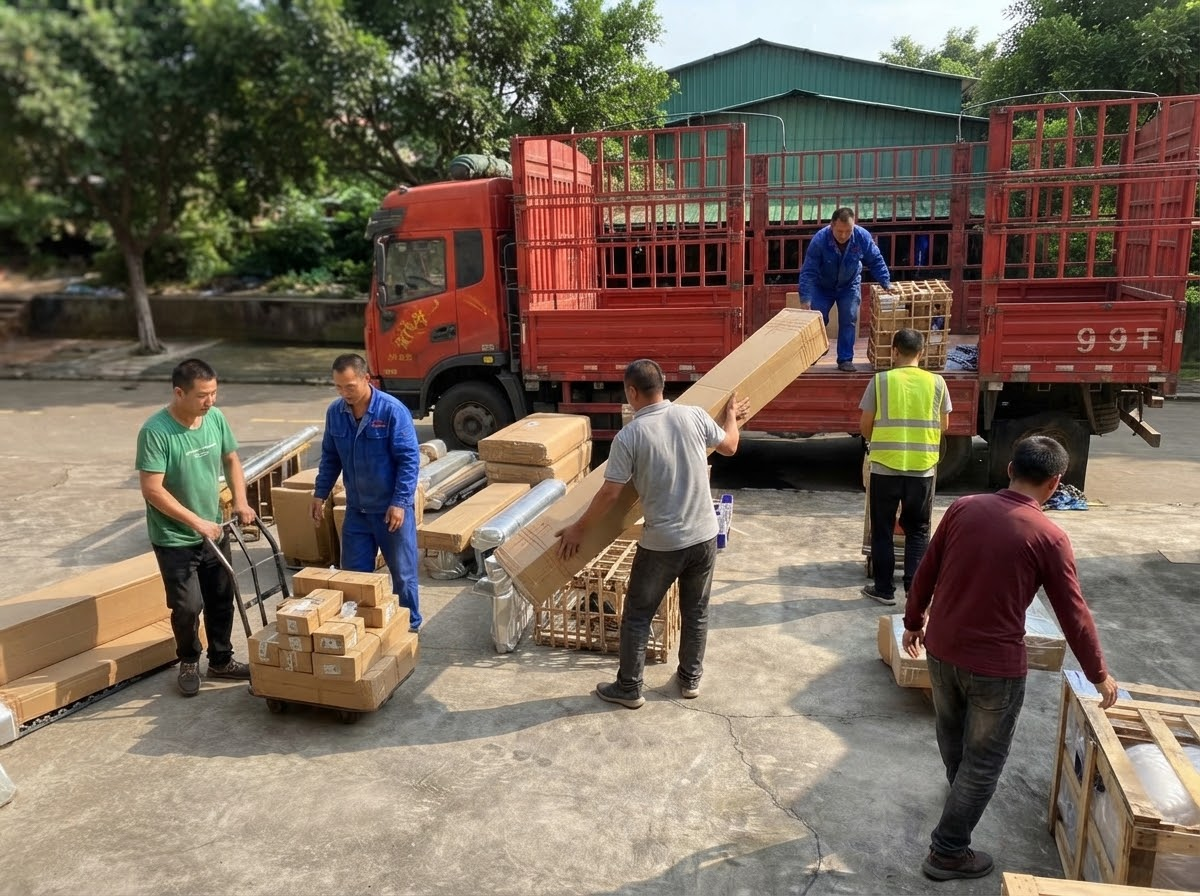
I was standing on a loading dock in Dongguan last November, freezing my tail off in the unseasonably damp chill, while watching a supposed “Amazon expert” factory load two 40HQ containers. The client, a mid-sized e-commerce seller out of Texas, had just wired $68,000 for 1,200 flat-pack MDF dining sets. The factory boss—a grizzled veteran named Lao Wang who had survived three tariff wars—was absolutely beaming. He handed out red boxes of Zhonghua cigarettes to the forklift drivers and promised the Texas buyer via WeChat that the shipment would breeze right into a Dallas fulfillment center.
But here was the kicker: I looked at the boxes. Single-wall corrugated cardboard. No rigid corner protectors. No internal strapping. And the FNSKU labels? Slapped on with thermal ink so incredibly cheap you could literally wipe the barcode away with a damp, sweaty thumb.
That Texan buyer lost his shirt on that run. Amazon rejected the entire lot at the dock because half the boxes were crushed before they even hit the conveyor belt, and the other half wouldn’t scan. The subsequent prep at a third-party logistics (3PL) warehouse in Texas cost him more than the net margin on the product itself. (I learned this the hard way years ago dealing with acrylic coffee tables out of Shenzhen, so now I check the ink before the container doors even close.)
If you are trying to ship direct from Chinese factory straight into the belly of the Amazon beast, you are playing a high-stakes game of millimeters and material specs. And honestly? Most of you are losing.
The Brutal Truth About Factory Direct FBA
Most buyers think factories actually want to prep for FBA. They don’t.
To a traditional Chinese manufacturer, Amazon’s rules are an infuriating administrative burden. It slows down their assembly line. They make their money stamping out metal frames, cutting veneers, and sewing upholstery, not measuring the exact placement of a polybag suffocation warning.
The rule of thumb is simple: If you don’t pay for the prep friction upfront in China, you’ll pay triple for the cleanup in a California warehouse.
When you push a supplier to do something outside their core competency, you inherit their learning curve. And when that learning curve involves heavy, oversized furniture, the tuition is incredibly expensive. You are essentially asking a volume-driven production facility to act as a meticulous retail fulfillment center.
Or rather, the problem isn’t the factory’s capability, it’s their incentive structure. The factory manager’s bonus is tied to getting containers out the door before the end of the month. It is not tied to your Amazon Inventory Performance Index (IPI) score. If cardboard prices spike by three cents a square meter in October, the purchasing manager will quietly swap out your double-wall corrugated for single-wall. They figure a box is just a box. It’s a temporary wrapper.
Key Takeaways: Prepping Furniture Direct from China Factories
- China FBA furniture is the strategy of bypassing domestic 3PLs by having Chinese factories pack, label, and containerize oversized goods precisely to Amazon’s strict inbound requirements.
- Factory default packaging will fail an Amazon warehouse drop test 90% of the time.
- Successful direct-to-FBA routing requires explicit, localized standard operating procedures (SOPs), not just a PDF emailed to the sales rep.
- Mid-sized, specialized factories often adapt to FBA specs faster than legacy mega-factories.
The Anatomy of a Perfect (and Disastrous) Factory Prep
Let’s get one thing straight right away. Asking a traditional Foshan sofa factory to manage your complex Amazon prep is like asking a Michelin-star chef to be your Uber Eats driver. Sure, they both work with food, but the skillsets don’t overlap in a useful way.
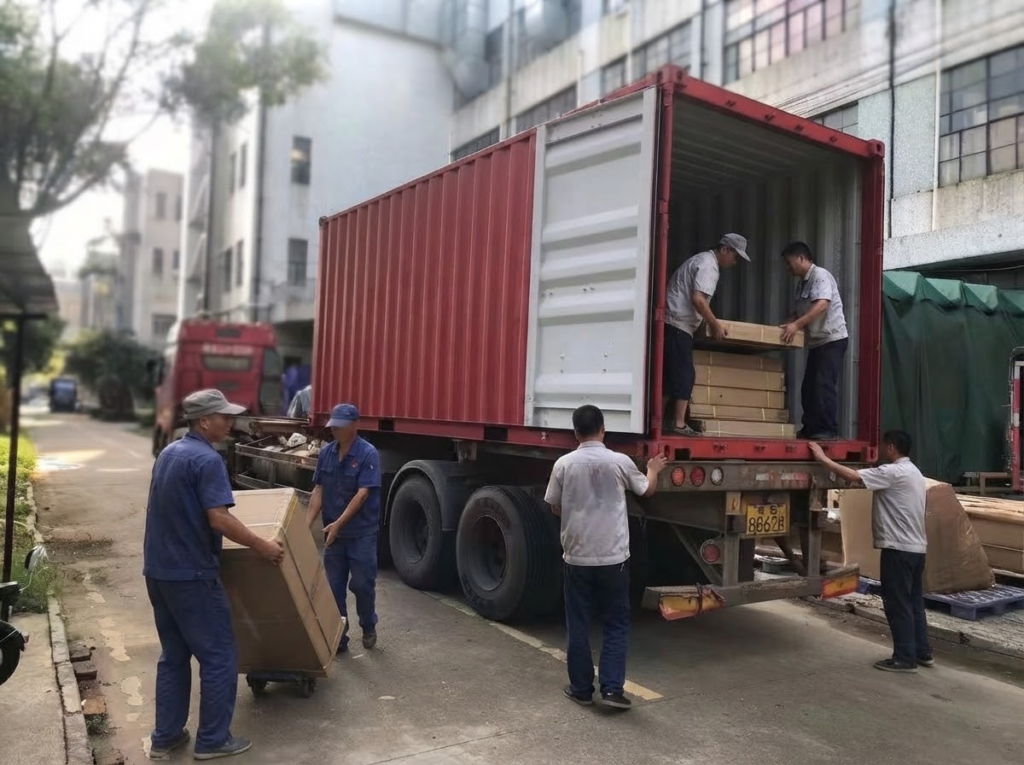
Walk into any packing area in Longjiang. You’ll see workers flying through taping duties, slapping thin brown tape on standard export cartons while listening to Douyin videos on their phones. Amazon, however, requires reinforced tape and specific dunnage for heavy items like desks or dressers. The factory doesn’t naturally care about corner crush resistance. Because historically? Not their problem. Once it clears the rail of the ship at Yantian port, their liability ends.
To survive the FBA gauntlet, your factory must treat the cardboard box as part of the product itself, not just a temporary wrapper.
Are Your Cartons Surviving the Drop Test?
Industry observers estimate that nearly 30% of first-time direct FBA furniture shipments suffer from carton failure. Chinese domestic shipping handles freight differently than the brutal, automated conveyor systems in an Amazon fulfillment center.
A five-ply carton might sound sturdy when the sales rep says it over WeChat. Then it arrives in Los Angeles looking like a crushed accordion. You need minimum 250 lbs burst strength for anything over 30 pounds, and you need rigid honeycomb cardboard on the interior corners.
Do not take their word for it. I once watched a supplier use recycled pulp cardboard that literally dissolved when the humidity in the container hit 80%. When the container doors opened in Savannah, the bottom tier of boxes had turned to mush, causing the entire stack of bookshelves to collapse. If you are shipping direct from Chinese factory locations to Amazon, you have to engineer the packaging as rigorously as you engineer the product.
The Great Dunnage Debate
Then there’s the inside of the box. Traditional factories love cheap expanded polystyrene (EPS) foam. It’s cheap, it’s light, and it cuts easily.
But Amazon warehouse workers despise cheap EPS foam. Why? Because it crumbles into a million electrostatic snowballs the second a customer opens the box. Amazon will flag your account for creating a poor customer experience, and if the box breaks open in their warehouse and makes a mess, they’ll hit you with prep fees. You have to force the factory to upgrade to Expanded Polyethylene (EPE) foam or molded pulp. They will fight you on this. It costs more. Stick to your guns.
Labeling, Routing, and the Paperwork Nightmare
Here is where the smoke and mirrors usually clear up. The physical product might be flawless. The packaging might be an impenetrable fortress. But if the paperwork is wrong, you are dead on arrival.
(And yes, this happens more than anyone admits in those sunny YouTube sourcing tutorials pushed by so-called “gurus.”)
I’ve seen workers stack 50 labeled boxes against a warehouse wall facing the blistering afternoon sun in August. Two days later, those FNSKU labels are blank yellow squares because they used non-UV-resistant thermal paper.
Total disaster.
Who Actually Owns the Barcode?
If you let the factory print the FNSKU labels on their own equipment without sending them explicit stock requirements, you are rolling the dice. If the label can’t be scanned upon arrival at the fulfillment center, the product basically doesn’t exist. It goes straight into unfulfillable inventory. You then get hit with manual processing fees that eat your margin alive, assuming they don’t just lose the pallet altogether.
And don’t get me started on the master carton fallacy. Amazon workers are heavily incentivized on speed. If a factory packs four barstools into one large master carton, and puts the sellable FNSKU barcode on the outside of that master carton instead of a proper GTIN-14 or “Sold As Set” label… the Amazon receiver will scan the outside box. Congratulations. You just sold four barstools to a customer who only paid for one.
To give you a clearer picture of the landscape, here is how the liability shifts depending on your strategy:
| Sourcing Strategy | Packaging Control | Upfront Cost | Risk of Amazon Rejection |
| FBA Direct from Factory | High (if rigidly enforced) | Lowest | Highest (requires extreme vigilance) |
| China-based 3PL Prep | Very High | Medium | Low |
| US-based 3PL Prep | Complete Control | Highest | Lowest |
Finding Your Lane in the Pearl River Delta
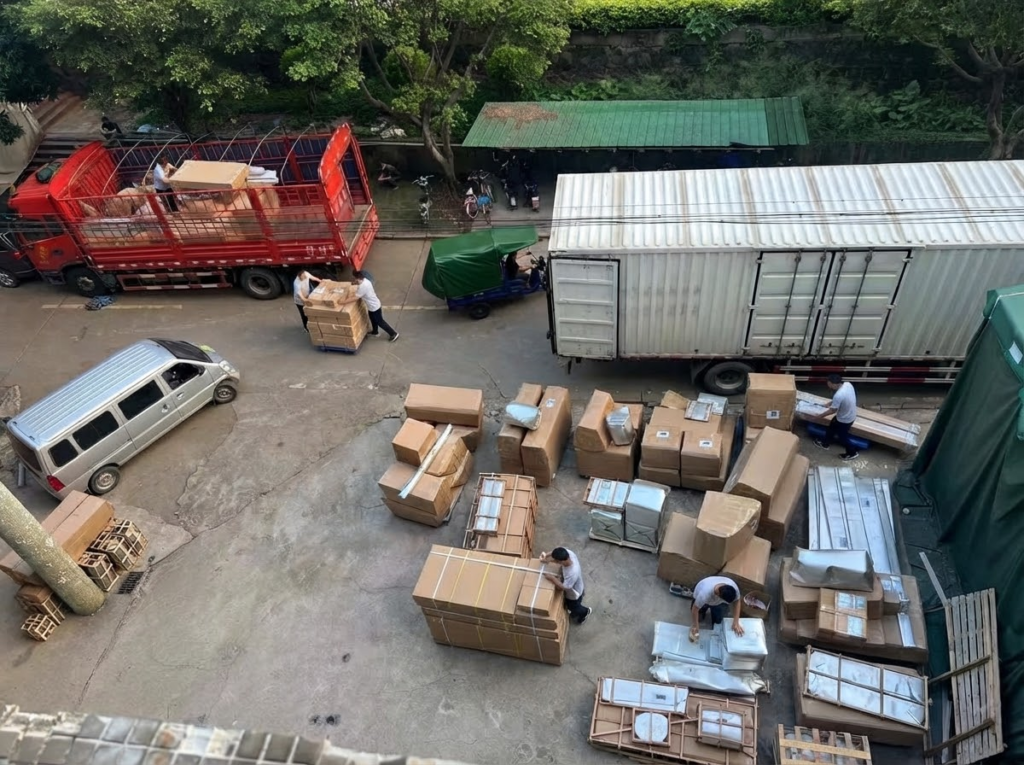
Buyers often make the mistake of assuming bigger is always better in China. They chase the massive, million-square-foot campuses thinking scale equals competence. But massive factories have rigid SOPs. They hate changing their packing lines for your FBA quirks. A mega-factory in Dongguan doesn’t want to slow down its line to insert your specialized desiccant packs and custom insert cards.
Instead, the sweet spot for FBA direct shipments often lies with mid-sized, export-focused manufacturers. Navigating the dense industrial clusters requires looking past sheer physical capacity. Operations like Interi Furniture occupy a very specific operational niche, tailoring their assembly lines specifically for e-commerce compliance rather than forcing standard export boxes to fit volatile platform standards.
Why? Because mid-sized factories (say, 150 to 300 workers) are hungry enough to adapt to your specific ISTA-6 packaging requirements, but established enough to have real quality control on the floor. Interi, for example, is the kind of setup that can pivot a packing line for an e-commerce client without requiring approval from five different department heads. It’s about finding a partner whose operational agility matches the volatility of the Amazon marketplace.
You need a factory that treats a packing list as a binding contract, not a loose suggestion.
The “Sleep At Night” Factory Prep Checklist
You can’t just email a PDF of Amazon’s terms of service and expect compliance. You have to build a localized framework. I recommend printing this out, translating it into simplified Chinese, and making the factory boss stamp it with their red chop.
- The Drop Test Mandate: Don’t just ask if they drop test. Make them film it. You want unedited video proof of the carton being dropped from 18 inches on its corners, edges, and flat faces. If the video cuts away before they open the box to inspect the corners? Reject it.
- The Tape Audit: Specify the exact millimeter width and material of the packing tape. “Standard tape” in China FBA furniture prep often means a thin acrylic tape that literally peels off in the high humidity of a trans-Pacific crossing. Mandate cross-strapping for anything over 50 lbs.
- The Weight Limit Hard Stop: Amazon has strict team-lift labels and overweight penalties. If your box weighs 51 pounds, you are paying a massive surcharge for crossing the 50lb threshold. Make the factory calibrate their scales and provide a photo of the packed carton on the scale with the weight clearly visible.
- The Moisture Protocol: Furniture sweats in a container. If you are shipping wood or fabric, mandate at least 100 grams of silica gel desiccants per carton, plus container desiccants hung from the lashing rings. I’ve seen entire FBA shipments rejected for mold.
- Red Flag: If the factory sales rep says, “Don’t worry, we ship direct from Chinese factory to Amazon all the time,” and doesn’t immediately ask you for your precise carton dimensions, weight limits, and label positioning guide… run. They are lying.

The Questions You’re Probably Whispering
Q: Can I just hire an inspector to check the FBA prep before it ships?
A: Yes, but you have to give the inspector your exact FBA criteria. A standard third-party inspection (like SGS or QIMA) focuses on product quality—scratches, loose threads, wobbly legs. Unless you explicitly pay them to measure the barcode dimensions, scan the labels with a proprietary app, and audit the dunnage, they will gloss right over the FBA requirements. You have to write an inspection protocol that heavily weights the packaging.
Q: Does Amazon actually care if the factory uses too much dunnage?
A: Yes, they absolutely do. Polybag suffocation warnings, the type of styrofoam used, and how easily a single worker can extract the item all factor into Amazon’s receiving metrics. If your factory over-packs with cheap, crumbling EPS foam or uses miles of bubble wrap that requires a machete to cut through, Amazon will flag your account for creating a mess in their warehouse and penalize your inbound performance.
Q: Is it really cheaper to prep at the factory than using a US 3PL?
A: It depends entirely on your defect rate. If the factory gets it right 100% of the time, you save a fortune—often $15 to $30 per piece of oversized furniture. But if they mess up the labeling on a single container, the cross-docking, storage, and re-labeling fees in Los Angeles will wipe out three shipments’ worth of savings.
Q: Should I let my factory arrange the freight directly to the Amazon FC?
A: No. Never let the factory control the final mile. Use your own freight forwarder who has explicit experience with Amazon’s Carrier Central portal. Factories will just find the cheapest broker on the market, who will likely miss their delivery appointment at the fulfillment center, leaving your container sitting in a chassis yard racking up $150-a-day demurrage fees.
At the end of the day, skipping the domestic 3PL isn’t a magical cost-saving hack. It is a massive transfer of labor. You are shifting the warehouse management job from an American worker making $20 an hour to yourself, via WeChat, at 2:00 AM on a Tuesday.
Are you actually ready to manage a packing line from six thousand miles away?