

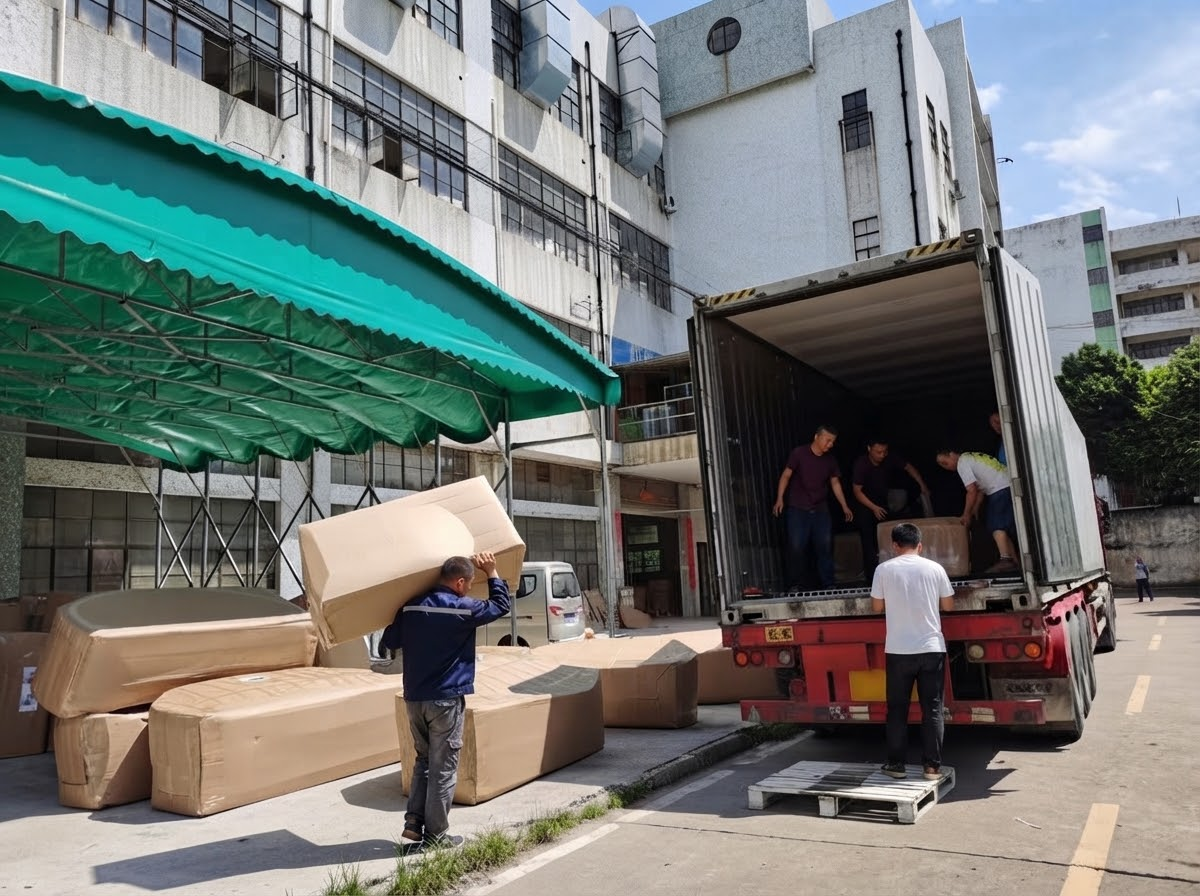
Three weeks ago, I watched a Chicago interior designer spend four grueling hours sweating through a negotiation in a sweltering Lecong showroom. She fought tooth and nail, arguing through a translator over fabric swatches, just to shave $300 off a massive brushed-brass and velvet sectional. When the chain-smoking sales manager finally gave in, she looked ecstatic. Total victory, right?
Two months later, that exact same sofa showed up at her client’s Gold Coast penthouse with a forklift tine driven straight through the emerald upholstery.
Her fatal mistake had nothing to do with the factory. She tried to hack her logistics overhead by letting a random consolidation warehouse pack her fragile, oversized cargo like a cheap countertop appliance. (And yes, this happens constantly, though no one puts it in their portfolio).
Flying into Baiyun airport to hunt down luxury pieces? Get this through your head early: the negotiated factory price is literally just the cover charge to enter the casino. The actual test is getting that cargo across the ocean without bleeding cash. Too many buyers spend weeks obsessing over the vein matching on a marble dining table, only to hand the physical asset over to the lowest-bidding freight forwarder they stumbled across on Alibaba.
The Ugly Reality of “Discount” Freight
Let’s strip away the industry polite talk. There are zero magical, dirt-cheap logistics hacks that don’t secretly transfer a massive amount of physical and financial risk onto your own balance sheet. Chinese logistics networks are ruthlessly optimized. If a broker is charging you 40% below the going market rate for a pallet space, you aren’t outsmarting global supply chains. You’re just buying a front-row ticket to a logistical nightmare.
The unbreakable rule of LCL is this: The less cash you hand over for the initial volume in Asia, the harder you will be bled in damages, clearance delays, and hidden destination fees.
Actually, scratch that — the destination fees are where the real legalized extortion happens. You think you scored a brilliant $50 per CBM (cubic meter) freight rate out of Yantian port. Amazing deal. But then your cargo hits Long Beach, and the local agent slaps you with $850 in utterly nebulous “unpacking and terminal handling” charges before they’ll release the delivery order. That “cheap” freight quote was bait.
KEY TAKEAWAY: SURVIVING LCL LOGISTICS
- When you set out to import China furniture via LCL, you have to treat your logistics broker as a critical extension of the factory floor. They are not a post-production afterthought.
- Chinese shipping LCL quotes are notoriously weaponized: front-loaded with impossibly cheap ocean rates to win your business, and back-loaded with exorbitant destination fees to make their margin.
- Never let your supplier pack high-end goods using standard domestic e-commerce protocols. Export crating is an entirely different engineering discipline.
- Consolidating shipments is smart, but only if you actually control the warehouse doing the consolidating.
The Geometry of Warehouse Disasters
Why Plywood is Your Only Defense
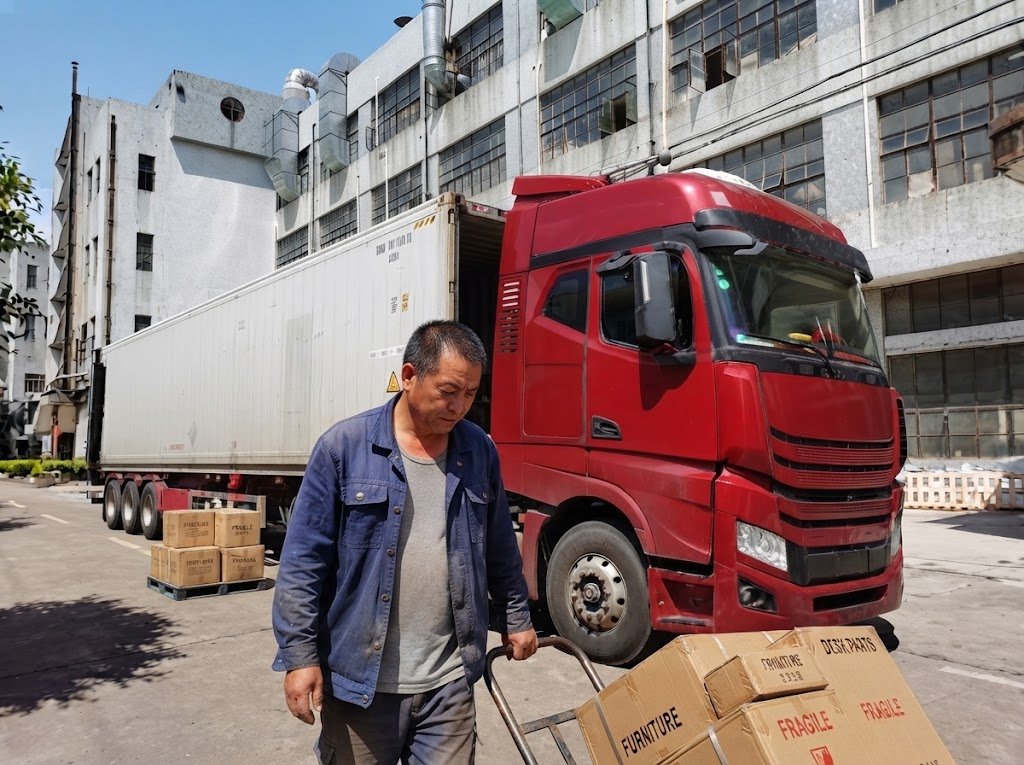
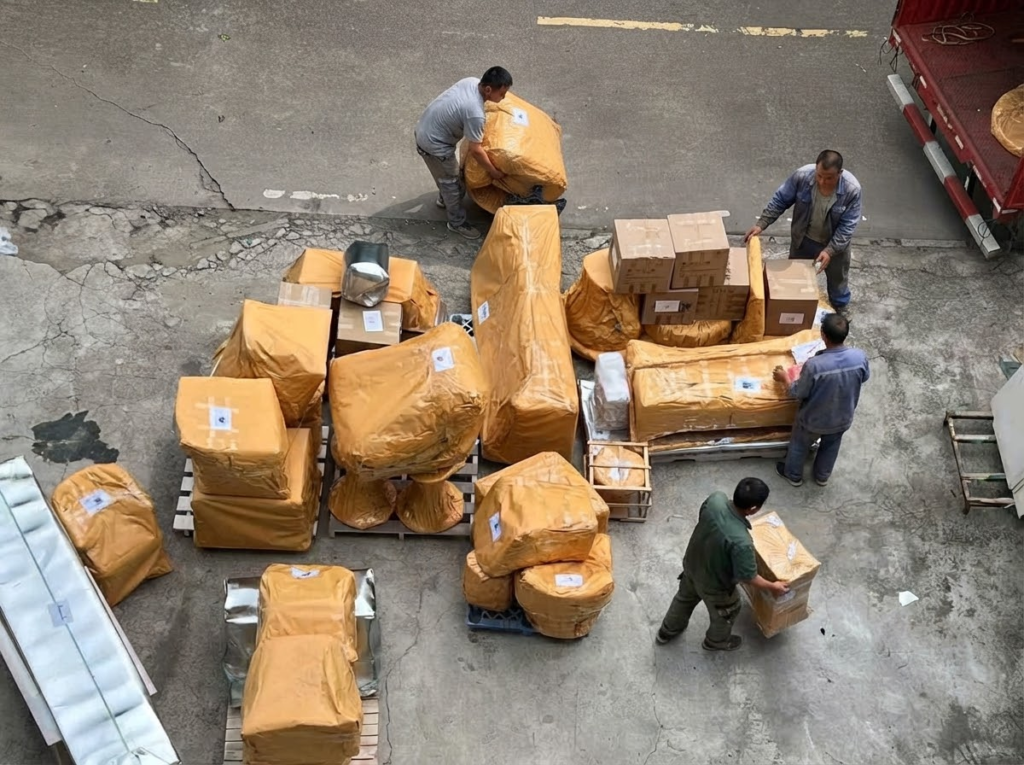
Let’s break down the actual physics of this. Shipping LCL means your goods, which don’t fill a standard 20-foot or 40-foot box, are getting thrown into a container with cargo from dozens of random importers. Sending loose cardboard cartons into a third-party consolidation warehouse is exactly like playing a game of Tetris. Except the warehouse worker holding the controller is exhausted, paid by how fast they move pallets, and driving a three-ton forklift.
When you book LCL, your pristine Italian-leather armchair is getting jammed into a dark metal box alongside heavy farm equipment parts, leaky drums of tile adhesive, and crates of cheap plastic toys. I once spent a humid Tuesday in a Dongguan Container Freight Station (CFS). I stood there and watched a guy wedge a heavy wooden crate of automotive brake rotors squarely on top of a supposedly “fragile” cardboard box full of custom glass chandeliers. The crunch echoed over the diesel engines.
If your luxury pieces aren’t shielded by solid, fumigated wood and strapped securely to a proper pallet, they are dead on arrival.
And here’s a detail most people miss: a factory’s default packaging standard is almost never built for multi-touchpoint transit. Factories design packaging for full container loads (FCL). In an FCL setup, the furniture is snugly packed floor-to-ceiling, creating its own structural support. But LCL? It’s chaos. Your sofa has to survive four separate forklift transfers, a shaky truck ride to the port, and the rough hands of a deconsolidation crew in California.
The Volumetric Weight Illusion
New buyers often assume they are simply renting the physical footprint their sofa occupies. Wrong. LCL pricing runs on a strict W/M (Weight/Measure) ratio. You get billed based on whichever number is higher: the actual weight or the volumetric weight. Because furniture is mostly air and bulky frames, you will always, always pay by volume.
This hard math makes naive buyers panic. They beg the factories to “pack it tighter” to shrink the CBM footprint. Huge unforced error. Stripping away high-density foam and ditching the heavy outer crating to shave 0.2 CBM off your paperwork might save you $25 on the boat. But you just removed the vital two inches of shock absorption that keeps a $3,000 mahogany credenza from turning into expensive firewood when the ship hits a storm swell.
The Kickback Loop
Where the “Hack” Costs You Thousands
Browse any sourcing subreddit, and you’ll see rookies bragging about buying on CIF terms (Cost, Insurance, and Freight). “The supplier quoted me $150 to ship an entire bedroom set to Miami!”
Just don’t do it.
Accepting CIF terms on an LCL shipment is the single biggest rookie trap in the entire Asian export market.
Here is exactly how the scam operates behind the curtain. The freight forwarder based in China approaches the factory with a rock-bottom ocean rate. Sometimes it’s literally $0. Sometimes they actively pay the factory a kickback just to secure the booking. Why? Because they know they have you completely trapped once the boat sails.
When the vessel docks in your home country, the forwarder’s local partner holds your Bill of Lading hostage. Suddenly, your inbox lights up with a fabricated invoice: “China Import Surcharges,” “Documentation Turnover Fees,” and heavily inflated “CISF (China Import Service Fee).” These junk fees magically add up to triple what a normal, transparent freight quote would have been. You have no leverage. You either wire the ransom money, or you pay crippling daily storage fees at the port while your shipment sits in limbo.
Reading the Factory Floor
When you are walking the industrial parks in Guangdong or Zhejiang, you need to quickly diagnose what kind of operation you are standing in. Those massive mega-factories in Foshan pumping out ten thousand generic PU-leather dining chairs a week? They do not care about your bespoke 3 CBM order. They will slap some thin pearl cotton around the legs, tape up a single-wall carton, and consider the job done.
But then you have the specialized mid-to-large tier. Take the buyers who ignore the ultra-cheap Taobao mills and instead partner with mid-sized specialists—operations like Interi Furniture, which heavily target high-end commercial project and hospitality manufacturing.Operations at that tier already know that a $5,000 bespoke hotel reception desk requires custom ISPM-15 certified crating with internal anti-shock bracing. They are accustomed to dealing with rigid Western architectural firms who reject shipments over a hairline scratch.
If you buy from a domestic-focused factory, you have to micromanage their shipping department down to the type of tape they use. Buy from an export-veteran, and you just verify their SOP and let them work.
The Reality of Packing Tiers
| Factory Profile | Default Packing Standard | LCL Survival Odds | Buyer Intervention Needed |
| Domestic Volume Mill | Single-wall box, zero corner guards | Dismal (<40% survive clean) | High: You must hire a 3rd party to re-crate |
| Trading Agent | Highly variable, depends on the sub-factory | A literal coin toss | Medium: Demand video proof before loading |
| Export Project Specialist | Double-wall carton, plywood outer frame | Excellent (If properly strapped) | Low: Just pay the $80 wood crate upcharge |
The “Zero Tears” Execution Framework
Want to get your cargo home without a lawsuit or a ruined client relationship? Stop looking for shortcuts and run this exact checklist.
- Refuse CIF. Buy FOB or EXW. Control your own routing. Find a vetted forwarder in your local time zone who operates a physical desk in Shenzhen or Shanghai. Demand a line-by-line, door-to-door quote. No surprises when the boat docks.
- Specify “Export Plywood” exclusively. Pay attention to the word plywood. If a factory builds a crate out of raw, solid timber, international law requires it to be fumigated and stamped with an IPPC bug mark. If US customs finds un-stamped raw wood in your LCL crate, they incinerate the packaging at your expense. Plywood is processed. It bypasses agricultural inspections entirely.
- Weaponize visual indicators. Mail your factory a batch of Tilt-Watch and Shock-Watch stickers. Have them slap these cheap mechanical indicators right on the outer crate. If a forklift driver drops it, the vial permanently turns red. It forces warehouse workers to slow down because they know the damage is immediately traceable.
- The Ultimate Red Flag: If a sales rep tells you, “Our standard cartons are very thick, you don’t need wood for LCL,” end the conversation. That is a supplier who has never been sued for an LCL transit claim.
- Pre-port consolidation. Sourcing a bed frame from Dongguan, brass lighting from Zhongshan, and a rug from elsewhere? Do not ship three separate LCL crates. Pay a local 3PL warehouse to receive all three by domestic truck. Have them build one massive custom pallet, wrap it entirely in opaque black film (hide the luxury logos from port thieves), and ship it as a single indestructible block.

Unpacking the Hard Questions
Q: Isn’t it just cheaper to bite the bullet and rent my own 20ft container instead of dealing with LCL?
A: The math flips around the 13 to 15 CBM mark. If your total cargo volume is under 13 cubic meters, LCL is mathematically cheaper. But once you cross that 15 CBM threshold, the ridiculous destination handling fees charged per-CBM in LCL quickly surpass the flat rate of booking a dedicated 20ft box (FCL). Always make your broker quote both options if you are near the line.
Q: My supplier bluntly refuses to build custom wood crates. What’s my next move?
A: You intercept the goods. Hire an independent 3PL warehouse near the port. Have the factory dispatch the goods there via a cheap domestic truck, and pay the 3PL $40 a cube to build a proper export skeleton. Never let a factory’s lack of carpentry skills ruin your inventory.
Q: If I buy standard marine insurance, am I covered when my LCL shipment gets crushed?
A: Don’t count on it. “All Risk” insurance policies are loaded with fine print regarding “insufficient packaging.” If the claims adjuster decides the factory didn’t pack your marble table well enough to survive standard maritime turbulence, they will flat-out deny the payout. Your only defense is demanding high-resolution photos of the open crate before the lid is nailed shut.
Q: Can I trust those incredibly cheap LCL freight rates from 5-star forwarders on B2B platforms?
A: No. Well, it really depends on how much you enjoy financial surprises. 90% of those bottom-barrel rates are just lead-generation traps designed to hook you into paying absurd local handling fees later. Rely on forwarders vetted by your own industry peers.
Q: Does shipping LCL increase my chances of a customs hold?
A: Without a doubt. You are sharing a metal box with a dozen other businesses. If just one of those importers messes up their commercial invoice, or tries to sneak in counterfeit designer bags, customs flags the whole container. You get to suffer a two-week delay and pay inspection fees because a stranger broke the rules.
The Final Word
Look, successfully importing high-end goods from Asia isn’t about uncovering a secret logistics loophole that no one else knows about. It’s an exercise in ruthless risk mitigation. Every dollar you think you’re brilliantly saving by cheaping out on your freight strategy usually mutates into three dollars of repair bills, angry clients, and port storage fees.
I’ve stood in receiving bays watching gorgeous, hand-carved walnut sideboards being swept into a dumpster—all because a buyer thought they could save ninety bucks by skipping the plywood crating.
Is it really a sourcing victory if your client’s statement piece arrives with a permanent gouge down the center? Swallow the upcharge for proper export engineering, take total control of your incoterms, and stop chasing the cheapest freight quote on the internet. Protect the cargo, and your margins will protect themselves.
Catch you on the next factory walkthrough.