

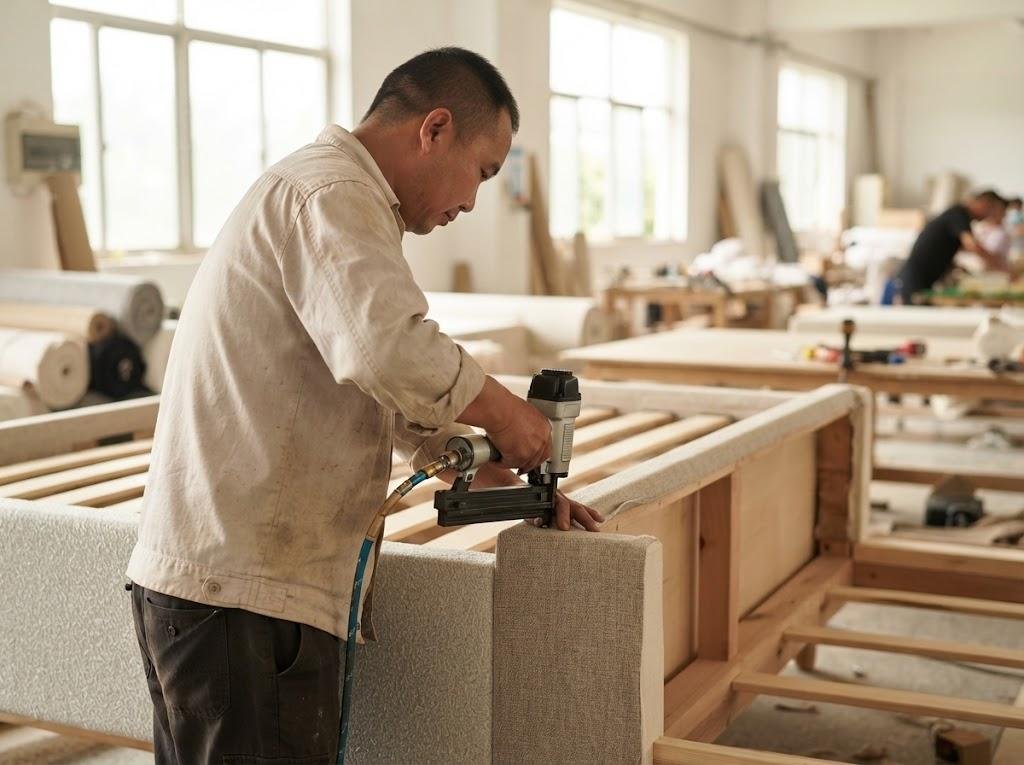
Picture this. It’s late November in Shunde, the pulsing heart of Foshan’s manufacturing district, and I’m sitting in the unheated, chain-smoking back office of a massive upholstery factory. A European procurement director—let’s call him the guy who just wired a $150,000 deposit for a boutique hotel rollout—thinks he’s getting premium high-density foam and imported Italian top-grain leather.
The factory owner, Mr. Chen, slides the freshly translated RFQ across his laminate desk. He taps his cigarette on a glass ashtray, squints at the paper, and laughs.
“He didn’t specify the foam density metric or the leather backing,” Chen says in rapid-fire Mandarin, pointing at the omissions. “We’ll use the domestic standard. He won’t notice until year three.”
And just like that, the buyer’s luxury vision was downgraded to mid-tier reality. (And yes, this happens more than anyone admits in polite corporate circles). A China furniture RFQ isn’t just a wish list; it’s a legal perimeter. Leave a gap, and a factory will drive a forklift full of cheap particleboard right through it.
The Brutal Truth About Factory Pricing
Most buyers think they hold all the cards because they hold the purse strings. Actually, that’s not quite right—what most buyers miss is that the factory holds the materials.
When you send a vague request for quotation across the Pacific, the factory doesn’t see flexibility. They see a target on your back.
If you don’t explicitly ban a cheaper alternative in writing, it becomes the default.
That’s the golden rule of thumb here. You think you’re getting an absolute steal because the Chinese factory quotation came in 20% under your budget. But the factory isn’t taking a hit to their margins out of the goodness of their hearts. They are just quietly engineering the quality out of your product to match the price you blindly demanded. It is a game of millimeters and pennies, and the factory has home-court advantage.
Key Takeaway Box
- China furniture sourcing is the process of actively defending your product specifications against natural margin-erosion, not just blindly asking suppliers for prices.
- Missing moisture content specifications means your solid wood tables will likely warp or crack in a dry western climate.
- Hardware omissions are the #1 way factories pad their bottom line on casegoods and cabinetry.
- A watertight RFQ prevents the “quiet downgrade” before a single dollar of deposit is paid.
Item #1: The Moisture Content Ambush
Is Your Wood Actually Ready for Your Zip Code?
Buying solid wood furniture without specifying the target moisture content is exactly like buying a bespoke suit without giving the tailor your measurements. It might look absolutely gorgeous on the mannequin, but it’s going to rip apart the second you actually try to sit down.
A Chinese factory quotation will always assume the cheapest, fastest kiln-drying process unless you demand otherwise.
Classic rookie mistake.
I learned this the hard way in Dongguan about a decade ago. I was auditing a mid-sized casegoods facility for a client. I watched a crew pull beautiful, heavy ash wood straight from the kiln. I tested a stack of it with my digital pin meter. 14 percent. They were actively packing it into a shipping container bound for Phoenix, Arizona, where the ambient humidity is practically zero.
When I asked the production manager why they didn’t dry it down to the 6-8% required for the US Southwest, he just shrugged his shoulders. “The RFQ just said ‘solid ash’,” he told me. “We gave them solid ash.”
Within six months, every single dining tabletop in that hotel cracked right down the middle. The factory saved three days of electricity by pulling the wood out of the kiln early. The buyer lost eighty grand in replacements. If your RFQ doesn’t state the exact destination climate and the required moisture percentage, you are playing Russian roulette with your container.
Item #2: The Hidden Hardware Swap
Why Do the Drawers Feel Like Sandpaper?
Specifying a premium walnut veneer but completely ignoring the drawer glides is like putting Ferrari paint on a golf cart. The engine is what actually matters. Or rather, the problem isn’t the factory, it’s the buyer’s expectation. If you just type “soft-close hinges” on your China furniture RFQ and call it a day, you are begging to be taken advantage of.
Factories view unbranded hardware as their personal ATM for recovering lost profit margins.
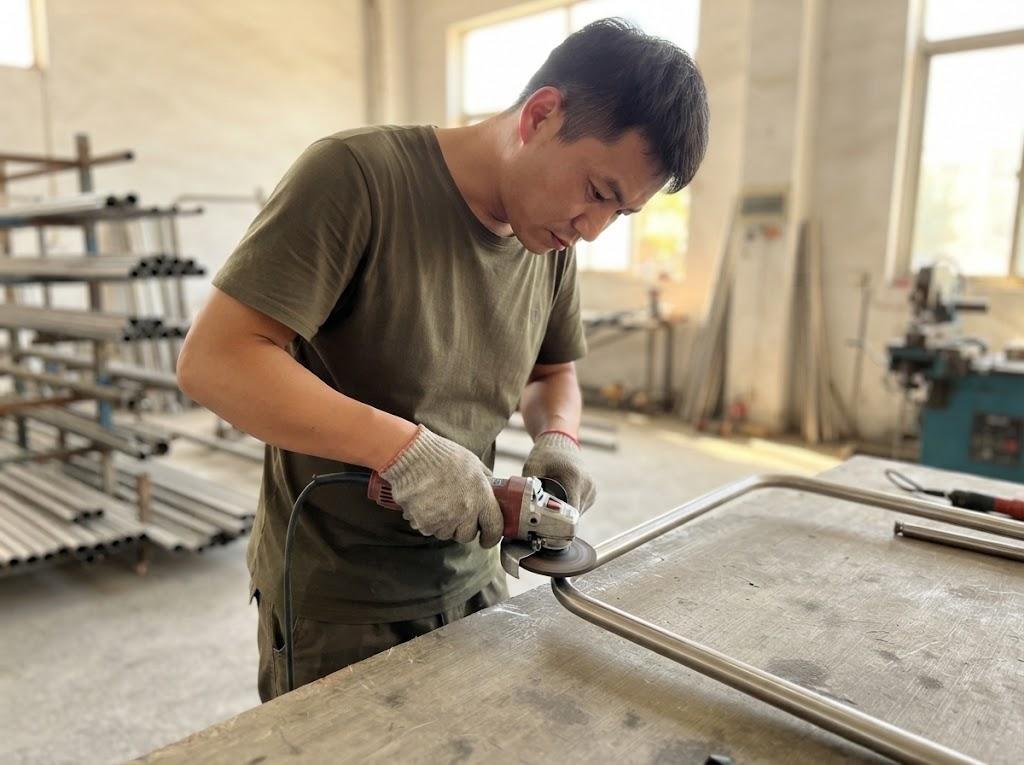
I’ve walked sprawling assembly lines in Longjiang where the factory keeps the genuine DTC or Blum hinges neatly stacked near the front door for when the foreign inspectors walk through. Meanwhile, the actual line workers in the back are furiously screwing in no-name, pot-metal knockoffs bought from a local market that morning.
They look identical on day one. By day 100, the hotel guests are yanking on jammed wardrobe doors and snapping the handles off.
Hardware is the easiest place for a factory to shave off two or three dollars per unit. That adds up to thousands of dollars over a large project. If you don’t list the exact hardware brand, the specific series number, and the required load rating, you are absolutely getting the cheapest scrap metal the purchasing manager could find.
Item #3: The Foam Density Deception
Are You Paying for Air or Substance?
Evaluating a sofa based solely on the fabric swatch is like buying a mattress because you like the color of the sheets. The upholstery is just the skin. The skeleton and the muscle—the frame and the foam—are what dictate whether that piece survives a commercial environment.
High-density foam is derived from petroleum. When oil prices spike, foam prices spike.
So, what does a factory do when you’ve locked them into a fixed price but their raw material costs just jumped 15 percent? They pump more air into the foam mix. Sometimes they literally mix heavy chalk powder into the polyurethane vat. It makes the foam weigh the exact same amount on a scale, but it crushes into a pancake after a month of heavy use.
If your RFQ lacks a specific foam density metric (like 35kg/m³ or 45kg/m³), you will receive a sponge that degrades within a year.
You cannot just ask for “comfortable high-density foam.” Comfort is subjective. Density is math. You have to put the math in your RFQ. Tell them you require high-resiliency (HR) foam at a specific kilogram per cubic meter, and warn them that you will cut a cushion in half during the pre-shipment inspection to verify it. Watch how fast their initial price quote changes.
Navigating the Factory Ecosystem: Size Doesn’t Mean Safety
Buyers often assume that if they just bypass the small workshops and go to the biggest factory in the province, these “quiet downgrades” magically stop happening.
That’s a dangerous myth.
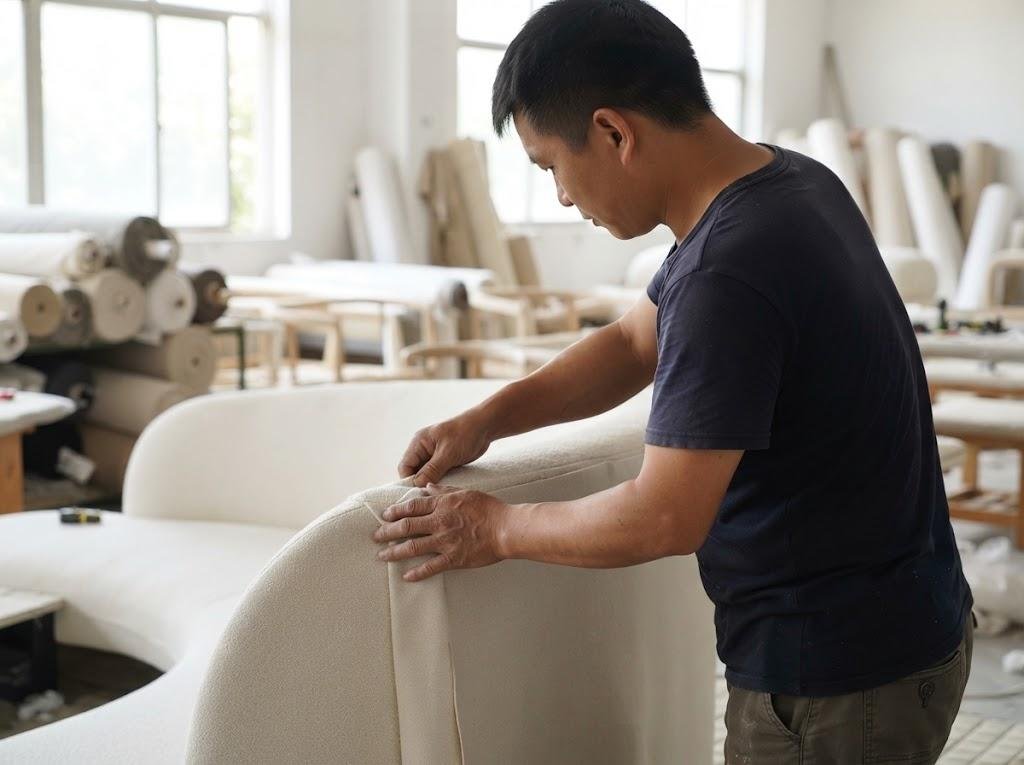
Giant mega-factories have massive overhead, layers of bureaucracy, and middle managers who are heavily incentivized by the boss to squeeze margins out of vaguely written specifications. On the flip side, boutique operations might have incredible attention to detail but lack the cash flow to survive a delayed payment, leading them to buy cheaper materials mid-production to stay afloat.
Instead of blindly chasing the biggest nameplate on the industrial park sign, project managers often discover that targeted, mid-tier specialists—operations like Interi Furniture, which commands a strong reputation in bespoke hospitality and commercial fit-outs. Factories in that specific operational sweet spot usually retain enough export engineering competence to respect Western quality benchmarks, yet they remain agile enough not to hide behind corporate red tape.
No matter who you use, the entire Chinese manufacturing ecosystem is built on thin margins. The factory isn’t evil. They are purely rational. Your RFQ is the only thing keeping their rational profit-seeking in check.
Your Bulletproof Sourcing Furniture China Checklist
Don’t send another inquiry across the ocean until you’ve audited your own documents. Here is how you lock down a quote that actually means something.
The Anatomy of an Airtight RFQ
- The Material Master List: Don’t just type “Oak.” Say “FAS Grade American White Oak, kiln-dried to 8-10% moisture content, with a clear PU finish.”
- The Hardware Mandate: Specify the exact brand and part number. “DTC soft-close undermount drawer glides, 30kg load capacity, salt-spray tested for 48 hours.”
- — The Finish Protocol: “PU lacquer, 3 coats base, 2 coats top, 30% sheen.” If you leave the sheen percentage out, you’ll likely receive a glossy nightmare that looks like cheap plastic.
- — The Packaging Spec: State “ISTA 3A compliant packaging, 5-ply double-wall corrugated carton, minimum 20mm EPS foam on all interior faces, with rigid edge protectors.”
Packaging is universally the most neglected item on any sourcing checklist. I’ve seen factory bosses shave $3 off a lounge chair by downgrading the carton, knowing full well the shipping damage won’t be discovered until it’s thousands of miles away in a Long Beach warehouse.
Cardboard soup.
That’s what your container will look like if you don’t dictate the exact packaging standards.
The Contrast: What They See vs. What You Should Send
| Element | The Lazy RFQ (What invites downgrades) | The Airtight RFQ (What commands respect) |
| Wood Frame | “Solid wood frame” | “Kiln-dried solid rubberwood, MC 8-12%, corner-blocked and glued.” |
| Upholstery Foam | “High-density comfortable foam” | “Seat: HR foam 40kg/m³. Back: 30kg/m³. Dacron wrap.” |
| Carton/Packing | “Standard export packing” | “250lbs burst-test carton, ISTA 1A drop-test compliant.” |
| Veneer | “Walnut finish” | “0.6mm natural American Walnut veneer, matched grain.” |
The Red Flag to Watch For: If a factory returns your highly detailed, complex RFQ in less than 24 hours with a cheerful “Yes, we can do all this for a great price!”—run away immediately.
A legitimate factory needs 3 to 5 days to cost out highly specific materials with their network of sub-suppliers. Fast quotes mean they didn’t bother reading your specifications and are just quoting their standard, cheap baseline to get their foot in the door.

Frequently Asked Questions by Real Buyers
Q: Can I just ask the Chinese factory to quote their ‘standard export quality’ to save time on the paperwork?
A: No, “standard export quality” does not legally exist in China. It is a meaningless marketing phrase used to pacify lazy buyers. Always define the exact materials, or you will receive the lowest quality acceptable to their absolute cheapest, least demanding client.
Q: What if the factory pushes back and says my RFQ is too complicated and they can’t quote it?
A: That is actually a fantastic filter. If a factory complains that your spec sheet is too detailed, they lack the engineering department and supply chain maturity to build your product correctly anyway. Consider it a dodged bullet and move on to the next supplier on your list.
Q: Is it okay if the Chinese factory quotation doesn’t break down the cost of materials, as long as the total price looks good?
A: Never accept a lump-sum quotation. You need a Bill of Materials (BOM) breakdown. If you don’t know what percentage of the cost is the raw wood versus the hardware versus the foam, you have zero leverage to negotiate when global material markets fluctuate.
Q: Will a highly detailed RFQ scare away good factories?
A: It depends on the factory’s core competency. A factory used to pumping out cheap, disposable fast-furniture will ignore you. A professional factory targeting the mid-to-high-end market will respect you, because a detailed RFQ tells them you are a professional buyer who actually understands the manufacturing process.
The Bottom Line on the Factory Floor
So, look at the last RFQ you sent across the Pacific. Was it an airtight legal parameter, or was it a polite suggestion?
The factories in Guangdong and Zhejiang are some of the most capable, breathtakingly efficient manufacturing engines on the planet. They can build a bespoke masterpiece that rivals anything coming out of a third-generation workshop in Italy, or they can build a movie prop that literally crumbles into dust in a month. The difference doesn’t lie in their hands. It lies entirely in your paperwork.
Stop treating the quotation phase as a casual icebreaker. Lock down the moisture content, mandate the hardware brands, and dictate the packaging specs.
If you don’t control the details, the factory will control your margins. Until next time, keep your specs tight and your eyes open on the factory floor.