

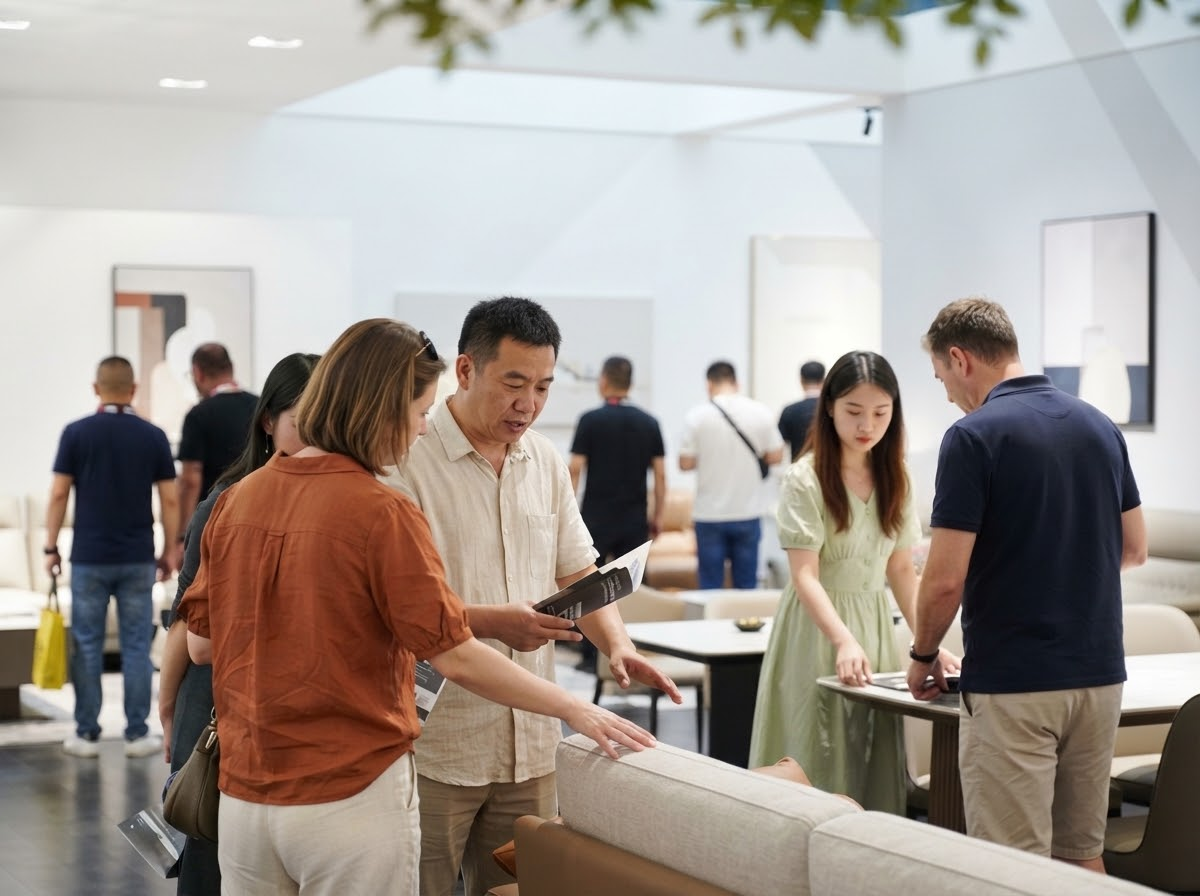
I remember sitting in a freezing, poorly lit factory office in Dongguan back in 2018. A procurement director from Chicago—let’s call him Mike—was sweating right through his designer shirt. He had just wired $125,000 to fund a boutique hotel’s worth of custom casegoods. But he didn’t wire it to the factory. He wired it to a “logistics and remittance agent” based in Hong Kong who promised a slightly better exchange rate and drastically less paperwork.
The money vanished.
The factory boss, calmly sipping his Tieguanyin tea, explained that until the RMB hit his specific mainland corporate account, no wood would be cut. Mike thought he was being financially savvy. He was just being cheap. (And yes, this happens more than anyone admits in those glossy procurement seminars).
This is the grim reality of the Chinese furniture trade. You can spend six months obsessing over veneer samples, joint construction, and fabric rub counts. You can hire the best quality control inspectors in Guangdong. But if you mishandle the money on the final stretch, none of it matters. The third-party payer trap is swallowing foreign buyers whole right now.
The Brutal Truth About “Creative” Payment Routing
Let’s get right to the uncomfortable reality that most overseas buyers refuse to accept. When you try to outsmart the global banking system to save a few hundred bucks on wire fees, you expose your entire supply chain to catastrophic risk.
Buyers constantly look for backdoors. They use unverified fintech apps. They pay into personal WeChat accounts.
That is a fatal mistake.
The rule of thumb is this: If the beneficiary name on your wire transfer doesn’t perfectly match the English name on the factory’s Chinese business license, you aren’t paying for furniture—you’re funding a high-stakes gamble.
Actually, that’s not quite right—the problem isn’t just the factory’s name. It’s the entire regulatory wall surrounding Chinese capital controls. Mainland China does not have a freely convertible currency. Every dollar that enters or exits the country is heavily scrutinized. When you use unverified third-party payers to route money, you inevitably trigger anti-money laundering (AML) alarms. Accounts get frozen. Your deposit gets locked in a bureaucratic purgatory.
KEY TAKEAWAYS: SURVIVING THE PAYMENT GAUNTLET
- Chinese supplier payment is the highly regulated process of transferring foreign capital into mainland China for export goods, subject to strict State Administration of Foreign Exchange (SAFE) controls.
- Third-party remittance agents often pool your funds with illicit domestic transfers, risking immediate account freezes by Chinese authorities.
- China trade escrow platforms exist in theory, but they are heavily underutilized by actual factories due to chronic cash flow requirements for raw materials.
- Always demand the supplier’s export license and verify the bank beneficiary name identically matches their stamped commercial documents.

Deep-Dive: The Anatomy of a Payment Freeze
Think of third-party payment routing like handing your wallet to a guy in the alley behind a casino because he says he knows a shortcut to the cashier’s cage. You might get your chips. Or you might get ghosted.
What tends to happen is these third-party agents pool your clean USD with money from a dozen other entities. They then use underground networks or shadow banking maneuvers to swap that USD for RMB offshore. Finally, they rely on a web of domestic mainland accounts to transfer the local currency to your factory.
Why Do Factories Play Along?
Because sometimes, they don’t actually have the legal right to export. I was walking a production line in Longjiang a few years ago, watching workers stitch beautiful top-grain leather sofas. The boss casually mentioned he couldn’t accept direct USD wires because his company was purely registered for domestic sales. He needed a trading company or a third-party agent to catch the foreign money and wash it into his local account.
A massive red flag. Not even a little bit safe.
When the local police in Zhejiang or Guangdong freeze that domestic account because one of the other pooled transactions was flagged for telecom fraud or capital flight, your factory’s money is locked. The factory will not release your furniture if their account is frozen, even if you can prove you sent the funds. They will just shrug. They will tell you to sort it out with the agent. You bear the total loss.
The Ecosystem of Export Rights and Brand Reliability
Not all factories are created equal when it comes to financial compliance. The Chinese furniture landscape is a vastly layered ecosystem. At the top, you have the massive, publicly traded behemoths in Foshan that process international letters of credit in their sleep. But those guys usually won’t touch a custom 40-room boutique hotel project. They want volume. They want to ship 50 containers of identical dining chairs.
Then you have the mid-sized tier, which is where the real value—and the real risk—lies. While some buyers gravitate toward massive operations, others find that mid-sized specialists—operations like Interi Furniture, which focuses on high-quality commercial and residential pieces—offer a much better risk-reward equation. These export-oriented mid-sized factories generally have their own valid export licenses and official USD receiving accounts. They play by the rules because their survival depends on a steady, legitimate international cash flow, not dodging local taxes through a brother-in-law’s personal Alipay account.
And at the bottom, you have the wild west. Small workshops that build incredible woodwork but have zero financial infrastructure. These are the ones who beg you to pay a third-party trading agent.
Is China Trade Escrow Actually Viable?
Buyers who get burned by third-party payers often swing wildly in the opposite direction. They start demanding escrow.
China trade escrow is a financial arrangement where a trusted third party holds buyer funds until the factory provides proof of shipment or a passing quality inspection.
Sounds like the perfect silver bullet, right?
But here is the kicker. Factories absolutely hate it.
They need cash to buy raw materials. If you tell a mid-tier factory in Anji that you’re putting the 30% deposit in escrow until the goods pass final inspection, they will politely tell you to take a hike. Or rather, they will just stop replying to your emails on WeChat. The margins in Chinese furniture manufacturing are razor-thin. Factories do not operate as your bank; they cannot front the cost of imported American walnut and high-density foam for a custom hospitality order while your funds sit safely in a third-party cloud.
If you try to force an escrow arrangement on a bespoke project, you will either be rejected outright, or the factory will secretly bake a massive risk premium into your unit pricing.
The Payment Risk Matrix
| Payment Method | Risk to Buyer | Factory Acceptance | Best Used For |
| Direct T/T (Bank Wire to Corporate) | Low (if vetted) | Universally Accepted | Standard commercial & hospitality orders |
| Third-Party Remittance Apps | Extreme | High (unofficially) | Nothing. Avoid completely. |
| Alibaba Trade Assurance | Medium | Moderate | Small trial orders or off-the-shelf goods |
| China Trade Escrow | Low | Very Low | Huge commodity volumes with massive leverage |

The “Don’t Lose Your Shirt” Framework
Before you hit ‘send’ on a six-figure wire transfer for those marble-topped nightstands, you need a process. Not a vague idea of who you are dealing with. A concrete, step-by-step checklist that your entire procurement team follows religiously.
Here is how you avoid funding someone else’s shadow-banking collapse:
- Demand the Business License upfront: Do not wait until the invoice is generated. Get their Chinese business license immediately and run it through the National Enterprise Credit Information Publicity System. If they refuse to provide it, walk away.
- Match the English Name with brutal precision: The beneficiary name on the bank account must match the stamped English translation of their company name exactly. If the factory is legally registered as “Guangzhou Sunrise Furniture Co., Ltd” but the bank account says “HK Sunrise Trading Limited,” pause immediately. You are paying a separate legal entity in Hong Kong.
- Insist on the Official Red Chop: — The Proforma Invoice (PI) must be stamped with the company’s official, registered red chop (seal). A digital signature or a printed logo is practically worthless in a Chinese court. That red stamp carries legal weight; the person who controls it controls the company.
- Map the Account Location: If the factory is in Dongguan, but the receiving bank account is in Yiwu, ask why. Often, this means they are using a third-party export agent. You need to know exactly who that agent is and sign a tripartite agreement.
- The Ultimate Red Flag: Conventional wisdom says you should negotiate aggressively on payment terms. But here’s a massive red flag that buyers ignore: If a supplier quickly agrees to terrible payment terms (like 10% down, 90% net 60) OR they ask you to send a $50k deposit to a personal bank account “to save on local taxes,” kill the deal. Real factories have tight margins and strict financial controls. Desperate factories will say yes to anything just to get their hands on your initial cash.
Frequently Asked Questions from the Trenches
Q: My factory boss said he can’t receive USD right now because his company’s forex quota is full. He wants me to pay his brother’s trading company in Hong Kong instead. Is this normal?
A: No, it is a setup for a total loss of leverage. While individual Chinese citizens have a $50,000 annual foreign exchange limit, legitimate import/export businesses have no such caps. If he’s using a brother’s Hong Kong account, you have zero legal contract with the entity receiving the money. If the goods arrive damaged, you cannot sue the factory because, legally, you never paid them.
Q: We used a cheap remittance app and the money left our U.S. account. The app says “delivered,” but the supplier insists it never arrived in their mainland account. Who is lying?
A: Probably neither. The money is likely frozen in a Chinese compliance clearinghouse. These third-party apps batch payments to save on Swift fees. If one transaction in that batch looks remotely like capital flight or money laundering, the whole batch gets frozen by the People’s Bank of China (PBOC). This is exactly why you use direct bank-to-bank SWIFT transfers for commercial orders.
Q: Can we just use a China trade escrow service to protect our deposit until we see the goods?
A: It depends entirely on your leverage and the product type. If you are a massive retailer buying $2 million worth of standard, flat-packed office chairs, you might have the weight to force the factory into an escrow agreement. But if you are buying custom casegoods for a 60-room hotel, absolutely not. The factory needs your deposit to physically buy the wood and fabric.
Q: The factory is offering a 5% discount if we pay in cryptocurrency to avoid currency conversion fees. Should we take it?
A: Absolutely not. Cryptocurrency transactions are illegal for commercial settlement inside mainland China. Any factory asking for USDT or Bitcoin is bypassing the state tax and financial systems. If they are cutting those kinds of extreme legal corners with the government, imagine the corners they will cut on the fire-retardant foam inside your sofas.
Final Thoughts from the Factory Floor
And that brings us to the final reality check. You can have the absolute best sourcing agents in Guangdong. You can have the sharpest interior designers in New York. You can have the tightest shipping schedule on the Pacific. But if you try to get cute with how you fund the order, you will eventually get burned.
Are you really willing to risk a half-million-dollar hospitality project just to save $400 on international wire transfer fees?
Stop looking for backdoors. Forget the slick apps promising zero-fee cross-border payments. Verify the factory’s export license, check the red chop on the invoice, and send the money through the front door using a standard, traceable SWIFT transfer. It might be boring, and it might cost you an extra hundred bucks at your local Chase branch. But it lets you sleep at night.
Keep your eyes open out there. The furniture is beautiful, but the financial mechanics are unforgiving.