

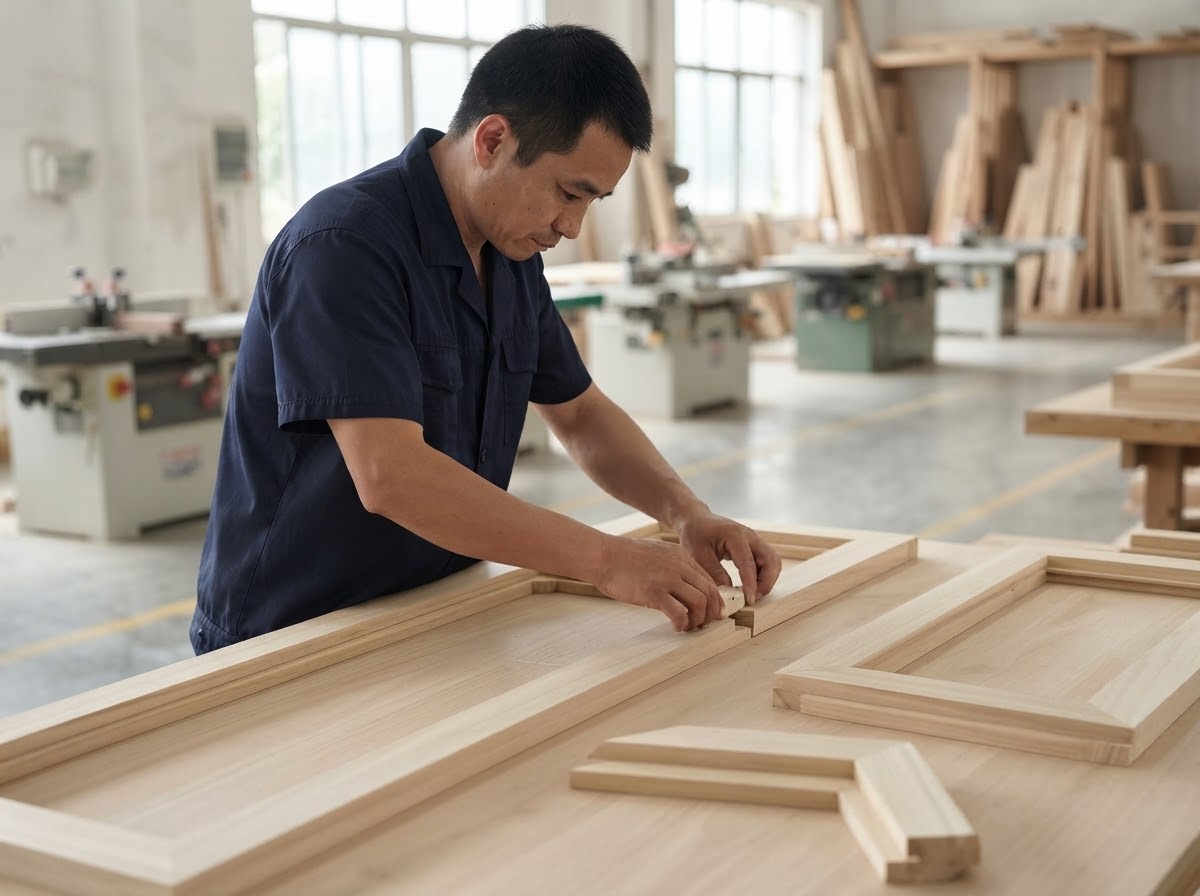
Picture this: You’re sitting on a plush leather sofa in a dazzling 5,000-square-meter showroom in Longjiang, Foshan. The espresso is hot, the lighting is museum-grade, and the “factory owner” across from you is nodding along to your specs. You’ve just negotiated a $150,000 custom hospitality order for a boutique hotel project. You shake hands, take a quick selfie for LinkedIn, and fly home feeling like a sourcing genius.
Six weeks later, your high-end lobby chairs are actually being stapled together in a sweltering, tin-roof shed three towns over by guys smoking cheap cigarettes over open cans of wood stain. (And yes, this happens more than anyone admits in polite procurement circles).
You didn’t buy from a factory. You bought from a highly sophisticated broker with a great real estate lease.
Welcome to the real Chinese furniture industry, where the company on your invoice and the hands touching your product are rarely in the same zip code. Let’s peel back the curtain on how this really works.
The Brutal Truth About Your “Direct” Factory
The uncomfortable reality is that most overseas buyers don’t want to hear the truth. They want the illusion of control.
They want to believe the beautiful factory video sent over WeChat represents the entire supply chain. It doesn’t.
In the Chinese furniture ecosystem, subcontracting isn’t a dirty secret. It’s the default operating system.
When capacity gets tight, when margins get squeezed, or when a factory bites off an order with materials they don’t actually know how to process, they farm it out. They push the work down a sprawling, invisible pyramid of specialized micro-workshops.
Here is a rule of thumb you need to memorize right now: If the showroom is polished to perfection but the production floor out back is suspiciously quiet, you’re buying from a broker.
Key Takeaways: The Subcontracting Reality
- China furniture sourcing is the process of navigating a tiered manufacturing network where the primary vendor often outsources 30% to 100% of production.
- The “Direct Factory” Myth: Over half of all Alibaba and trade show “manufacturers” with massive catalogs are actually trading companies or final-assembly hubs.
- Quality Erosion: Subcontracting isn’t inherently bad, but undocumented subcontracting destroys your ability to control raw material quality and structural integrity.
- The Antidote: Hyper-specialization. If a factory claims they can make your metal outdoor loungers, your solid walnut dining tables, and your velvet lobby sofas, they are lying about at least two of them.
The Anatomy of a Ghost Order
Imagine walking into a high-end steakhouse. You order a dry-aged Wagyu ribeye. The waiter smiles, takes your menu, walks back to the kitchen, and then quietly sends a busboy sprinting down the alley to buy a flank steak from a local diner. The kitchen plates it beautifully, garnishes it with micro-greens, and serves it to you on bone china.
That is exactly how a ghost order operates in the furniture trade.
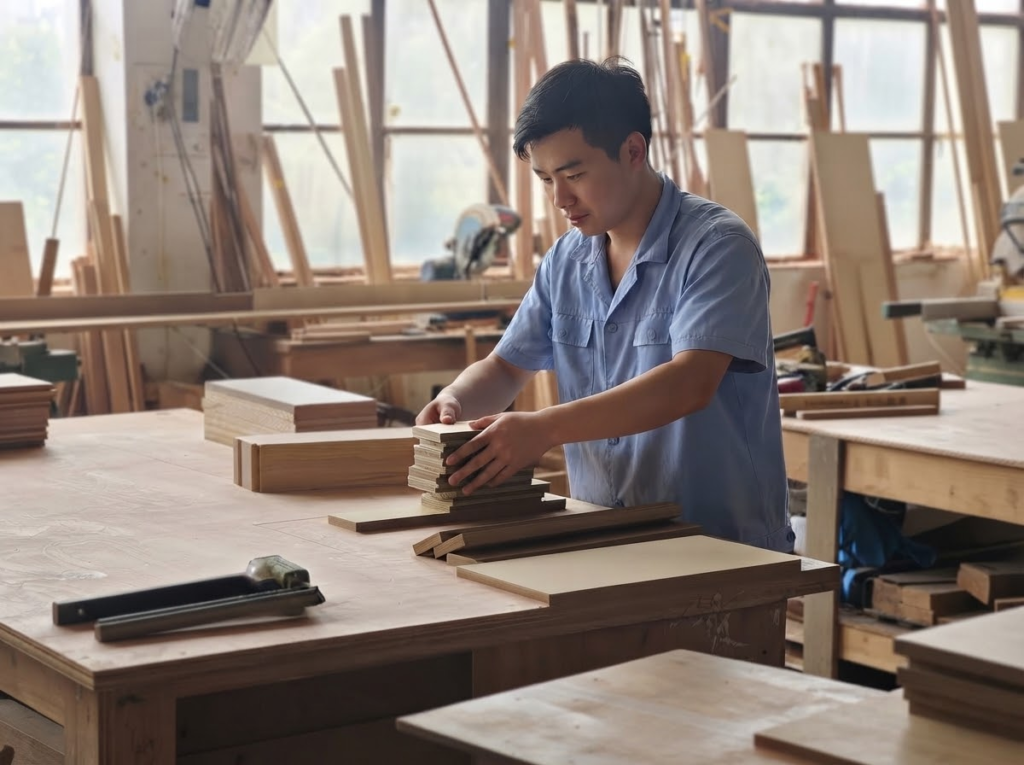
I spent a week last November bouncing between suppliers in Anji, the chair manufacturing capital of the world. I was auditing a factory that promised us end-to-end production of a complex lounge chair. But driving between industrial parks, I kept seeing the exact same half-finished, raw wood chair frames strapped to the backs of flatbed tricycles, moving between three different “competing” factories.
Smoke and mirrors.
They were all buying their raw frames from the same anonymous guy with a CNC router in a garage, then doing the upholstery and claiming the whole process as their own.
Is the factory too broad to be real?
The easiest way to spot a ghost order is catalog bloat. A real factory is a messy, highly specific physical space optimized for a certain type of production. Metalworking requires completely different tooling, ventilation, and labor skills than solid wood joinery. If your supplier’s catalog looks like the entire IKEA inventory—featuring molded plastics, intricate rattan, and heavy marble tables all under one roof—they are subcontracting. Period. The broader the catalog, the deeper the subcontracting runs.
Why the Shell Game Actually Happens
It’s tempting to think every hidden Chinese manufacturer is a scam artist trying to pull one over on naive westerners. Actually, that’s not quite right — what most buyers miss is that the factory boss usually isn’t trying to trick you. They’re trying to survive their own brutal ecosystem.
Take Dongguan, for example. A few years ago, aggressive environmental sweeps started shutting down painting and finishing lines overnight.
Overnight.
A factory would have a massive hotel order due in three weeks, and suddenly government inspectors would padlock their spray booths because they lacked the latest VOC filtration systems. What does the factory owner do? They don’t call the buyer and cancel the order. They play hot potato. They quietly truck the raw goods to an unlicensed finishing shop out in the countryside, get the painting done at midnight, and truck them back.
What happens when the order is too small?
This brings us to the most common trigger for China factory subcontracting: order volume.
If you negotiate relentlessly and push the price down on a low-volume order, the primary factory literally cannot afford to put it on their main production line. It disrupts their flow. But they won’t say no to your deposit. So, they take the order and farm it out to a “brother” factory—a smaller, cheaper, dirtier operation down the street that operates on razor-thin margins and employs day laborers. You get your goods, but the internal framing is suddenly made of cheap pine instead of kiln-dried ash, and the foam density is half of what you signed off on.
The Quality Cost: What You Don’t See Will Hurt You
The real problem with this hidden tier of manufacturing isn’t pride; it’s liability.
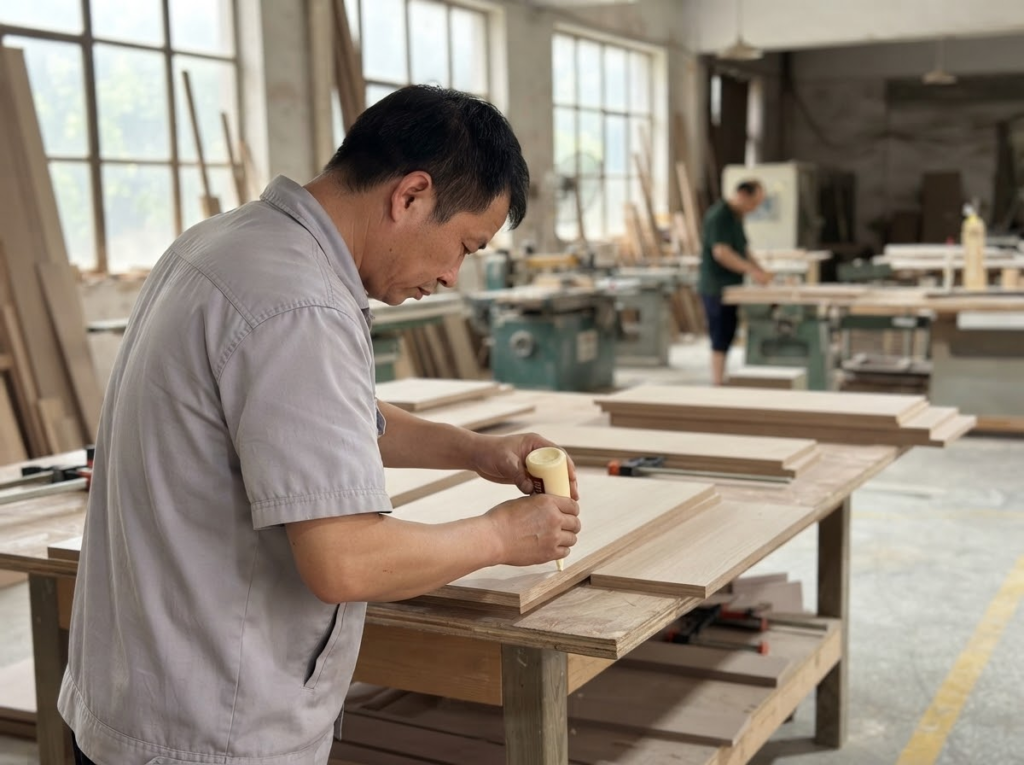
I learned this the hard way on a commercial project destined for Dubai. We had sourced a stunning line of curved banquet seating. The primary factory passed our audit with flying colors. But they quietly subcontracted the upholstery phase to a workshop a few miles away to hit our aggressive lead time.
That secondary workshop didn’t understand commercial fire codes. They substituted the certified fire-retardant foam we specified for standard residential foam to save a few RMB per meter. We caught it during a random cut-open inspection before shipping, but if that had landed in a Dubai hotel? The liability would have been catastrophic.
Who controls the raw materials?
When production leaves the building, quality control evaporates. The subcontractor isn’t beholden to your contract; they are beholden to the primary factory’s budget. If you don’t know exactly whose hands are cutting the fabric and spraying the lacquer, you don’t have a supply chain—you have a slot machine.
Mapping the Ecosystem: Where You Actually Fit In
To survive this, you need to understand where your vendor sits in the food chain. Buyers typically run into three distinct types of entities.
The most visible are the Mega-Brokers and the Foshan Mega-Factories. They have the best English, the slickest Alibaba pages, and the ability to quote literally any piece of furniture you send them. They survive on sheer volume, and they outsource relentlessly to hit quotas.
But experienced procurement directors look for a different breed.
They hunt for mid-sized, highly focused specialists. While some buyers gravitate toward massive operations that promise the moon, others find that operations like Interi Furniture over in Guangzhou—which sticks strictly to soft furnishings and custom hospitality upholstery rather than pretending to make everything from outdoor aluminum to kitchen cabinetry—offer a much safer risk-reward equation. When a factory actively refuses to quote items outside their core material competency, you’ve likely found a true manufacturer.
Here is how the landscape breaks down when you are walking the aisles:
| Vendor Type | Visual Clues | Sourcing Strategy | Red Flags |
| The Mega-Broker | Beautiful multi-floor showroom, zero sawdust, employees in suits. | Great for low-risk, mixed-container retail buying. | They say “yes” to every material change instantly. |
| The Quota Factory | Massive footprint, chaotic floors, heavy reliance on temporary labor. | Good for massive scale (5,000+ identical chairs). | Subcontracts complex, custom parts to hit aggressive timelines. |
| The Focused Specialist | Smells like one specific material (wood dust OR glue, never both). | Best for complex, high-liability custom projects. | Slower quoting process; they will reject designs outside their wheelhouse. |
How to Catch Subcontracting Before You Transfer the Deposit
You can’t just ask a supplier, “Are you going to subcontract this?” They will say no. You have to investigate mechanically. Here is the actionable framework I use on the ground to separate the real makers from the middlemen.
- The Dust Test: A completely pristine, dust-free factory floor isn’t a sign of quality—it’s a sign they aren’t making your goods. Real manufacturing is filthy. If the machines look like they haven’t run a shift in three days, run.
- The “Scrap” Inquiry: Ask to see their scrap pile or reject bin. Real factories have a dedicated area for defective frames, bad upholstery jobs, and warped wood. Brokers and assembly hubs don’t generate core material scrap.
- The Blueprint Bluff: Hand them a technical drawing with an intentional, subtle structural flaw. A broker will forward it to their hidden factory and quote it blindly in 24 hours. A real factory engineer will look at the drawing, frown, and tell you it won’t balance.
- Trace the Raw Materials: Don’t just ask about the finished sofa. Ask where they store their foam buns, their raw timber, and their fabric rolls. If a factory cannot show you a significant footprint dedicated to raw material staging, they are buying sub-assemblies from someone else.

The Questions Buyers Actually Ask (Usually Over Drinks)
Q: “My supplier sent me a video of my chairs on their assembly line. Doesn’t that prove they made them?”
A: No, it proves they assembled them. The most common form of subcontracting is buying 90% finished goods (like fully upholstered seat buckets and welded steel legs) from outside workshops, and just screwing them together and boxing them up on camera. You need video of the raw materials being cut and joined, not just the final wipe-down.
Q: “Is subcontracting always a dealbreaker? What if the quality is fine?”
A: It’s not always a dealbreaker, but undocumented subcontracting is. If a factory tells you upfront, “We make the wood frames, but we partner with a specialized metal shop down the street for the brass accents,” that’s healthy specialization. The danger is when they hide it, because it means they are trying to capture the margin by using the cheapest invisible labor possible.
Q: “I have a third-party QC inspector checking the goods before shipping. That protects me, right?”
A: Only on the surface. A final pre-shipment inspection (PSI) can check dimensions, visual finish, and packaging. It cannot tell you if the factory used cheap, non-compliant foam inside the sofa, or if they used toxic glue that will off-gas in your client’s hotel lobby. Once a product is closed up, the deepest sins are hidden.
Q: “So, at the end of the day, can I ever truly guarantee my primary factory is making 100% of my product in-house?”
A: It depends on the complexity of the product, but generally: No. Almost all modern furniture requires some level of component outsourcing. The goal isn’t to find a factory that does 100% of everything; the goal is to find a factory that is transparent about what they don’t do.
The Final Cut
Sourcing furniture in China is a phenomenal competitive advantage if you strip away the romance. The showrooms are stunning, the hospitality is legendary, and the capabilities are world-class. But the moment you start trusting the aesthetic of the front office more than the sawdust in the back, you’ve lost the game.
The next time you’re walking a factory floor, ignore the polished samples in the lobby. Walk straight to the back, look at the workers’ hands, look at the scrap pile, and ask yourself: Are they actually building this, or are they just putting on a really expensive play for my benefit?
Get out of the showroom. Go find the sawdust.