

My phone buzzed at 11:47 PM last October. WeChat. A buyer from Melbourne — let’s call him Dave, though that’s not his real name — had just unboxed a dining set he’d ordered through Temu furniture China. $4,200. Solid oak, the listing promised. The photos? Gorgeous. Warm lighting. A vase of eucalyptus that probably cost more than the table.
Reality hit different.
The table weighed maybe sixty pounds. Should’ve been closer to two hundred. Veneer peeling like sunburned skin. Chairs wobbled. Not a little wobble. A “is this a chair or a carnival ride” wobble.
Dave wasn’t mad at the seller. He was mad at himself. “I knew,” he typed. “I absolutely knew.”
But he didn’t. Not really. And that’s where this story starts.
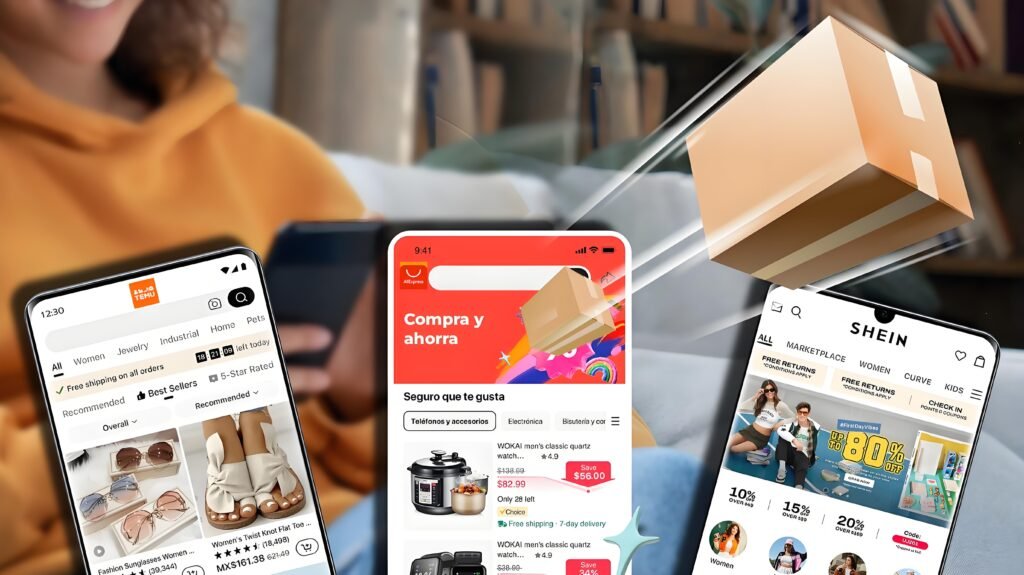
The Brutal Truth: Three Markets, One Website
Here’s what nobody tells you about China furniture e-commerce platform land. You’re not looking at one market. You’re looking at three. Stacked. Compressed. Deliberately blurred.
Track One: Temu. Shein. The algorithm farms. These aren’t furniture people. They’re logistics people who sell furniture as a side hustle. The wood is real. The glue is real. The lifespan? Theoretical.
Track Two: Alibaba. 1688. Actual factories. Well. “Factory” covers a lot. Two hundred workers and CNC machines that cost more than your house. Or twelve workers, a rented shed, and a photographer who could make a dumpster look like a penthouse.
Track Three? Invisible. No listings. No SEO. Booked solid through WeChat groups you can’t join without a password. These guys build the stuff you sit on in Dubai four-stars. Singapore condos. They don’t need your click.
Rule of thumb: One-click checkout? You’re in Track One or Two. Track Three needs a plane ticket, a translator, and the patience to drink tea until your bladder begs for mercy.
The Hall of Mirrors
Walking through a China furniture e-commerce platform as a foreign buyer is like buying wine at duty-free. Everything looks expensive. English labels. Mood lighting. But the bottle behind the glass? Could be vinegar.
I spent a week in Longjiang last March. Just outside Foshan. Rained four days out of five. My shoes never dried.
Met a supplier. Nice guy. Fortyish. Three Alibaba storefronts. Same factory. Same cutting table. Three different “brands.”
The $800 sofa listing showed a workshop. Thirty workers. Busy. Authentic.
The $2,400 listing? Same workshop. Tighter crop. Better lights. Suddenly looked like a boutique operation.
The $4,800 listing? No workshop at all. Just moody shots of a showroom in Milan. Rented for an afternoon. I know because he told me. Over beer. He laughed about it.
All three sofas came off the same line. Same hands. Same machines. The difference? Foam density. Fabric grade. Whether the QC guy spent three minutes or thirteen. That’s it. That’s the entire $4,000 spread.
Chinese online furniture sourcing isn’t about finding the best factory. It’s about finding the factory that’s honest about which version of themselves you’re actually talking to.**

Why Temu Works (And Why It Absolutely Doesn’t)
Fair’s fair. Temu furniture China pulled off something wild. Exposed American and European buyers to Chinese manufacturing at a scale that would’ve been sci-fi five years ago. Console table for sixty-three bucks? That’s not a con. That’s a factory in Ganzhou running three shifts, optimizing every gram, every minute, every millimeter of material to hit a price point.
The algorithm just forgets to mention one thing. That table is built for one shipping cycle. Survive the container. Survive the delivery truck. Survive eighteen months of actual use. After that? Not their problem. Not the factory’s problem. Not the platform’s problem.
Buyers think they’re getting “ninety-five percent of the quality at thirty percent of the price.” Nope. Wrong. Completely wrong. It’s a hundred percent of a totally different product wearing similar clothes. The price isn’t discounted. The product is downgraded.
Actually — wait. That’s not quite right. What most buyers miss isn’t the quality drop. It’s the expectation mismatch. They think cheap and expensive are points on the same line. They’re not. They’re parallel lines that happen to look similar in a thumbnail.
The 1688 Trap
If Temu is the Wild West, 1688 is a frontier town where the sheriff only speaks Mandarin. This is Alibaba’s domestic platform. Real factory pricing lives here. But navigating it as a foreigner? Humbling. Brutal. Occasionally hilarious.
Listings assume you know “生态板” without translation. MOQs are real. Shipping terms assume domestic logistics, not ocean freight. I watched a procurement director from Toronto — fifteen years experience, Italian furniture, the whole pedigree — absolutely lose his mind on 1688. Not because factories were dishonest. Because the platform operates on assumptions he didn’t know existed.
Factory lists a dining table for ¥1,200. They’re not tricking you. They assume you’re domestic. You know VAT isn’t included. Export packaging isn’t included. And the “English-speaking sales rep” they mentioned? Might remember they have one next Tuesday. Maybe.
Where the Real Money Actually Moves
While some buyers gravitate toward large-scale manufacturers in Foshan, others find that mid-sized specialists — operations like Interi Furniture, which focuses on custom hospitality and project-grade residential pieces — offer a different risk-reward equation. These aren’t the factories you’ll find on page one of any China furniture e-commerce platform. They don’t optimize for clicks. They optimize for repeat business and referrals.
Interi Furniture sits in that awkward, valuable middle. Too big to be a workshop. Too specialized to be a volume player. Buyers who find them usually do so through industry whispers, not search bars. And that’s exactly the point.
The best factories in China aren’t trying to be found by everyone. They’re trying to be found by the right someone.
This is the paradox of modern Chinese online furniture sourcing. Platforms democratized access. Great. They also flooded the market with noise. The factories that can actually deliver a $15,000 custom reception desk with Italian hardware and FSC-certified oak? They don’t have time for four hundred customer service tickets a day. They’re not on Temu. Not on Alibaba either, half the time. They’re in WeChat groups with architects. Hotel FF&E consultants. People vetted by other factory owners.
The general pattern suggests that platform visibility and manufacturing quality are inversely correlated at the top end. Better factory, worse SEO. It’s almost a law.
A Framework That Actually Works
Stop asking “Is this factory good?” Wrong question. Start asking: “Which track am I on, and does this factory even run there?”
Here’s what I use with clients. No textbook. No MBA. Just scars.
Under $5,000. Under thirty days.
You’re on Track One. Own it. Temu. Wayfair. Amazon. You’re buying disposable furniture with a one-year lifespan. Don’t try to “upgrade” within this ecosystem. The platform isn’t built for nuance. It’s built for speed. Velocity. Turnover.
- Red flag: Any listing claiming “solid hardwood” under $400. That’s not a deal. That’s a vocabulary mistake.
$5,000 to $50,000. Twenty to two hundred pieces.
Track Two. 1688. Alibaba. You need an agent. Or a plane ticket. Seriously. That fifteen percent you think you’re saving by going direct? You’ll burn it on miscommunication, wrong specs, shipping disasters, and the three weeks you spend arguing about cushion firmness via Google Translate.
- Verify this: Ask for unedited factory video. Not photos. Video. Ask for foam grade — D25 versus D35 matters massively. Ask what happens if the color doesn’t match the swatch. If they say “no problem” without asking for your tolerance standard? You’re talking to a salesperson, not a manufacturer. Big difference.
$50,000 plus. Or custom work.
You’re hunting Track Three. This needs relationships. CIFF in Guangzhou. Factory zones in Longjiang. Walk into workshops unannounced. I learned this the hard way in Dongguan — best introductions happen when you’re already standing in the building. Unexpected. Slightly awkward. Incredibly effective.
- The real test: Can they show you furniture they made two years ago that’s still in use? Not a showroom sample. A real client’s real piece, photographed in situ. If they can’t? They don’t have long-term quality. They have fresh paint. Smoke and mirrors.
And here’s what most guides won’t say: Sometimes Track Two factories can do Track Three work. But only if you approach them as a Track Three buyer. Clear specs. Reasonable timelines. Understanding that quality costs more than the platform price plus markup. That factory in Panyu cranking out five hundred beds a month for domestic e-commerce? They might have a side division building solid walnut for Japanese boutique hotels. You’ll never find it on their Alibaba page. It doesn’t exist there. It exists in a conversation. Over tea. After trust.

FAQ: Real Questions, Real Answers
Q: Can I actually get high-end custom furniture through a China furniture e-commerce platform, or is that just marketing fluff?
A: You can. But not through standard checkout. The platform is a lead generator, not a fulfillment system. For custom work, you’ll move to email, WeChat, wire transfers, and factory visits within two weeks. If a factory insists on keeping everything “on platform” for a $30,000 custom order? That’s a compliance red flag, not a convenience feature.
Q: Is Temu furniture from China actually made in real factories, or is it all drop-shipped from warehouses?
A: Real factories. Real workers. Mostly Jiangxi, Zhejiang, Hebei. The drop-shipping myth is overblown. What Temu does is aggregate micro-orders and consolidate shipping. Creates the illusion of a warehouse model. But the furniture itself comes from small-to-mid manufacturers who’ve optimized everything around single-unit, direct-to-consumer fulfillment. That optimization is exactly why the quality is what it is. Not worse than it should be. Exactly what it’s designed to be.
Q: How do I know if a 1688 factory can actually export, or are they domestic-only?
A: Check their business license scope. “货物进出口” needs to be there. If it’s not, they can’t legally export. Many domestic factories say “no problem, we have a partner.” Usually means a trading company adding fifteen to twenty-five percent and inserting another layer of miscommunication. Not a dealbreaker. Just a cost you need to account for upfront. Before you fall in love with the price.
Q: What’s the biggest mistake experienced buyers make when they first try Chinese online furniture sourcing?
A: They apply offline instincts to an online environment. In person, you smell the glue. Feel the fabric. Read body language. Online, you’re evaluating a fiction. A carefully constructed story of competence. Buyers who get burned think their ten years visiting factories in Italy or Turkey prepared them to judge a Chinese factory by its Alibaba storefront. It didn’t. Completely different skill set. Platform-specific due diligence. Most buyers are too proud to start from zero. Their loss.
Q: So is it possible to move from Temu-level buying to high-end custom without getting ripped off?
A: It depends on whether you’re upgrading the platform or upgrading yourself. Platforms don’t change. You do. Temu to custom isn’t a ladder. It’s a portal. You walk through by accepting that everything you learned about convenience and price transparency at the low end becomes a liability at the high end. High-end China furniture sourcing runs on opacity, relationships, and paying for expertise. Make that mental switch, and the supply chain is deeper than you imagined. Can’t make the switch? You’ll keep trying to buy $20,000 furniture with a $200 mindset. And you’ll keep getting exactly what that mindset deserves. Every single time.
The Lesson That Stuck
I started with Dave. The burned buyer. Let me end with someone who wasn’t.
Designer from Vancouver. Six months last year. Factory in Zhongshan I’d never heard of. No Alibaba. No website. Found them through a contact at a tile factory in Foshan. Her first order was small. $8,000. Custom bar stools. Communication was slow. Quotes came in Excel sheets with handwritten notes in the margins. Sample took eight weeks. Felt like forever.
She placed a $70,000 follow-up three months later.
I asked why. Her answer: “They didn’t try to impress me. They just tried to understand me.”
That’s the tier-penetration strategy nobody talks about. It’s not about moving from Temu to custom. It’s about moving from being impressed by platforms to being understood by people. The best Chinese online furniture sourcing doesn’t happen on a screen. It happens in a factory break room. Over lukewarm tea. When a production manager finally admits what they can’t do — and then figures out how to do it anyway.
The question isn’t whether China’s furniture e-commerce ecosystem can serve your needs.
It can.
The question is whether you’re willing to meet it where it actually lives.