

I was in Shunde, Foshan, last October. Hotel lobby. Beer cost twelve yuan, lukewarm as dishwater. Phone buzzed at 11:47 PM. Melbourne buyer on the line. “Inspector says PASS. Release balance?”
I’d just walked a factory floor. Three hundred forty thousand dollar hotel order. Crates stacked floor to ceiling, shrink-wrapped, ready for port. Inspector’s report sat in my inbox. Eight pages. Forty-seven photos. Every single box green.
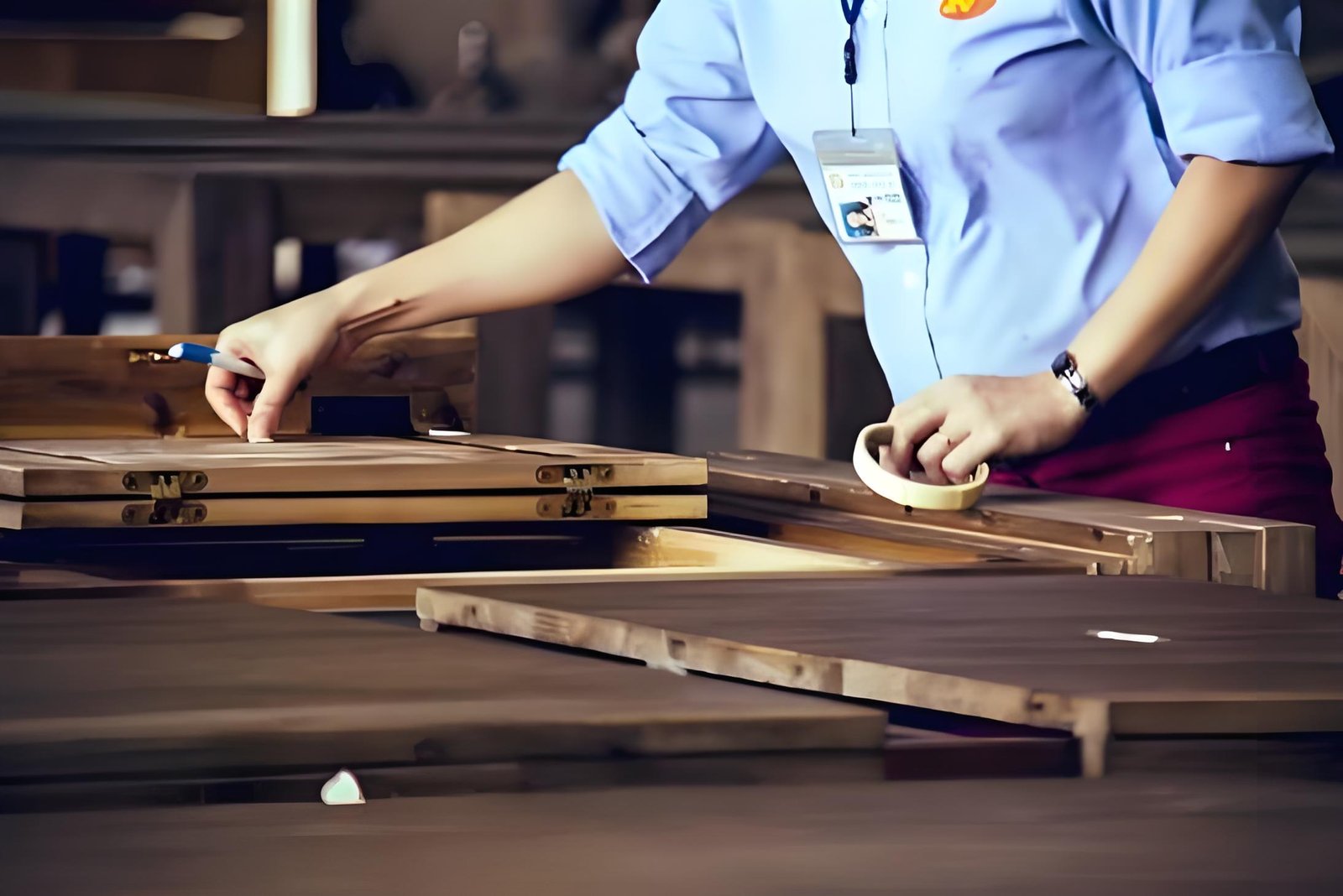
I walked back to loading bay. Asked foreman to pop open crate 7. King-size headboard inside. Hairline crack running six inches along veneer seam. Inspector had photographed it. Called it “minor surface irregularity.” Still ticked PASS.
That’s the moment it hits you. This whole game isn’t about finding perfect furniture. It’s about deciding which flaws you’re willing to pay for twice.
The Brutal Truth Nobody Puts on LinkedIn
Most third-party inspectors in China aren’t stupid. They’re conflicted. The inspection agency wants repeat business from factory. Inspector wants to catch 5 PM train back to Guangzhou. Factory manager knows exactly which crate to open for “random” sample.
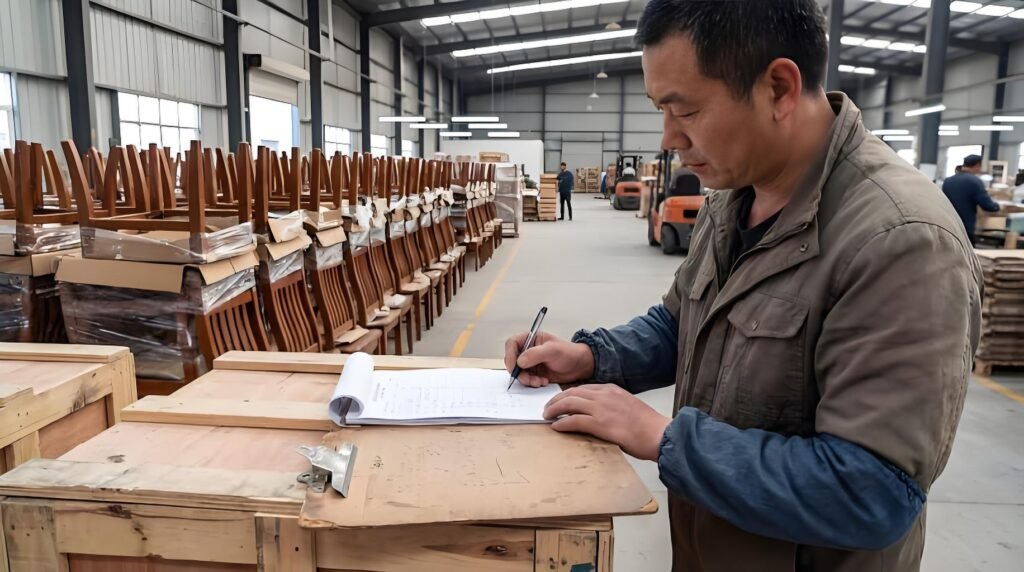
Here’s my rule of thumb: inspector spends less than four hours on 40-foot container? He didn’t inspect anything. He performed.
A real China furniture pre-shipment check is forensic work. Not a photo shoot. Most buyers treat it like box-ticking because logistics clock is ticking, hotel opening is 90 days out, factory’s already pushing next order. Pressure to say “ship it” is crushing. I’ve watched procurement directors sign off on containers they knew were dodgy. Alternative—delay, renegotiation, angry project owners—felt worse than risk of a few bad pieces.
But a defective headboard in a hotel room? Doesn’t get a bad review. Gets photographed by guest with 80,000 Instagram followers. Your “minor surface irregularity” becomes a brand crisis overnight.
What “Inspection Passed” Actually Means (Spoiler: Not Much)
Let’s decode the language. Report says PASS under AQL 2.5? Sampled units fell within statistically acceptable defect limits. That’s it. Doesn’t mean your container is good. Means the sample was acceptable.
And furniture? Defects cluster. By production batch. By shift. By humidity level on a given Tuesday. That statistical comfort? Dangerously misleading.
Think restaurant health inspection. Inspector walks in, checks walk-in fridge, glances at prep station, leaves. Restaurant gets A grade. That night, 200 people eat the fish. Morning, 40 are sick. Inspection was technically correct. System was fundamentally broken.
Chinese factory final inspection protocols were designed for widgets, not 200-pound oak tables that warp in transit because wood moisture was 14% leaving kiln. Standard checklist—visual defects, dimensions, quantity, packaging—misses variables that actually destroy furniture: internal joinery, wood chemistry, foam density breakdown, stress fractures that only show after 28 days in humid container.
The Hidden Killers Your Checklist Won’t Catch
Moisture: The Silent Assassin
I learned this in Dongguan. Hard way. Container of solid walnut dining chairs arrived Denver, January. Beautiful pieces. Factory inspection: PASS. Third-party: PASS. Six weeks later, six chairs split along grain. Wood moisture was 12% when shipped. Denver winter humidity? About 25%. Wood dried, contracted, cracked itself open like an overripe melon.
Handheld moisture meter? Forty bucks. Inspector should take three readings per unit: joint, panel face, base. Average exceeds 8%? Don’t ship. Period. Yet I’ve seen reports where this check is “not applicable.” Inspector didn’t bring meter. Or factory “lost” the battery. (Convenient, that.)
Most factories know their wood is wet. Ship anyway. Kiln-drying to 6-8% takes extra week they don’t have. Buyers don’t know to ask because checklist their inspector uses was copied from some 2012 Alibaba blog post.
The Glue vs. Staple Trap
This one makes me genuinely angry. Most common hidden defect in Chinese furniture manufacturing? Substituting glue-and-dowel joinery with single pneumatic staple. Standard practice in high-volume Foshan production lines built for speed, not longevity. Staple-only corner block pulls loose under normal use within months. Result? Wobbly table. One-star review. Return request. Customer never buys from you again.
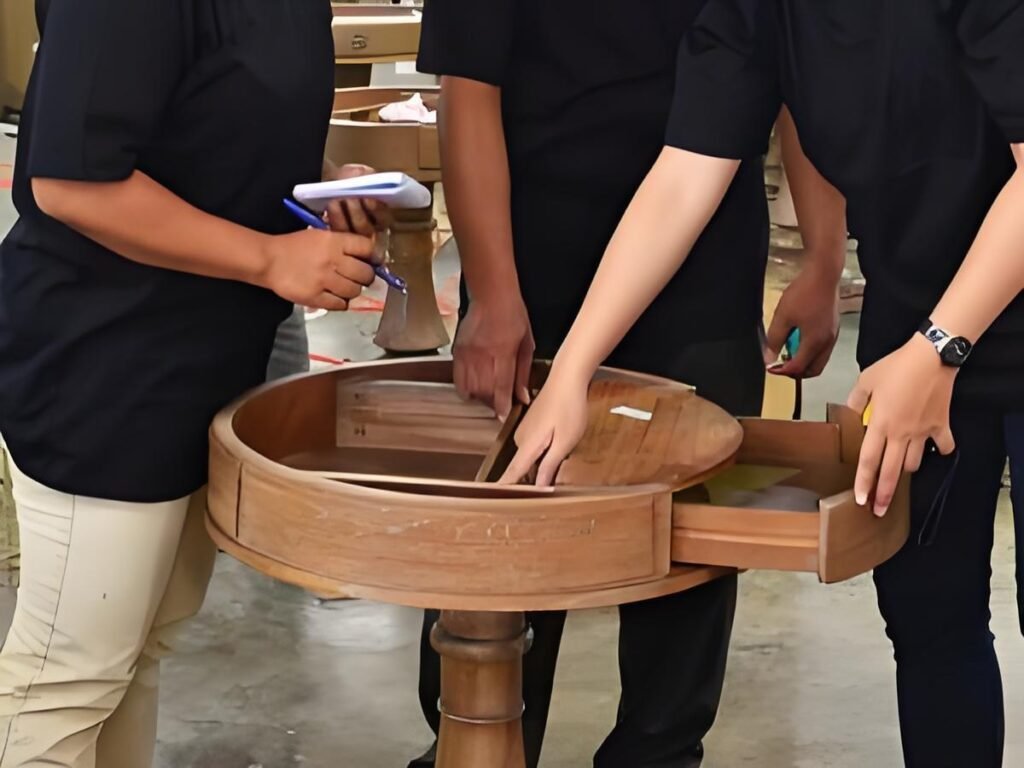
Your China furniture pre-shipment check must explicitly mandate checking internal joinery. Not just visible finish. Inspector should disassemble at least 20% of random sample units to expose hidden joints. Factories push back because it slows packing line. That pushback? Red flag. Factory confident in its construction doesn’t flinch when you ask to see inside carcass.
The Packaging Lie
Furniture can pass every product check and still arrive destroyed if packaging fails. I’ve opened containers where marble tabletops packed against metal legs with nothing but thin foam sheet between them. Foam compressed in transit. Metal won. Result: eighteen thousand dollars of scratched stone. Factory blamed “rough handling at port.” (Yeah, right.)
Proper packaging inspection isn’t just checking carton strength. It’s simulating the journey. Drop packed carton from waist height. Corner crushes? Your container will look like that after first crane lift. Check heavy parts don’t rub against finished surfaces. Verify hardware bags secured so screws don’t migrate through carton and scratch everything they touch. I’ve seen screws punch through foam and gouge ten table tops because someone used cheap tape on the hardware bag.
Why Some Factories Get It Right (And Most Don’t)
Not every factory is cutting corners. Difference usually comes down to whether quality is managed by process or only checked at end. Operations that conduct trial assembly before mass production, patrol floor during shifts, inspect first packaged unit before batch packing begins—these ones ship containers you can trust.
While some buyers gravitate toward large-scale manufacturers in Foshan, others find mid-sized specialists offer different risk-reward equation. Operations like Interi Furniture, based in Panyu, Guangzhou, with additional manufacturing in Foshan, focus on high-end custom contract furniture for hotels and hospitality. They build model around project evaluation meetings before production begins, supervisors from every team review production process for each item. Not revolutionary. But rare. Most factories skip this step because it costs half day of management time. Interi treats it as non-negotiable. Whether that translates to fewer defects at your loading bay depends on your specific product category and how aggressively you verify claims on ground. No factory gets free pass because website looks professional.
Ship, Hold, or Rework? My Decision Framework
Here’s practical tool I use. No jargon. No scoring matrices. Just questions that force binary answer.
Before you even open inspector’s report, ask yourself:
Did inspector spend at least four hours on-site for single container? (If no, report is decorative.)
Did he open sealed cartons from production line, or did factory “helpfully” pre-open samples?
Was moisture meter used on wood products, readings documented with photos?
Did he disassemble any units to check internal joinery?
Was packaging tested with drop or compression simulation?
Red flags that contradict conventional wisdom:
Factory is too cooperative about inspection timing. Eagerness usually means they’ve pre-curated sample pool.
Inspector’s report contains zero “minor” defects. Real inspection always finds something. Perfect reports are fiction.
Packaging photos show pristine white foam. In real factory, that foam is dusty, scuffed, reused from last order.
If you find defects, decision tree is simple. Critical defects—safety, structural failure, wrong material—hold shipment. Don’t negotiate. Demand rework and reinspection. Major defects—visible finish flaws, missing hardware, dimensional errors—sort, rework, or discount. But only if defect rate is isolated to specific batch. Minor defects—cosmetic marks in hidden areas, slight carton scuffing—document and accept intentionally. Don’t ignore without checking scope.
Wait. Actually, that’s not quite right. What most buyers miss? “Minor” defects have habit of clustering. One scratch in carton is chance. Five scratches across three cartons is process failure. Pattern matters more than individual mark. Always.

FAQ: What Buyers Actually Ask (And What I Tell Them)
Q: My inspector gave PASS, but I’m nervous. Should I still ship?
A: Depends what was actually checked. PASS based on visual finish and carton count means almost nothing. PASS based on moisture readings, disassembly checks, load testing, packaging simulation means something. If you can’t tell difference from report, hold shipment and ask for specifics. Or rather, problem isn’t factory, it’s expectation that single word—PASS—absolves you of due diligence. Sometimes a furniture shipping hold China buyers implement is the smartest move they make all year. I’ve seen buyers save entire projects by refusing to release that container seal.
Q: How much should proper pre-shipment inspection cost?
A: Foshan factory, third-party inspection typically runs three hundred to five hundred dollars per man-day. One day covers statistically valid sample for most container loads. That’s roughly 10 times cheaper than paying return freight and replacement costs from 2% defect rate on 1,000-unit shipment. Cheap inspections are most expensive thing you’ll ever buy. Penny wise, pound foolish.
Q: Can I just rely on factory’s own QC team?
A: Only if you’re willing to bet your reputation on their incentive structure. Factory QC works for factory. Their bonus depends on shipping on time, not catching defects that delay shipping. Plus, they check under factory fluorescent lighting, not under 500-lux living room lamp where your customer will notice ripple in finish.
Q: What’s one check most buyers skip that costs them most?
A: Wood moisture content for solid wood shipments, and hardware completeness for flat-pack furniture. Missing screw pack means 100% customer assembly failure. Wet wood means warping, cracking, returns within 30 days. Both preventable with forty-dollar meter and 10-minute count. Ten minutes. That’s it.
Q: Should I be present for inspection myself?
A: Order over fifty thousand dollars or first time with supplier? Yes. Your presence changes factory’s behavior. Not because they’ll try harder, but because they can’t curate experience as easily. Plus, you’ll learn more in four hours on factory floor than in four years of video calls. Trust me on this one.
The Hard-Earned Lesson
After fifteen years walking factory floors from Longjiang to Anji, from Nankang to Dongguan, here’s principle: The container seal is not finish line. It’s starting gun. Everything after that—transit, customs, warehousing, final delivery—is just amplifying whatever quality you locked in at factory gate.
A furniture shipping hold China importers use isn’t sign of failure. It’s sign of professional discipline. Buyers who sleep well aren’t ones with perfect suppliers. They’re ones who know exactly which imperfections they accepted, documented, priced in. And ones who had guts to stop container when data said no.
Inspector’s green checkmark? Starting point for conversation, not end of one. Real question isn’t whether your furniture passed inspection. It’s whether you know what was actually inspected—and whether you’d bet your next project on it.
Because that Melbourne buyer? He shipped. Headboard cracked. Guest posted. “Minor surface irregularity” became fifty thousand dollar reputation repair job. Inspection report still said PASS. Furniture didn’t care what report said. It just cracked.