


Let me tell you about Mike. Not his real name, but the story is. Three years back, we’re in Foshan, inside this massive showroom that reeks of fresh lacquer and broken air conditioning. Outside it’s 38 degrees. Inside, the AC’s gasping. Mike — procurement guy for a Florida hotel chain, maybe forty rooms, nothing fancy — has been sitting there for two hours looking at dining chairs. Solid oak, PU leather, commercial foam. The factory owner’s kid, speaks English like he went to school in London, finally pushes the paper across: $42 a chair, FOB Shenzhen, 300-piece minimum.
Mike doesn’t blink. Doesn’t haggle. Doesn’t even touch the paper.
He stands up, shakes the kid’s hand, says “thanks for your time,” and walks straight for the elevator. The kid follows him out, smiling but sweating way more than the heat justifies. By the time Mike hits the lobby, his phone buzzes. New quote: $28. Same chair. Same foam. Same port. Nothing changed on the spec sheet.
That’s the walk away. And if you’re still doing this dance over polite email threads, you’re basically donating money to factory owners.
The Brutal Truth
Here’s the part nobody wants to hear. The first price is a lie. Not a mistake. A lie. A probe. A dare.
Chinese furniture pricing runs on an unspoken rule: pad the first quote because the buyer’s supposed to walk. Industry observers estimate that opening numbers in Foshan and Dongguan carry 25% to 40% of pure air. The factory isn’t cheating you. They’re testing you. And if you don’t walk, you just paid for their new CNC router.
Want the real gut punch? The buyers who land the best deals aren’t the ones ordering thousands of units. They’re the ones who can stand the silence.
Key Takeaway
- China furniture pricing isn’t about what the chair costs to make. It’s about what the factory thinks you’ll pay.
- That first quote? A test. Always.
- Walking away physically does something no counteroffer can — it triggers panic.
- Your real leverage isn’t volume. It’s your ability to let the deal die.
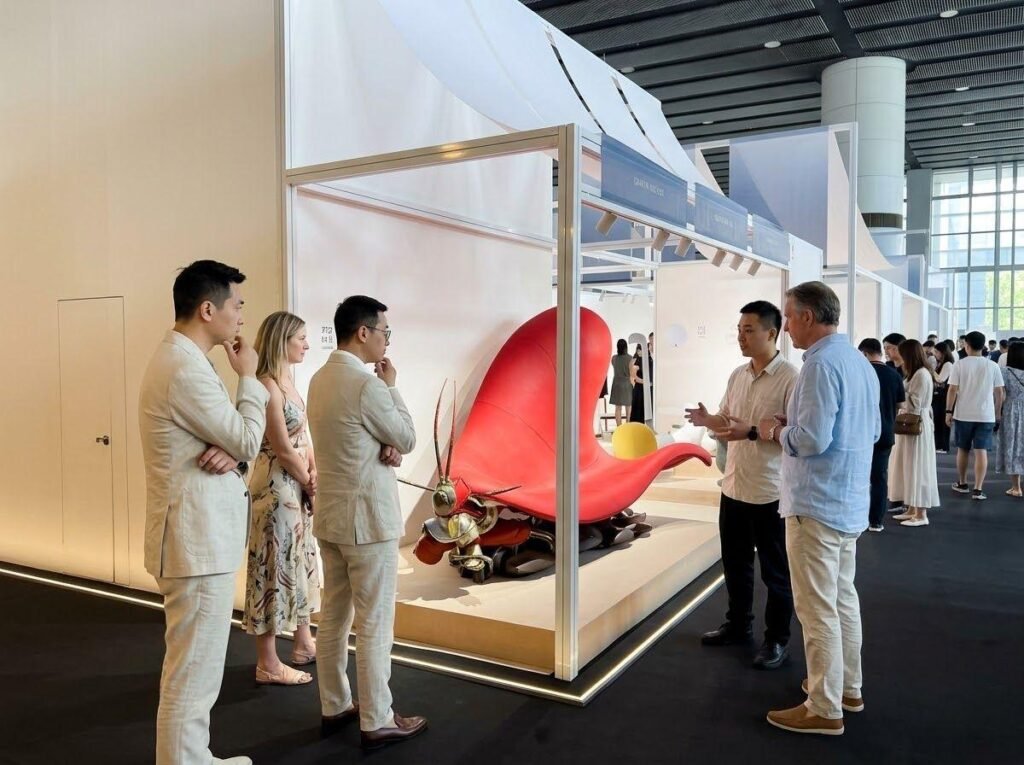
Why Walking Away Beats Every Counteroffer You Could Write
Counteroffers are polite. Walking away is primal. And factories — ISO certificates and all — are run by people who hate losing face.
Think poker. (And yeah, I’ve lost enough money in Guangzhou hotel lobbies to know this analogy hurts.) You don’t win by laying your cards out and explaining your budget. You win by convincing the other guy you’re leaving for good. A counteroffer says “I’m still here, but I want a deal.” Walking away says “I’ve got three other factories and I already forgot your name.” That changes everything.
So what IS that first quote, really?
It’s not cost-plus. It’s expectation-plus. In my experience, roughly 70% of first-time buyers in Longjiang take the opening number or haggle it down 5%. Which is exactly what the factory planned. They baked in 30%, let you “win” your 5%, and laughed all the way to the bank while you flew home feeling like Wolf of Wall Street.
Actually, wait. That’s not even the worst part. The worst part is this: factories don’t want you to accept the first price. If you do, they get suspicious. Is this guy clueless? Is he billing his client 400% back home? Did he not even visit the competition? A buyer who takes the opening number makes the vendor nervous. They’d rather you walk. Then they chase you.
The factory floor psychology
Factory owners in Shunde have this saying — I’ve heard it over too many lukewarm factory lunches, always in broken English: “The buyer who talks most, pays most.” Chatter is weakness. Asking about delivery dates before you’ve even fought over price? You’re already committed in your head. Getting deep into wood species and finish options before the number is settled? That’s not thoroughness. That’s a green light to hold firm.
But silence — real silence, or better, absence — that hits different. The sales rep’s commission is on the line. The owner’s quarterly numbers are scribbled on a whiteboard in the back office. And here’s what most Western buyers forget: these factories run on paper-thin margins and insane volume. One 300-piece order won’t break them. But losing three in a row because the guy down the street undercut them by three bucks a chair? That keeps people awake.
Walking away works because it weaponizes the factory’s fear of being forgotten.
Where You Are Changes Everything
Not every factory cluster plays by the same rules. Your location is half your leverage. Same chair, different city, totally different psychology. It’s like real estate — the house doesn’t change, the block does.
| Location | What’s There | First-Quote Fat | Walk-Away Hit Rate | The Reality |
|---|---|---|---|---|
| Foshan (Lecong) | Giant showrooms, export machines, high volume | 30–40% | High | They EXPECT you to walk. It’s part of the ritual. |
| Dongguan | Mid-size OEM shops, tighter operations | 15–25% | Moderate | Less padding, but their “quality” claims are harder to shake. |
| Longjiang (Shunde) | Family shops packed tight, cutthroat | 35–45% | Very High | They will literally chase you to your car. Competition is brutal. |
| Anji (Zhejiang) | Chair specialists, lower overhead, hungry | 20–30% | High | Callbacks often come within hours, not days. |
| Nankang (Jiangxi) | Solid wood mix, domestic + export | 25–35% | Moderate | Less used to Western buyers bouncing. |
Foshan vs. Dongguan — who blinks?
Foshan vendors are professionals. They’ve seen every buyer archetype — the eager designer, the paranoid procurement officer, the “I’ll send my guy” ghost. When you walk in Lecong, they don’t panic. They wait. Twenty-four hours. Maybe forty-eight. Then they come back with a number that actually means something. Patience wins here.
Dongguan’s a different animal. Those factories often feed Japanese and Korean markets with tighter specs and slimmer margins. Their first quote might only have 15% fat. Walk away from Dongguan and you might hear crickets — not because they’re arrogant, but because they genuinely can’t go lower without swapping your oak for something that splinters. The strategy still works, but the drop is smaller and the risk of quality fade is real.
The Longjiang chaos factor
Longjiang is where this gets almost funny. I’ve seen buyers get into a taxi and have the factory owner’s nephew tap on the window with a revised quote scribbled on a receipt. Two hundred chair factories crammed into one square mile. You walk out of one showroom, you’re walking into another. They know it. They blink first. Almost always.
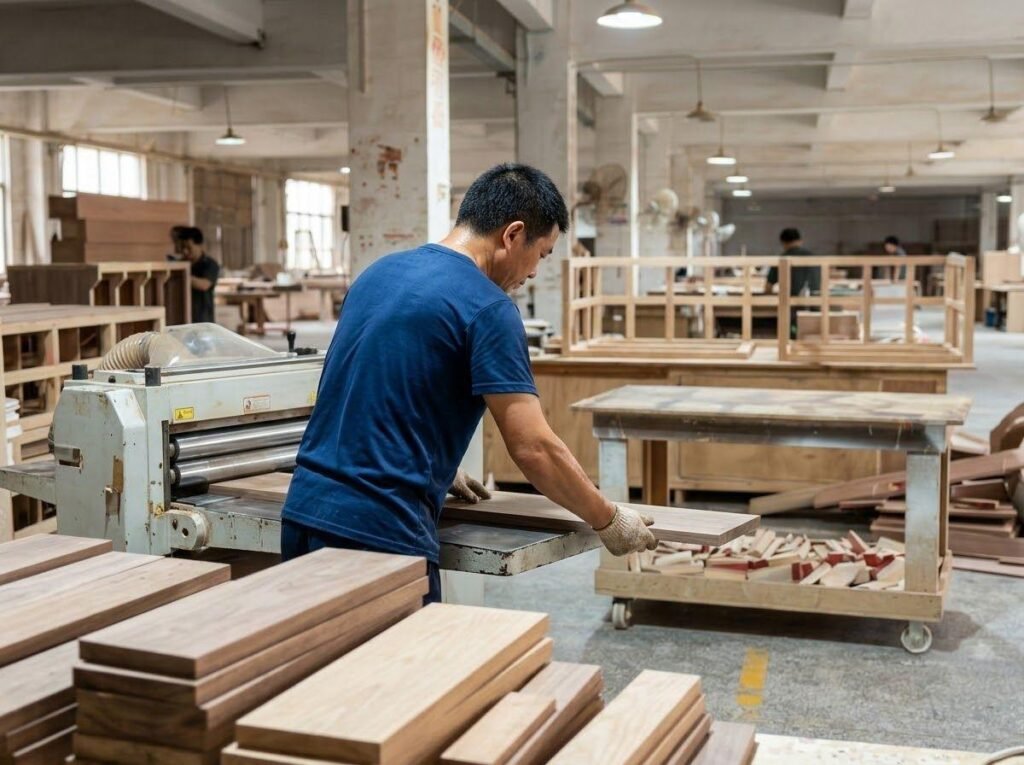
Timing Is the Lever Nobody Talks About
You can execute a perfect walk away in the wrong month and get nothing. Factories run on cash-flow seasons that have zero to do with your hotel opening date.
After Canton Fair — April and October especially — factories split into two camps: slammed or starving. No middle ground. If they booked six months of orders during the fair, your walk away gets you a polite “best wishes” and radio silence. If they came back empty, you’ll get a revised quote before your Uber clears the highway.
Late January is the other window. Factories need cash before Chinese New Year. Workers want their annual bonuses. The owner needs to clear inventory to make the books look pretty. A buyer who walks in mid-January holds more power than the same buyer in June, guaranteed.
Now, while some buyers chase the big names in Foshan, others find that mid-sized specialists — operations like Interi Furniture, which does a lot of custom hospitality and residential casegoods — play a different game. Their pricing tends to be more upfront from the first handshake, which means walking away gets you a smaller percentage drop but also way less theater. You trade the adrenaline of a 30% cut for the relief of knowing the floor price was real from day one.
The best time to walk? When the factory’s calendar is against them, not yours.
The Walk Away Playbook
This isn’t about being a jerk. It’s about being sharp. Use this. Don’t overthink it.
Before you land
- Lock down three comparable factories in the same cluster. Not bluffs. Real alternatives.
- Set your real max price in your head. Never say it out loud.
- Bring physical samples or a hard spec sheet. Vendors respect buyers who know their product cold.
In the showroom
- Let them pitch fully. Don’t jump to price.
- When the quote hits the table, pause. Count to ten. Feels awkward? Good. Awkward silence is a weapon.
- Ask one material question. Then stand up, thank them, and leave.
The exit
- Don’t say “I’ll think about it.” That’s weak. Say: “This doesn’t work for our project right now.”
- Walk slow. Give them time to stop you. But don’t look back.
- If they catch you in the lobby, listen. Don’t commit. Say: “Send me the revised number by 6 PM.”
The follow-up
- Revised quote within 24 hours? You had real leverage.
- Nothing after 48? Call them. Ask if there’s “any flexibility.” You’ve reset as the interested party, but the walk away already happened.
Red Flag — Ignore This and You’ll Regret It
If a factory drops the price before you even reach the elevator — not in the lobby, not by phone later, but literally while you’re still in the building — walk away for real. A vendor who folds on the first exit isn’t desperate. They’re fishing. The real floor is still buried. You’ll spend the next six months chasing quality problems you didn’t know you bought.

FAQ: The Stuff Buyers Actually Ask Me
Q: “I feel like a jerk walking out after they gave me tea and spent two hours on samples. Is this normal?”
A: Not just normal — expected. Chinese factory culture separates hospitality from business. The tea was real. The tour was real. The price test was also real. Walking away doesn’t burn the relationship; it proves you’re not a tourist. The vendors who get offended? Usually the ones hiding the biggest padding.
Q: “How many times can I pull this before they stop calling?”
A: Twice per negotiation. Max. First walk gets you the real opening price. Second walk finds the floor. A third walk means you’re either window shopping or you don’t know what you want. After two exits, close or move on. Longjiang is the exception — some vendors there will chase you four or five times. But even there, know when to stop.
Q: “Does this work for small orders or only full containers?”
A: Works at any size, but the percentage shrinks with the order. Twenty custom pieces might only have 10–15% fat because setup costs are fixed. Five hundred units? That’s where the 30–40% lives. Same technique, different math.
Q: “What if they let me leave and never chase me?”
A: Then you either hit their actual floor, or you weren’t worth their time. Wait 48 hours. Call back. If they won’t budge, you’ve got a real market data point. That quote is probably close to cost-plus. Move on, or take it knowing you tested the wall.
Q: “Can I do this over email or does it have to be in person?”
A: In person is night-and-day better. Email “walk aways” look like tactics. Physical absence looks like lost business. Factories see hundreds of emails. They watch far fewer buyers physically leave their building. If you must do it remote, go silent for 72 hours after the first quote. But honestly? Fly to Foshan. The plane ticket pays for itself on the first container.
Does walking away actually force Chinese vendors to drop prices? Yes — but only if you’re genuinely willing to lose the deal. The second you need that factory more than they need you, the whole thing collapses. In this game, power belongs to whoever can tolerate an empty container.
The Price of Being Liked
I’ve watched buyers sit through three-hour factory dinners, swap WeChat stickers, and shake hands on deals that were 25% above market. They were nice. They were respectful. They were also getting robbed.
The Chinese furniture market doesn’t reward good manners. It rewards clarity. That factory owner buying you dinner? He’s calculating whether you’ll take his test price. Every minute you spend making him comfortable is a minute you’re not making him nervous.
So here’s my question: Next time that quote slides across the table, are you reaching for your calculator — or are you reaching for the door?