

Dave didn’t sit down. He just stood there, in the middle of a 4,000-square-meter showroom in Shunde, Foshan, staring at a walnut credenza. Retail back in Melbourne? $8,400. His phone was already out. “FSC paperwork,” he said. Not a question. A demand.
The sales guy — let’s call him Tony — didn’t even blink. iPad out. Swipe, swipe, tap. PDF. Clean. FSC license number, issue date, the whole nine yards. Dave snapped a photo. Ordered forty units. Invoice came to $109,600. Flew home happy.
Here’s where it gets messy.
That certificate? Real. In the database. Valid license. Meant jack shit about the actual wood inside those credenzas.
I’ve seen this movie maybe two hundred times. Guangdong. Zhejiang. Hell, even out in Nankang, Jiangxi, where they’re cranking out solid wood furniture like nobody’s business. The paper is real. The timber? That’s a whole different conversation. And most buyers don’t even know that conversation exists — not until customs calls, or a competitor drops a dime, or that one email lands from the client asking why the lab test came back wrong.
The Brutal Truth: Your Certificate Is a Receipt, Not a Guarantee
Buyers treat FSC like a hall pass. Flash it, walk in, no questions asked. But in this supply chain? That pass gets photocopied, borrowed, rented, and sometimes faked so well it fools the database itself.
Uncomfortable reality: a factory can have a 100% legit FSC certificate and still ship you illegal timber.
How? Simple. The cert covers the system. Not every plank that rolls through the loading bay. Audits happen once a year. Maybe twice if the cert body is feeling thorough. The other 363 days? It’s paperwork, trust, and whatever the lumber broker felt like delivering that morning. And trust — let me be real with you — is a terrible sourcing strategy.
If you didn’t check the wood before it hit the factory floor, you’re not verifying product. You’re verifying a PDF.
Key Takeaway
- China furniture sourcing means buying finished or semi-finished wood products from manufacturers clustered mainly in Guangdong, Zhejiang, and Jiangxi. That’s the map. Know it.
- A valid FSC certificate only proves the factory can handle certified wood. It proves nothing about what’s actually in your container.
- The real danger isn’t a fake certificate. It’s the upstream lumber broker peddling “FSC Mixed” stock where half the load has zero traceability.
- Real verification means three checks: factory license, supplier invoice, species declaration. One is never enough.
What FSC Actually Means on the Ground
The Driver’s License Problem
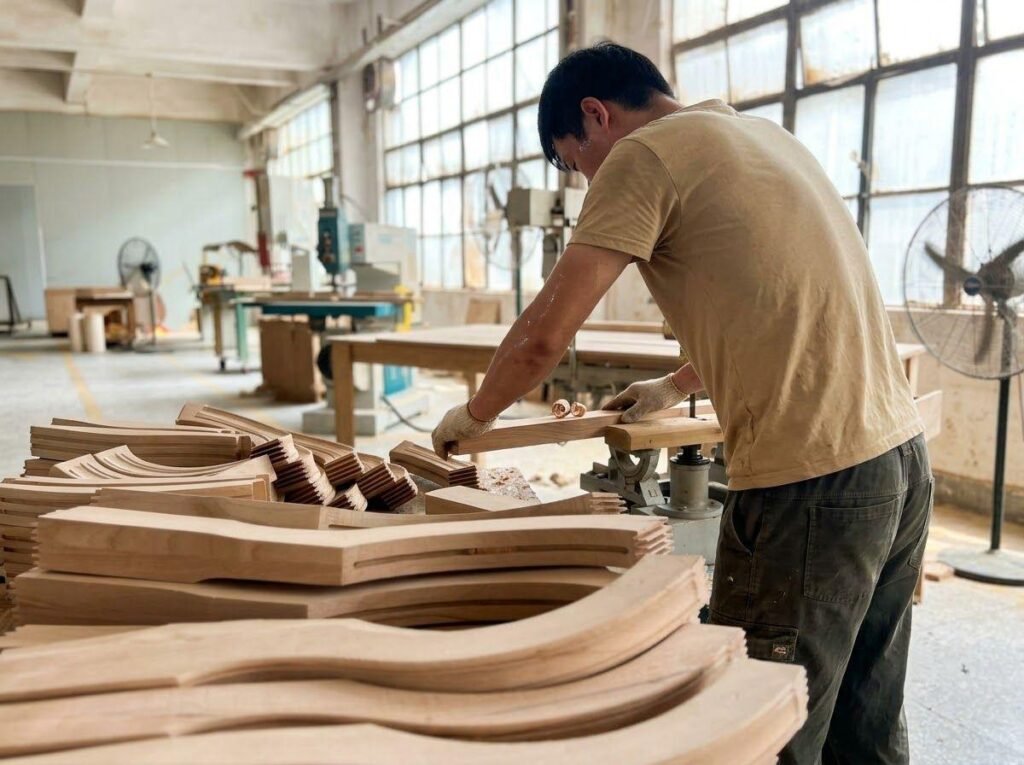
FSC is like a driver’s license. Passed the test. Doesn’t mean they’re not speeding right now. Drive out to Longjiang — yeah, that Longjiang, the furniture capital buried inside Foshan — and you’ll find factories with flawless FSC paperwork and lumber yards full of timber that has no business being there.
Audits get scheduled in advance. (Everyone knows this. Nobody talks about it.) Factory cleans up the docs, shoves the good wood to the front, hides the sketchy stuff out back. Auditor shows up, checks the system, ticks the boxes. Six months later, some buyer in Sydney unboxes a dining table made from merbau pulled out of a protected watershed in Indonesia. Certificate on file? Spotless.
Actually, wait. That’s not even the real problem. Most factories aren’t trying to cheat. They just don’t know. The lumber broker three steps up the chain? That’s where the rot sets in. Broker grabs a mixed load — some certified, some not — slaps “FSC Controlled Wood” on the whole pile, sells it downstream. By the time it hits the factory, the paperwork looks clean. The wood sure isn’t.
Who Actually Knows What They’re Selling?
Most factory owners aren’t foresters. They’re furniture guys. They buy what the broker sells. They trust the invoice. The paper is real. The wood is a coin toss.
The Certification Chain: Where It Actually Breaks
Follow the Money Backward
If you want to figure out why FSC falls apart in China, don’t start at the forest. Start at the showroom floor and walk backward. Everyone looks upstream — the logger, the tropical origin story, the rainforest narrative. Wrong move. Tracing wood through a Chinese factory is like trying to prove where your tap water came from. You can check the utility bill. Inspect the pipes. But unless you drove to the reservoir yourself, you’re trusting a chain of middlemen who make money by keeping things blurry.
| What Buyers Think | What Actually Goes Down |
|---|---|
| FSC factory = 100% certified wood | “FSC Mixed” and “FSC Controlled Wood” allow up to 30% uncertified. Legal on paper. Messy in reality. |
| Database entry = traceability | Database entry means they paid their annual fees and an auditor visited on a Tuesday. |
| Customs catches illegal wood | Customs checks paperwork, not species. Mislabeled timber sails through every single day. |
| Small factories are the risk | High-volume giants often have the messiest, most opaque upstream chains. |
The Database Won’t Save You
The break happens at the broker. Not the factory gate.
I learned this the hard way in Dongguan. Three-year relationship. Solid factory. Two hundred workers. Legit FSC license. Shipped a hotel project that got hit with a random species DNA test in Hamburg. Wood was acacia. Paperwork said white oak. Factory had switched to a new broker who undercut the old price by 12%. Factory didn’t know. Broker didn’t care. Buyer got torched. Twelve percent savings. Total loss.
Why Factories Play the Game
The Certification Treadmill
Look, you can’t fully blame them. Overseas buyers hammer them daily. “Need FSC.” “Client requires FSC.” “No cert, no order.” So factories do what any business would do. They get the cert.
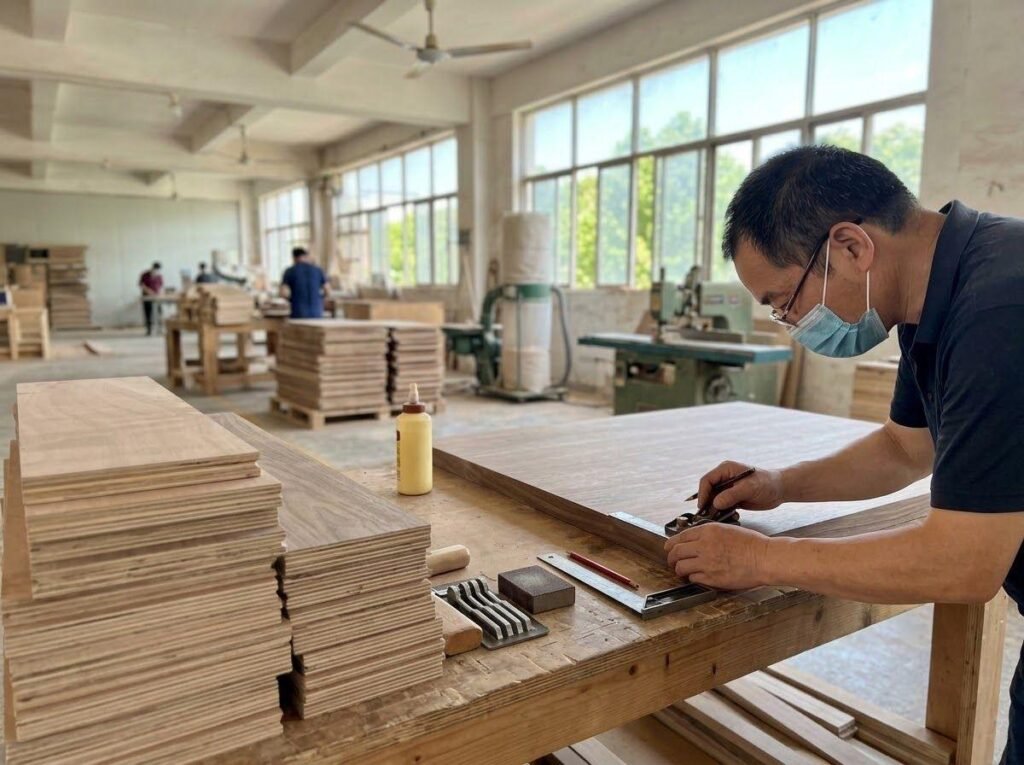
But holding onto it costs money. Annual audits. Segregated storage. Documentation systems. Training staff who’d rather be running CNC machines. For a mid-sized exporter doing maybe $4 million a year, that’s real cash. Then one day the broker says, “Certified stock is backordered three weeks.” Factory’s got a choice: stop the line or use what’s in the yard and hope nobody looks too close.
Most keep the line running. Not because they’re villains. Because margins out here are thinner than veneer. Way thinner.
When the Broker Says “Trust Me”
Some buyers chase the big names in Foshan. Others gravitate toward mid-sized shops that actually answer the phone. Operations like Interi Furniture, for instance — they do custom hospitality and project work out of Guangdong. Smaller volume, but you can actually get the purchasing manager on a WeChat call. Sometimes he even knows which broker supplied last month’s oak. That’s rarer than you’d think.
Bigger the factory, thicker the fog. Not a universal law. Just something I’ve seen enough times to bet on.
The Instant Verification Framework
You don’t need a lab coat. You need a system. Here’s what I run through on every factory visit — or when I’m staring at a factory through a shaky video call:
The Pre-Order Checklist
- License check — Punch the FSC license number into info.fsc.org yourself. But don’t stop at “valid.” Check the scope. I’ve seen chair factories whose FSC cert only covers “wooden packaging materials.” Completely useless for furniture. Happens more than you’d guess.
- Supplier disclosure — Get the name and FSC license of the lumber supplier. Not the factory. The actual timber source. If they stall, if they deflect, if they say “it’s complicated”? That’s your answer. Walk.
- Species declaration — Scientific name. In writing. Not “walnut.” Not “oak.” Juglans nigra. Quercus alba. Cross-check it against CITES. Cross-check it against regional protected lists. Takes five minutes. Saves your ass.
- Invoice matching — Make sure the FSC-certified supplier’s invoice number shows up on the factory’s production records. Sounds paranoid? Good. Paranoid people don’t get surprised in Hamburg.
- The “red flag” that breaks the rules — Factory says they can “get FSC sorted” for your order in two weeks? That’s not a green light. That’s a siren. Real chain-of-custody certification takes months. What they’re offering is borrowed paperwork. Don’t be the buyer who finds out the hard way.
The Video Audit Protocol
Can’t fly to Dongguan? Fine. Demand a live video walkthrough. Not a slick factory promo. Live. Ask them to pan across the lumber yard. Ask to see certified stock physically separated from the general pile. Ask them to read the supplier stamp on the end of a random board. Clean factories comply immediately. The ones that need two hours to “prepare”? You know exactly what they’re doing in those two hours.
FAQ: What Buyers Actually Ask
Q: If the FSC database says the certificate is valid, I’m good, right?
A: Nope. The database confirms they have a license. It says zero about whether the wood in your container is clean. Necessary? Sure. Sufficient? Never. Always verify upstream.
Q: How long does FSC certification actually take for a Chinese factory?
A: Four to six months, start to finish, for chain-of-custody. Anyone telling you weeks is either clueless or planning to use someone else’s cert. Either way, run.
Q: Is FSC the only thing I need to worry about?
A: Not even close. Shipping tropical hardwoods? CITES permits matter just as much. Domestic Chinese species? There’s CFCC, but good luck getting an overseas client to recognize that. FSC is the export gold standard, yeah. But it’s not the only lock on the door.
Q: My client insists on FSC. Can I still source from China without ending up on the evening news?
A: Yes. But audit the chain, not just the factory floor. Work with manufacturers who’ll name their lumber brokers. Put FSC compliance clauses in your PO with real teeth. And reserve the right to third-party species testing. Every single time.
Q: Is there really a way to verify Chinese wood legality instantly?
A: No. True verification takes legwork. What you can do in five minutes is filter out the obvious scams by cross-checking three things: factory license, supplier name, species declaration. That’s your instant triage. Everything past that point is digging.
Closing
Dave called me six months later. Credenzas landed. Client loved them. Then a competitor tipped off the local environmental authority. Paperwork checked out. The wood didn’t.
FSC isn’t a scam because factories are crooks. It’s a scam because buyers want a one-click answer in a business that demands shoe leather. A certificate is comfort food. Due diligence is the actual meal.
So here’s what I ask every procurement director before they fly east: Would you stake your company’s name on a PDF you never verified?Because that’s exactly what you’re doing.