


Last Tuesday. 11:30 PM. I’m freezing to death in a ridiculously over-air-conditioned showroom in Foshan’s Shunde district. It’s 400,000 square feet of endless, echoing beige. My client—a procurement guy for a Miami boutique hotel—is just staring at this massive modular bouclé sofa. Staring hard.
Back in South Beach, a piece with this kind of aggressive scale and high-end finish easily retails for, what, fourteen-five? Fifteen grand? Here, the factory boss is hammering a cheap calculator through a cloud of cigarette smoke, quoting us $2,100.
Same high-density foam. Same kiln-dried hardwood frame. Imported Italian fabric.
My client looks at me. Total disbelief. “Are we getting scammed?” he whispers, scratching at the brushed brass legs like he expects the gold to flake off onto his fingernails.
I hear this twice a week. Actually, scratch that—the real issue isn’t the scam they think is happening. The trap is believing that $2,100 is the number they’ll actually pay at the end of the day. Look, if you want to buy furniture from China in 2026, the old math is completely dead. Those pre-COVID glory days of dirt-cheap shipping and zero tariffs? Gone. Done. The wild west is over, and the new reality is a lot more complicated. Let’s crack open the actual ledger and see where the money goes.
The Ugly Reality Behind “Factory Direct” Pricing
Everyone gets off the plane at Baiyun Airport thinking they’re geniuses. They think they’ll just waltz into a showroom, point at some chairs, and slash 80% off their FF&E (Furniture, Fixtures, and Equipment) budgets.
They won’t.
Here’s the thing nobody wants to say out loud on those sourcing webinars: the Chinese luxury furniture market isn’t a charity setup for Western designers. These factory bosses are shrewd. They know exactly what Minotti charges in London. They know the Restoration Hardware markup down to the penny. They’re pricing their stuff based on how smart they think you are, not just what the plywood and glue cost them.
Rule of thumb. And write this down: If the wholesale quote is under 20% of your home country’s retail price, you aren’t buying a deal. You’re buying a massive headache.
Try to squeeze the price too hard in negotiations, and the factory won’t eat the loss out of the goodness of their hearts. They never do. They just swap the good adhesive for the cheap stuff. They rush the wood drying process. You won’t notice until the container opens in California.
Key Takeaway: The 2026 Reality Check
- Paper Savings vs. Real Savings: You might see a 75% discount on the factory floor, but landed costs (ocean freight, drayage, tariffs, quality control, broken pallets) will chew that down to 35-50% in the real world.
- You Pay for the A-Team: Top-tier Chinese production can go toe-to-toe with European goods now, but the factories capable of pulling that off charge a strict 30% premium over the standard volume mills.
- Time is a Hidden Tax: Custom pieces? Budget 4 to 6 months. If you try to rush production and have to air-freight a replacement credenza because the first one failed QA, your entire profit margin just went up in jet fuel.

The 2026 Cost Structure (Where Your Money Actually Bleeds)
Procuring high-end hospitality goods overseas isn’t shopping. It’s heavy logistics. Think of it like buying an old boat. The purchase price is just your ticket to get on board; the maintenance and docking fees are what actually bankrupt you.
So where does the margin vanish?
Take a standard five-star king room setup. Bed, two nightstands, a custom desk, maybe a lounge chair. US retail is hovering around $12,000. The true Ex-Works cost in Foshan? Around $3,000.
Massive margin, right? Looks incredible on a spreadsheet.
But let’s talk about getting it home. The whole process is basically dodging a gauntlet of hidden taxes. You’ve got local trucking from the factory to the port of Yantian. Export crating—which isn’t cheap if you want it done right. Ocean freight. Terminal handling charges. The lovely 25% Section 301 tariff if you’re hitting the US. Then you’re putting it on a rail chassis in Long Beach, dealing with chassis split fees, and finally dumping it onto a loading dock in Chicago.
Suddenly, that $3,000 pile of wood and fabric costs $5,800. Add the cost of your flights, your hotel, and the third-party inspector you’d be insane not to hire. You’re sitting at $6,200.
Yeah, you saved almost 50%. It’s a solid, bankable win. But it’s a far cry from the 75% fantasy that drop-shipping gurus push on YouTube.
Are you paying for engineering, or just a pretty render?
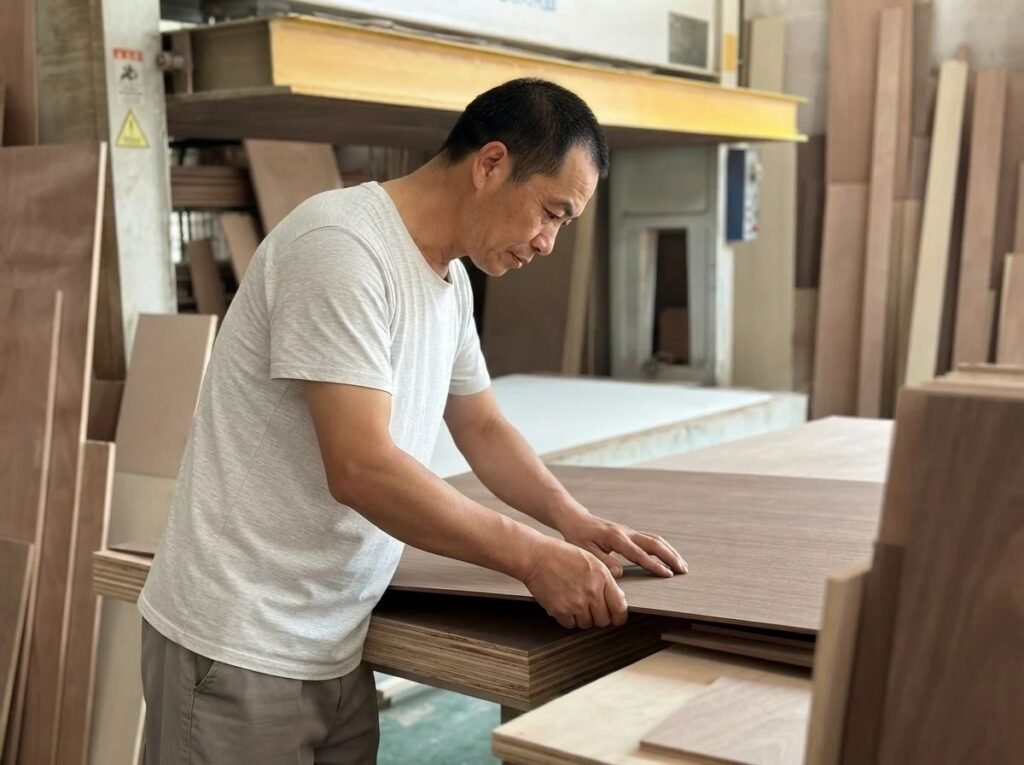
Last month, I was out in Dongguan. I spent three hours standing on a dusty factory floor watching line workers painstakingly book-match American walnut veneer for a sprawling Aspen residential job. Flawless engineering. Hettich hardware straight from Germany. Internal joinery that would make a purist weep.
That factory wasn’t cheap. The dirty secret nobody admits is that the top-tier guys in Guangdong aren’t fighting over price anymore. They’re gunning for Italy on execution.
(And honestly? In a lot of categories, they’re winning). The general consensus on the ground is this: if you cough up 40% of the European retail price, a top-tier Chinese outfit gives you 95% of the European quality. Demand to pay 10%? You get a shiny object that will literally disintegrate six months after installation.
The “Good, Fast, Cheap” Triangle is Completely Dead
I see it happen all the time. Over half of first-time buyers torch their budgets on replacements. They get a slick, high-res photo over WeChat, fall in love, and authorize mass production. They deliberately skip ordering a physical sample just to save three weeks on the timeline.
Total disaster.
The brutal cost of impatience
The container pops open in Miami. That “solid brass” they thought they bought? Painted zinc. It chips if you breathe on it. The “top-grain leather” feels like a synthetic basketball. The sofa foam is so low-density that sitting on it feels like falling down a well.
You can’t fast-track this stuff. High-end manufacturing takes time because physics demands it. Wood needs to be properly kiln-dried to match the ambient humidity of your exact install location. Otherwise? It splits the second the central heating kicks on in a Chicago winter. Fabrics need rub testing. Metals need multiple baths for electroplating.
If a sales rep looks you in the eye and says they can crank out a 40-foot high-cube of bespoke hospitality goods in 25 days, they are actively lying to you.
The Factory Caste System
Factories aren’t just factories. The whole ecosystem is hyper-stratified. If you don’t know who you’re sitting across from, you’ve already lost the negotiation.
Down in the mud, you’ve got the volume mills. Pumping out MDF garbage for fast-furniture web stores. Then, at the absolute peak, there are the mega-OEMs (Original Equipment Manufacturers). These are the silent, massive partners building goods for household-name luxury brands. Don’t even bother calling them unless you’re dropping POs for 500 units a SKU.
The money is made in the middle. The mid-sized, export-heavy specialists.
Sure, a lot of rookies run straight into those chaotic, million-square-foot megamalls in Longjiang chasing the absolute cheapest price they can find. But seasoned buyers usually figure out that mid-tier operations—places like Interi Furniture, for example, which lean heavily into export-grade residential and bespoke hospitality work. Factories living in this specific bracket usually employ project managers who speak decent English. They understand what ISTA drop-test packaging means without you having to draw a picture. They can actually read a complex CAD file without screwing up the tolerances. That alone saves you from the nightmare of opening a container to find shattered marble and twisted steel.
Finding these guys takes legwork, though. You aren’t going to just Google them, click an Alibaba link, and blindly wire a 30% deposit expecting a miracle.
The Tier Breakdown (Per 40HQ Container)
| Who You’re Dealing With | What They Actually Make | Rough Container Spend | The Headache Level |
| Volume Export Mills | Fast-furniture / Budget filler | $15,000 – $25,000 | Absolute nightmare (High damage claims) |
| Mid-Tier Specialists | High-end Resi / 4-Star Hospitality | $35,000 – $60,000 | Manageable (If you run good QC) |
| Luxury OEMs | Euro-Replicas / 5-Star Flagships | $70,000 – $120,000 | Low (Usually nail it on round one) |
Your 2026 Survival Playbook
Want to actually pocket that 40% net savings without getting fired? You need a militant approach. Stop having polite tea ceremonies and start running a system.
- The 3x Sample Rule: Always pay for a full-scale physical prototype. Yes, it’s going to cost you roughly three times the unit price of mass production. Do it anyway. It’s the cheapest insurance policy you will ever buy against a six-figure mistake.
- Hire Your Own Mercenaries (QC): Get an independent inspector on the ground. They answer to you, nobody else. Make them do a DUPRO (During Production) check, plus a final random inspection (FRI) before those doors lock on the container. Waiting until the goods hit LA to find a defect means your money is already up in smoke.
- Dictate the Cardboard: Never ask for “good packaging.” It means nothing to a packing crew trying to get off shift. Demand 5-ply double-corrugated boxes. Insist on high-density EPE foam—not that flimsy bubble wrap garbage. Put it in writing on the Proforma Invoice.
- The Major Red Flag:Watch out for the guy who says “Yes” to everything.
Seriously. If a factory claims they can perfectly replicate a complicated, woven-leather Italian chair, tweak the dimensions, swap the wood to ash, and ship it in three weeks for 200 bucks? Run. Fast. The best factories in this country will fight you. They’ll complain that your custom design is structurally stupid. They’ll groan about the fabric having a 45-day lead time. Friction is a sign of competence. Eagerness just means they’re desperate for cash.

The Trench-Warfare FAQ
I get hammered with these same questions every time I fly out. Here are the unvarnished answers.
Q: What’s the actual minimum spend to make the headache worth it?
A: Look, industry veterans generally agree: if your total FF&E budget is under $50,000, importing direct is a fool’s errand. Below that line, the fixed costs—customs bonds, LCL (Less than Container Load) fees, freight forwarding, and inspections—will eat you alive. If you’ve only got twenty grand to spend, stick to local wholesalers.
Q: Can Chinese pieces genuinely match the stuff coming out of Italy or North Carolina?
A: Absolutely. Assuming you’re working with the right tier and managing them like a hawk. Wood, leather, hardware—these are global commodities now. The final quality has nothing to do with geographic magic; it’s entirely about your QC protocols and what you’re willing to pay.
Q: If I send them my CAD files, are they just going to steal my design?
A: Probably. Don’t lose sleep over it. Unless you’ve got a bulletproof global design patent and an army of lawyers, your stuff will get knocked off the second it hits the market anyway. The real value is in your distribution and brand curation, not a DWG file.
Q: With freight rates bouncing around, does the math still work?
A: Depends entirely on your timeline. Got 16 weeks and a six-figure budget? Yes, the math works beautifully. If you need chairs in four weeks, buy local. It’s a definitive “Yes, but…” situation.
The Final Ledger
Ask yourself a really hard question before you wire a deposit: Are you a designer, or are you a logistics manager?
Because the second you cut out the middleman, you inherit their job. All of it. You take on the risk of port strikes. You deal with the cracked veneer. You get to stay up until 2 AM arguing over paint finishes on WeChat. The math in 2026 still heavily favors the bold, but it absolutely slaughters the naive.
Foshan isn’t a flea market. It’s a hyper-sophisticated, multi-billion-dollar industrial meat grinder. Respect the process, put in the work, and your margins will survive.
See you on the floor.


