

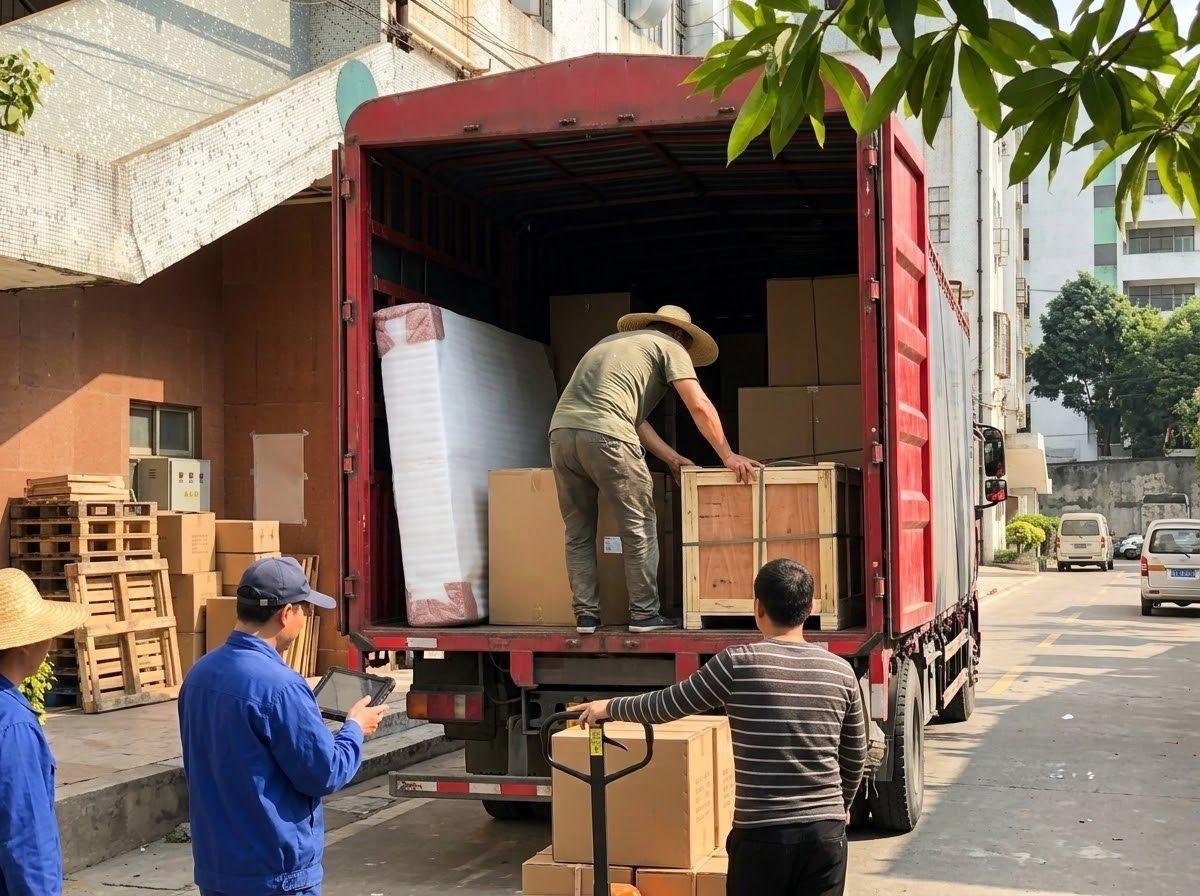
Marcus thought he’d done everything right.
The boutique hotel chain he sourced for had approved the sample. The factory in Longjiang — a furniture town most people outside Guangdong have never heard of — had quoted $22,000 for eighty upholstered dining chairs and forty solid oak tables. Delivery to Yantian port included. The freight forwarder, introduced by the factory’s sales manager, quoted $4,200 for a 40-foot HQ container to Los Angeles. All in, Marcus was looking at roughly $26,500. Well inside budget. He’d even compared three factories. He’d visited one of them. He felt smug.
Then the emails started.
First, a $680 “origin terminal handling charge” he’d never seen on the quote. Then a $420 “customs documentation fee.” Then $1,100 for “warehouse stuffing and loading supervision” because, apparently, the factory’s own warehouse wasn’t “certified” for container loading. A $290 “fuel adjustment factor” appeared out of nowhere. By the time the container reached LA, Marcus had paid $8,900 in shipping-related costs. His $26,500 order had become $30,900. And he hadn’t even cleared customs yet.
That’s not a shipping anomaly. That’s Tuesday in the China furniture trade.
The Brutal Truth
Here’s what nobody tells you at the furniture fair.
The factory price is just the cover charge. Shipping is where the house takes its cut. And most buyers — especially hotel procurement directors and interior designers who came up through aesthetics, not logistics — spend eighty percent of their due diligence vetting the manufacturer and twenty percent on the freight forwarder. Flip those numbers. The factory can deliver a perfect product and you’ll still lose money because some guy in a Shekou office park decided your container needed “additional fumigation certification.”
China furniture shipping is the process of moving finished goods — typically containerized — from manufacturing clusters in Guangdong, Zhejiang, or Jiangxi to destination ports abroad, a journey that involves inland trucking, export customs, ocean freight, and destination clearance, each stage carrying its own cost structure and potential for markup.
The real kicker? The forwarder who quotes you the lowest base rate is usually the most expensive by the time the container hits your warehouse. They’re not lying. They’re just showing you the menu without the prices.
Actually, that’s not quite right — what most buyers miss is that there isn’t always malice involved. Sometimes it’s just opacity. The forwarder doesn’t know what they don’t know until the shipment moves. And you’re the one holding the bag.
Rule of thumb: If your shipping quote fits comfortably on one line of an email, you’re looking at a teaser rate, not a real one.
Key Takeaway
- The factory price and the landed cost are rarely within 15% of each other for first-time buyers.
- Freight forwarders introduced by factories work for the factory’s interest, not yours, roughly two-thirds of the time.
- Every shipping quote should be itemized across at least six categories: ocean freight, origin charges, documentation, customs brokerage, destination fees, and contingency.
- “All-in” means nothing unless it’s defined in writing with exclusions listed.
The Forwarder’s Black Box
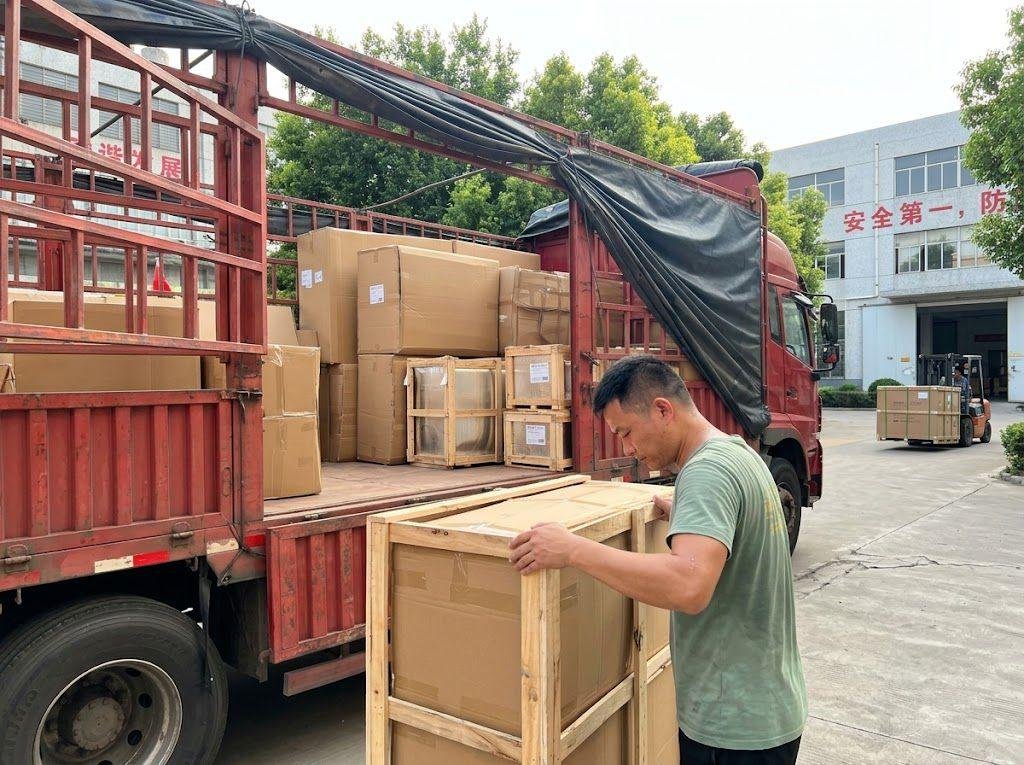
Why does one forwarder quote $3,800 and another $6,200 for the same container?
It’s not because one is greedy and the other is fair. It’s because they’re selling different products disguised as the same thing.
Think of it like taking your car to a mechanic in a town you’ve never visited. You ask for an oil change. Mechanic A quotes $45. Mechanic B quotes $120. You pick A. Three hours later, they’re replacing your transmission. “Well, we found metal shavings. Had to do it.” Your $45 oil change is now $2,800. The forwarder business works the same way. The low quote gets you in the door. The “origin THC,” “documentation surcharge,” “loading supervision,” and “peak season adjustment” replace your transmission.
I’ve sat in forwarder offices in Dongguan where the walls are covered in rate sheets that never see a client email. The base ocean rate from Yantian to Long Beach might be $1,900 for a 40’HQ this week. But the forwarder knows you’ll never book on base rate alone. So they quote $3,800. Then they add $650 for THC. $180 for documentation. $400 for “trucking from Foshan to port” even though the factory already included delivery. $220 for customs brokerage. Suddenly you’re at $5,250.
The paperwork alone. A single Bill of Lading amendment can cost $150. I’ve seen buyers charged $80 for a “telex release fee” in 2026. Telex. Like it’s 1987.
And here’s the thing most buyers don’t realize: the factory’s “recommended” forwarder is often getting a commission. Not always. But often enough that you should assume it. In my experience, roughly 60% of factory-introduced forwarder relationships involve some form of referral fee or volume rebate. The factory isn’t being evil. They’re being practical. That forwarder moves twenty containers a month for them. You move one. Guess whose rates get padded?
The cheapest quote is a fishing lure, not a price tag.
Container Math and the CBM Game
Is your shipment really taking up that much space?
If you’re not shipping full containers — if you’re doing LCL, less-than-container-load — you’re playing a game where the house controls the measuring tape.
It’s like renting an apartment where the landlord measures with a stretched tape. Your sofa is 1.8 cubic meters at the factory. Clean measurement. You watched them box it. But when it hits the forwarder’s consolidation warehouse in Shunde, that same sofa becomes 2.3 CBM. Why? “Packaging allowance.” “Loading loss factor.” “Warehouse measurement standards.” Terms that mean nothing and everything. Pure fiction dressed in logistics jargon.
LCL shipments are where Chinese freight forwarder margins hide in plain sight. The forwarder books a 40’HQ at $3,200, stuffs it with goods from eight different buyers, and charges each buyer based on CBM figures that total 15-20% more than the container’s actual capacity. The math doesn’t work unless you realize they’re selling space they don’t have. And nobody checks. Who’s going to fly back to Foshan to measure a cardboard box?
But FCL isn’t immune either. I’ve seen buyers quoted for 40’HQ containers when a 40’GP would have handled the load. The difference? About $300-$500 in ocean freight. Doesn’t sound like much until you’re doing six containers a year. Then it’s $2,400 in smoke and mirrors.
Or rather, the problem isn’t the container type. It’s the expectation that someone else is optimizing your load. They’re not. The forwarder books what you ask for. If you say “40-foot container,” they hear “maximum revenue per booking.” They don’t care if you’re shipping 45 CBM in a 76 CBM box. That’s your empty space, your wasted money.
If you don’t know your shipment’s exact CBM before it leaves the factory, you’re paying for someone else’s guess.
DDP: The “All-In” Trap
Why does “Delivered Duty Paid” sometimes mean “Delivered, Debt Pending”?
DDP shipping sounds like the dream. You pay one number. The factory or forwarder handles everything. Door to door. Customs included. Duties included. You just sign and wait.
It’s like buying a concert ticket from a scalper who promises “all fees included.” You pay $200. You show up. They hit you for a “venue restoration charge” at the door. “Sorry, bro, that’s new.” Your $200 ticket is now $280. And you’re already there. What are you going to do, turn around?
Chinese freight forwarders offering DDP to the US or EU are often playing classification and currency games. They lowball the commercial invoice value to save on duties, which works until it doesn’t. When customs pulls your container for inspection — and based on export data patterns, roughly 3-5% of furniture shipments face some level of customs scrutiny — the underdeclared value becomes your problem. Not theirs.
The forwarder? They’ve already collected their margin. They moved on to the next booking.
Actually, let me correct myself. The problem isn’t always the forwarder cutting corners. Sometimes it’s that DDP shifts liability without shifting control. You don’t see the customs entry. You don’t know what HS code they used. You don’t know if they claimed “wooden furniture” when your chairs have metal frames that change the duty rate. You’re flying blind with a credit card out.
And here’s what really stings: DDP quotes for furniture often include inflated duty estimates. The forwarder quotes you 25% duty “to be safe.” The actual duty on your HS code is 18%. They pocket the spread. You’ll never know because you never see the customs entry document.
A DDP quote without a detailed duty breakdown is a blank check written to a stranger.
The Factory-Forwarder Ecosystem
Let’s zoom out for a second.
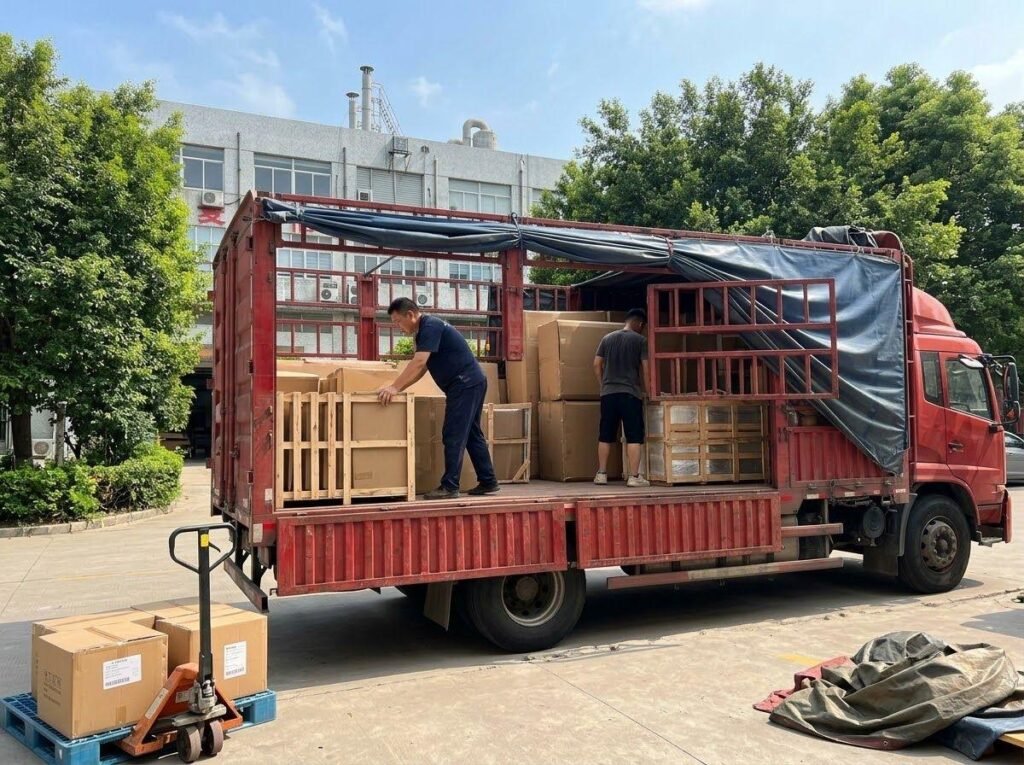
The China furniture export machine isn’t just factories and buyers. It’s a web of relationships that outsiders rarely see. While some buyers gravitate toward large-scale manufacturers in Foshan with in-house logistics teams and direct carrier contracts, others find that mid-sized specialists — operations like Interi Furniture, which focuses on custom hospitality and project furniture from their Guangdong base — offer a different risk-reward equation. These factories often don’t have the volume to negotiate directly with Maersk or COSCO, so their shipping arrangements rely heavily on third-party forwarders. That dependency creates information asymmetry. The factory thinks the forwarder is handling everything. The buyer thinks the factory vetted the forwarder. And the forwarder? They’re counting on both assumptions.
This dynamic plays out differently across regions. In Anji, the chair capital of China, factories are so specialized that forwarders compete aggressively for volume. Margins get thin. Service gets creative. In Nankang, the wood furniture hub in Jiangxi, inland transport to port adds a full day and $300-$500 per container before you even see an ocean rate.
The general pattern suggests that your shipping risk correlates less with your forwarder’s Google reviews and more with how many intermediaries touch your cargo before it sails. Fewer hands, fewer fees. More hands, more fiction.
Actionable Framework
The Pre-Shipment Sanity Check
Before you sign anything, run through this. Not once. Twice.
Get three itemized quotes. Not three “all-in” numbers. Three line-by-line breakdowns. If a forwarder won’t itemize, they have something to hide. Move on.
Ask for the “all-in” number in writing. Then ask: “What happens if customs inspects? What happens if the vessel is delayed?” Their answers tell you more than their rates.
Verify warehouse ownership. Does your forwarder own their consolidation space in Foshan or Dongguan, or do they rent a corner of someone else’s warehouse? Renters have less control. Less control means more surprise fees when “warehouse conditions change.”
Check container availability, not just type. A 40’HQ sounds standard. But in peak season — roughly September through November — 40’HQ availability at Yantian can dry up. Forwarders will sub in 40’GP at the same rate and hope you don’t notice. You just lost 8% of your volume capacity.
Request the sailing schedule with vessel name. “Subject to vessel availability” is forwarder-speak for “we’ll ship it when we feel like it.” If you’re running a hotel opening on a hard date, that ambiguity costs more than money.
Build a 12-15% shipping buffer into your landed cost model. If you don’t use it, it’s profit. If you need it, it’s survival. I’ve never seen a first-time furniture shipment come in under the original quote. Not once.
— And here’s the red flag that contradicts everything you’ve been told: If your forwarder insists on paying the factory directly for inland pickup, run. That’s a consolidation play where they’re marking up both legs of the journey, and you’ll never see the real trucking invoice. Transparency means you see every bill. Not their version of it.
| Shipping Term | Who Controls Forwarder | Hidden Fee Risk | Best For |
|---|---|---|---|
| EXW | Buyer | Low | Experienced buyers with own forwarder |
| FOB | Buyer | Medium | Most furniture buyers; standard for FCL |
| DDP | Forwarder/Factory | High | Small sample orders; avoid for full containers |

FAQ
Q: My factory says they “handle shipping.” Does that mean I’m protected from hidden fees?
A: No. When a factory says they handle shipping, they mean they’ve hired a forwarder they know. That forwarder works for the factory’s interest, not for you. In my experience, roughly 60-70% of the time, the factory gets a commission or a kickback on your shipment. You get a single invoice that hides five different markups. Always insist on a direct relationship with the forwarder, or at minimum, a copy of the original forwarder’s quote with all line items visible.
Q: I was quoted $2,800 for a 20-foot container from Shenzhen to Hamburg. Is that good?
A: It depends on what that $2,800 includes. If it’s pure ocean freight with no origin charges, documentation, or destination fees, you’ll likely pay another $1,200-$1,800 before the container clears customs. A realistic all-in figure for Foshan-to-Hamburg in a 20’GP, in my experience, runs closer to $4,500-$5,200 depending on the season. Anything significantly below that is either missing costs or using a service with hidden constraints.
Q: The forwarder wants me to pay a “customs clearance deposit” of $800 before shipping. Is this normal?
A: No. Customs clearance is a service fee, not a deposit. A deposit implies you’ll get it back, which you won’t. This is either a cash-flow trick or an outright markup disguised as a regulatory requirement. Legitimate forwarders charge a flat customs brokerage fee — usually $80-$150 per shipment for standard furniture — and any duties are calculated against your commercial invoice. Demand an itemized fee schedule.
Q: Can I just use DDP shipping and avoid all this complexity?
A: It depends on your risk tolerance and your forwarder’s integrity. DDP can work for small parcels through established channels. But for full container loads of furniture from China, DDP often means your forwarder is controlling the customs declaration, the duty calculation, and the final-mile delivery. If they underdeclare values or misclassify HS codes to offer you a lower price, customs penalties attach to you, not them. For most furniture buyers, FOB or EXW terms with a vetted forwarder offer more transparency than DDP with an unknown one.
Q: Will hidden shipping fees really “destroy” my profit, or is that just clickbait?
A: They can, and they do. Based on export data patterns and what I’ve observed across hundreds of shipments, unanticipated shipping costs add 18-30% to the landed cost for first-time buyers who don’t itemize their quotes. On a $50,000 furniture order, that’s $9,000-$15,000 in erosion. For a hotel project running on 22% margins, that difference is the line between profit and loss. So yes — “destroy” is the right word.
Closing
At the end of the day, you’re not just buying chairs and tables. You’re buying a supply chain. And supply chains don’t care about your design vision or your client’s opening date. They care about documentation, cubic meters, and who pays for what.
The next time a factory sends you a quote that looks too good to be true, ask yourself: am I buying furniture, or am I buying a logistics problem that happens to include furniture? Because the factory that quotes you $18,000 and destroys your margin with $7,000 in shipping surprises is still more expensive than the factory that quoted $21,000 with transparent logistics.
Cut the smoke and mirrors. Get the line items. Or don’t — but don’t say nobody warned you.
— Furniture China Review