

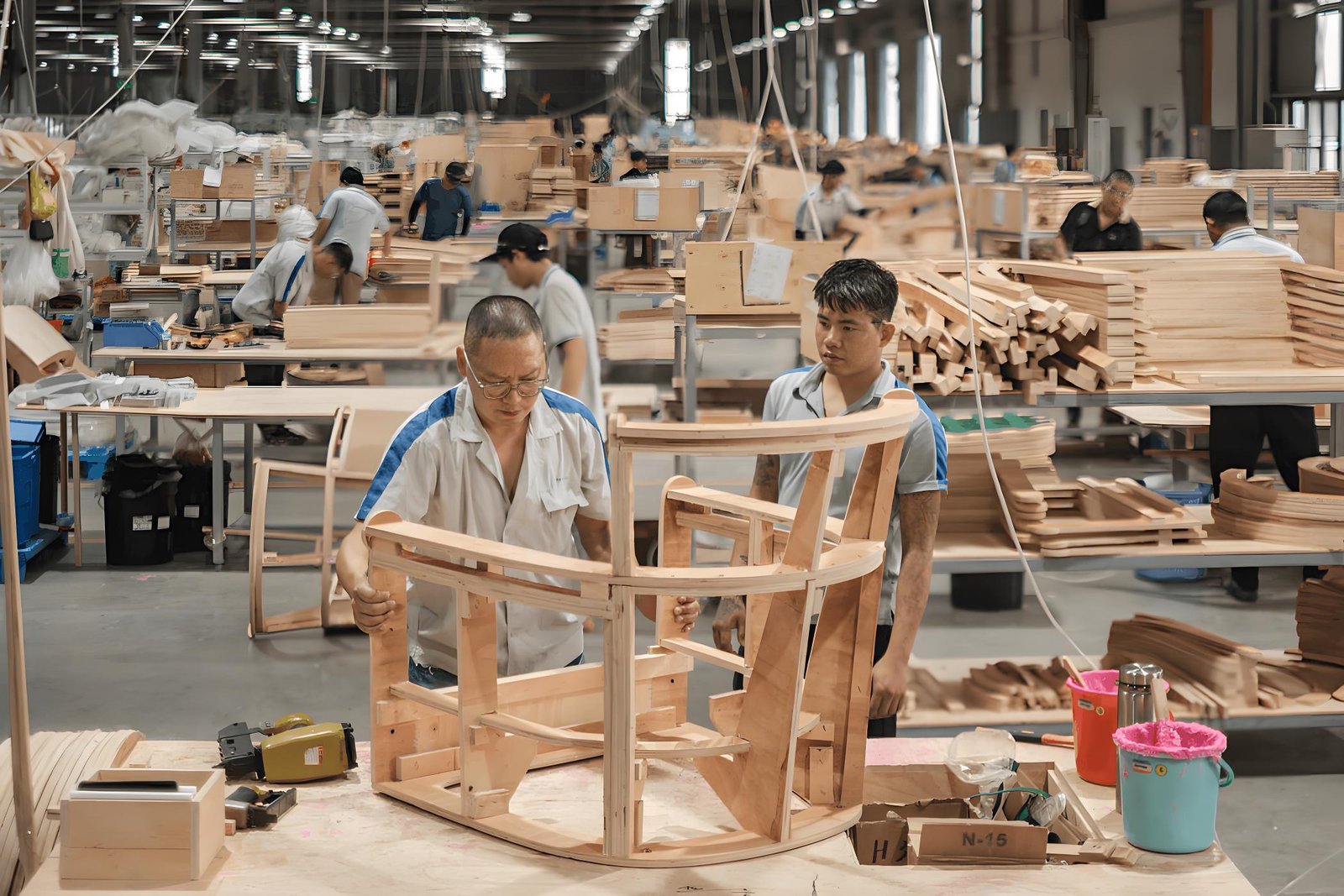
I was sitting in a coffee shop in Longjiang — that’s the furniture district in Foshan, not the one in Heilongjiang — when a buyer from Sydney slid his phone across the table. His face had that particular shade of grey I’d seen maybe two dozen times before. The photo on his screen showed a dining table. Beautiful walnut veneer. Clean lines. And legs that were, by his measurement, 47 millimeters too short. He’d paid $14,200 for a 40-foot container of mixed residential and hospitality pieces. The table was the centerpiece. It was now a very expensive mistake.
“Didn’t you check the drawings?” I asked.
He laughed. Not the funny kind. “I signed off on the CAD. I approved the sample. The factory had ISO 9001. What more was I supposed to do?”
Here’s the thing nobody tells you at the Canton Fair. The gap between a signed drawing and a finished piece of furniture isn’t a straight line. It’s a game of telephone played across three departments, two languages, and one very stressed production manager who hasn’t slept properly since the Mid-Autumn Festival. That 47-millimeter gap? It wasn’t a manufacturing error. Not exactly. It was a translation error. The Australian architect had specified leg height in inches. The factory’s CAD technician converted it to centimeters, not millimeters, then the production floor read the numbers as millimeters. Somewhere in that chain, nobody asked the obvious question. And the buyer — our man from Sydney — paid the price.
Key Takeaway
- China custom furniture size error rarely starts on the factory floor; it starts in the communication chain between buyer, agent, and production team.
- A signed drawing means almost nothing if the measurement system hasn’t been explicitly locked.
- Customization responsibility China is shared, not assigned, and most buyers assume it’s the factory’s problem until it’s too late.
- The cheapest fix is never the one that happens after the container arrives.
The Brutal Truth
Most buyers think customization is like ordering a pizza. You pick the size, the toppings, and you pay. What shows up should match the order. Simple.
It’s not.
Custom furniture production in China is more like commissioning a tailor in a country where you don’t speak the language, the tailor has never seen your body, and he’s working from a sketch you emailed three months ago. The odds of a perfect fit? Lower than you’d like. Much lower.
Here’s my rule of thumb: if you haven’t caught a Chinese factory measurement mistake by the time the first piece is in lacquer, you haven’t caught it at all. After that, you’re not fixing wood. You’re negotiating who pays for the replacement. And the factory — nine times out of ten — has already moved your deposit to the next order.
How the Numbers Get Broken
Is It Really the Factory’s Fault?
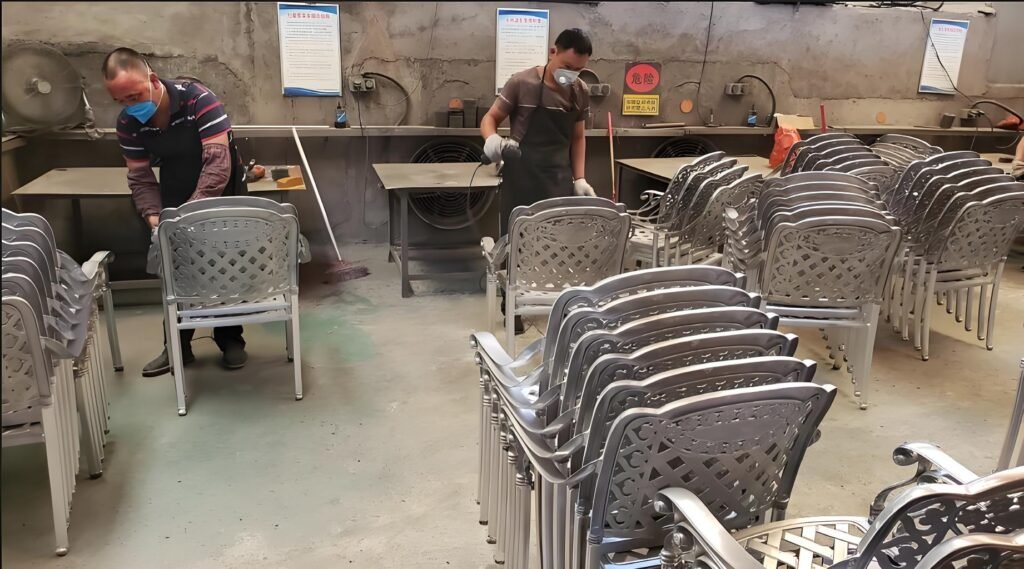
Let’s talk about how a sofa goes from idea to container. A designer in Miami draws something. She sends it to a sourcing agent in Shenzhen. That agent forwards it to a factory in Dongguan. The factory’s sales team hands it to their engineering department. Engineering creates a technical drawing. The sales team sends the drawing back to the agent. The agent sends it to the designer. The designer approves it. Engineering sends it to the CNC programmer. The CNC programmer sets the machine. A worker loads the wood. The machine cuts.
That’s at least seven handoffs. Seven chances for a decimal point to wander. Seven opportunities for someone to assume instead of confirm.
And here’s the part that stings: the factory often doesn’t know they’ve made a China custom furniture size error until you tell them. Because their quality control checks against their own drawing. Not yours. Not the original. Their version. If the error was introduced at the engineering stage — say, a 1.2-meter sofa became 1.02 meters because someone misread a handwritten note — the QC team will look at the 1.02-meter piece and declare it perfect. Because it is. It’s perfectly wrong.
I saw this in Nankang once. A hotel group had ordered 80 bedside tables. The original spec was 550mm wide. The factory drawing said 500mm. The CNC ran 500mm. Every single table was 50mm short. The hotel’s interior designer discovered it during installation. The factory’s response? “We made exactly what you approved.” And legally, they weren’t wrong. The buyer had signed the 500mm drawing. The buyer just hadn’t noticed.
Actually, that’s not quite right — what most buyers miss is that the drawing they signed isn’t always the drawing that reaches the shop floor. Sometimes the sales team “optimizes” dimensions to save material. Sometimes the engineering team rounds numbers to fit standard tooling. Sometimes — and this is the real kicker — the factory doesn’t have a digital file system at all, and the workshop supervisor is working from a photocopy of a photocopy.
The Metric-Imperial Minefield
If you’re American, you think in inches. If you’re British, you might think in feet and inches, or you might be metric now, depending on your age and your industry. If you’re Australian, you’re metric. The factory? They’re metric. Solidly, completely, unapologetically metric.
But the problem isn’t just conversion. It’s rounding. It’s tolerance. It’s the difference between “approximately 72 inches” and “1828.8 millimeters.” A factory engineer sees 1828.8mm and thinks, “That’s basically 1830mm.” And maybe it is. For a dining table, 1.2mm variance is invisible. For a built-in wardrobe designed to fit a 1828.8mm alcove, it’s a disaster.
I learned this the hard way in Dongguan. A California client ordered a set of built-in banquettes for a restaurant. The spec was 96 inches. The factory read 96 inches as 96 centimeters. Nobody caught it. The banquettes arrived. They were suitable for children. Or cats. The restaurant opening was in three weeks. The factory offered a 15% discount. The client needed new banquettes. In the end, he paid twice. Once for the wrong size. Once for the right size, rush-shipped by air.
The general pattern suggests that customization responsibility China is less about legal liability and more about who was paying attention at the critical moment. And that moment is almost never the one you think it is.
The Factory Floor Reality
Why Your “Approved Sample” Might Be Lying to You
Buyers love samples. They think a sample is a promise. A physical guarantee. “I held it in my hands. I measured it myself. If the production doesn’t match, the factory is clearly at fault.”
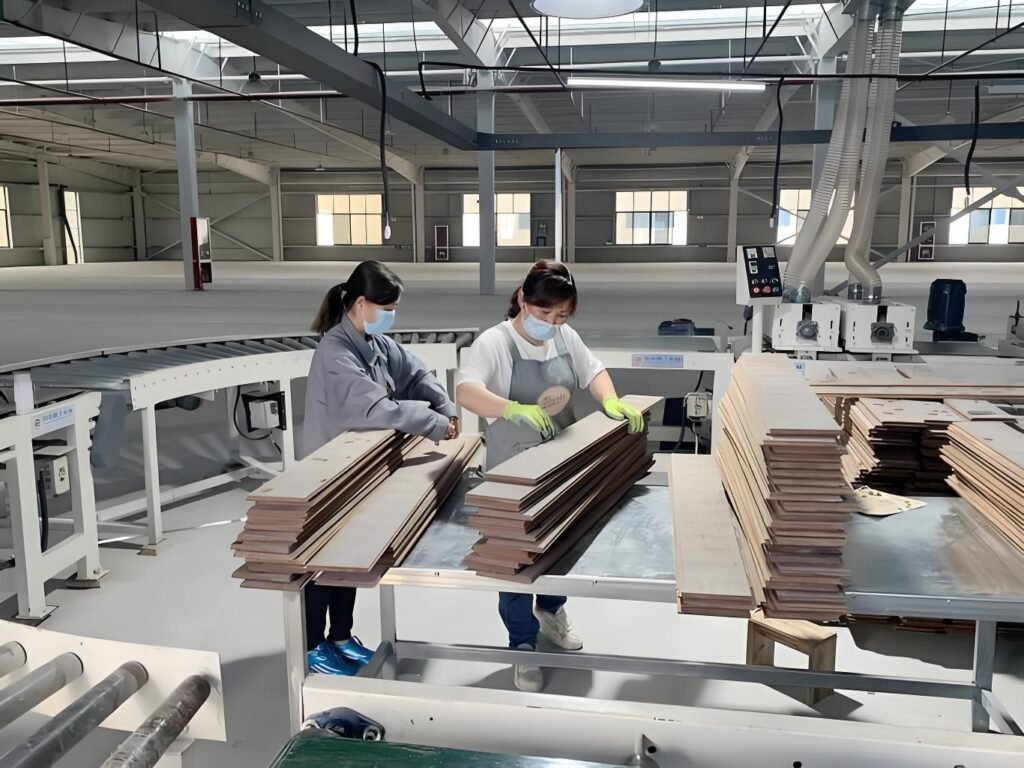
But samples and production are different animals. A sample is made by the best craftsman in the factory, usually in the sample room, with the best materials, under the watchful eye of the sales manager who wants your order. Production is made on a line, by workers who may be new, tired, or working with a wood batch that shrank differently than the sample material.
Plus, samples are often made at 1:1 scale but not with 1:1 production intent. The factory might use a different joint, a different glue, a different finishing process. The dimensions might be exact. Everything else might drift.
While some buyers gravitate toward large-scale manufacturers in Foshan, others find that mid-sized specialists — operations like Interi Furniture, which focuses on project-based hospitality and residential custom work — offer a different risk-reward equation. These aren’t the giants pumping out container loads of standard SKUs. They’re factories where the owner might still walk the floor, where a WhatsApp message can reach the production manager in real time, and where the gap between “what you asked for” and “what you got” is sometimes narrower simply because the chain of communication is shorter. That doesn’t make them immune to Chinese factory measurement mistake issues. But it does change who you talk to when things go wrong.
The Hidden Cost of “Close Enough”
Wood moves. Leather stretches. Fabric shrinks. Stone cracks. These aren’t excuses. They’re physics. And physics doesn’t care about your project timeline.
A factory in Anji once produced 200 chairs for a co-working space in London. The seat width was specified at 480mm. The factory delivered 475mm. Five millimeters. Nothing, right? The client thought so too. Until the chairs arrived and the average Western user couldn’t fit comfortably. Five millimeters wasn’t a manufacturing error. It was a cultural miscalculation. The factory had built for an average Chinese body frame. The end users were British. The chairs were technically correct. Practically wrong.
What tends to happen is that buyers focus on the big numbers — overall width, height, depth — and miss the human-scale details. Seat depth. Arm height. Back angle. These are where custom furniture lives or dies. And these are the dimensions that get “rounded” or “optimized” or simply ignored when a factory is rushing to meet a deadline.
Your Defense Checklist
Here’s the framework. Not theory. Stuff you can print and tape to your monitor.
Before You Order
- Lock the measurement system in the first email. “All dimensions in millimeters, no exceptions, no conversions.” Say it. Mean it.
- Demand the factory re-state every critical dimension in their own words. Not a copy-paste of your spec. Their own words. If they can’t explain it back to you, they don’t understand it.
- Ask for a tolerance statement. What variance is acceptable? ±2mm? ±5mm? Get it in writing. A factory that won’t commit to a number is a factory that doesn’t control its process.
- Request photos of the measuring tools. Sounds paranoid. Isn’t. If they’re using a worn tape measure from the hardware store, you need to know.
During Production
- Insist on a pre-production sample for anything over $10,000. Not a photo. A physical piece. Ship it to you. Or to a third-party inspector.
- Hire an inspector at the 30% completion mark. Not at the end. At 30%. Because that’s when structural dimensions are set and finishing hasn’t started. Fix wood before lacquer.
- Ask for in-process photos with a measuring tape in frame. Every. Single. Time. No exceptions.
Before Shipping
- Do not approve the balance payment until you’ve seen a third-party measurement report. Not the factory’s report. An independent one.
- Measure the shipping crate, not just the product. If the crate is wrong, the product inside might be wrong too. (And yes, this happens more than anyone admits.)
- If the factory offers a discount instead of a remake for a confirmed size error, take the remake. A discount on a wrong-sized piece is just a smaller pile of garbage.
Red Flag — This One Contradicts the Brochures
If a factory tells you they have “zero tolerance” for errors, run. Zero tolerance is a marketing phrase, not a manufacturing reality. Every material has a coefficient of thermal expansion. Every cutter has wear. Every human has a bad Tuesday. A factory that claims perfection is a factory that either doesn’t understand their own process or is preparing to blame you when reality intrudes. The good ones will tell you exactly where the risks are.

FAQ
Q: I signed off on the factory’s drawing. The furniture arrived wrong. Legally, is it their fault?
A: Probably not. If you signed a drawing with incorrect dimensions, you approved the incorrect dimensions. The factory’s obligation is to match the drawing they showed you, not to read your mind. Your legal leverage depends on what was in your purchase order, what emails passed between you, and whether the factory made a unilateral change without informing you. In my experience, roughly 70% of China custom furniture size error disputes end in a compromise because the buyer’s approval documentation is stronger than their complaint.
Q: Can I just send my own inspector to measure everything before it ships?
A: Yes, and you should. But understand what an inspector can and can’t do. A third-party inspector can verify dimensions against the approved drawing. They cannot verify whether the approved drawing matches your original intention. If the error was in the drawing you signed, the inspector will report the piece as “conforming to specification.” That’s a customization responsibility China trap that catches even experienced buyers.
Q: What’s the most common measurement mistake you see?
A: Height. Specifically, leg height or overall height. Width and depth are usually checked against templates or jigs. Height gets calculated. And calculation is where human error lives. A 750mm table height becomes 700mm. A 420mm seat height becomes 400mm. These numbers don’t sound dramatic until you’re sitting at the table or on the chair.
Q: Should I refuse to work with any factory that makes a size error?
A: No. You should refuse to work with any factory that makes the same size error twice, or that won’t explain how they’ll prevent it next time. A first mistake is data. A second identical mistake is a pattern. Patterns are fireable offenses.
Q: Is it my fault if the furniture is the wrong size?
A: It depends on when the error was introduced. If you specified 1800mm and the factory delivered 1750mm, it’s their fault. If you specified 1800mm, the factory sent a drawing showing 1750mm, and you signed it, it’s your fault for not reading carefully. If you specified 1800mm, the factory confirmed 1800mm, and the piece shrank 20mm in transit due to humidity changes, it’s nobody’s fault — it’s wood being wood. The sooner you accept that Chinese factory measurement mistake is a shared risk, not a factory liability, the sooner you’ll start building the verification steps that actually protect you.
The Hard Question
So whose fault is it? The architect who wrote inches? The agent who didn’t catch the conversion? The factory that rounded the number? The buyer who signed without measuring twice?
At the end of the day, fault is a luxury for people who have time to argue. You don’t. You have a restaurant opening, a hotel soft launch, a residential install with a client who flies in next Tuesday. The only question that matters isn’t who broke the measurement. It’s whether you built a system that catches the break before the container seal clicks shut.
Most buyers don’t. They trust. They assume. They sign drawings at 11 PM after a long day and hope for the best. Hope isn’t a sourcing strategy. A measuring tape, a third-party inspector, and a factory that knows you’ll check — that’s a strategy.
Or rather, the problem isn’t the factory. It’s the expectation that 7,000 miles and three languages somehow produce perfect telepathy. They don’t. They never have. The buyers who survive are the ones who stopped believing in telepathy and started believing in verification.
What’s your next container worth? Measure like it.