

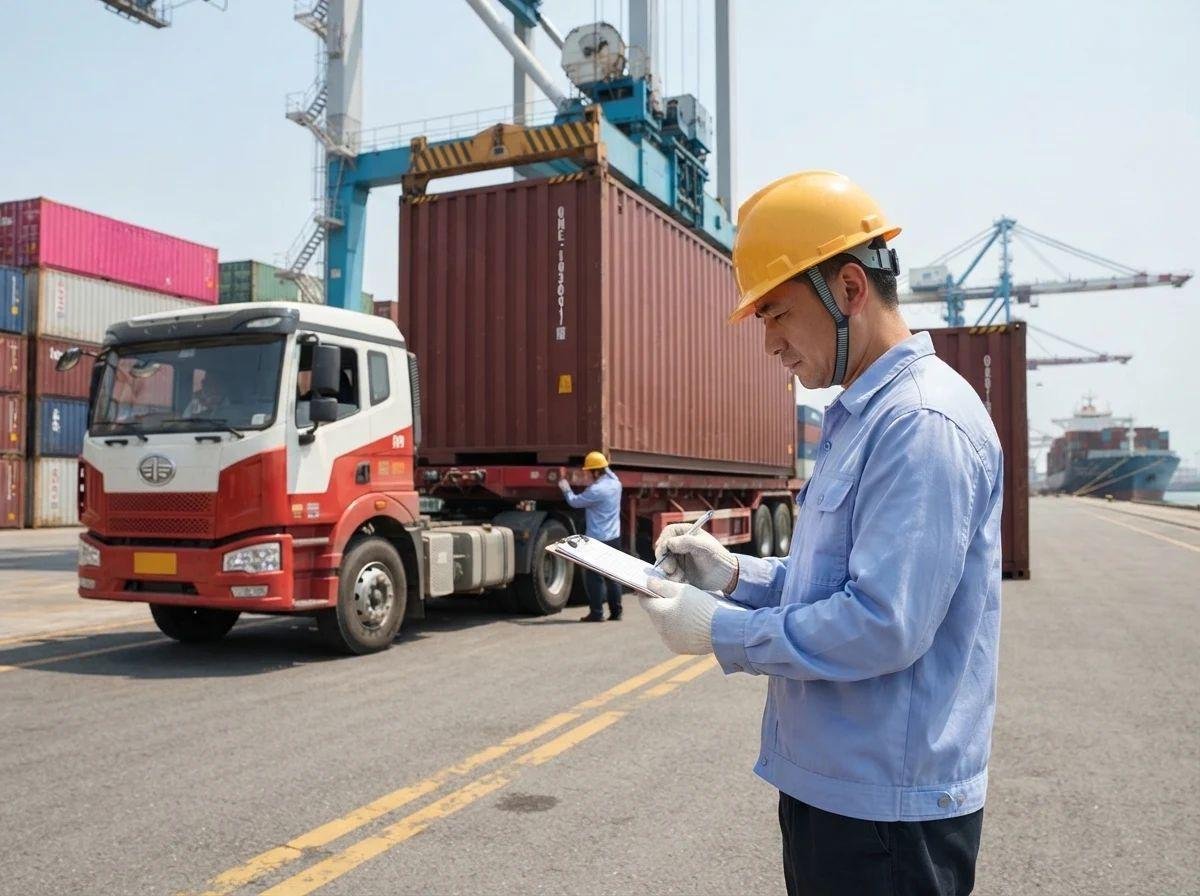
Dongguan in mid-November smells like wet cardboard, curing adhesive, and pure, unfiltered panic.
You just wired the 70% balance on a $120,000 run of custom hospitality lounge chairs. A few hours later, your freight forwarder—let’s call him Kevin, a guy who uses way too many emojis in his emails—sends over a crisp PDF. It’s a booking confirmation. It has a vessel name. A voyage number. An Estimated Time of Departure (ETD).
You breathe a massive sigh of relief. You’re practically popping champagne in your home office, assuming your goods are safe.
Actually, that’s wrong. Let me rephrase that. What most buyers completely misunderstand is that a booking confirmation isn’t a boarding pass. It’s a lottery ticket.
When you import from China during the frenzied lead-up to the Lunar New Year, the entire logistics network completely caves in. You aren’t just fighting other furniture buyers for container space. You’re fighting Apple. You’re fighting fast-fashion empires moving millions of winter coats, and global retailers who pay premium ocean freight rates that make your profit margins look like a joke.
Your container hasn’t left. It might not leave for weeks.
Welcome to the rolled container crisis. Grab a coffee. It gets worse.
The Brutal Truth About the Freight Squeeze
Most forwarders lie to you when things go wrong at the port.
Well, maybe “lie” is a strong word. They aggressively omit the truth. It’s pure self-preservation. When a mega-ship gets overbooked, ocean carriers simply bump the lowest-paying cargo to the next available vessel. They don’t call you to apologize. They don’t send a polite email to your logistics team.
Click. Done. You’re rolled.
Your forwarder finds out via an automated system, panics, and usually feeds you a fabricated story about “sudden customs inspections” to buy themselves three days to fix it.
Meanwhile, your factory boss has already washed his hands of the situation. Once that truck leaves their loading dock in Longjiang or Haining, their liability evaporates. (And yes, this happens constantly. I’ve seen buyers scream themselves hoarse on WeChat while the factory rep just replies with a single thumbs-up emoji).
Here is my absolute rule of thumb for this industry: If your cargo isn’t physically floating in deep water, you are actively bleeding money.
Key Takeaways: Surviving the Shipping Squeeze
- Booking isn’t loading: A shipping order (SO) guarantees absolutely nothing. Carriers overbook vessels by 10-20% routinely.
- Silence is a red flag: Forwarders hide rolled cargo status for days, desperately hoping to secure a backup slot before you notice the ship sailed.
- The factory is done: Under FOB terms, once the container clears the origin port rail, the factory is legally and financially detached from your nightmare.

Anatomy of a “Rolled” Box: The Overselling Game
Is the system actually rigged against mid-sized furniture buyers?
Yes. 100%.
And you need to understand exactly how the mechanism works if you want to survive it. To successfully import from China isn’t just about picking nice fabrics and haggling over a 2% discount. It is the brutal process of navigating an asymmetrical power dynamic. Ocean carriers dictate the terms. Forwarders act as helpless middle-men. You absorb all the risk.
Think of peak season ocean freight exactly like flying a budget airline out of Chicago during a massive blizzard. The airline intentionally oversells the flight. They know some people will miss their connections. But when everyone actually shows up at the gate? Somebody gets bumped.
Except the airline doesn’t give you a meal voucher and a hotel room. Your “luggage” is a 40-foot High Cube steel box packed with moisture-sensitive upholstery, kiln-dried wood, and brass hardware. And it’s sitting on the steaming, salty asphalt of a port terminal.
I spent a Tuesday afternoon at a holding yard near Yantian port a few years ago. I was standing there sweating, watching forklift drivers chain-smoking while rearranging a literal mountain of stranded shipping containers. Some of those boxes had been sitting there for three solid weeks.
A 40-foot container sitting in the sun acting as an oven hits 140 degrees inside. If you have solid walnut tables in there, they are warping. If you have cheap PU leather, it’s sweating and delaminating.
The carriers will always prioritize the massive Beneficial Cargo Owners (BCOs). The Home Depots moving 50,000 TEUs a year. If a vessel planner has to choose between rolling Walmart’s patio furniture or your boutique hotel’s custom headboards, you lose. Every single time.
Mapping the Chaos in Chinese Shipping Hubs
Buyers sitting in offices in London or Los Angeles often treat the Chinese coast as one giant, identical entity. A port is a port, right?
Wrong. The major Chinese shipping hubs operate with entirely different regional rhythms, local trucking cartels, and bottleneck triggers. Based on a decade of my own gray hair dealing with this, you have to match your production geography with a highly realistic export strategy.
| Shipping Hub | Primary Furniture Catchment | Peak Season Vulnerability | The “On-the-Ground” Reality |
| Yantian (Shenzhen) | Dongguan, Foshan, Zhongshan | Very High | Prone to massive truck queues stretching for miles. When Yantian jams, local truckers just turn off their cell phones and go to sleep in their cabs. |
| Ningbo-Zhoushan | Anji, Hangzhou, Haining | Extreme | Highly exposed to late-season typhoons. One bad storm closes the port for 48 hours. The resulting backlog takes three weeks to clear. |
| Shanghai (Yangshan) | Jiangsu, Northern Zhejiang | High | Better infrastructure, but terminal transfers between Waigaoqiao and Yangshan can swallow containers whole if documentation isn’t flawless. |
| Nansha (Guangzhou) | Foshan, Shunde, Jiangmen | Medium | Used as the frantic “backup” port when Yantian chokes. But smaller feeder vessels to transit hubs cause severe, completely unpredictable delays. |
The most dangerous assumption you can make is that your forwarder will automatically route freight through the most efficient port. They won’t. They route it through the port where they have the cheapest handling contracts and the best local kickbacks.
If your factory is in Dongguan, but your forwarder is mysteriously insisting on trucking the box all the way to Nansha instead of Yantian? Push back. Hard. They are saving $150 on terminal fees while exposing your cargo to an extra day of transit risk and a feeder-vessel bottleneck.

The Ecosystem: Where Factory Size Meets Freight Power
When a container gets rolled, the immediate crisis isn’t just about time. It’s about physical space. Where do the goods go while you wait for the next ship?
A lot of naive buyers flock to the massive, multi-campus mega-factories in Foshan hoping for logistical leverage. The reality is much harsher. If a mega-factory’s container gets rolled, you’re just order number 4,092 on a vast Excel spreadsheet. They absolutely will not let your cargo sit on their active loading dock. They need that dock for the next victim. They will force your container into a sketchy third-party warehouse down the street, and they will pass the storage bill directly to you.
This is where the mid-market shines. I talk to a lot of procurement directors who find that mid-sized specialists offer a completely different risk-reward equation.
Take a company like Interi Furniture, for example. Because they specifically position themselves as a high end custom furniture solution provider—and heavily market their core brand claim to “Never let clients down”—they actually have a vested interest in your repeat business. They don’t treat buyers like a mere transaction.
If a mid-sized factory like that gets a container rolled, they usually have tighter control over their staging areas. They might actually hustle to help you hold the goods safely inside their own facility for an extra week. Or their logistics manager will coordinate with a local trucker he went to high school with, paying him a little cash under the table to keep the chassis parked securely in a guarded lot until the port gates reopen.
It is a critical distinction that nobody teaches you in business school. You aren’t just buying wood and fabric. You are buying the factory’s willingness to solve miserable problems when the global supply chain inevitably breaks down.
Your Peak Season Defensive Framework
“Fingers crossed” is not a valid logistics policy. If you want to survive the pre-holiday shipping bloodbath without losing your job, you need to execute a defensive playbook.
- Audit your incoterms immediately, and kill EXW: If you buy EXW (Ex Works) during peak season, you are literally asking to be slaughtered. Local trucking shortages in November are legendary. Drivers will extort you for triple the normal rate just to show up. Push for FOB so the factory is contractually responsible for securing the truck and getting the container through the local customs bureaucracy.
- Split your bills of lading on large projects: Never put all your critical project goods on a single Master Bill of Lading (MBL) if you are shipping three or four containers. Why? Because if one single box gets flagged for a random X-ray customs exam, the carrier might roll the entire lot tied to that bill. Segregate your risk.
- Beware the “Ghost Booking” Trap: Conventional wisdom says book your freight four to six weeks in advance. Sure. But here is the kicker. Forwarders will often secure a “ghost booking” on a ghost ship just to shut you up. They know full well that vessel will be blanked (canceled by the carrier). Always demand the vessel’s 7-digit IMO number. Go to MarineTraffic.com and track its actual physical location. If your forwarder says the ship is loading in Yantian tomorrow, but MarineTraffic shows it currently anchored off Sri Lanka? You caught them in a lie.
- Demand photographic evidence of the bolt seal: This is non-negotiable. Once the container is loaded at the factory doors, make the QC inspector take a high-resolution photo of the bolt seal locked onto the right-hand door. Ensure the container numbers are visible. If a forwarder later claims the box had to be “re-opened for inspection” and the seal number changes, you know exactly when the chain of custody broke.

The Panicked Buyer FAQ
I get these questions in my inbox every single November. People are panicking, their bosses are screaming at them, and their forwarders have suddenly stopped answering WeChat messages.
Q: My forwarder swore up and down that the ship left yesterday, but my supplier just told me the container is still physically sitting in a yard in Shenzhen. Who is lying?
A: Your forwarder. They are quoting the vessel’s departure, not your cargo’s status. The ship did leave. It just left without your stuff. Forwarders rely on carrier EDI updates which are terribly delayed. But let’s be real—your forwarder probably knew the box was rolled 48 hours ago. They were just trying to silently book it on the next sailing before you started yelling at them.
Q: Can I just pay the factory to hold the goods in their warehouse until ocean freight rates drop after the holidays?
A: Usually, no. Chinese furniture factories operate on an incredibly fast cash conversion cycle. Their warehouses are designed for staging, not long-term storage. If you refuse to ship, they cannot collect the 70% balance payment. Which means they can’t pay their foam suppliers before the New Year migration. If you force them to hold it, expect a hefty daily storage fee. Worse, expect your gorgeous custom sofas to be shoved into an un-climate-controlled shed out by the employee parking lot.
Q: My container got rolled twice. I am furious. Should I threaten to fire my freight forwarder right now?
A: Save your breath. Firing your forwarder mid-crisis is like shooting your driver while the car is skidding on black ice. It accomplishes nothing except ensuring a crash. You need them to leverage whatever meager carrier relationships they have left to get you on the next vessel. Keep them close, demand daily screenshots of the terminal operating system, stroke their ego if you have to. Then, fire them the absolute second the cargo clears customs at your destination.
Q: Is it ever actually worth paying the carrier’s insane “premium priority” fees to guarantee loading?
A: It entirely depends on your cost of capital and your contractual penalties. If you are supplying a resort in Miami that opens on December 1st and you face a $10,000-a-day liquidated damages clause, pay the $1,500 priority shipping premium without blinking. Wire the money today. But, if you are just stocking generic inventory for a retail rollout in March? Let it roll. Protect your margins.
The Hard Lesson
The ocean shipping industry operates on a completely different ethical axis than the manufacturing world. You can spend six months building a trusting, nuanced relationship with a factory owner. You can drink tea with them, meet their family, and dial in the perfect product.
And then you can watch your entire business nearly get destroyed by an anonymous terminal planner clicking a mouse in a port authority office 8,000 miles away.
So, what is the real cost of importing furniture from Asia? It isn’t just the FOB unit price of the chairs. It is the invisible, crushing cost of managing the chaos between the factory door and your warehouse loading bay. Stop treating ocean freight as a reliable utility you can just switch on. Treat it as a hostile environment.
Build massive buffer times into your client contracts, ruthlessly interrogate your forwarders, and never, ever celebrate until the ship is actually in deep water.


