

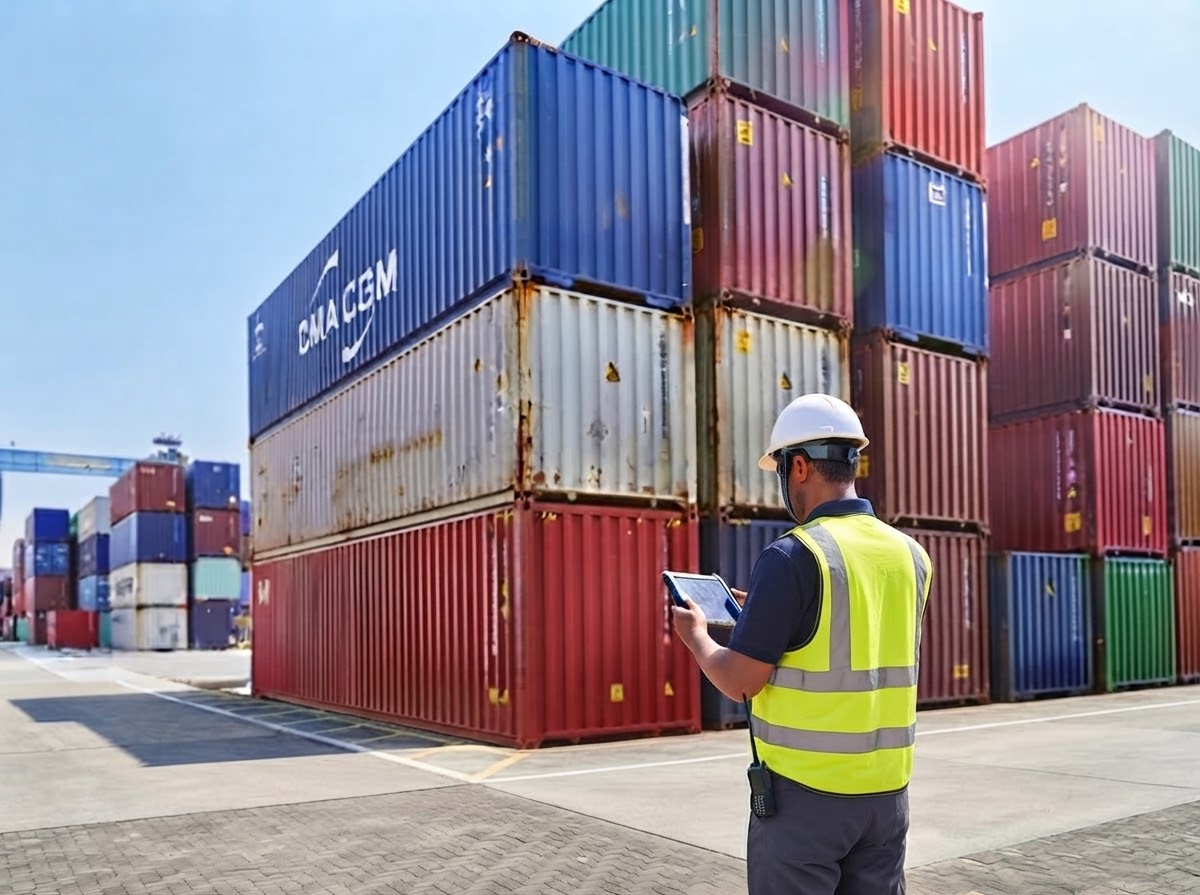
The container sat at Yantian Port for eleven days. Eleven. Inside were 240 solid oak dining chairs, custom-upholstered in a bouclé fabric that had taken six weeks to source from a mill in Keqiao. The buyer — a boutique hotel group out of Austin — had already wired $47,000 for the goods. What they hadn’t budgeted for was the $8,200 in demurrage and detention fees that metastasized while their customs broker in Shenzhen argued with the freight forwarder about whether the commercial invoice needed a third-party inspection stamp.
I’d seen this exact movie before. In fact, I’d watched it enough times to know the ending by heart. The buyer calls me, voice tight, asking if I know “someone in Guangzhou who can make this go away.” I don’t. Nobody does. Once that container hits day five at the terminal, you’re not negotiating with the port authority — you’re paying a daily ransom that compounds faster than most buyers’ profit margins.
China shipping demurrage is the silent killer that separates experienced procurement teams from rookies who think the hard part ends at the factory gate.
Here’s what nobody tells you at the furniture fairs in Foshan: the port isn’t your enemy. Your enemy is the assumption that when you buy from China, shipping works the same way it does from North Carolina.
The Brutal Truth
China shipping demurrage isn’t a fine. It’s a tax on optimism.
Most buyers I meet treat container free time like a suggestion rather than a hard stop. They assume customs clearance in China is a formality — just stamps and signatures, right? Wrong. At major export hubs like Shekou, Yantian, and Ningbo-Zhoushan, free time typically runs four to seven calendar days from discharge. Day eight? You’re bleeding. Day twelve? You’re hemorrhaging.
The rule of thumb I give every new buyer: if you can’t clear customs within five days of arrival, you haven’t done your homework. Period.
And here’s the thing that keeps me up at night — the fees aren’t even the worst part. The worst part is what happens to your relationship with the factory. Because when your container sits at port, the factory’s reputation takes a hit too. Their logistics team gets flagged. Their forwarder starts charging them premium rates. They remember. Oh, they remember.
Key Takeaway
- China shipping demurrage accrues daily after your container overstays free time, running anywhere from $150 to $400 per day.
- Major Chinese export terminals typically allow 4–7 calendar days of free time, starting the moment the box hits the dock.
- Furniture exports carry dense documentation requirements; one missing detail can freeze an entire container.
- The ones who stay out of trouble start their paperwork audit two weeks before cargo ready date — not after the vessel arrives.
Why Chinese Ports Eat Your Margins Alive
The “Free Time” Mirage
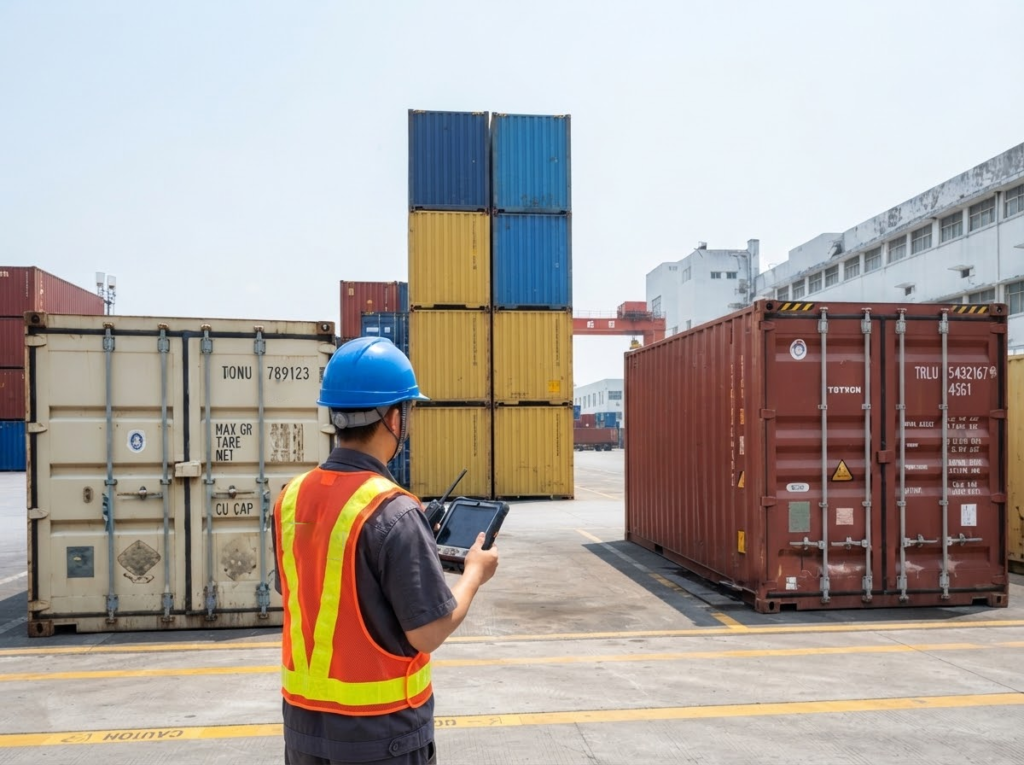
Think of container free time like a parking meter in Manhattan — except the meter starts running before you’ve even found a space. At most Chinese export terminals, your free days begin when the container is discharged from the vessel, not when you receive notification. I’ve watched buyers lose two full days simply because their broker’s email sat in a spam folder. Two days. At $150 to $400 per day for a 40-foot high cube, that’s real money evaporating while someone checks their inbox.
The general pattern suggests that Western buyers who buy from China consistently underestimate the documentation density of Chinese export clearance. You’re not just dealing with a commercial invoice and packing list. You’re navigating the customs declaration form, the export license verification (depending on HS code), the fumigation certificate for solid wood products, and increasingly, the pre-shipment inspection requirements that vary by destination country. Miss one checkbox, and that container isn’t moving.
Actually, that’s not quite right — what most buyers miss isn’t the paperwork itself. It’s the sequencing. You can’t submit the customs declaration until the export license is verified. You can’t get the export license verified until the factory’s VAT invoice is registered. And if the factory’s accountant submitted the VAT invoice on a Friday afternoon? You’re waiting until Monday. Or Tuesday, if there’s a holiday you didn’t know about. (And yes, this happens more than anyone admits.)
The real kicker: China shipping demurrage fees at major ports often exceed the ocean freight cost for the same container.
The Documentation Domino Effect
I learned this the hard way in Dongguan. A few years back, I was overseeing a shipment of walnut veneer credenzas for a commercial project. The factory had everything ready — or so I thought. The commercial invoice listed the wood species as “walnut” without the Latin name Juglans nigra. The customs officer flagged it. Not because it was wrong, but because the HS code for that product required species-level identification for CITES compliance. One word missing. Six days of demurrage. $3,800 in fees on a $22,000 order.
It’s like trying to board an international flight with a driver’s license when you need a passport. The gate agent doesn’t care that you “usually get through with this.” The rules are the rules, and at a Chinese port, the rules are enforced with bureaucratic precision that would make a Swiss watchmaker nod in respect.
While some buyers gravitate toward large-scale manufacturers in Foshan, others find that mid-sized specialists — operations like Interi Furniture, which focuses on custom hospitality and project-grade casegoods — offer a different risk-reward equation. These factories often have tighter logistics coordination because they can’t absorb demurrage hits the way a billion-yuan conglomerate can. Their export documentation teams are smaller, but they’re usually more responsive because every container matters.
What tends to happen is this: buyers who source from mid-tier factories develop better documentation habits out of necessity. They learn to ask the right questions early. They build relationships with freight forwarders who specialize in furniture exports, not general cargo. And they stop treating the shipping phase as an afterthought.
The Hidden Costs Nobody Talks About
Is It Really Just About Paperwork?
No. And yes.
The paperwork is the trigger, but the underlying disease is communication architecture. Most furniture buyers in China are working through a chain that looks like this: buyer → sourcing agent → factory sales rep → factory logistics manager → freight forwarder → customs broker → port authority. That’s seven links. Seven opportunities for a WeChat message to get lost in translation. Seven chances for someone to assume someone else handled the fumigation certificate.
I once watched a $180,000 hotel furniture shipment sit at Ningbo for nine days because the buyer’s agent told the factory “CIF Miami” but never specified which Miami terminal. The forwarder booked to Port Everglades. The buyer’s receiving warehouse was in Miami proper. The discrepancy triggered a destination change request, which required revised documentation, which the factory’s logistics team didn’t process because the sales rep was on vacation. Smoke and mirrors. The whole system runs on assumptions until it doesn’t.
The buyer who treats shipping as a procurement afterthought is the buyer who funds the port authority’s Christmas bonus.
Your Anti-Demurrage Playbook
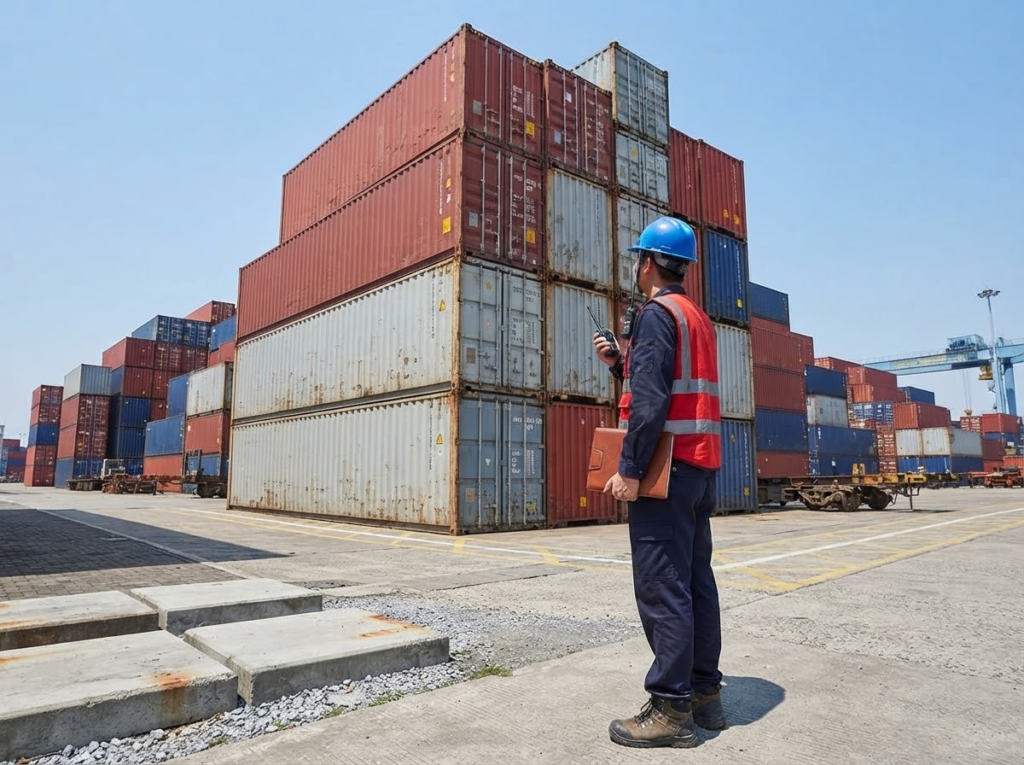
Forget the generic “best practices” lists. Here’s what actually works on the ground:
The Pre-Shipment Audit — Do This Two Weeks Before Cargo Ready Date
- Verify the fumigation certificate validity window. Most are good for 21 days. If your vessel gets delayed, that certificate expires mid-voyage. Red flag.
- Confirm the factory’s export license covers your exact HS code. Not “similar products.” Your exact code.
- Get the commercial invoice in both English and Chinese. The port customs officer reads Chinese. Your broker should too.
The Documentation Lock — 72 Hours Before Gate-In
- Send your customs broker a complete document packet: commercial invoice, packing list, customs declaration, export license copy, and — for solid wood — the fumigation certificate. All at once. Not piecemeal.
- Ask for written confirmation that the export license has been registered in the customs system. A verbal “yes” from the factory sales rep is worth nothing.
The Buffer Day Rule — Build In One Extra Day
- Book your vessel sailing with a one-day buffer before your documentation expires. If the fumigation certificate is valid until the 15th, your cargo needs to gate in by the 14th. Not the 15th. The 14th. Because trucks break down. Drivers get lost. Gates close early.
The Forwarder Red Flag — Ignore This at Your Peril
- If your freight forwarder says “don’t worry, we handle the customs declaration,” ask them who their designated broker is at that specific port. If they can’t name a person — a specific individual with a mobile number — you’re not their priority. Find another forwarder. This contradicts conventional wisdom that says “let the experts handle it.” In China, opacity in logistics isn’t expertise. It’s a liability.
The Holiday Calendar Check
- Cross-reference Chinese national holidays, local port holidays, and your factory’s vacation schedule. I’ve seen buyers lose entire weeks because they didn’t realize the factory was closed for Tomb-Sweeping Day while the port was open. The container arrives. Nobody’s there to sign the export declaration. Demurrage starts. Nobody to blame but yourself.

FAQ: What Buyers Actually Ask
Q: My factory says they’ll “handle everything” including customs clearance. Should I trust them?
A: Partially. Most established furniture factories in Guangdong and Zhejiang have in-house logistics teams that handle export declarations daily. But “handling everything” rarely includes verifying that your destination country’s import requirements are met. The factory clears Chinese customs. They don’t necessarily ensure your fumigation certificate meets USDA APHIS standards or that your commercial invoice format satisfies your broker in Long Beach. Verify separately. Always.
Q: How much demurrage is “normal” for a first-time buyer?
A: Zero. If you’re paying demurrage as a first-time buyer, something went wrong in your preparation phase. Industry observers estimate that 60-70% of demurrage incidents for furniture exports from China are documentation-related, not port congestion-related. That’s a preparation failure, not a logistics failure. The only acceptable demurrage is force majeure — a typhoon closing Yantian, for example. And even then, you should have cargo insurance that covers port delays.
Q: Can I negotiate demurrage fees down after they accrue?
A: Almost never. Terminal operators — COSCO, SIPG, YICT — don’t negotiate retroactively. The only exception is if you can prove the delay was caused by port system error or customs misclassification on their end. Good luck with that. Your energy is better spent preventing the fees than disputing them. I’ve seen buyers spend forty hours on emails and phone calls to recover $800 in disputed demurrage. That’s not a good ROI.
Q: Is it cheaper to use LCL (less than container load) to avoid demurrage risk?
A: No. LCL shipments consolidate multiple buyers’ cargo, which means you’re at the mercy of the slowest documentation in the group. Plus, LCL cargo sits in a container freight station (CFS) where storage fees often exceed demurrage rates. If you buy from China and you’re moving furniture, you’re almost always better off with FCL (full container load) and tight logistics control. The exception is sample orders under 5 CBM — and even then, use a forwarder who specializes in furniture LCL, not a general consolidator.
Q: Does demurrage apply if I buy ex-works and the factory arranges shipping?
A: Yes, but it depends on who controls the documentation timeline. If you’re buying FOB, you control the forwarder and the customs broker. If you’re buying EXW, the factory might use their preferred forwarder, which means you’re relying on their documentation speed. In my experience, roughly 80% of demurrage disputes I encounter involve EXW terms where the buyer assumed “the factory has it covered.” They didn’t. FOB gives you control. EXW gives you convenience until it doesn’t.
The Hard Lesson
At the end of the day, demurrage isn’t a shipping problem. It’s a planning problem dressed up in logistics clothing. The buyers who get burned are the ones who treated the port like a black box — cargo goes in, cargo comes out, someone else worries about the middle part.
That container of oak chairs in Yantian? The buyer eventually paid the fees, shipped the goods, and installed them in a fourteen-room boutique property outside Austin. Beautiful result. But they told me later that the $8,200 in demurrage wiped out their projected margin on the entire soft goods package for that project. One mistake. One invoice detail. One assumption that someone else was watching the calendar.
So here’s my question: if you buy from China and you can’t name your customs broker’s contact at the port, who exactly do you think is protecting your container from the meter?
Safe sourcing. Keep your paperwork tight.