

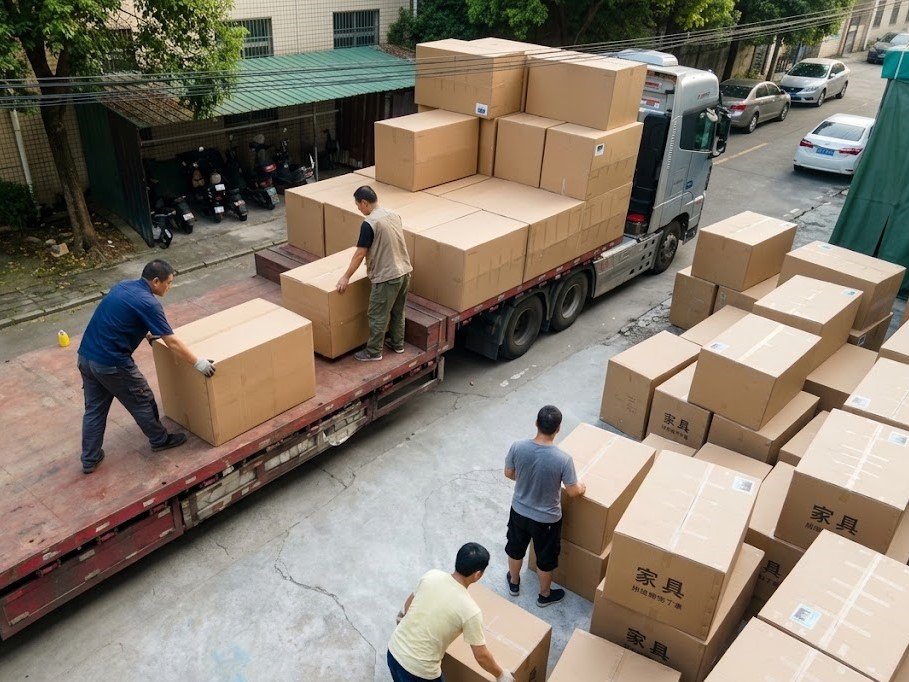
6:47 AM. My phone buzzed on the nightstand in Dongguan. Three hours ahead of Austin. My buyer was still up, staring at disaster.
“You need to see this.”
Forty-two cartons from a factory in Longjiang, east of Foshan. Her hotel group had wired $18,400. Another $4,200 for ocean freight. Now her Long Beach warehouse was sending photos that looked like a demolition site.
The smell hit first. Damp cardboard. That wet-dog-in-a-hot-car stench that means container sweat. Three chairs with legs snapped clean off. Seven more had corners crushed where five-ply cartons folded like wet newspaper under a marble sideboard above them. The sideboard? Perfect. Crated. ISPM-15 stamp. The chairs, “export packed” per the factory, looked drop-kicked.
“Is this… normal?”
It’s not normal. But it’s common. No packaging spec — no burst strengths, no foam densities — means you didn’t buy furniture. You bought a lottery ticket with a 35-day delivery window.
The Brutal Truth
Here’s what nobody says at Canton Fair.
The factory’s “standard export packing” is built for the truck ride from Shunde to Yantian port. That’s it. Three hours on decent roads. Not for the South China Sea swell. Not for six-high stacking in Port Klang. Not for the Red Sea humidity. Not for the Rotterdam forklift driver who treats unmarked boxes like personal insults.
Most buyers think packaging is the factory’s problem. It’s not. It’s yours.
The factory’s job? Get it out the door. Onto the truck. Invoiced. Your job? Make sure it survives after that. Containers shift. Temperature swings 40 degrees. “Container rain” — condensation dripping from the steel ceiling — soaks through cartons like they’re not even there.
Here’s my rule of thumb for China furniture packaging: if you can’t tell me the carton burst strength, the foam density in kg/m³, and what corner blocks are going on, you’re getting whatever was cheapest at 4:30 on a Friday.
Key Takeaway
- China furniture packaging isn’t a factory default — it’s a buyer specification. No spec means no protection.
- Sea freight damage is almost always a packaging failure, not a shipping problem. The container didn’t break your chair; the carton gave up.
- Furniture damage rates run higher than general cargo. Ocean average is 2–4%; furniture pushes 5–10% when packing is lazy.
- The cheapest fix — a written packaging specification before production — costs nothing and prevents most claims.
What “Export Standard” Really Means on the Factory Floor
Why Does That Phrase Mean Next to Nothing?
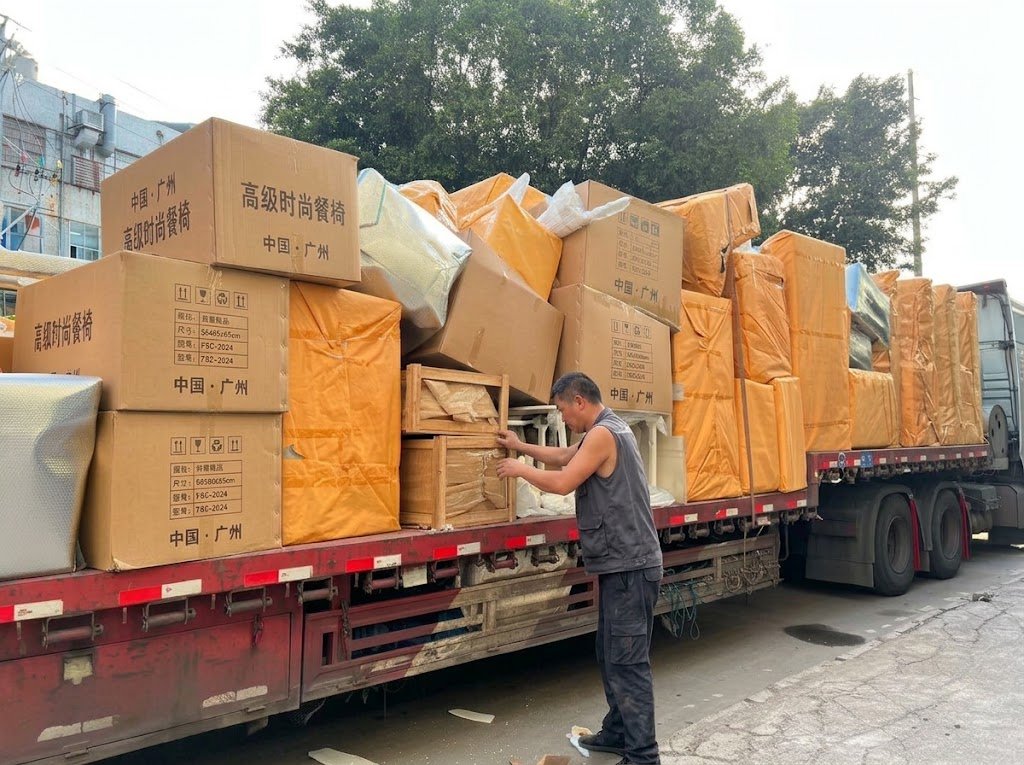
Walk into a mid-size factory in Shunde at 2 PM. Not the showroom. The back. Where the packing happens.
Rolls of PE foam — white, blue, dusty. Stacks of five-ply cartons. Workers in slippers, paid by the piece. The truck’s coming at 5. Cartons look fine. For a Guangzhou delivery? They are fine.
But export? It’s like bringing a raincoat to a hurricane.
In Foshan and the Pearl River Delta — Longjiang, Lecong — factories default to five-ply corrugated with one wrap of PE foam. Usually 10mm, maybe 15mm if you’re lucky. Under three stacked cartons in a 40ft container? It compresses to paper-thin in 72 hours. Cartons are taped at the seams, sometimes strapped with PP band that cuts into cardboard under load.
For a three-hour truck to Shenzhen, this works. For a month at sea? It’s tissue paper with delusions of grandeur.
And buyers never ask: who made the carton?
A five-ply carton from a quality mill in Dongguan or Zhejiang tests at 14 kgf/cm² burst strength or higher. The same five-ply from a discount supplier, identical to the eye, might test at 10. You can’t see the difference. You find out when the stack collapses in Singapore and your chairs become kindling.
Corner blocks? Rare unless you beg. Stretch wrap on drawers? Inconsistent — sometimes the worker ran out at 4:15 and nobody noticed. Surface protection for lacquer? Often skipped. The factory isn’t evil. They’re optimizing for speed because nobody told them the rules differ for a container crossing the Pacific.
Actually, that’s not quite right. What most buyers miss — what I missed for my first three years — is that the factory is cutting corners. Not because they’re dishonest. Because you didn’t draw the line. In China furniture packaging, no specification means no protection.
Inside the Steel Box: What 35 Days at Sea Actually Does
Can a Container Really Drown Your Furniture?
Picture the inside of a shipping container. It’s a metal lung. Temperature swings of 30 degrees Fahrenheit between day and night make the air expand and contract. Warm, moist air hits the cold steel ceiling at 3 AM south of Sri Lanka, drops below the dew point, and you’ve got “container rain.” Water dripping from the roof. Condensation running down the walls.
Wood swells. Fabric grows mold. Lacquer blisters. Hardware corrodes. And the cartons? They soften. A five-ply carton starting at 14 kgf/cm² can lose half its strength by day 20 in damp conditions. I’ve pulled cartons from containers in Long Beach that felt like wet newspaper.
Industry observers put ocean freight damage at 2–4% globally for general cargo. But furniture — bulky, irregular, surface-vulnerable — runs higher. Based on export data and my own tracking, sea freight damage on furniture orders ranges 5–10% depending on route, season, and whether your factory read your spec. Here’s what matters: roughly 65% of cargo damage claims trace back to poor packing, not the shipping line. Not bad luck. Packing.
The real kicker? Most damage hides until you unpack. The carton looks fine outside. Corner’s dented, sure — it’s a box. Inside, foam compressed to nothing, the corner block shifted, and the chair leg ground against a metal bracket for twenty-one days. You find out when your client sends the photo: “WTF?”
And moisture isn’t the only killer. Containers stack six high in port. The bottom one carries five others. If your cartons aren’t rated for compression — if heavy pieces aren’t on the floor, if you didn’t specify stack limits — you’re not shipping furniture. You’re running an experiment in structural failure.
The Ecosystem: Who Gets It Right
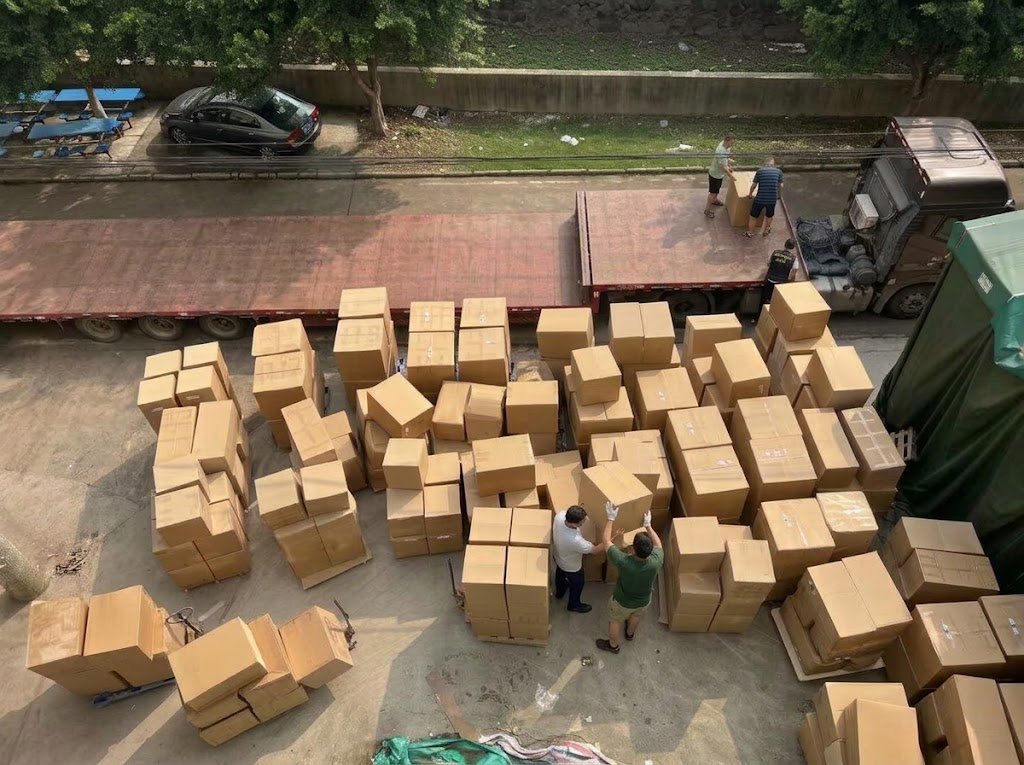
Factories selling to domestic hotel chains pack light — replacements are two days away. Factories with deep export scars, especially those serving European and North American project buyers, have tougher systems because they’ve paid the tuition on claims. One damaged container wipes out the margin on three good ones.
While some buyers gravitate toward massive volume manufacturers in Foshan, others find that mid-sized specialists — operations like Interi Furniture, which focuses on high-end custom contract furniture for hotels from its base in Panyu, Guangzhou — offer a different risk-reward equation. With two decades of export experience across 40-plus countries, they’ve had to develop packaging protocols that survive long-haul sea freight because their core business depends on delivering pristine goods to project sites where a replacement chair means a twelve-week lead time and a very angry project manager.
Even experienced exporters default to lighter packing if the buyer doesn’t push back. The factory wants to minimize material cost and labor. You want the opposite. The gap between those incentives? That’s where sea freight damage lives.
Your Packaging Playbook: What Actually Works
Before you sign the PO, write the spec. Not “good export packing please.” A document with numbers. Carton ply. Foam density in kg/m³. Corner block material. Crating rules. Moisture control. Marking requirements. Loading plan. Make it a contractual deliverable.
Carton spec — Five-ply baseline for standard upholstered and solid wood. Seven-ply for glass, stone, or fragile finishes. Minimum burst strength: 14 kgf/cm² for five-ply, 18 kgf/cm² for seven-ply. Ask for the test certificate. If they look at you like you’re speaking Martian, find a new supplier.
Foam density — PE foam at 25–33 kg/m³ for standard pieces. Bump to 33–45 kg/m³ for stone or glass. Minimum 20mm on all six faces. Thin foam is worse than no foam — false confidence. Security theater.
Corner blocks — EPS or high-density PE foam at all eight corners. First thing factories skip when the truck is idling outside. Don’t let them.
Surface wrap — Non-woven fabric or tissue paper between finish and foam. PE foam pressed against lacquer for thirty days leaves marks you can’t buff out. I learned this the hard way in Dongguan — a $3,200 console table that arrived looking like it had acne.
Inner securing — Stretch wrap on drawers, doors, and handles before boxing. Loose parts in a rolling container become projectiles. I’ve seen a loose drawer handle punch through three cartons.
Wooden crating — Non-negotiable for glass over 900mm, marble tops, and large mirrors. Timber must be ISPM-15 stamped — heat treated, not chemically fumigated with methyl bromide. More ports reject chemical fumigation certificates. A crated piece costs more to ship but arrives intact. An uncrated piece that breaks costs you the piece, the freight both ways, and the client.
Moisture control — Calcium chloride container desiccants. Not silica gel. Silica gel absorbs 25–30% of its own weight and can release moisture back when temperatures climb. Calcium chloride traps moisture as gel and absorbs several times its weight. For a 40ft container, use 12 to 16 strips. For a 20ft, 6 to 8. Place along walls and ceiling, not buried under cargo. I’ve seen buyers toss four silica gel packets into a 40ft container and call it done. That’s a $20,000 joke.
Marking — Every carton needs: PO number, item code, “Made in China,” gross and net weight in kg, external dimensions in cm, and care marks (“This Way Up,” “Fragile,” stack limits). Factories print whatever you specify at zero cost. Cartons show up unmarked because the buyer didn’t ask.
Loading plan — Get the stow diagram before the seal. Heavy items on the floor. Nothing over 180cm in carton length — long cartons rack during handling like a wet noodle. Verify stack limits are printed on cartons and observed inside. I’ve seen cartons saying “Max 3 High” with five stacked because the supervisor was on his phone.
Red flag: If the factory says “don’t worry, we export all the time” — worry. The factories that push back, that ask about foam density and desiccant placement? Those get it right. The ones saying “no problem” to everything? They’re sending you photos at 6:47 AM.

FAQ: The Questions Buyers Actually Ask Me
Q: My factory swears they use “five-layer export carton.” Should I sleep easy?
A: Not unless you know what’s inside. Five-ply is the right starting point for most upholstered and solid wood furniture, but layer count tells you almost nothing. Burst strength matters. Foam density matters. Corner blocks matter. Ask for the burst strength test. If they can’t produce it — if they give you that “why are you making this difficult” look — you’re getting discount board. Five-ply at 10 kgf/cm² burst strength folds under pressure like a cheap suit.
Q: How much is proper China furniture packaging going to add to my unit cost?
A: Roughly 3% to 7% on most orders. A wooden crate for a large dining table adds $40 to $60. Upgraded foam and corner blocks on a chair? Maybe $2 to $4. Compare that to the replacement piece, the freight, the project delay, and your client’s face when you tell them delivery is pushed six weeks. It’s the cheapest insurance you’ll ever buy. Unlike actual insurance, it prevents the damage instead of cutting a check six months after you’ve lost the client.
Q: Do I really need container desiccants if everything’s sealed in cartons?
A: You do. Cartons are not moisture barriers. They’re paper. Humidity passes through corrugated board like it’s not even there. Once damp, board loses structural strength fast. Shipping through tropical zones — basically everything from China to Europe, the Americas, or Africa — means desiccants are non-negotiable. Use calcium chloride strips, not silica gel packets from shoe boxes. Silica gel is for sneakers. Calcium chloride is for 40ft steel boxes crossing the equator.
Q: Should I pay for a third-party inspector to check packing before shipment?
A: If the order value is over $15,000, or pieces are custom and hard to replace, yes. Pre-shipment inspection with packed-carton photography, foam thickness verification with a caliper, and loading supervision runs $300 to $500. I’ve seen inspectors catch factories using three-ply instead of specified five-ply. I’ve seen them catch workers skipping corner blocks on half the cartons to make quota. The factory fixes it on the spot if your inspector stands there with a camera and checklist. They won’t fix it if you’re 8,000 miles away hoping for the best.
Q: So is sea freight damage just the cost of doing business in China?
A: No. It depends on whether you treated packaging as a specification or an assumption. Buyers who write detailed specs, verify at inspection, and control loading rarely see damage above 1%. Buyers who trust the factory’s “standard” see rates that make them question sourcing from China. The damage is optional. The protection is cheap. The only expensive choice is doing nothing and hoping the ocean stays gentle.
The Hard Lesson
I used to blame bad factories. After fifteen years in packing stations across Dongguan, Longjiang, and Panyu — after enough 6:47 AM calls with photos that ruined my breakfast — I know better.
The problem isn’t the factory. It’s the expectation that someone else cares about your furniture as much as you do. They don’t. They’ve got fifty orders to pack before the truck leaves at 5 PM. Your chairs are just another stack of cartons in the corner.
The only person who loses sleep when a $2,400 armchair arrives with a cracked frame is you. So write the spec. Inspect the cartons. Question the foam. Count the desiccants. Check the ISPM-15 stamps. And when the factory says “don’t worry” — worry.
At the end of the day, China furniture packaging isn’t rocket science. It’s a process. And like every other process in this business, it rewards buyers who show up with a checklist, a camera, a caliper, and a healthy distrust of “standard export packing.”
What’s the most expensive piece you’ve ever written off because the carton gave up before the voyage did?