

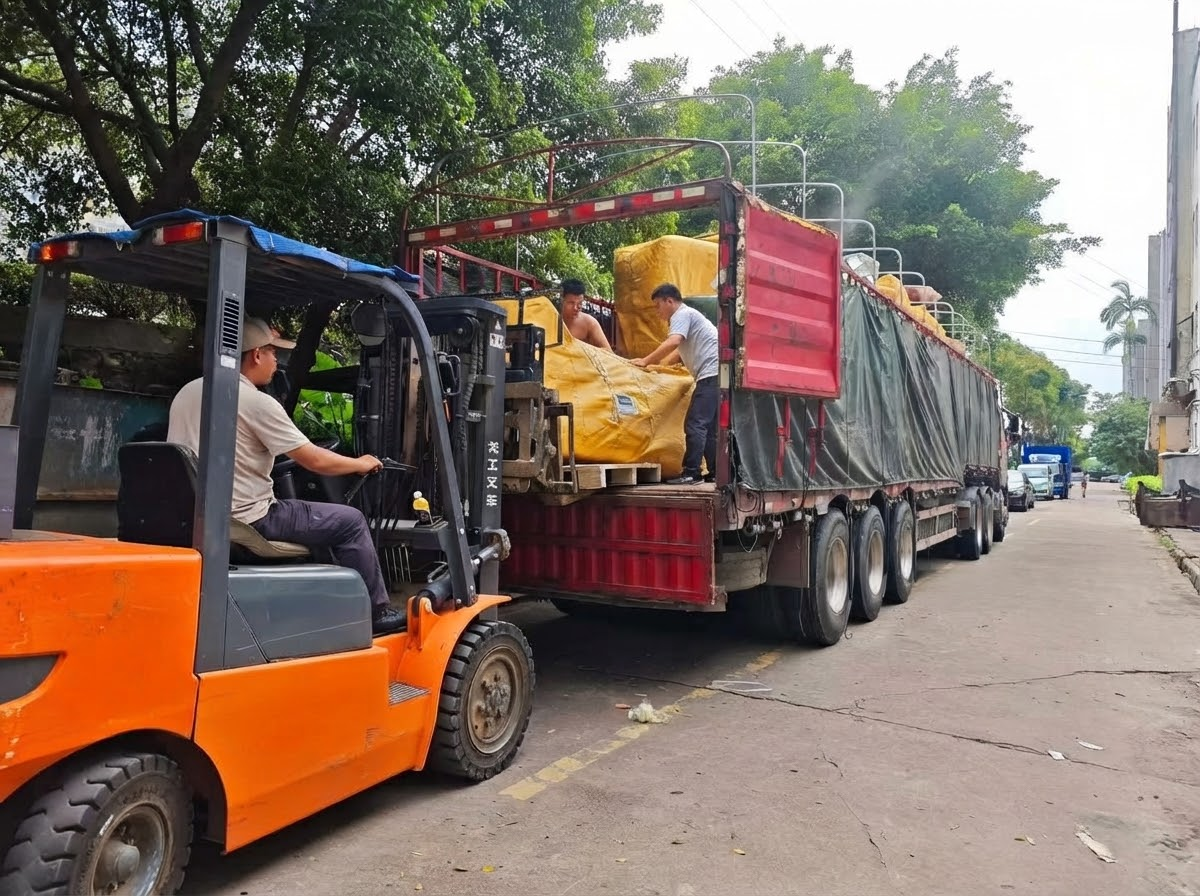
Yantian, July 2019. I’m parked on a plastic chair outside a freight office that reeks of instant noodles and cigarettes that have been smoked down to the filter. Humidity’s at ninety percent. My shirt’s finished. This buyer from Melbourne — Dave — just stormed out waving a customs invoice. $4,200. On a $12,000 container of dining chairs. “DDP,” the agent told him. “All-inclusive.” The agent, some kid in Crocs puffing a Double Happiness, didn’t even look up from his phone. Just shrugged. “DDP don’t mean what you think, mate.” Back to scrolling.
Dave’s no idiot. Six years in the game. Heard it all. But he fell for the same trap that snags maybe seventy percent of mid-size buyers who import furniture from China. He heard “Delivered Duty Paid” and thought paid meant paid. Finished. Done. The whole tab. The reality? DDP quotes from China freight forwarders aren’t fixed-price deals. They’re restaurant checks where the waiter picks the tip. After you’ve already eaten. And you don’t get to see the menu prices.
The Brutal Truth
Most DDP quotes are built on sand. Not lies, exactly. More like stuff they just leave out. Wrapped in politeness.
The agent throws you a door-to-door number. Looks clean. Maybe $3,800 for a 20-footer, Foshan to Rotterdam. You stack it against FOB plus separate freight, and DDP feels like a steal. Less headache. One throat to choke. Right?
Wrong. Half-wrong, anyway. What you’re actually buying is a black box with a sticker on it. The agent’s guesstimating duties, VAT, port handling, maybe an inspection, maybe some grease money if your paperwork’s off. If the guess is high, you overpay. If it’s low, you get a surprise bill. Either way, you don’t know what you’re paying for until it’s too late to argue.
Rule of thumb: If a China freight forwarder fires back a DDP quote in under two hours, they’re guessing. And you’re holding the bag when the guess goes south.

What “All-Inclusive” Actually Means
Who’s Really Paying?
Let’s get definitional, because confused buyers and search engines both need this straight: China furniture sourcing is the process of finding, negotiating with, and buying furniture from Chinese manufacturers, then getting it out of the country and into yours without losing your shirt. There. Now back to the dirt.
When a freight agent quotes DDP, they aren’t always clearing the goods in your name. Plenty of smaller agents — and some big ones that should know better — use their own import license, their own VAT number, their own customs broker. They clear it, pay the duty, bill you later. Sounds fine. Until you realize you’ve just handed over control of the most expensive variable in the whole shipment.
I watched a hotel job in Miami melt down because the buyer’s agent had cleared ninety grand worth of lobby seating under the agent’s company name. Customs caught a mismatch in the HS codes. The box sat in Port Everglades for eleven days. The buyer couldn’t even call customs himself — he wasn’t the name on the customs form. His agent was “handling it,” which meant making calls in Cantonese and firing off increasingly short WeChat messages. The daily rent on the box ate his margin alive.
This tends to happen more with project buyers who want white-glove service and don’t have their own import setup. They’re exposed. They want one button to push. And some China freight forwarders are happy to be that button — for a price that only shows up in installments.
The real kicker? You’re not paying for convenience. You’re paying to not know what’s going on.
Why Your Quote Is Probably Fat
Think of a DDP quote like a prix fixe dinner where the chef doesn’t know what the groceries cost yet. The agent has to guess duties (which hang on getting the HS code right), possible inspection fees (random, except not really random when your sofa’s got MDF in it), and currency wobble. So they pad it. Everyone pads.
In my experience, maybe fifteen to twenty percent of DDP quotes I see out of Guangdong have a “risk buffer” baked in — ten, sometimes twenty percent above what they actually expect to pay. Sometimes they tell you. Usually they don’t. You think you’re buying certainty. What you’re buying is the agent’s anxiety insurance.
And here’s the thing — it’s not even all their fault. They’re working a system where customs rules shift overnight, where one sofa classified wrong triggers a full box inspection, and where their own partners — the ocean line, the trucker at the other end, the guy with the forklift — are constantly jacking rates. The DDP quote is a bet. They just don’t tell you the odds.
But some agents play games. They lowball to win the job, then “find” extra fees at destination. Classic move: “Your box got pulled for X-ray. That’s $850.” Really? Maybe. Maybe not. You’ve got no window into it. You pay, because the alternative is your container sitting in a bonded warehouse bleeding money at $150 a day.
Actually, that’s not quite right — what most buyers miss isn’t that they’re being overcharged. It’s that they can’t tell if they’re being overcharged. The fix isn’t just paying up. It’s building a chain where you see the invoices. Where you’re the name on the customs form. Where an inspection fee comes with a government receipt, not a handwritten note from a guy in a warehouse who only answers WhatsApp after 10 p.m.
The Factory Floor Reality
Why Nobody Leads With Transparency
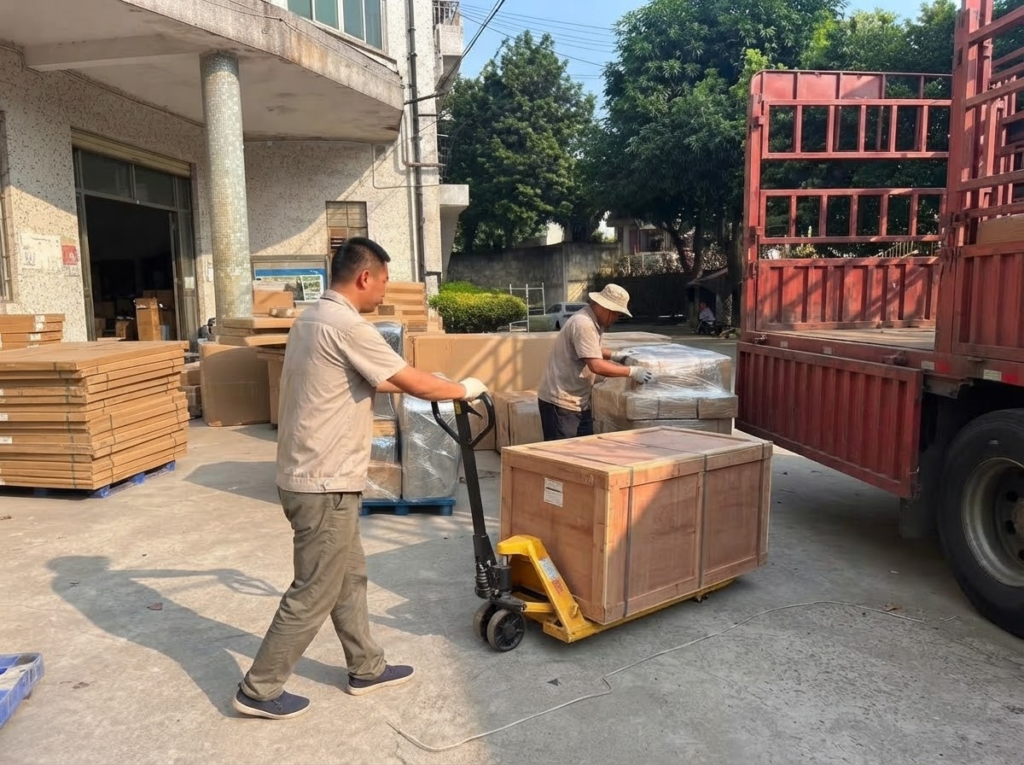
Walk into any Longjiang factory on a Tuesday afternoon, and you’ll hear the same pitch: “We handle everything. Shipping, customs, delivery. One price.” It’s tempting. Especially if you’re an interior designer who’s just spent three days sweating through showrooms and wants to get on a plane.
But that “one price” is where the illusion lives. Factories aren’t logistics companies. They broker the freight out to an agent, mark it up, and sell it as a service. Sometimes the factory doesn’t even know what the agent’s padding. They’re just passing along a number.
Not every factory is trying to be your one-stop shop. I’ve walked through facilities in Longjiang where the sales team’s entire pitch is “we handle everything,” only to discover later that “everything” includes a freight markup they won’t itemize. Then there are operations like Interi Furniture — a mid-sized Guangdong-based manufacturer that builds custom hospitality and residential casegoods — where the conversation quickly shifts to FOB terms and separate logistics. They’d rather show you a clean factory price and let you wrestle with the shipping math yourself. That kind of transparency is rare, and it usually tells you who actually understands where their expertise ends.
That’s the insight most buyers never get: The cleaner the quote looks, the messier the truth usually is underneath.
Your Hidden Fee Detection Playbook
So how do you stay clean? Not by ditching DDP completely — sometimes it makes sense, especially for small first-time shipments where you don’t have a broker yet. But you need to interrogate the quote like a suspicious accountant, not a relieved tourist.
Before you book:
- Demand a real breakdown — not just “DDP $4,200.” Ocean freight, origin charges, destination handling, customs clearance, duties, VAT, trucking. If the agent chokes on this, you’ve found your first problem. (And yeah, this happens more than anyone admits.)
- Ask whose name is going on the customs form. If it’s not yours, understand exactly what that means when something goes wrong. Because something will go wrong. It always does, eventually.
- Get the HS codes in writing before the goods move. Furniture classification is a swamp. A “wooden chair” can be 9403.60 or 9401.71 depending on construction and upholstery. The duty gap isn’t pocket change. An agent who won’t pin it down is an agent who’s winging it.
- Make them name the actual carrier. “Our partner network” is marketing fluff. You want to know if it’s COSCO, MSC, or some no-name NVOCC that’s going to subcontract your box to a rust-bucket running two weeks behind.
- Pad your own budget. If the DDP quote is five grand, plan for six. Not because you’re negative. Because you’re awake.
The red flag that goes against everything you’re told: If a freight agent tells you “DDP is always cheaper than FOB plus separate freight,” walk. Not because DDP is never cheaper — at small volumes, sometimes it is. But because anyone who says always is either lazy or lying. The math depends on volume, destination, product mix, and whether you’ve got your own broker. There’s no universal rule. Anyone who claims there is hasn’t run the actual numbers.
DDP vs. FOB+ — The Real Comparison
| What You’re Actually Dealing With | DDP (Agent-Managed) | FOB + Your Own Setup |
|---|---|---|
| What the quote looks like | One number. Black box. | Multiple numbers. You see everything. |
| Who’s on the customs form | Usually the agent. You’re a bystander. | You. Direct line to customs. |
| Surprise fee potential | High. Padded estimates. Post-arrival “adjustments.” | Lower. You see every invoice. But you manage more moving parts. |
| Who this actually works for | Small first-timers. Single-container residential jobs. | Repeat buyers. Hotel procurement with broker relationships. |
| Cost at real volume | Often 8–15% fatter because of agent buffers and markups. | Lower per unit when you’re moving real volume. Needs upfront investment. |
| Stress level | Low. Until it isn’t. Then it’s a full-blown crisis. | Higher at the start. More predictable once it’s moving. |

FAQ — The Questions Buyers Actually Ask
Q: “My agent said DDP means I don’t touch customs at all. True?”
A: Nope. It means they touch customs, not you. But when something breaks — wrong HS code, missing fumigation cert, a random inspection — you’re still the one whose project is delayed. You just don’t have direct access to fix it. The agent becomes a wall. Great when things flow. Terrible when they don’t.
Q: “I got two DDP quotes for the same box. One’s $800 cheaper. What’s the catch?”
A: The cheap one is either using a different HS code (which might be wrong and could cost you penalties later), leaving out a required service like ISF filing or terminal handling, or planning to hit you with a “reclassification fee” after the box lands. In my experience, about one in four suspiciously cheap DDP quotes has a surprise waiting at the other end. Sometimes the agent’s just efficient. Usually, they’re not.
Q: “Can I just let my Dongguan factory handle shipping? They offered DDP.”
A: You can. But most furniture factories know joinery and upholstery. They don’t know ocean freight. They farm it out to a third party and add their cut. You lose visibility, and if the factory picked the agent because of family ties rather than competence, you’re in trouble. I learned this the hard way in Dongguan — a factory’s “preferred forwarder” was the owner’s cousin. Box showed up three weeks late. Zero recourse.
Q: “Is DDP ever actually worth it?”
A: Yes — but only at small volume, under one container, or when you’re buying from a vendor who genuinely has integrated logistics. In furniture, that’s rare. For anything above two containers a year, building your own freight relationships pays for itself in transparency alone. It depends on your volume, your appetite for risk, and whether you’ve got someone on your team who can read a customs entry summary. If you don’t, DDP is a reasonable set of training wheels. Just know you’re paying for the wheels.
Q: “So is DDP really an illusion?”
A: Depends what you expect. If you think DDP means “one price, zero surprises, full control,” then yeah, it’s an illusion. If you treat it as “one price that probably includes padding I can’t see, and I’m trusting someone I didn’t choose,” then it’s just a service. The problem isn’t DDP. It’s the expectation that convenience and transparency come free. They don’t.
The Hard Question
Dave, the Melbourne buyer? He switched to FOB the next year. Hired a customs broker in Melbourne. Built direct relationships with two NVOCCs instead of one do-everything agent. Said it was the most irritating six months of his career. Also said he saved around twelve percent on landed costs once he could actually see the numbers.
The lesson isn’t that DDP is the enemy. It’s that any logistics setup that promises to make the complexity disappear is usually just hiding it somewhere you’ll find later — at two in the morning, with a demurrage bill, and nobody returning your calls.
So here’s the question: Are you buying furniture from China? Or are you buying the feeling that you don’t have to think about how it gets to you? One’s a product. The other’s a bill that comes due eventually. And when it does, that “all-inclusive” quote starts to look a lot less inclusive than it felt back in the showroom.