

Longjiang in August is basically a sauna. I was standing inside a massive, over-air-conditioned showroom right off the main drag in Foshan, staring dead at a tufted velvet Chesterfield sofa.
My client—a boutique hotel procurement director back in London—was about twenty minutes away from wiring an $85,000 deposit. A massive lobby rollout, based entirely on this one sample. The sales rep, let’s call her Maggie (because every trading company has a Maggie), wore a razor-sharp blazer. She poured me high-mountain tea from an elaborate carved root-wood tray. Handed me a glossy, thick-stock brochure that probably cost ten bucks a pop to print.
Everything in that room looked flawless.
But when I asked to walk the production floor to see where this exact sofa was supposedly being framed and upholstered? The excuses started instantly.
“The floor manager took the keys home to his village.”
“That specific assembly line is closed today for a government safety inspection.”
“The workers are on a special extended lunch break.”
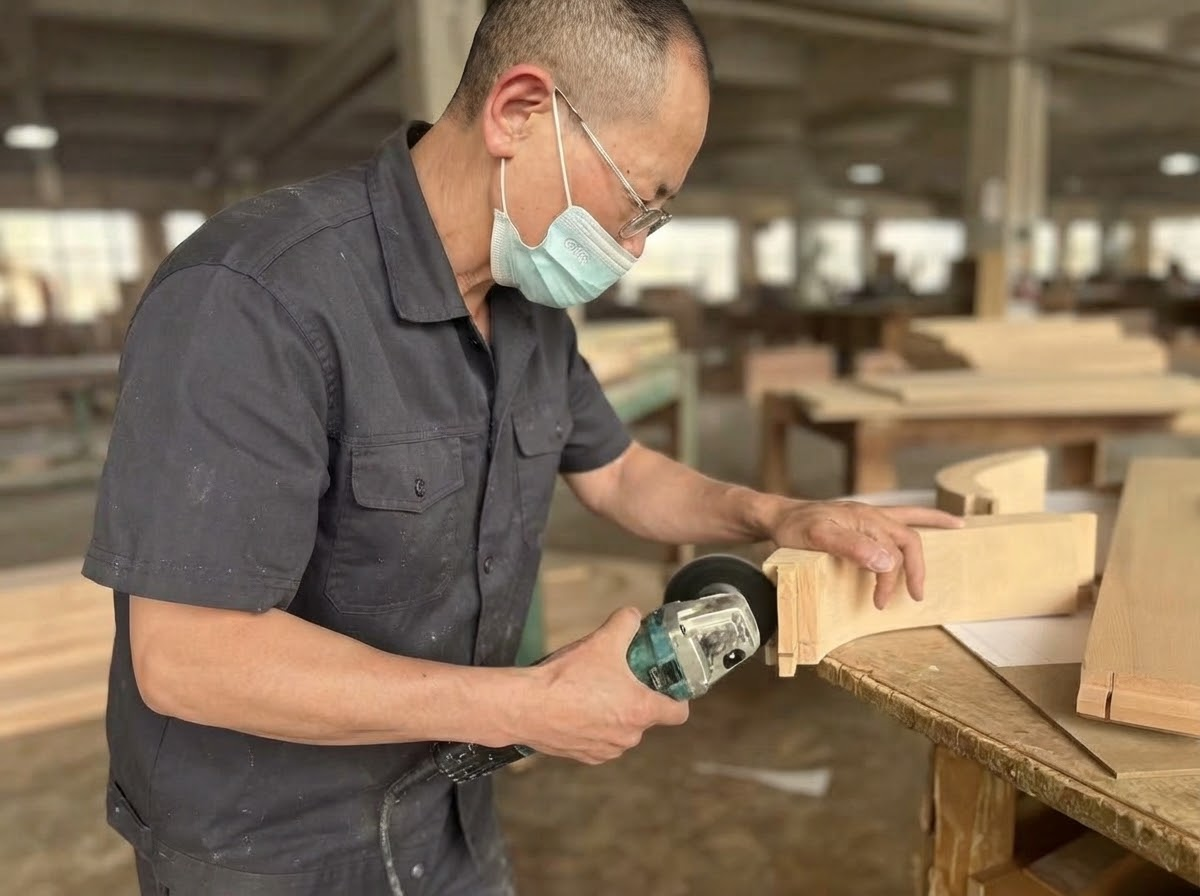
I didn’t back down. I never do. After twenty minutes of uncomfortable silence and aggressive tea-pouring, we finally hopped into a dusty electric golf cart. Drove three miles past the gleaming industrial park, took a hard left down a deeply rutted dirt road, and walked into a corrugated metal shed. It smelled heavily of cheap contact adhesive and stale sweat. Inside, five guys chain-smoking Double Happiness cigarettes were hastily stapling ridiculously thin fabric over green, unkilned pine.
That beautiful Chesterfield back in the showroom? They hadn’t made it. They bought a single unit from a high-end competitor just to hook foreign buyers. If my client had wired that cash, the garbage in this shed is exactly what would have shown up in London three months later.
The Brutal Truth About “Direct from Factory”
The uncomfortable reality—the one platform sales reps pray you never figure out—is that you are probably being lied to right now. The Chinese furniture supply chain isn’t some neat, straight line. It is a total labyrinth. We are talking aggressive subcontracting, shadow factories, and slick trading companies wearing the skin of legacy manufacturers.
You think you’re dealing direct. You aren’t.
You think your 30% deposit secures raw materials for your specific production run. It actually just secures a spot in an outsourced queue you know absolutely nothing about.
Here is my golden rule of thumb for Guangdong sourcing: If you haven’t personally kicked a pile of fresh sawdust on their actual factory floor, you don’t have a manufacturer yet.
KEY TAKEAWAYS: SURVIVING THE HUSTLE
- Showrooms mean nothing: Polished sample rooms are routinely stocked with competitor products to secure your deposit.
- Subcontracting is the default: Unless aggressively audited, assume your order will be farmed out to cheaper, unregulated village workshops.
- Verification requires boots on the ground: Documentation and WeChat photos can be faked; a running CNC machine, warm glue guns, and an active upholstery line cannot.
The Anatomy of a Furniture Phantom
Trying to source commercial-grade furniture in China without physical oversight is exactly like using a sketchy dating app. The profile pictures are heavily filtered. The bio is deeply aspirational. And the reality that shows up to the date might be an entirely different entity altogether. (And yes, this bait-and-switch happens way more than anyone in the hospitality procurement world is willing to admit).
A proper China factory audit is the grueling process of physically verifying a manufacturer’s true production capacity, quality control systems, and actual ownership structure before a single dollar changes hands.
Without that audit? You are flying completely blind. Last year, I walked into a supposed “mega-factory” in Dongguan. Their Alibaba profile claimed a monthly capacity of fifty shipping containers. What did I actually find when I pushed past the showroom? Three busted sewing machines, a rusty drill press, and a very nervous manager sweating through his shirt.
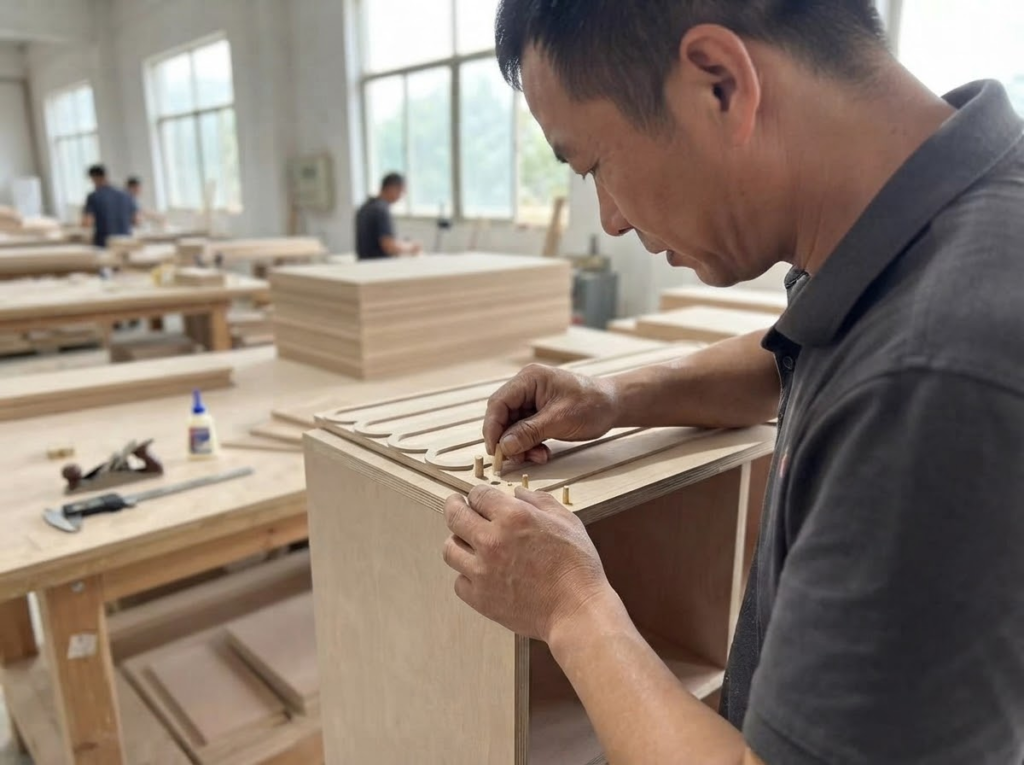
The real production was happening in five different village workshops scattered across the province. None of those workshops had climate-controlled painting rooms. None had proper wood drying kilns. And absolutely none of them cared about the strict fire-retardancy specs my client legally required.
Smoke and mirrors. Literally just a setup engineered to grab your deposit.
Are you buying from a factory, or a warehouse with an English speaker?
Look at the numbers. It’s safe to say at least 40% of the “manufacturers” you find on global B2B platforms are just trading companies. They rent a massive, impressive warehouse. They build out a gorgeous showroom with perfect track lighting. Then they farm out the actual production to the absolute lowest bidder the second your Letter of Credit clears the bank. The company that stamps your commercial invoice is almost never the company cutting your wood.
Actually, that’s not quite right—what most buyers miss is that the trading company often does own a tiny, token workshop. They keep a handful of hourly workers on payroll just in case a foreign buyer demands a video call. They’ll walk around the shop floor, show you some sparks flying from a welder, and confidently claim the other 400 workers are at the canteen.
Sizing Up the Market (and Finding the Middle Ground)
If you spend enough time bouncing between the dust-choked industrial zones of Nankang, Anji, and Foshan, you realize the furniture ecosystem here is violently tiered.
On one extreme, you have the state-backed conglomerates. These places are literal cities, boasting 100,000-square-meter footprints. They have their own in-house testing labs, automated UV finishing lines, and dormitories for thousands of workers. But they also enforce astronomical minimum order quantities (MOQs). If you aren’t buying 50 containers a month, they treat you like dirt. Good luck getting them to tweak the armrest height on a custom lounge chair.
On the other extreme, you have the village workshops. Cheap? Insanely. Capable of passing a commercial BIFMA drop-test or a UK crib 5 fire-retardancy test? Not a chance in hell.
So where does a smart buyer go? The middle.
Take a project I worked on recently. The buyer almost signed with a massive conglomerate, only to realize they were too small a fish to get any custom marble top configurations approved. They ended up pivoting to a mid-sized specialist over in Guangzhou—an operation like Interi Furniture, which heavily targets the high-end commercial and residential export space. Operations like that offer a completely different risk-reward equation. Why? Because a mid-tier factory usually owns its core upholstery and frame assembly lines outright. They maintain much tighter control over their sub-tier suppliers, but they remain hungry enough to actually care about a twelve-container boutique hotel rollout.
Understanding who you are dealing with dictates exactly how you structure your contract and your QA process. Here is how the landscape usually breaks down:
| Supplier Tier | Typical Profile | Best For | The Hidden Risk |
|---|---|---|---|
| The Megalith | $50M+ revenue, fully integrated, highly rigid management. | Massive retail chains, 500+ room mega-hotels. | You are a rounding error to them. Zero flexibility on custom designs. |
| The Mid-Sized Specialist | $10M-$30M revenue, specialized in specific materials/styles. | Boutique hotels, high-end residential, mid-size retail. | Might still outsource highly complex components (like custom brass plating). |
| The Trading Co. | Flawless English, incredible showroom, zero actual machinery. | Naive buyers who prioritize communication over price control. | Complete loss of quality control; aggressive bait-and-switch on materials. |
| The Village Workshop | Dirt floors, cash only, highly skilled but totally inconsistent. | Domestic market, ultra-budget buyers. | Zero IP protection, zero compliance, massive defect rates. |
The Paper Trail Illusion and Compliance Theater
Let’s talk about paperwork for a minute. I cannot tell you how many times a junior procurement director has confidently shoved an ISO 9001 certificate across my desk as ironclad proof of a factory’s legitimacy.
Listen to me. Roughly 70% of the certifications handed to foreign buyers in the furniture space are entirely worthless. They are either dangerously outdated, completely fabricated in Photoshop, or legitimately issued—but to a completely different holding company owned by the boss’s brother-in-law. Buying a fake FSC (Forest Stewardship Council) certificate in Guangdong costs less than a decent dim sum dinner.
Why Your “Verified” Supplier Secretly Outsources
Environmental regulations in China have gotten brutal over the last few years. The government has aggressively cracked down on Volatile Organic Compounds (VOCs) emitting from furniture painting lines.
And here’s the real kicker. A supplier will proudly walk you through their pristine, climate-controlled, dust-free water-based painting room. It looks incredible. State of the art. But if you look closely—and I mean really look—the exhaust fans are totally clean. There’s no dried overspray on the concrete floor. The air smells like a library.
Why? Because operating that eco-friendly paint line costs a fortune in electricity and filters. They keep it spotless purely to show inspectors and foreign buyers. Once you leave, they truck your raw, sanded furniture out at midnight to an illegal, unregulated solvent spray shop hidden up in the mountains just to save 12% on finishing costs.
If a factory component looks too clean to be true, it is not being used to make your product.
How to Actually Check Under the Hood
You need a systematic, slightly paranoid approach to cut through this theater. To actually verify Chinese furniture supplier capabilities, you have to stop looking at what they want to show you, and start digging into the boring, dirty, operational realities of their daily grind.
Here is my mandatory, boots-on-the-ground framework. Memorize it.
- Follow the raw materials: Don’t just stare at the shiny assembly line. Walk outside. Ask to see the wood yard and the drying kilns. If they claim they are manufacturing solid American oak dining tables, but their yard is stacked high with cheap, local rubberwood, you have a massive problem. Moisture content is the silent killer of exported furniture. Bring your own moisture meter. Stab the wood yourself.
- The Rafters and Scrap Bins Test: This is my absolute favorite contrarian red flag. Look up at the rafters. Are they covered in fine sawdust? Good. Now look at the trash out back. If a factory is spotless, with no piles of off-cuts, empty foam barrels, or messy fabric scraps, they aren’t manufacturing anything. Real factories generate immense amounts of highly specific waste. No waste? No production.
- Audit the worker turnover: Ask the line supervisor—not the smooth-talking sales rep—how long the upholstery team has been there. High-end upholstery, especially deep button tufting, requires serious muscle memory. If the factory relies on piece-rate day-laborers brought in per order, your sofas will look like a high school home-economics project by the time they reach Los Angeles.
- Check the Power Bill: Want to terrify a fake factory? Ask to see last month’s industrial electricity receipt. A real factory running heavy machinery, dust extractors, and kilns burns massive amounts of power. A trading company acting as a factory will have a power bill similar to a large residential house.
- Demand the sub-tier list: Every single factory outsources something. Maybe it’s the brass hardware casting, maybe it’s the powder coating for the metal chair legs. Force them to name their sub-suppliers in your contract. If they look you in the eye and claim they do 100% of everything in-house from scratch, they are lying.
- The “Show Me” Test: Walk up to a complex, expensive piece of machinery—like an automated edge bander or a 5-axis CNC router. Ask them to turn it on and run a quick scrap piece for you right then and there. If it takes them 45 minutes to find the one guy in the building who actually knows how to turn it on, that machine is a prop.

FAQs from the Factory Floor
Q: What if my supplier sends me a live video tour on WeChat? Isn’t that enough to prove they are a real factory?
A: Absolutely not. A live video tour proves exactly one thing: that the person holding the smartphone has physical access to a factory building on that specific Tuesday afternoon. It doesn’t prove they own the facility, it doesn’t prove they employ those workers, and it certainly doesn’t prove your specific order will be made there. I’ve personally seen trading company reps pay factory security guards 500 RMB just to let them walk around the floor with a phone for an hour to appease a nervous American buyer.
Q: Do I really need to hire a third-party inspector if the factory has stellar Alibaba reviews and a Gold Supplier badge?
A: Yes. You always need independent, third-party inspection. Badges and platform reviews are essentially marketing expenses. They reflect a supplier’s ability to navigate an algorithm, pay platform fees, and resolve minor disputes. They do not reflect their ability to deliver 500 defect-free commercial lounge chairs. Never, under any circumstances, let the entity building your product be the only entity inspecting your product.
Q: How do I know if they are secretly changing the foam density inside the sofas to save money?
A: You cut one open. It’s that simple. During a pre-shipment inspection, randomly select one finished piece from the production run. Don’t let them pick the sample. You pick it. Take a box cutter and physically slice the upholstery wide open. Weigh the foam block. Check the internal frame joints and the webbing. If you aren’t willing to completely destroy one $400 chair to save an $80,000 container from being rejected by your client, you have no business sourcing in China.
Q: Can I just rely on a comprehensive, airtight contract to protect myself from these supply chain games?
A: It depends entirely on whether your contract is actually enforceable in a mainland Chinese court. A beautifully drafted contract written in English, governed by US or UK law, is functionally just a piece of decorative toilet paper in Foshan. If you don’t have a bilingual NNN (Non-Disclosure, Non-Use, Non-Circumvention) agreement, and a manufacturing contract stamped with the factory’s official red corporate seal, your legal leverage is exactly zero.
The Final Word
Sourcing furniture in China is not for the faint of heart, the easily intimidated, or the hopelessly naive. It is a grueling, hyper-competitive street fight where margins are razor-thin and the temptation to cut corners is baked deep into the very DNA of the industrial ecosystem.
But let’s be fair. It’s also the only place on earth where you can scale production with such terrifying speed and capability—if you know exactly how to navigate the shadows. The skilled labor exists. The infrastructure is unparalleled. The quality can be world-class. You just have to fight for it.
Stop buying the showroom. Stop falling in love with the glossy brochures, the flawless English-speaking reps, and the high-mountain tea. At the end of the day, you have to ask yourself one very hard question before you wire that 30% deposit across the ocean: Are you buying a beautifully crafted piece of furniture, or just a beautifully crafted illusion?
Stay sharp out there. Keep your boots dusty.