


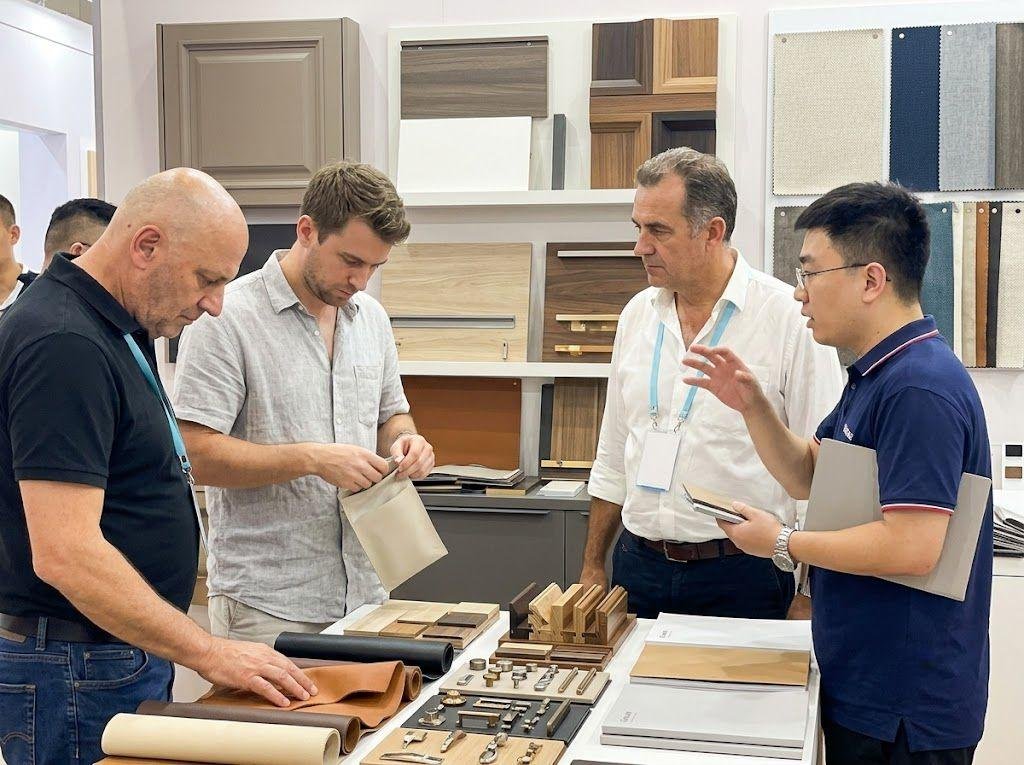
Lao Chen’s showroom in Lecong had air conditioning that worked too well. July. Forty degrees outside. Inside, I was shivering in a polo shirt, staring at a price sheet he’d slid across a marble table like he was dealing cards. $847. Solid ash dining table. His “best price.” I looked at the number. He looked at me. The AC hummed. And I knew — I knew — that figure had about as much backbone as a wet noodle.
Three hours later we’d toured his workshop, shared cigarettes on a loading dock that smelled like sawdust and diesel, and argued about veneer grades in a mix of broken English and my even more broken Mandarin. The number? $612. Same table. Same afternoon. Twelve years back. I’ve been to that district maybe forty times since. The lesson hasn’t shifted: the price on the sheet isn’t a price. It’s bait.
Most buyers who fly into Guangzhou Baiyun think they’ve done their homework. YouTube videos. Alibaba guides. Spreadsheets with target margins and “walk-away numbers.” Cute. You’re still walking in like a tourist. Because the real game isn’t about numbers. It’s about who blinks first, who asks the dumb questions that aren’t actually dumb, and who gets that a Chinese furniture factory isn’t a vendor — it’s a relationship you haven’t started yet.
The Brutal Truth
Here’s what stings: the factory doesn’t need you as much as you think.
Harsh? Sure. But after fifteen years watching procurement directors from London, Sydney, Los Angeles march into Dongguan workshops with their chests puffed out, I’ve seen one mistake kill more deals than bad pricing. Buyers assume their order volume makes them special. It doesn’t. Unless you’re moving containers monthly. And even then, you’re one face in a crowd.
The rule of thumb? The factory priced in your negotiation before you opened your mouth.
They know you’ll ask for 15% off. They know you’ll compare quotes. They know you’ll threaten to walk. So they padded the first number. The “best price” is never the best price. It’s the starting gun in a race where only one side knows the track.
And here’s what really burns. Sometimes the factory with the lowest opening quote? That’s the one you run from. Not because they’re crooks. Because they’re hungry. And hungry factories cut corners you won’t find until six months after delivery, when chair joints start giving up in a Dubai hotel lobby at 2 AM.
Key Takeaway
- China furniture sourcing is the process of identifying, vetting, and contracting with manufacturers across China’s major furniture production clusters — primarily Guangdong, Zhejiang, and Jiangxi provinces.
- The quoted price is almost always a negotiation anchor, not a ceiling. Expect 20–35% movement on first quotes in most categories.
- Factory size and price have an inverse relationship with flexibility: bigger factories often have less wiggle room on unit price but more capacity for customization.
- The most dangerous factory isn’t the expensive one — it’s the one that can’t afford to say no to your terms.
Why Your “Professional” Playbook Backfires
What if the factory wants you to negotiate badly?
Think fishing in a stocked pond. The factory owner is the angler. You’re the fish. Your aggressive tactics — hard deadlines, competitive bidding, “take it or leave it” emails — that’s the bait they want you to swallow. Because when you negotiate like a spreadsheet, you show your hand. You tell them exactly how much you don’t know.
I watched a buyer from Melbourne walk into a Longjiang sofa factory with a laminated checklist. MOQ. Lead time. Payment terms. Unit cost. He ticked boxes like a tax auditor. The factory manager, Mrs. Huang, she’d been in this game since 1998. She smiled. Gave him exactly what he asked for. On paper. Sofas arrived on time. Looked fine in the showroom. Six months? Foam density collapsing like a failed cake. He’d squeezed the price. Never asked what else got squeezed with it.
The real kicker: Mrs. Huang didn’t cheat him. She answered the questions he actually asked.
Most buyers think negotiation is about extracting concessions. It’s not. It’s information exchange wearing a haggling costume. Every question reveals your priorities. Every number you fixate on tells them what you’re willing to sacrifice.
Actually — hold on. That’s not quite right. What most buyers miss isn’t the haggling part. It’s that the factory is reading you faster than you’re reading them. They’ve seen your type. They know the script. Stick to the script, get a scripted result. Simple as that.
Geography Is Everything
Is Foshan still the only game in town?
Foshan gets the glory. Lecong. Shunde. Miles of showrooms along the 325 National Highway. Disneyland for furniture buyers. But the real action — the stuff that decides whether your container arrives intact or in pieces — happens in towns you’ve never heard of. Anji for chairs. Nankang for solid wood. Dongguan for upholstery and metal framing. Longjiang for mattresses.
Each cluster has its own ecosystem. Its own rules. Its own flavor of factory owner. Foshan showrooms are polished. Owners wear blazers. Speak decent English. Anji workshops? Grittier. Owners wear work shirts stained with lacquer. Negotiate over tea that could strip paint. Neither’s better. Different games. Walking in with the same playbook for both is like bringing chess moves to a poker table.
China furniture sourcing is fundamentally a geography-dependent exercise: the same product category, negotiated in different industrial clusters, can yield wildly different outcomes on quality, price, and terms.
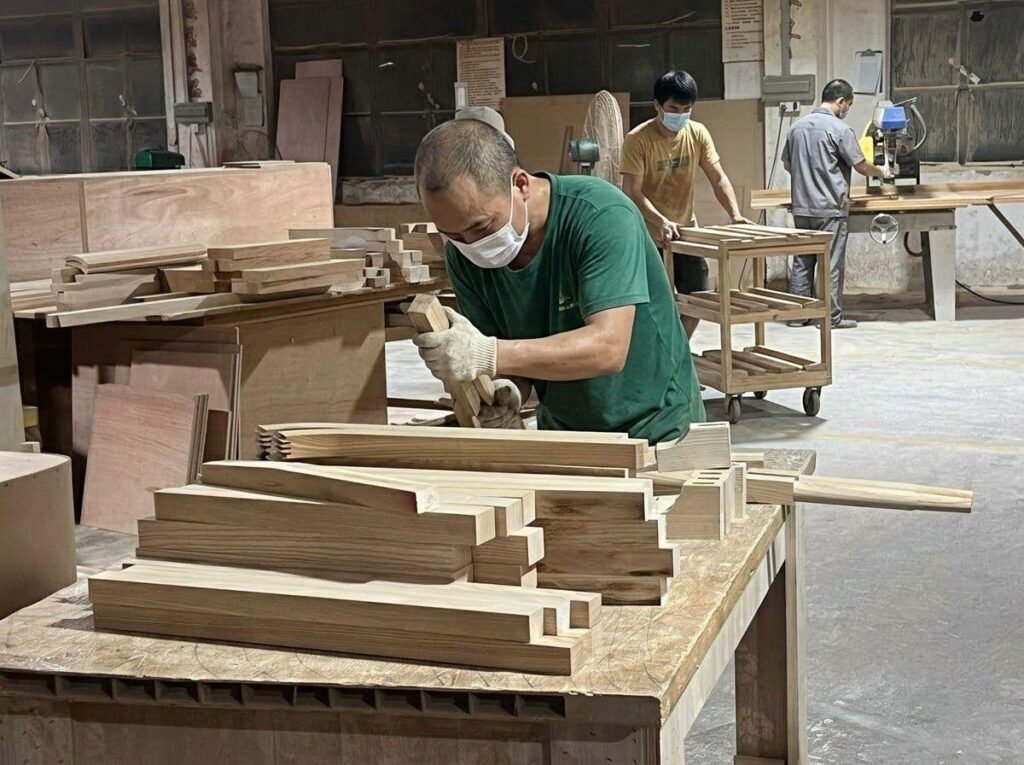
I learned this the hard way in Dongguan. Two years I’d been sourcing upholstered headboards from a Foshan factory. Solid relationship. Good quality. Then a contact told me I was bleeding 18% and sent me to Dalang — a Dongguan sub-district most buyers never visit. Smaller factory. Showroom was a converted warehouse. Fluorescent lighting that made everything look slightly green, like a hospital corridor. But the owner? Former technician. Worked his way up. Walked me through his foam supplier relationships, his fabric grading, his QC checkpoints like he was showing off his kids. Price was lower. Quality identical. Lead time two weeks shorter because he wasn’t juggling forty buyers in a gleaming showroom.
Pattern isn’t universal. But what tends to happen: the further you get from the famous showroom districts, the more you’re dealing with manufacturers who survive on technical competence, not salesmanship. No English. No marble tables. Workshop discipline. For buyers who bridge the gap — translator, patience, showing up more than once — that’s where the value hides.
While some buyers chase the big names in Foshan with their glossy catalogs and English-speaking sales teams, others find that mid-sized specialists — operations like Interi Furniture, which focuses on project-grade and hospitality furnishings with heavier emphasis on engineering docs and compliance certification — offer a different risk-reward equation. Not the cheapest. Don’t pretend to be. But for buyers who need ASTM or BIFMA-level documentation and can’t afford to discover structural failures after installation, that engineering-heavy approach fills a gap the showroom giants often leave wide open.
The Real Fight Starts After the Handshake
Why is the contract just the beginning?
This is where smart buyers turn naive overnight. Three days negotiating price, MOQ, payment terms. Get it in writing. Feel accomplished. Fly home. Then the real negotiation kicks off — over WeChat at 11 PM, about whether “walnut veneer” means quarter-sawn natural walnut or engineered walnut-print paper, about how the fabric you specified is “temporarily unavailable” and would you mind this “perfectly acceptable” alternative that costs them 40% less.
The contract is paper. The relationship is the enforcement mechanism.
- Hotel project. Forty guest rooms, custom casegoods, brutal deadline. Nankang factory. Signed everything. 30% deposit, 70% before shipping, third-party inspection. Standard. Six weeks in, project manager sends a photo. Sample panel. Wood grain running perpendicular to the drawing. Not slightly off. Completely wrong. I called the factory. Owner sighed. “Your drawing was unclear.” It wasn’t. CAD-perfect. But I got it in that moment: he was testing me. Seeing if I’d enforce the spec or fold because the deadline was breathing down my neck and the deposit was already in his account.
I enforced it. Cost me two weeks. A lot of WeChat argumentation. Final product was correct. That factory still takes my calls. Because they know I know. That mutual knowledge? Worth more than any contract clause.
Your Cheat Sheet — The Stuff That Actually Works
Before You Fly
- Visit twice, or don’t bother. First trip is recon. Second trip is where you negotiate. Showing up once signals interest. Twice signals commitment. Factories respond to commitment with better terms.
- Bring something physical. Fabric swatch. Wood sample. Competitor’s product. Tangible reference kills 70% of the “misunderstandings” that plague email chains.
- Learn five phrases in Mandarin. Not “hello.” Learn “What’s your actual cost on this?” and “I need to see the workshop, not the showroom.” Even badly pronounced, this signals you’re not a tourist.
At the Table
- Lead with volume, not price. Ask about their production schedule. What they’re running at capacity. A factory at 85% capacity has leverage. One at 60% has desperation. Know which one you’re talking to before you discuss a single dollar.
- Never accept the first “final” offer. It’s never final. The real number comes after you’ve walked away once. Literally. Stand up. Thank them. Say you’ll think about it. Watch what happens in the next forty-eight hours.
- Negotiate payment terms before unit price. A factory that takes 50/50 instead of 30/70 is giving you more real protection than one dropping unit price by 8%. Cash flow is their oxygen. Terms are where leverage lives.
Red Flag — The One That Breaks the Rules
→ A factory that agrees to everything immediately. Looks good. Total compliance means they either don’t understand your requirements or they’re planning to ignore them. The best ones push back. Tell you why your timeline’s unrealistic or your material choice is problematic. Resistance means competence.
After the Deal
- Inspect in person, or hire someone who will. Third-party inspectors in China cost a fraction of what a defective container costs. Use them at pre-production, mid-production, pre-shipment.
- Over-communicate on specs. What you call “natural oak finish” and what a Nankang technician calls “natural oak finish” are probably different things. Send photos. Send physical samples. Send drawings with dimensions. Then confirm they got all three.

FAQ — The Questions Buyers Actually Ask
Q: If I don’t speak Mandarin, am I already screwed?
A: Not if you’re smart about it. The problem isn’t the language — it’s assuming an English-speaking sales rep is an accurate proxy for the factory’s capabilities. Many of the best workshops have terrible English support. Hire a sourcing agent or translator for critical talks, but make sure they understand furniture, not just language. A generic translator converts your words. A furniture-savvy one converts your intent. That’s the gap between getting what you asked for and getting what you actually need.
Q: How do I know if a factory’s “certification” is real or printed in a copy shop?
A: Ask for the certificate number. Look it up on the certifying body’s site. Then — and most buyers skip this — ask the factory to explain what that certification actually tests for. If they can’t articulate it in detail, they probably bought the paper rather than earned it. A factory that genuinely maintains FSC chain-of-custody or CARB Phase 2 compliance can walk you through their documentation system. One that’s faking it will change the subject fast.
Q: Is it true you should never pay 100% upfront?
A: Yes, with one exception. Highly customized product with proprietary tooling or molds — the factory may legitimately need a higher deposit to cover sunk costs. In those cases, structure payment in stages tied to verifiable milestones: tooling completion, first article approval, pre-shipment inspection. Not calendar dates. For standard catalog items, 30% deposit and 70% against bill of lading is the norm. Anyone demanding 100% upfront on a standard sofa run is either a scammer or a factory in such bad financial shape that you don’t want the relationship anyway.
Q: What’s the one thing I should do differently on trip two versus trip one?
A: Trip one, you’re collecting data. Trip two, you’re testing relationships. Bring a problem from your first order — minor defect, late delivery, spec deviation — and see how the factory responds when you’re standing in their office. Excuses? Compensation? Do they fix it before you ask? Trip two reveals character. Trip one only reveals price sheets.
Q: Can you really negotiate with Chinese furniture factories, or is it all just smoke and mirrors?
A: You can. But it depends what you mean. If you mean driving price down 30% through aggressive haggling — yes, possible, and often a mistake. If you mean structuring a deal where both sides understand the risks, share the constraints, and build terms that protect you when things go wrong — that’s the real negotiation. And that’s where money is actually made or lost.
The Hard-Earned Lesson
At the end of the day — and I hate that phrase, but here we are — the best deal you’ll ever make with a Chinese furniture factory isn’t the one where you win. It’s the one where you don’t lose without knowing why.
I’ve seen buyers celebrate a 22% price cut, then discover their “walnut” tables were stained rubberwood. I’ve seen buyers pay premium prices for mediocrity because they trusted a brand name over a workshop visit. I’ve made both mistakes. More than once.
The cheat sheet isn’t really about tactics. It’s about humility. The factory knows more about making furniture than you do. The question is whether they respect you enough to use that knowledge in your favor instead of against you. And respect, in this business, isn’t earned by being the smartest person in the room. It’s earned by showing up, paying attention, and proving you’re not just another buyer who’ll vanish after one order.
So here’s my question: when was the last time a factory owner invited you to his kid’s wedding? In fifteen years, that’s happened to me twice. Those two factories? They’re the only ones I’d bet my reputation on.