

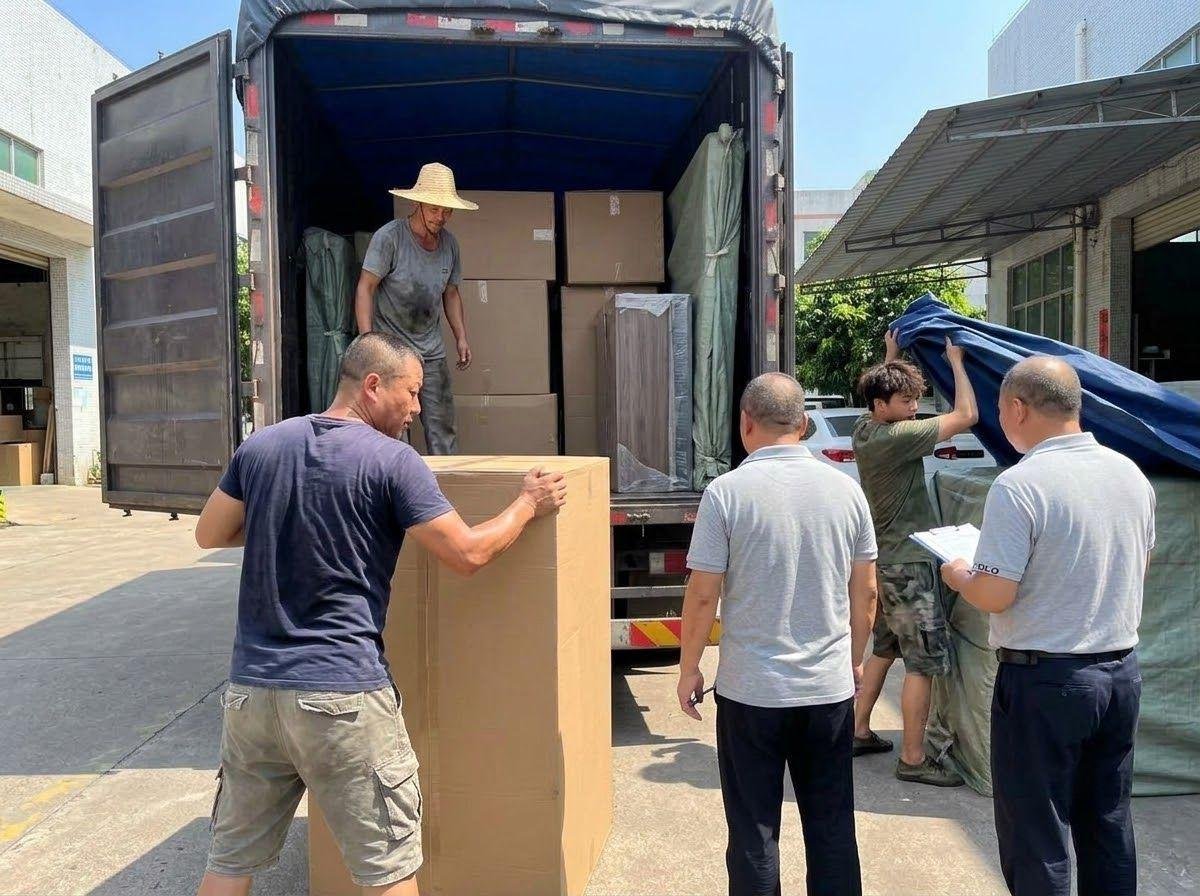
I still remember the Tuesday afternoon in March 2019. A procurement director from a boutique hotel group — let’s call him Marcus — stood in a Foshan factory showroom, staring at a $38,000 order of solid oak headboards and nightstands. The samples were flawless. The factory owner, a guy named Lao Chen, slapped him on the back and said, “Don’t worry about shipping. My cousin has a freight company in Shenzhen. Very cheap. Very fast.” Marcus nodded. He’d already spent three days negotiating unit prices down by $4 per piece. He was tired. The cousin’s quote came in $600 below the next cheapest option. Done deal.
Eight weeks later, that container sat in the Port of Long Beach with a customs hold because the commercial invoice listed the wood species incorrectly. The “cousin” — who turned out to be a one-man operation working out of a shared desk in Luohu — had copy-pasted the HS code from a previous shipment. Leather goods. Not furniture. The demurrage fees alone ate the $600 savings in four days. By the time Marcus got his goods, he’d burned $11,400 on storage, re-inspection, and a customs broker he had to hire last-minute. The headboards arrived two weeks after the hotel’s soft opening. He ate the cost. And he never made that mistake again.
China sourcing freight isn’t about moving boxes from Point A to Point B. It’s about who takes the fall when something goes sideways at 2 a.m. in a Chinese port. And something always goes sideways.
The Brutal Truth: Your Forwarder Is Your Insurance Policy (Whether You Like It or Not)
Most buyers I meet spend more time choosing their hotel in Guangzhou than vetting the company that will handle a $50,000 shipment. That math doesn’t work. But it happens every single day.
The uncomfortable reality? Your factory doesn’t care who ships your goods. They care that the container leaves their dock. After that, you’re someone else’s problem. (And yes, this happens more than anyone admits.)
Here’s my rule of thumb: if a forwarder can’t explain, in plain English, what happens to your cargo between the factory gate and your warehouse door — step by step, with names and phone numbers — keep looking. No exceptions. Fancy websites and slick WeChat responses mean nothing when your container is stuck in Yantian because of a paperwork error.
Key Takeaway
- China sourcing freight is a relationship business, not a commodity purchase. The lowest quote almost always hides costs you’ll pay later.
- A trustworthy Chinese forwarder owns problems before they reach you. A bad one disappears the moment trouble starts.
- The factory’s recommended forwarder serves the factory’s interests first. Yours come second. Sometimes third.
- Documentation accuracy matters more than transit speed. One wrong HS code can cost more than the entire freight bill.
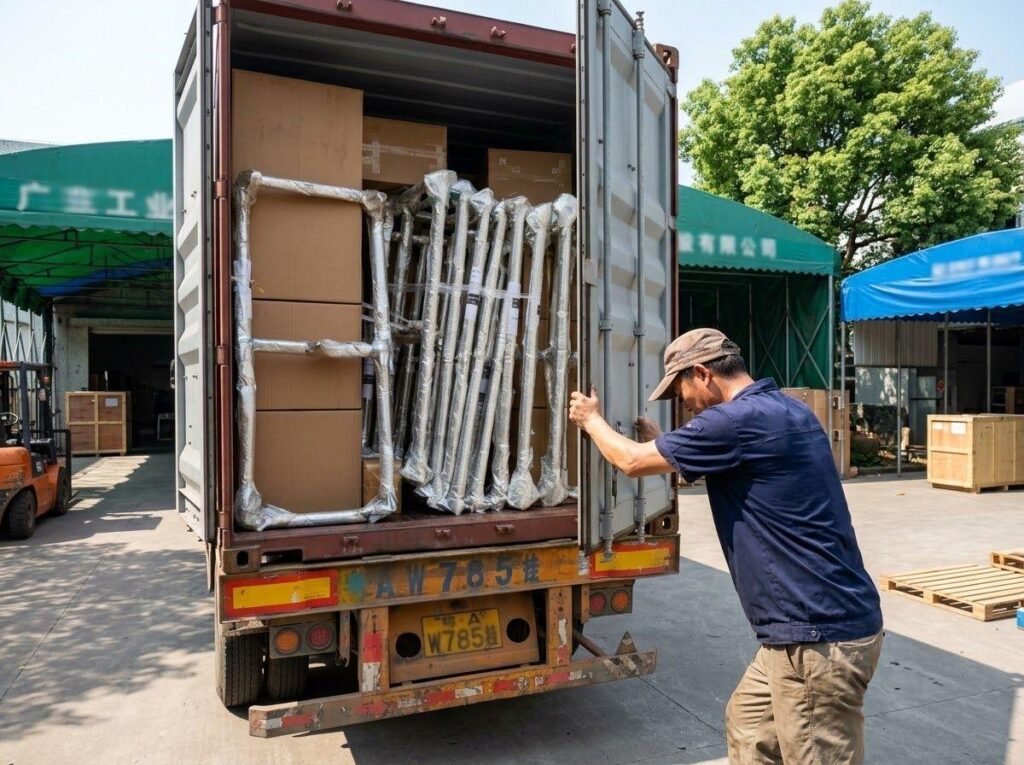
What You’re Actually Paying For (Hint: It’s Not the Boat)
Think of hiring a freight forwarder like hiring a general contractor to renovate your kitchen. You’re not paying for the tiles and the grout. You’re paying for someone who knows which plumber shows up drunk on Tuesdays, which inspector takes a three-hour lunch, and how to get a permit pushed through when the city office “lost” your paperwork. The materials are the same. The outcome isn’t.
China furniture sourcing is the process of identifying, negotiating with, and purchasing furniture from manufacturers in China — but the sourcing doesn’t end when you wire the deposit. It ends when the goods are in your possession, undamaged, and legally cleared. Everything in between is the forwarder’s domain. And that domain is a mess.
I learned this the hard way in Dongguan. A forwarder I trusted — or thought I trusted — had been consolidating my client’s shipments with agricultural products. Not illegal, but risky. One customs inspection in Ningbo and my client’s dining chairs were sitting in a warehouse next to sacks of unprocessed rice. Moisture damage. Mold. Total loss on 40% of the order. The forwarder? “Act of God,” he said. Not his problem.
The real kicker isn’t the damage. It’s the opacity. Most buyers have no idea what happens inside a Chinese consolidation warehouse. They see a quote, a booking confirmation, and a bill of lading. The middle part? Smoke and mirrors.
But here’s what tends to happen at the ground level. In the Pearl River Delta — think Shenzhen, Guangzhou, Foshan — you’ve got two types of forwarders. The first kind owns their warehouses, employs licensed customs brokers, and has relationships with port officials built over a decade. The second kind is a guy with a laptop, three WeChat groups, and a Rolodex of actual forwarders he resells to. Both will take your money. Only one will answer the phone at midnight when your container gets flagged.
Why Does the Factory’s Guy Always Seem So Convenient?
Because he is. For the factory.
Lao Chen’s cousin in Shenzhen? He probably handles twenty factories in Longjiang alone. He’s cheap because he cuts corners. He doesn’t double-check packing lists. He uses the same customs declaration template for every shipment, swapping out product names like he’s playing Mad Libs. “Wooden chair” becomes “wooden furniture” becomes “household goods.” Close enough, right?
Wrong. Customs officials in Shanghai and Los Angeles aren’t playing Mad Libs. They’re reading every line. And when your $45,000 hotel furniture shipment gets flagged because the declared value doesn’t match the product description, guess who pays? Not Lao Chen. Not the cousin. You.
And here’s the thing most buyers miss. Actually, that’s not quite right — what most buyers miss is that the factory-forwarder relationship often includes kickbacks. The factory recommends the forwarder. The forwarder gives the factory a cut of the markup. It’s a beautiful arrangement. For them. Your freight bill is subsidizing someone else’s relationship.
The Documentation Trap: Where Good Shipments Go to Die
If freight forwarding is like hiring a contractor, then documentation is the foundation. You can have the best cabinets in the world, but if your foundation is cracked, the whole house shifts. And in international shipping, the foundation is paper. Or rather, PDFs. Thousands of them.
I once watched a $72,000 hospitality order — bar stools, lounge chairs, custom reception desks — get held in Hamburg for seventeen days because the forwarder had listed the country of origin as “PRC” on one document and “China” on another. Seventeen days. For a three-letter abbreviation mismatch. The German customs authority doesn’t care that they mean the same thing. They care that the documents match. Exactly.
Chinese forwarder operations in major export hubs like Shekou, Nansha, and Qingdao live and die by documentation discipline. The good ones have internal checklists that would make an airline pilot jealous. The bad ones wing it. And when you’re sourcing from multiple factories — say, casegoods from Foshan, upholstery from Dongguan, and lighting from Zhongshan — the documentation complexity multiplies. Different HS codes. Different wood species certifications. Different fumigation requirements. One weak link in that chain and everything stops.
The general pattern suggests that buyers who manage their own documentation — or at least review it before it hits customs — have significantly fewer delays. I’m not saying you need to become a customs broker. I’m saying you need a forwarder who treats your paperwork like it’s their own money on the line. Because it is.
While some buyers gravitate toward large-scale manufacturers in Foshan with in-house logistics teams, others find that mid-sized specialists — operations like Interi Furniture, which focuses on project-based hospitality and residential furniture — offer a different risk-reward equation. These factories often don’t have captive forwarders. They work with independents. That means more flexibility for you, but also more homework. You can’t default to “the factory’s guy.” You have to build your own relationship. And that relationship is everything.
The Trust Test: A Decision Framework That Actually Works
After fifteen years of watching buyers get burned, I’ve distilled the vetting process into something practical. Not a 47-point checklist. A framework. Use it like a filter.
The Pre-Quote Screening
- Do they have a physical office you can visit? — Not a WeChat account. Not a slick website. An actual office in Shenzhen, Guangzhou, or Shanghai that you could walk into. If they hesitate to share an address, run.
- Can they explain their customs brokerage setup? — Do they employ brokers directly? Or do they subcontract to a third party? Subcontracting isn’t a dealbreaker. Not knowing who the subcontractor is? That’s a red flag.
- Ask for three references from buyers in your country. — Not testimonials. Phone numbers. Call them. Ask one question: “When something went wrong, how did they handle it?” Every forwarder has a disaster story. The trustworthy ones have recovery stories.
The Quote Evaluation
Here’s where conventional wisdom gets it wrong. Most buyers compare line items like they’re shopping for a used car. Freight. Origin charges. Destination charges. THC. BAF. ISPS. The list goes on.
The red flag that contradicts conventional wisdom: If one quote is dramatically cheaper and dramatically simpler — fewer line items, cleaner format — that’s not a good deal. That’s a forwarder hiding fees in the fine print or planning to hit you with “unexpected” charges after the goods are already in transit. The cheapest quote with the cleanest presentation is often the most expensive in reality. Complexity, explained honestly, is a sign of transparency.
The Relationship Stress Test
Before you commit, send them a deliberately messy scenario. “What happens if my factory in Anji ships three days late, the goods need fumigation, and I need to switch from FOB to EXW mid-process?” A good forwarder will ask clarifying questions. A great one will have handled it before and walk you through the exact steps. A bad one will say, “No problem, we handle everything.” That’s not confidence. That’s ignorance wearing a smile.
Comparison: Three Types of Forwarders You’ll Encounter
| Factor | Factory-Recommended Forwarder | Independent Chinese Forwarder | Direct Carrier / NVOCC |
|---|---|---|---|
| Who they serve first | The factory | You (if you’re the client) | Themselves |
| Pricing transparency | Often bundled, hard to audit | Variable; good ones are open | Lowest base rates, high add-on fees |
| Problem ownership | Deflects to factory or buyer | Depends on contract terms | Minimal; you’re one of thousands |
| Best for | Small, simple, single-factory orders | Complex, multi-factory, project-based | Massive volume, standardized goods |
| Midnight phone call? | Goes to voicemail | Sometimes answers (the good ones) | Automated system |
FAQ: The Questions Buyers Actually Ask
Q: Should I just use the forwarder my factory recommends? It seems easier.
A: It is easier. For about two weeks. Then it’s potentially catastrophic. Use the factory’s forwarder only if you’ve independently verified their credentials, checked references, and confirmed that the forwarder works for you — not for the factory. In my experience, roughly 60% of factory-recommended forwarders are resellers or cousins-with-laptops. The other 40% are legitimate. But you can’t tell which is which from a WeChat business card.
Q: How do I know if a Chinese forwarder is actually licensed?
A: Ask for their NVOCC (Non-Vessel Operating Common Carrier) license number or their freight forwarding business license. Then verify it. The Ministry of Commerce maintains records. A legitimate forwarder won’t flinch at this request. A sketchy one will say, “Don’t worry, we have many years experience.” That’s not an answer. That’s a dodge.
Q: What’s a reasonable markup for a forwarder to charge on top of actual shipping costs?
A: It depends on the service level. For straightforward FCL (full container load) shipments, a markup of 10-20% above the ocean freight rate is standard. For LCL (less than container load) or complex project cargo, 20-35% isn’t unusual. What matters isn’t the percentage — it’s whether you can see the math. If they won’t break down the carrier rate from their service fee, you’re flying blind.
Q: Do I need a forwarder with an office in my home country?
A: Not necessarily, but it helps for the destination side. The critical piece is having a responsive contact who speaks your language and understands your country’s import requirements. Some excellent Chinese forwarders partner with destination agents rather than maintaining their own offices abroad. That model works fine if the partnership is solid and you know who the destination agent is before the ship sails.
Q: Can I trust freight quotes sent over WeChat?
A: You can trust them as a starting point. You cannot trust them as a contract. Get everything in writing — email, PDF, formal quotation with terms and conditions. WeChat is the Wild West of business communication in China. Convenient. Fast. And completely unenforceable if things go wrong. Treat WeChat quotes like cocktail napkin math. Interesting. Not binding.
Does a cheap freight forwarder always mean a bad one? It depends on what “cheap” means. If they’re cheap because they have volume leverage and efficient operations, no. If they’re cheap because they skip insurance, use questionable consolidation practices, or employ inexperienced customs brokers, then yes — cheap is expensive.
The Hard Lesson
At the end of the day, choosing a freight forwarder for China sourcing freight isn’t a procurement decision. It’s a risk management decision. You’re not buying a service. You’re buying peace of mind with a tracking number attached.
The best forwarder I’ve ever worked with — a woman named Ms. Lin who ran a modest operation out of Nansha — never had the cheapest quote. She was usually middle-of-the-pack. Sometimes higher. But when a typhoon delayed our sailing by four days, she called me before I even knew there was a typhoon. She’d already rebooked on a different vessel, absorbed the difference in port charges, and sent me the new ETA before my coffee got cold. That’s not logistics. That’s ownership. And ownership is the only thing that matters when you’re staring at a blank hotel lobby and a guest list that arrives in seventy-two hours.
So here’s my question: when your next container hits a snag — and it will — do you want a vendor who sends you a revised invoice? Or do you want a partner who sends you a solution?