

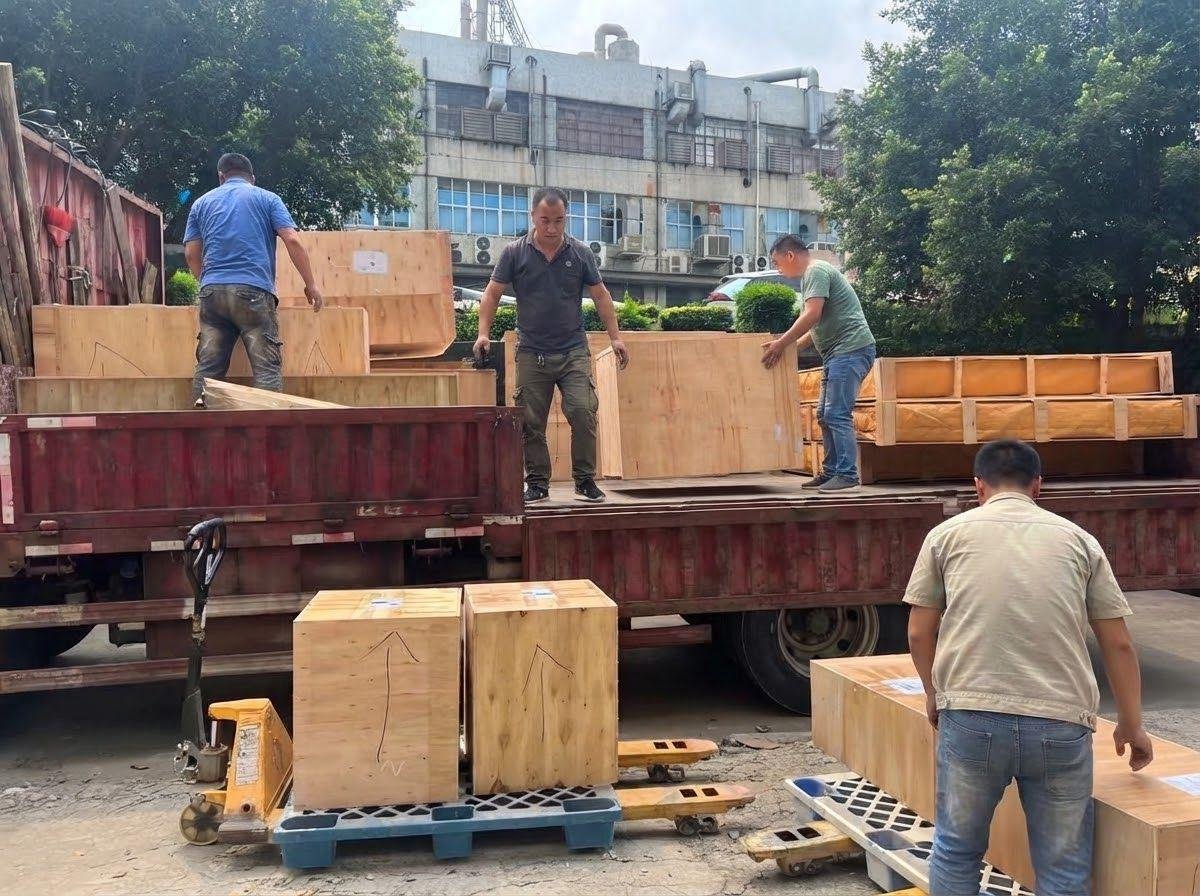
March. Foshan. Humid as a sauna and I’m watching Lao Chen — runs a 200-worker solid wood plant in Shunde — pace around a 40-foot container like it’s his daughter going off to college. Melbourne buyer. Boutique hotel chain. Grand opening in ten days. The dining tables inside? Gorgeous. Quarter-sawn oak, hand-rubbed oil finish, the kind of stuff that photographs itself.
Lao Chen’s not checking his phone because he’s busy. He’s checking it because his buyer just figured out the vessel’s sitting in Yantian port with a customs hold. Two weeks late already. And nobody told the Aussie that “production complete” and “on the water” are about as related as “I love you” and “I’ll call you tomorrow.”
He looks at me. Shrugs. “Making furniture is easy, but transporting it is a nightmare.” Furniture’s easy. Getting it there? That’s what breaks people.
Fifteen years in this game, and I’ve watched that same movie in Dongguan, Longjiang, Anji, Nankang — you name the loading dock, I’ve seen a buyer cry on it. They fall in love with a sample, negotiate a sharp price, sign the PO, pop the champagne. Then the real fight starts. The container hasn’t even left the factory gate and the timeline’s already unraveling. HS code doesn’t match the commercial invoice. The forwarder’s “lost” the packing list. That freight quote? Suddenly there’s a CFS charge nobody mentioned, a THC fee that materialized out of thin air, and oh — your cargo got rolled to next week’s sailing because the carrier overbooked.
It’s not rigged. It’s just got forty moving parts, and most buyers see three.
The Brutal Truth
Here’s what the trade show reps won’t tell you over their complimentary espresso.
Shipping furniture from China isn’t a line item. It’s a project. And you treated it like an afterthought.
You squeezed 12% off your unit cost. Bravo. But botch the logistics and you’ll give every penny back — then pay interest — in demurrage, port storage, and emergency trucking on the destination side. I saw a $40,000 shipment turn into a $52,000 nightmare because the buyer picked the cheapest forwarder on Alibaba and didn’t read the incoterms past the first three letters.
Your factory quote? That’s chapter one. The real story unfolds in port handling, origin charges, destination fees, customs bonds, and the silent assassin — dimensional weight on LCL. One wrong HS digit and your container sits in customs while the meter runs. Each day bleeds money. Money comes from your margin. Simple. Brutal.
Rule of thumb: If logistics isn’t eating 15-20% of your landed cost, you missed something. And if your forwarder quoted you in ten minutes without asking about dimensions, packaging type, or whether your warehouse has a dock? Run. Don’t walk.
Why Furniture Logistics Is a Different Animal
China logistics for furniture isn’t like moving electronics. Not even close.
Ship a container of LED panels — dense, valuable, fits like Tetris blocks. You hit weight max before you hit the walls. Ship sofas? You’re paying to move air. Cubic capacity maxes out while the scales laugh at you. Ocean freight priced by the container, sure, but if you’re doing LCL, you’re paying for volume, and furniture’s mostly volume.
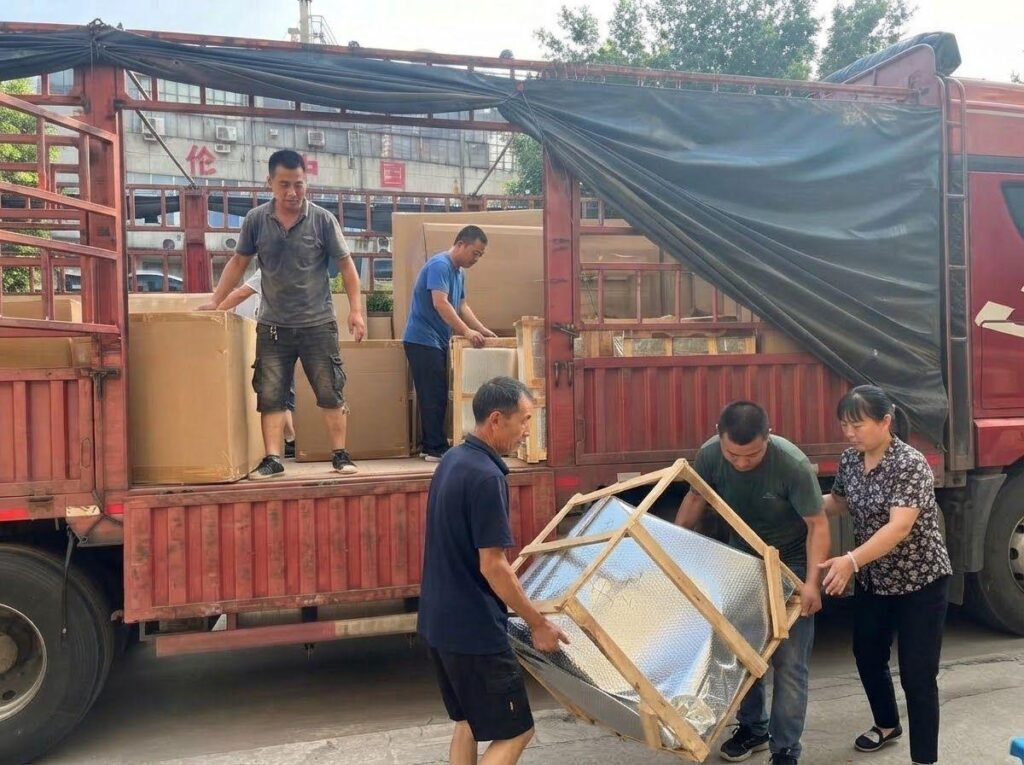
Here’s the thing. Chinese furniture factories build things. They don’t move things. Not their job. Not their mindset. They’ll hand you a packing list that looks like Google Translate had a stroke, slap some foam on the corners, and declare it “export standard.” What happens after the factory gate? Your problem. Your headache. Your 2 AM email to a freight agent who responds with “dear friend, no worry.”
Wait — that’s not fair. Some factories handle export logistics beautifully. But only if you ask. Specifically. In writing. Before the first board gets cut. The default is EXW factory gate. Everything else? A conversation. A documented, no-assumptions, put-it-in-the-PI conversation.
The Packaging Lie
Few years back, Anji. Walnut veneer conference tables. The kind that retail for three grand in Sydney and make interior designers weak in the knees. I walk the floor, check the finished goods, then I see the packing station. One layer of bubble wrap. Cardboard box. For a 2.4-meter table.
I ask the production manager — decent guy, just doing what he’s told — about damage claims. He laughs. “Sometimes. But buyer didn’t pay for better pack, so we use standard.”
Standard. There’s that word. In China, “standard packaging” usually means “the cheapest thing that survives until it leaves our door.” Shipping a container of dining chairs? Maybe you get away with it. Shipping a single marble-top console LCL? You’re gambling. And here’s what the insurance adjuster will tell you after the claim: inadequate packaging = denied. They’ll look at your photos and shrug. Should’ve packed better.
Better packaging isn’t an upsell. It’s the cheapest insurance policy that actually pays out.
FOB, EXW, DDP — What’s the Real Difference?
Let’s cut through the alphabet soup. Because this is where buyers consistently step on the rake.
| Term | Who Pays | Who Does Export Customs | Risk Flips When | Reality Check |
|---|---|---|---|---|
| EXW | You pay everything | You handle it all | Factory gate | Only if you’ve got boots on the ground in China |
| FOB | You pay ocean + destination | Factory handles export | On the ship | The sweet spot. Most control for your buck. |
| CIF | Seller pays to destination port | Factory handles export | On the ship | Sounds easy. Less control. Hidden markups. |
| DDP | Seller pays everything | Seller handles both sides | Your door | Convenience tax of 20-30%. And you fly blind. |
First-timers love DDP. One number, door to door, no thinking required. Problem is, you’re paying for that nap. Twenty, thirty percent over what FOB costs with a decent forwarder. Plus you lose visibility. Your DDP provider might use a customs broker who files paperwork with one eye closed. You won’t know until your shipment’s stuck in a bonded warehouse in Rotterdam and nobody’s answering the phone.
FOB is where the smart money lives. You pick the forwarder. You see the docs. You control the ocean leg. But — and this matters — FOB only works if somebody’s eyes are on that cargo before the seal goes on. Because once that container rolls to Yantian or Ningbo, whatever’s inside is yours. Good, bad, or twelve chairs short.
Now, while some buyers chase the big names in Foshan — the 500-worker plants with their own export departments — others end up working with mid-sized specialists. Operations like Interi Furniture, focused on project-grade hospitality and residential case goods. Not the giants. Not the tiny workshops either. These are the guys who’ll actually read your packaging requirements before quoting, who’ll let a third-party inspector walk the floor without calling the boss five times. That flexibility? Worth more than a 5% unit discount when you’re not moving containers every week.
The Timing Trap
Your factory says thirty days production, twenty-five days shipping. They’re not lying. They’re just not telling you about the ghost time in between.
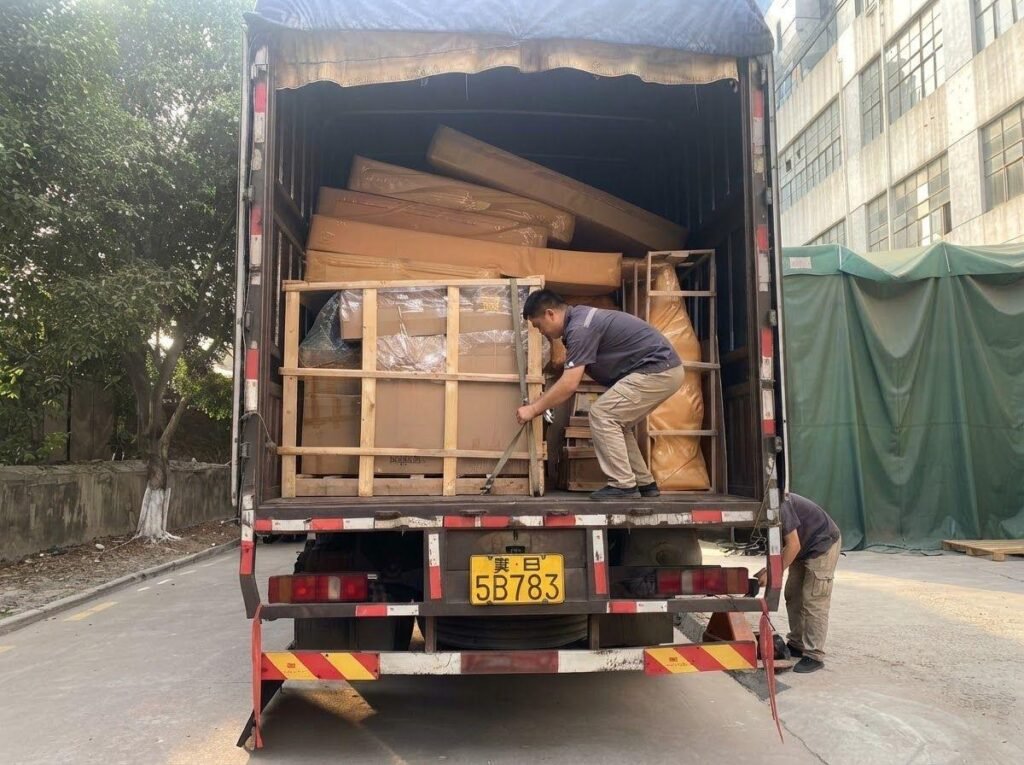
Production ends. Then there’s pre-booking space with the carrier. Customs declaration. Vessel scheduling. Port congestion. And the black holes nobody puts on the calendar — Golden Week in October, Chinese New Year in January or February. These aren’t slow periods. They’re dead zones. Your container sits because half the customs officials went back to Hunan to see their parents, and the other half are processing a backlog from hell.
And LCL? Less than Container Load isn’t “a small container.” It’s a shared closet. Your velvet sofa gets loaded with somebody’s ceramic tiles, metal brackets, or — I’ve personally seen this — industrial chemicals that have no business sharing oxygen with upholstery. The Shenzhen consolidation warehouse cares about cubic meters, not your fabric. Your goods get stacked. Under something heavy. Sometimes in the rain, if the dock’s covered and the roof leaks.
You ever ask your forwarder whether you’re the “floor” or the “wall” of the container build? Most buyers don’t. Most buyers also don’t know to ask.
Your No-Tears Checklist
Print this. Tape it somewhere you’ll see it before you sign anything.
Before production starts:
— Get the packaged dimensions. Not the product size — the carton. Gross weight. CBM per piece. You can’t quote freight without this, and factories will absolutely guess if you let them. Their guess will be wrong. Their wrong will cost you.
— Write down your packaging spec. “Export standard” is a fairy tale. Specify: corner protectors, foam density, pallet type, strapping, moisture barrier for ocean. Attach photos of packing you actually like. Make them replicate it.
— Lock the HS code. Your factory knows their export classification. Verify it matches what your customs broker expects. One digit off and you’re in for an exam. Exams take days. Days cost money.
During production:
— Book freight early. Ocean space isn’t Uber. You need allocations. Especially now, when carriers still play musical chairs with capacity. Book two, three weeks before your estimated completion date.
— Get a pre-shipment inspection. Not just for quality — for quantity and packaging verification. A third-party inspector in Dongguan runs you $300. Finding out you’re short twelve chairs in Rotterdam? Priceless. And not in the good way.
Before the seal goes on:
— Photograph everything. The loading. The empty container before loading. The sealed box with the lock number visible. These aren’t memories. They’re evidence.
— Check the docs. Commercial invoice, packing list, bill of lading — every comma must match. One typo in the consignee name and your cargo sits in a warehouse while lawyers send emails to each other.
After it sails:
— Track the vessel. MarineTraffic. Free. Use it. Know where your box is before your forwarder remembers to tell you.
— Prep customs paperwork early. Don’t wait for arrival. Have your import docs ready so clearance is a same-day event, not a three-day vacation in a bonded warehouse.
Red Flag — The One That Goes Against Everything You’ve Heard:
If your forwarder says “don’t worry, we handle everything” — worry. A lot. The good ones ask annoying questions. They want to know your product, your pack, your warehouse dock height, your forklift situation. The ones promising zero hassle? They’re the ones who vanish when your container gets held at the port. Convenience in China logistics is just hidden risk wearing a smile.

FAQ: The Stuff Buyers Actually Ask Me
Q: My factory said FOB Shanghai. Does that mean they deliver to my warehouse?
A: No. FOB means they get it on the boat in Shanghai. Ocean, destination port, customs, trucking to your door — that’s your circus. If you want door-to-door, you need DDP or you need to arrange the back half yourself. About sixty percent of the horror stories I hear start with somebody misunderstanding this.
Q: What percentage should I add on top of product cost for shipping?
A: Depends on density and method, but rough math: FCL adds 8-15% to your product cost. LCL runs 15-25% because you’re paying for consolidation, deconsolidation, and handling at both ends. Air freight? Don’t. Unless it’s samples or one urgent piece, air freight for furniture is like setting money on fire for warmth. Most first-timers underestimate by about a third. Sometimes half.
Q: Can my forwarder handle customs, or do I need a separate broker?
A: Most forwarders offer brokerage, but they’re generalists. If your shipment’s got mixed materials, CITES-regulated woods, or anti-dumping exposure, a specialist broker is worth the extra few hundred. Forwarder’s your GP. Broker’s your specialist. Routine stuff? GP’s fine. Complicated? See the specialist.
Q: What if my stuff shows up damaged? Who pays?
A: If you bought cargo insurance and documented properly — photos at unloading, written notice within the window — the insurer pays. No insurance? You pay. Period. “The carrier’s responsible” is a nice story. Maritime law limits carrier liability to laughable amounts. A $50,000 container might be covered for $500 unless you declared value and bought specific coverage. Buy the insurance. It’s not optional. It’s math.
Q: Is shipping furniture from China even worth it, or should I just buy local?
A: Depends on scale and what you’re buying. Five chairs for your house? Buy local, sleep better. Furnishing a 120-room hotel renovation at 40% under domestic wholesale? Then yes — but only if you treat logistics like a core skill, not a side task. The margin is real. The risk is real. The difference between profit and pain is whether you did the homework.
The Last Thing
I started with Lao Chen in Foshan, watching his buyer’s timeline implode. Here’s the ending he didn’t know. That Melbourne hotel opened two weeks late. Ate the delay costs. Blamed the factory. But the real failure happened months earlier, in an email where somebody wrote “ship by sea, standard terms” and nobody asked what that actually meant.
The furniture business doesn’t reward the best negotiators. It rewards buyers who know the product and the journey are the same thing. You can source the most beautiful craftsmanship in Longjiang, but if it arrives cracked, late, and undocumented, you didn’t buy an asset. You bought a problem dressed as a table.
So next time you’re comparing factory quotes, feeling good about that eight percent unit savings — who’s calculating what those savings cost you when the container hits the port?