

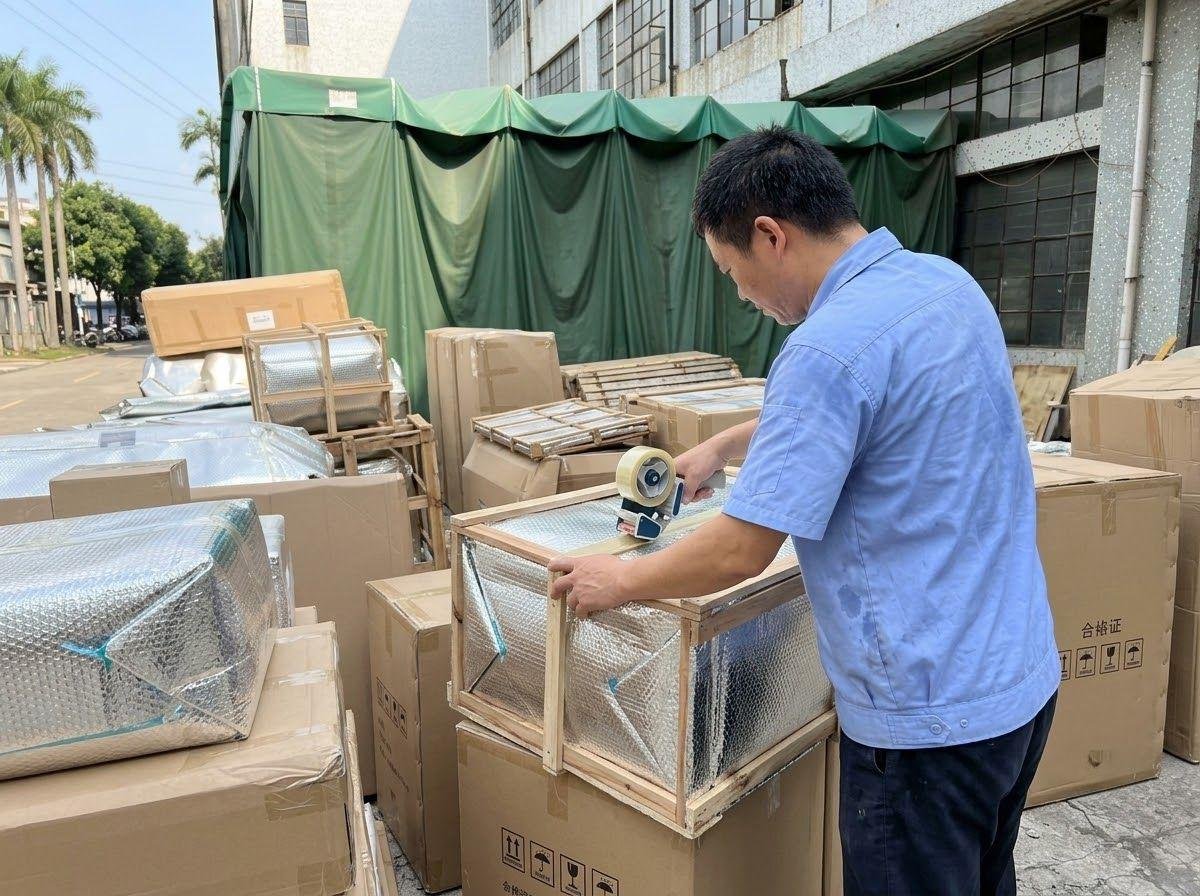
The container arrived in Long Beach on a Tuesday morning in March. Inside were 47 dining chairs bound for a boutique hotel group in Scottsdale — $31,000 FOB out of Shunde, every piece supposedly “export-packed” per the factory’s standard protocol. The procurement director called me three days later. Not because the walnut frames were wrong, or the upholstery color had drifted. Because 19 of the 47 cartons had collapsed. Not torn. Collapsed. The double-wall corrugated the factory promised turned out to be recycled pulp so thin you could read a barcode through it. Moisture had turned the corners to oatmeal somewhere between Yantian and Los Angeles. The chairs themselves? Mostly fine. A few nicks. But the packaging had failed so completely that the entire shipment looked like it had been dropped from a second-story window. And here’s what stung: the buyer had paid an extra $2.80 per unit for “reinforced custom packaging.” The factory had pocketed the margin and swapped in cheaper cartons. This isn’t a rare horror story. In my experience, roughly one in three custom packaging upgrades from mid-tier Guangdong factories contains some form of quiet substitution that doesn’t show up until the container hits your warehouse door.
The Brutal Truth
Most buyers think packaging is the easy part. They’ll spend twelve weeks haggling over veneer grades and foam density, then treat the carton spec like an afterthought. That’s backwards.
The packaging is the product by the time it reaches your client. A $4,000 sofa wrapped in garbage is a garbage sofa. Full stop.
Chinese furniture factories — especially the ones chasing volume in Foshan and Longjiang — view packaging as a cost center, not a brand extension. When you ask for “custom OEM packaging,” what they hear is “charge more for the same cardboard.” The upgrade is often theatrical: a slightly thicker wrap, a logo sticker, maybe a color-printed box side. The structural engineering underneath? Unchanged.
Here’s my rule of thumb: if the factory can’t show you a photo of their packaging line with a timestamp from this month, they don’t control it. They outsource to a third-party crate shop down the road, and that shop answers to whoever pays the invoice fastest. Guess who that isn’t?
Key Takeaway
China furniture sourcing is the process of procuring custom-manufactured furniture from Chinese factories, where packaging customization represents one of the most frequently underestimated risk vectors in the entire supply chain. Before you sign off on your next PO, internalize these three realities:
- “Custom packaging” often means cosmetic changes only — the underlying protective specs remain the factory’s default, which is built for domestic trucking, not ocean transit.
- Damage from inadequate packaging is classified as “insufficient inner packing” by insurers, which voids most standard CIF cargo claims before they’re even filed.
- The factories that take packaging seriously treat it as a parallel engineering discipline, not a line item — and they’re rarer than buyers assume.
Why Packaging Customization Fails: The Engineering Gap
What does “custom” actually mean on a factory floor?
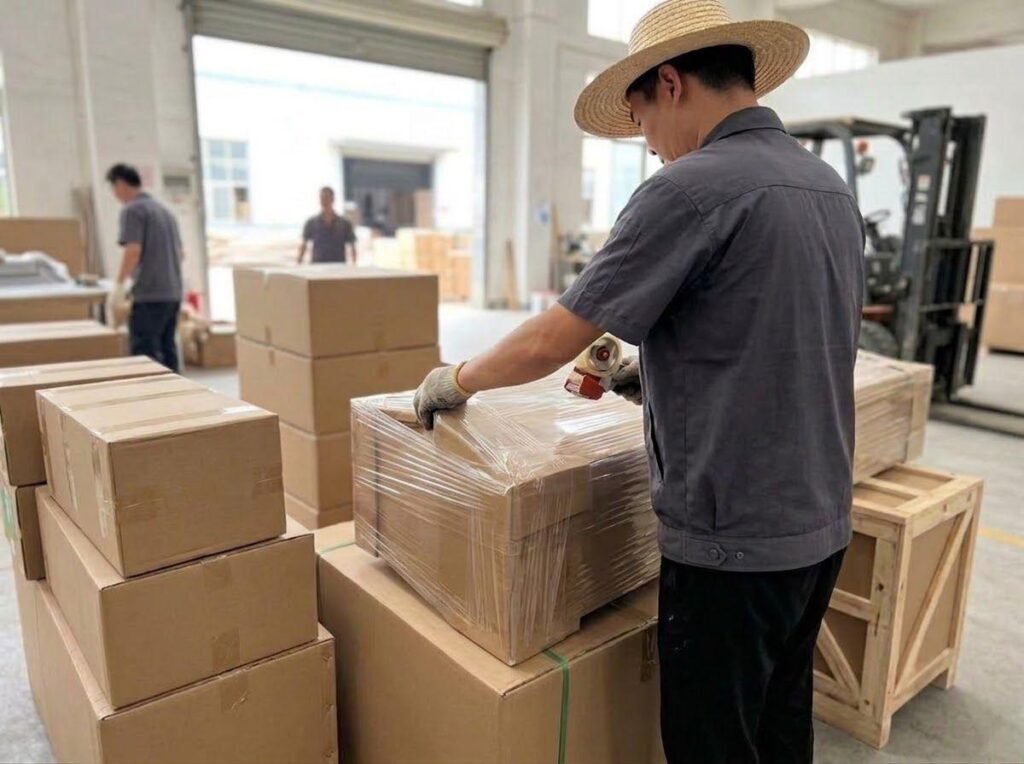
I once watched a packing team in Dongguan apply what the sales manager proudly called “luxury hotel export packaging” to a batch of upholstered headboards. The reality? A single layer of PE foam, a plastic bag with a heat-sealed top, and a carton that wouldn’t survive a rainstorm in the factory parking lot. The “custom” element was a gold-foil logo sticker. That was it.
China custom OEM packaging fails because the word “custom” gets interpreted at the surface level. Buyers ask for branded, aesthetically elevated presentation. Factories deliver branded, aesthetically elevated presentation. Neither party is technically lying. But the conversation never reached the structural layer: stacking strength, moisture barriers, vibration damping, ISPM-15 compliance for wooden crates. It’s like ordering a custom suit and getting excited about the monogram while the seams unravel.
Think of it like hiring a wedding caterer who promises “personalized service” but shows up with the same buffet trays everyone gets — just with your names on the place cards. The personalization is real. It’s also irrelevant to whether the food is any good.
What tends to happen in Guangdong’s furniture corridor is a structural misalignment of incentives. The factory’s packaging subcontractor gets paid per unit. Thinner foam, lighter cartons, generic bags — all of it pads their margin. Your $3-per-unit packaging upgrade might buy you 30 cents of actual material improvement. The rest is markup and theater. I’ve seen this pattern across maybe two dozen factory visits. (And yes, this happens more than anyone admits at trade shows.)
Actually, that’s not quite right — what most buyers miss is that the problem isn’t always the factory cutting corners. Sometimes it’s the buyer’s own spec sheet. If you write “strong export carton with logo” and assume the factory knows what “strong” means for a 40-day ocean voyage, you’re delegating engineering to a sales rep who has never unloaded a container in Miami humidity.
The Moisture and Mold Problem Nobody Talks About
Is your “custom” packaging actually protecting against condensation?
Container rain is real. A 40HQ crossing the Pacific in July can experience temperature swings that turn the interior into a greenhouse. Without proper desiccant loading and moisture-barrier films, your velvet upholstery becomes a petri dish. I’ve opened containers where the smell hit before the light did.
The standard-issue approach from many Foshan suppliers is thin, low-density polyethylene (LDPE) bags that are simply heat-sealed. They look fine on the factory floor. But once cartons are stacked five-high in a humid container, the corners act like knives. Pressure and vibration tear those weak seals, and suddenly your foam cushions are breathing salt air for three weeks.
Here’s the real kicker: mold damage from condensation is classified as “inherent vice” by most cargo insurers. That means it’s excluded under standard Institute Cargo Clauses. Your CIF policy — the one the factory bundled into the price — covers the ship sinking. It does not cover the sofa that arrived smelling like a basement in New Orleans.
And here’s something the logistics blogs won’t tell you. Even when buyers specify “vacuum-sealed bags with desiccant,” the factory might use the cheapest silica gel packets available — the kind that saturate after 72 hours and become inert lumps of gel. Real container desiccant needs to be calculated by cubic meter, not tossed in like afterthought mints on a hotel pillow.
Case Study: How the Mid-Tier Ecosystem Handles Packaging
The Guangdong furniture belt is not monolithic. At one end, you’ve got massive integrated manufacturers in Shunde with in-house crate engineering and loading supervision. At the other, you’ve got 3,000-square-meter workshops that buy cartons by the truckload from a local supplier and call it a day.
While some buyers gravitate toward large-scale manufacturers in Foshan, others find that mid-sized specialists — operations like Interi Furniture, which focuses on bespoke hotel and villa projects out of its Panyu, Guangzhou base — offer a different risk-reward equation. Interi’s project-oriented model, with its no-MOQ approach for multi-product hospitality orders, forces a more granular attention to packaging because each shipment contains mixed SKUs with wildly different fragility profiles. A single hotel project might combine marble-topped casegoods, upholstered seating, and glass-accented vanities in one container — which demands custom crating logic that commodity factories simply don’t have the bandwidth to engineer.
But don’t romanticize the mid-tier either. I’ve seen Guangzhou-based custom shops with stunning craftsmanship and packaging that looked like it was designed by someone who had never seen a forklift. The point isn’t that one tier is inherently safer. It’s that packaging competence correlates weakly with furniture quality — and buyers who assume a beautiful sample equals a well-engineered crate are the ones writing damage claims.
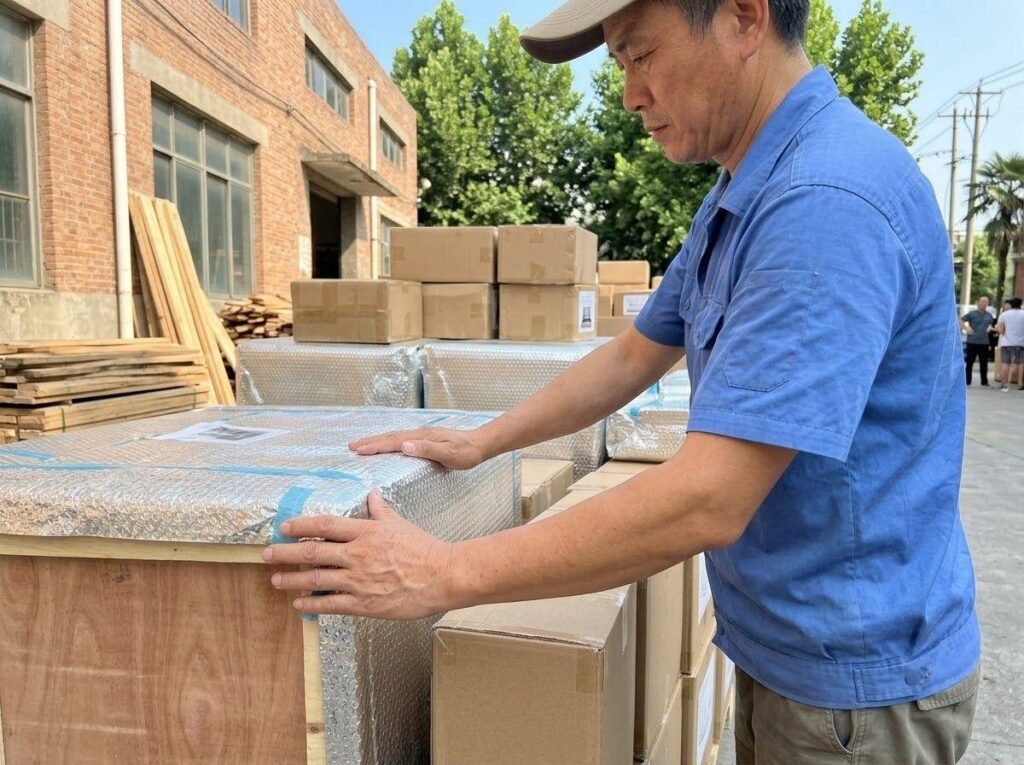
The factories that get this right treat packaging as a parallel discipline. They have a dedicated packing supervisor who signs off on load plans. They photograph every layer before the container seals. They calculate desiccant loads by volume, not by gut feeling. These factories exist. They’re just not the ones advertising “free custom packaging upgrades” on Alibaba.
The Decision Framework: A Buyer’s Packaging Checklist
Before you approve that pre-production sample, run this checklist. Not mentally. On paper. With someone else in the room.
The Non-Negotiables
- Demand a written packaging spec sheet — not a WeChat promise. It should list: carton ply rating, foam type and thickness, corner protector material, sealing method, desiccant quantity per cubic meter, and ISPM-15 certification status for any wooden crating.
- Require timestamped packing photos of the first production batch, showing the actual materials used, not a marketing shot from 2022. If you’re buying FOB, have your forwarder verify the crate markings match the spec before the container seals.
- Specify the sealing method explicitly. An ultrasonic bag sealer creates a molecular bond that holds under pressure. Heat-sealed LDPE rips. This one detail can be the difference between a pristine delivery and a moisture-damaged write-off.
The Smart Additions
- Mandate a loading protocol — who supervises, how cartons are stacked, whether dunnage is used to prevent shifting. A container that moves six inches in heavy seas turns your furniture into a demolition derby.
- Build in a packaging audit trigger: if any single damage claim exceeds 3% of shipment value, the factory pays for an independent third-party packaging review on the next order. This aligns their incentives with yours in a way that no “quality guarantee” email ever will.
- Compare insurance gaps before you choose FOB vs. CIF. Standard CIF coverage protects against total vessel loss, not partial damage from inadequate inner packing. All-Risk cargo insurance runs 0.3%–0.5% of invoice value and covers what actually happens to furniture. But — and this is critical — the insurer will still deny claims if your packing doesn’t meet their documented standards.
The Red Flag That Contradicts Conventional Wisdom
- Be suspicious of factories that offer “free” custom packaging upgrades. Real engineered packaging costs money — foam, labor, materials, design time. If it’s free, you’re not getting an upgrade. You’re getting a relabel. The factories that charge separately for premium crating are often the ones that have actually costed it out.

FAQ: What Buyers Actually Ask
Q: If I pay extra for custom packaging, shouldn’t the factory just do it right?
A: No. Extra payment creates an incentive to appear compliant, not to be compliant. Without material specs in the purchase contract and photo verification at origin, you’re trusting a sales rep’s interpretation of “premium.” The factories that execute well do so because you’ve made the spec unambiguous — not because you paid more.
Q: My factory says they use “export standard” cartons. Is that enough?
A: “Export standard” is a meaningless phrase. It has no regulatory definition. In my experience, it translates to “whatever cartons our supplier had in stock this week.” Demand a specific ply rating — 5-ply double-wall minimum for furniture over 15kg — and ask for the supplier’s carton test report. If they can’t produce one, you’re flying blind.
Q: Can I just use a third-party packaging company in China instead of trusting the factory?
A: You can, but coordination costs spike. The factory has to hold finished goods, coordinate with an outside packer, and manage liability handoffs. For high-value hospitality or residential projects, this can make sense. For standard OEM orders under $50,000, the overhead usually erodes the benefit unless your factory’s default packing is genuinely incompetent.
Q: How do I know if my cargo insurance will actually pay out for packaging-related damage?
A: Read the exclusions. Standard CIF policies exclude “insufficient inner packing” and “inherent vice” — which covers moisture mold and compression damage. All-Risk policies cover partial damage, but only if your packing meets their engineering standards: 30mm foam spacers, reinforced corner protectors, moisture barriers. No photos of the packed load? Your claim dies at the survey stage.
Q: Is custom packaging customization for Chinese furniture worth the hassle, or should I stick with factory defaults?
A: It depends on what you’re shipping and who you’re shipping to. If you’re moving flat-pack items to a distributor who repackages anyway, factory defaults might suffice. But if you’re shipping direct-to-consumer, direct-to-hotel-installation, or anything with a high-gloss finish, upholstered surface, or stone component, default packaging is a gamble. The hidden failure isn’t that custom packaging is hard — it’s that most buyers don’t realize their “custom” order was never custom at all.
The Hard Lesson
I used to think the biggest risk in China sourcing was quality fade during production. That was naive. The real risk is what happens after production — when the finished goods sit in a factory warehouse for two weeks because the packaging subcontractor is backed up, then get thrown into a container by workers who’ve never been told that “This Side Up” isn’t a suggestion.
Or rather, the problem isn’t the factory. It’s the expectation that packaging is a detail you can delegate.
The carton is the last thing your customer touches before they touch your product. In hospitality procurement, that first impression happens in a loading dock at 6 a.m., under fluorescent lights, with a general contractor breathing down your neck. If the box falls apart, the furniture inside doesn’t get a fair review. It gets a damage claim.
So here’s my question: when was the last time you asked to see a factory’s packing line — not their showroom, not their veneer workshop, but the actual concrete floor where your goods get wrapped and boxed? If the answer is “never,” that’s not a sourcing strategy. That’s hope. And hope doesn’t survive a Pacific crossing.