

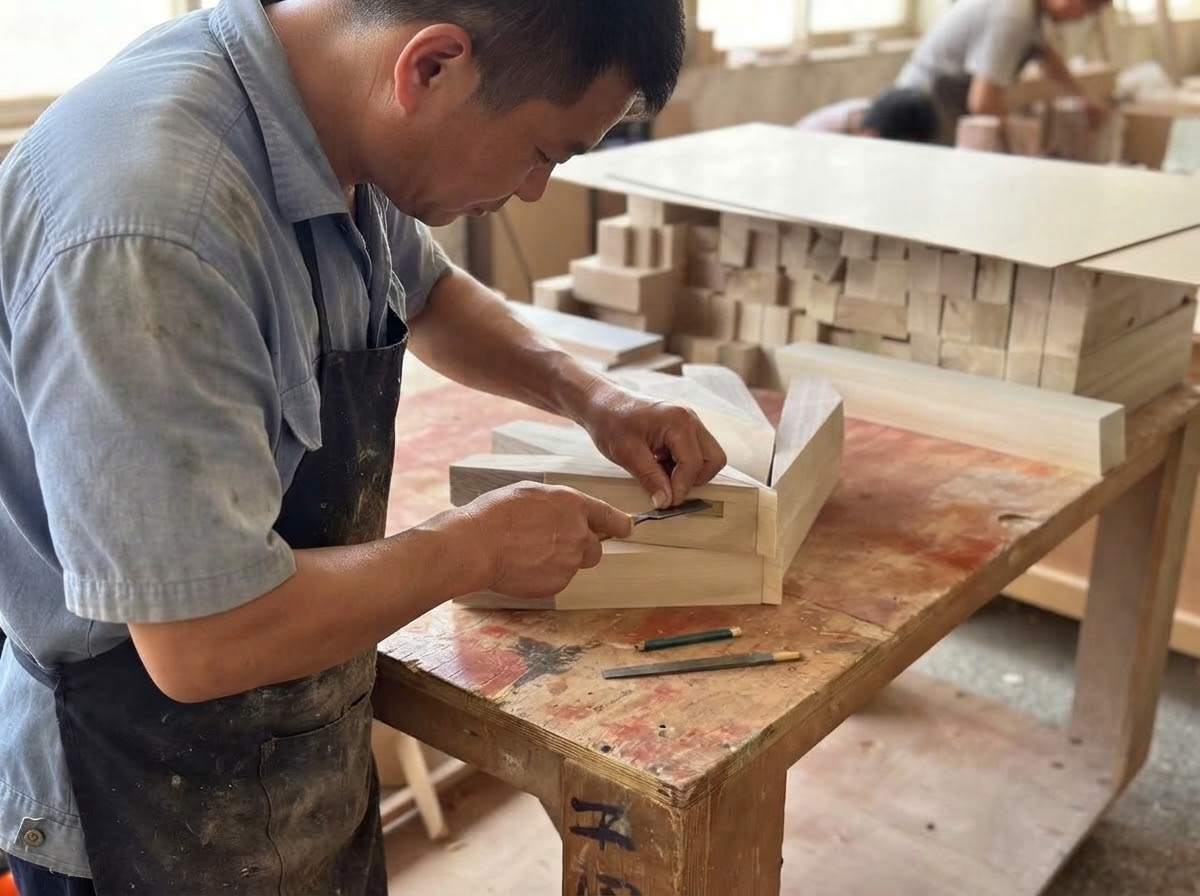
The factory manager in Longjiang leaned back in his plastic chair, lit a cigarette, and told me — in the friendliest possible tone — that what I wanted couldn’t be done. Not “would be expensive.” Not “needs more time.” Impossible. I was standing in a sofa factory that exports eight figures’ worth of product annually, and I had just asked them to produce a modular lounge system with a non-standard 68cm seat depth instead of their usual 60. That was it. Four centimeters.
He wasn’t lying, by the way. From his perspective, he was telling the truth. Changing the seat depth meant new jigs, retrained cutters, a slower line, and a bigger risk of rejects. The margin on my order didn’t justify the headache. So he said the word, and expected me to accept it.
I didn’t. And over the next three weeks, working through a mid-sized export manufacturer near Foshan, I got exactly what I wanted — at a price that was, frankly, embarrassing for the first factory to see. This dynamic plays out thousands of times a year between foreign buyers and Chinese furniture makers. And most buyers fold far too early.
The Brutal Truth: “Impossible” Is Usually a Price Tag
Here’s the uncomfortable reality nobody puts in their sourcing deck: Chinese factories don’t refuse custom work because they can’t do it. They refuse because they don’t want to do it for you, at your volume, on your timeline.
That sounds harsh. It is harsh. But after fifteen years of walking factory floors from Shunde to Anji, I can tell you the pattern holds. A factory is a machine built to repeat itself. Every customization request — however small — is sand in that machine. The factory owner’s job is to figure out whether the sand comes with enough gold attached.
The rule of thumb I give every junior buyer: “Impossible” in China means “impossible at the price you just mentioned.” Nothing more. Once you internalize that, the entire negotiation changes shape. You’re no longer begging for a favor. You’re pricing an engineering problem.
KEY TAKEAWAY
- “Impossible” from a Chinese furniture factory almost never means technically impossible — it means commercially inconvenient at your stated terms.
- Chinese craftsmen possess extraordinary adaptive skill, but that skill is unlocked by relationship, volume signals, and how you frame the request — not by the request itself.
- The best custom results come from mid-sized specialists, not the biggest factories, because flexibility lives in operations that still answer to a person, not a department.
- China custom furniture sourcing is the process of translating a design vision into factory-floor constraints — the buyer who does this translation work wins.
And here’s the thing most Western buyers miss entirely: this isn’t a cultural standoff to be “managed.” It’s a screening mechanism. The factory is testing whether you understand their world. Pass the test, and doors open that you didn’t even know existed.
Why Chinese Craftsmen Can Adapt to Almost Anything — and Choose Not To
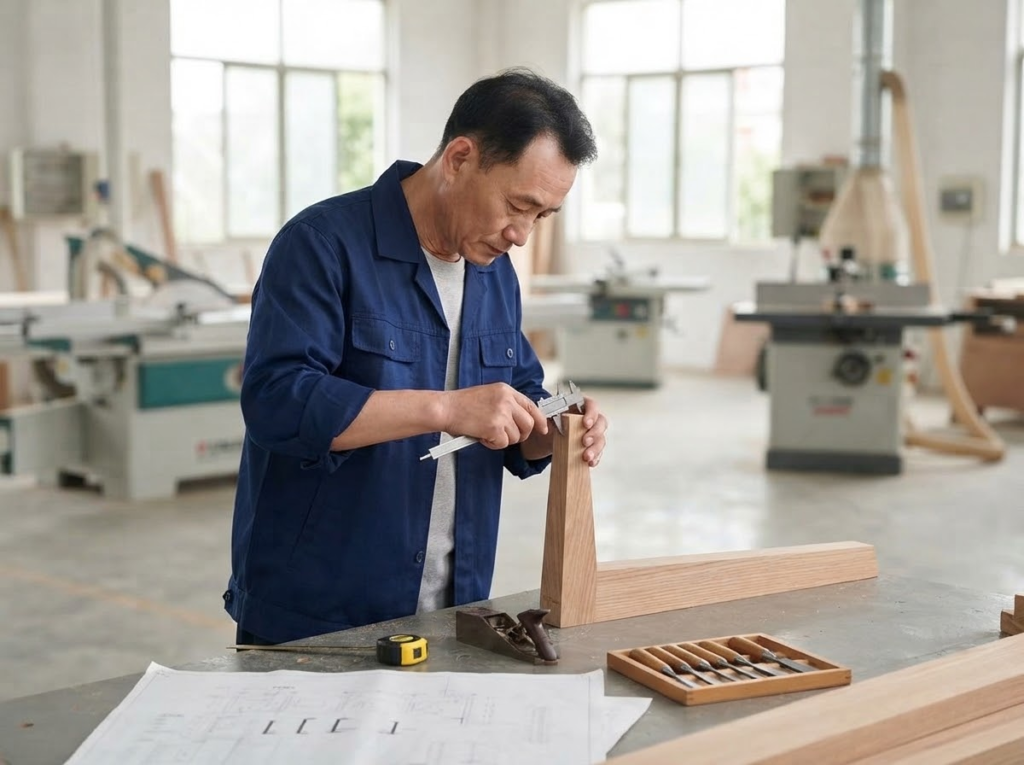
Think of a Chinese furniture factory like a jazz band that’s played the same setlist for ten years. The musicians are world-class. They could improvise circles around your request. But the band leader pays them to play the hits, on time, every night. Your “just a small change” is someone asking for freeform fusion during the dinner rush.
Walk into any serious upholstery operation in Shunde and look past the production line. You’ll see a wall of offcuts — odd-shaped foam pieces, bent plywood scraps, rejected leather panels. That wall is the tell. It represents thousands of small experiments, design fixes, and last-minute client saves that never appear on any spec sheet. The adaptive skill is there. It’s embedded in workers who’ve been cutting the same arm profile for so long they can feel a half-degree angle error by hand. (I once watched a cutter in Dongguan identify a 2mm seam misalignment by running his thumbnail across the stitching. He was right.)
But the general pattern suggests this skill only surfaces when the request arrives with the right packaging. Not email packaging — context packaging.
What does “right packaging” actually look like?
It looks like a buyer who shows up with a physical sample, or a dimensioned drawing, and says “here’s what I need — tell me what it breaks.” Not “can you make this?” The first framing invites the factory’s problem-solvers to the table. The second invites a risk assessment. And a risk assessment, from a factory that gets thirty inquiries a week, defaults to “no.”
Worse still, buyers often open with the customization before establishing any baseline. That’s backwards. You earn the right to ask for adaptation by first demonstrating you’re easy to deal with on standard work. Actually, that’s not quite right — it’s more that the factory needs evidence you’re a real buyer before they invest engineering attention in you. Six-figure container buyers and two-sample designers get very different answers to identical questions.
The Physics of a “No” — And How It Unravels
To understand why four centimeters of seat depth stopped a nine-figure exporter, you have to understand how these factories are actually organized. And this is the part that never makes it into textbooks: most mid-large Chinese furniture factories are not vertically integrated wonders. They’re assembly orchestrators. The Longjiang sofa plant might cut and sew in-house, but the frame lumber comes from one supplier, the foam from another, the mechanisms from a third in nearby Guangzhou.
So when you ask for a non-standard dimension, the factory owner is mentally running down three supplier phone calls before he answers you. One of those calls might go to a foam converter who requires a minimum run that swallows your entire order quantity. He’s not being stubborn. He’s doing arithmetic in real time and deciding the arithmetic fails.
Isn’t that just inflexibility?
No — it’s specialization, and specialization is precisely what makes Chinese craftsmen so good within their lane. Anji’s chair factories can take a dining chair from sketch to container in weeks because every single process is optimized for chairs. Nankang’s panel furniture cluster can price a hotel wardrobe project at a level that makes European factories blanch. The skill is narrow and deep, like a sushi chef who has spent twenty years on knife work alone.
This is where a lot of buyers waste months. They approach the wrong specialist for the wrong job, hear “impossible,” and conclude the whole market is rigid. The real kicker: they were often standing in the right industrial cluster — just talking to the wrong tier of factory within it.
Consider the risk-reward landscape, because not every “yes” is equal either:
| Factory Type | Typical Response to Custom Requests | Real Risk Profile |
|---|---|---|
| Mega-factories (500+ workers, big-brand OEM) | Polite, detailed refusal; will only customize at very high volume | Low quality risk, high inflexibility |
| Mid-sized export specialists (80–300 workers) | “Tell me more” — genuine engineering interest | Moderate risk; varies enormously by owner |
| Small workshops (10–40 workers) | Instant yes to almost anything | High consistency risk across batches |
| Trading companies (no factory) | Instant yes, no idea if the factory can do it | Highest; you’re paying for opacity |
Which brings up a name that surfaces in a lot of procurement conversations. While some buyers gravitate toward the giant OEMs in Foshan, others find that mid-sized specialists — operations like Interi Furniture, the kind of export-oriented Guangdong manufacturer serving hospitality and high-end residential project work. Not necessarily cheaper. But more likely to have a boss who picks up the phone and says “send me the drawing.” That’s the whole game, honestly. When the person who owns the factory answers your email, “impossible” becomes a negotiation. When a sales rep answers, it’s a verdict.
The Playbook: Turning “Impossible” Into a Timeline
Let me give you the sequence I’ve refined over years of doing this badly before I did it well. It’s not elegant. It works.
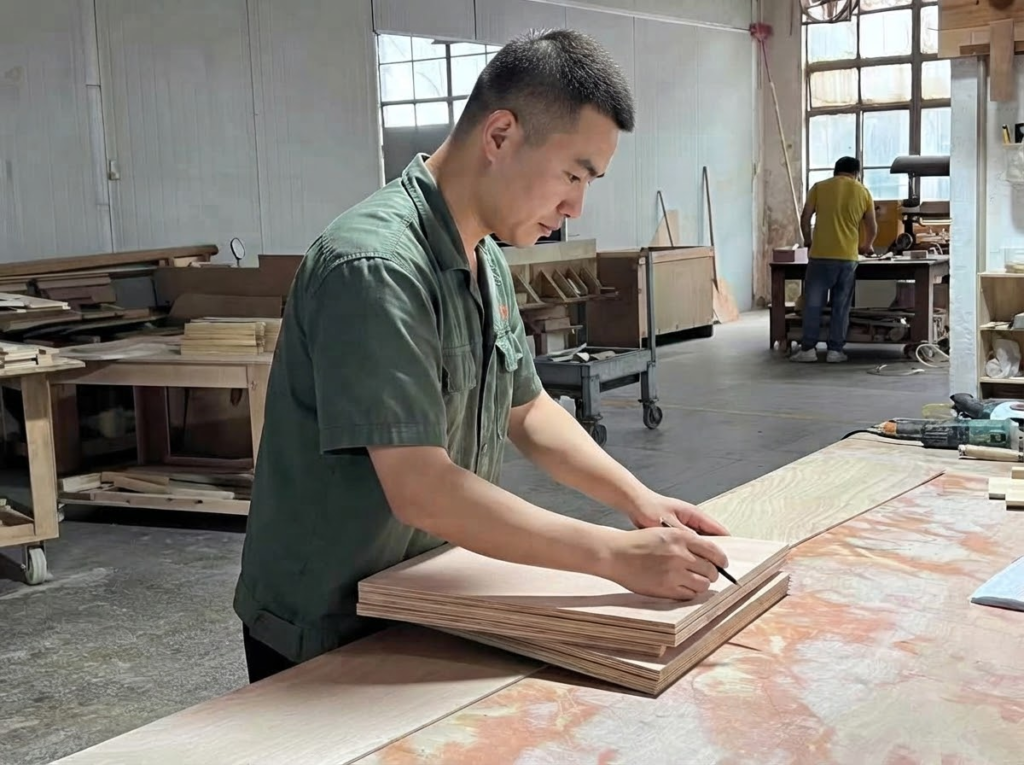
Start with the standard catalog item closest to your vision. Order the sample. Inspect it. This costs you a few hundred dollars and buys you something no email can: proof you’re real. Factories track this. They remember who actually bought the sample before demanding changes.
Then make one change at a time. I know, you want to send the full custom spec in one beautiful PDF. Resist. One change. Let them price it, engineer it, and deliver it. You’re building a track record of solvable problems, and each solved problem makes the next request easier. It feels slow. It is actually faster than the alternative, which is a “yes” followed by three months of silent disaster.
Ask “what breaks if we do this?” instead of “can you do this?” This is the single highest-leverage sentence in custom sourcing. It flips the factory from gatekeeper to collaborator. And it surfaces the real constraints — foam MOQs, jig costs, finish curing times — that you can then design around.
Talk to the engineer, not the salesperson. On any serious project, request a technical review call or a visit during a non-rush period. A factory’s flexibility is largely a function of how bored its technical staff are. Catch them in a slow month and you’d be amazed what becomes possible.
One red flag that contradicts everything you’ll read elsewhere: be suspicious of the factory that says yes to everything immediately. Conventional wisdom says enthusiasm is a good sign. It isn’t. Instant, unqualified yeses usually mean they haven’t understood the request, or they plan to “figure it out” at your expense on the production line. The factory that pushes back once, twice, then commits with specifics — that’s your factory.

FAQ: What Buyers Actually Ask
Q: Do Chinese furniture craftsmen really have the skill for high-end custom work, or is it all mass production?
A: Yes — the skill is real and often extraordinary, but it concentrates in specific clusters and specific tiers of factory. The finest hand-finishing and joinery work I’ve seen anywhere in my career has been in small-to-mid Guangdong and Zhejiang operations that most buyers never find because they’re invisible on Alibaba’s first page.
Q: My factory said my design is “impossible.” Should I just find a new factory?
A: Not yet. First, ask what specifically makes it impossible — material, machine, labor, or certification. If the answer is material or machine, a different factory in the same cluster might solve it in a day. If the answer is that your quantity doesn’t justify the setup, either raise the quantity, pay a setup fee explicitly, or redesign around the constraint. Find a new factory only after the “why” is clear.
Q: Is it true smaller factories are more flexible?
A: It depends on what you mean by flexible. Smaller workshops will attempt almost anything, yes. But consistency across a 200-unit hotel order is where they fall apart. For true custom work at volume, the sweet spot is usually a mid-sized specialist with in-house engineering and one strong export-market track record.
Q: How much extra should custom China furniture cost compared to standard?
A: Industry observers estimate that a well-executed custom program runs 15–40% above the equivalent catalog item at similar quality — but I’ve also seen naive buyers pay 200% premiums for changes that cost the factory almost nothing. The premium should reflect real engineering and setup cost, not your perceived desperation. Always ask for the setup cost as a line item.
Q: So can you actually push Chinese craftsmen to adapt, or is “impossible” final?
A: No — “impossible” is almost never final. It depends on one thing above all: whether you’ve given the factory a commercial reason to solve the problem. The craftsmanship adapts when the arithmetic adapts. Everything else is detail.
The Last Word
I eventually ordered that 68cm modular lounge system — 340 units for a boutique hotel group. The factory that said yes was smaller, hungrier, and run by a man who kept my rejected sample on his desk for two months, marking it up with a red pen until the design was his as much as mine. That’s when I stopped thinking about “pushing” Chinese craftsmen.
The lesson isn’t that factories are stubborn. It’s that adaptation in this market is a gift, not a service — and gifts flow toward relationships, not purchase orders. The buyers who thrive aren’t the ones with the biggest budgets. They’re the ones who walk in knowing that “impossible” is the first word of a negotiation, not the last word of one.
So the next time a factory manager lights a cigarette and tells you no — ask yourself whether he’s describing a limitation of his craftsmen, or a limitation of your question.
Chances are, it’s the question. Rewrite it, and watch what happens.