

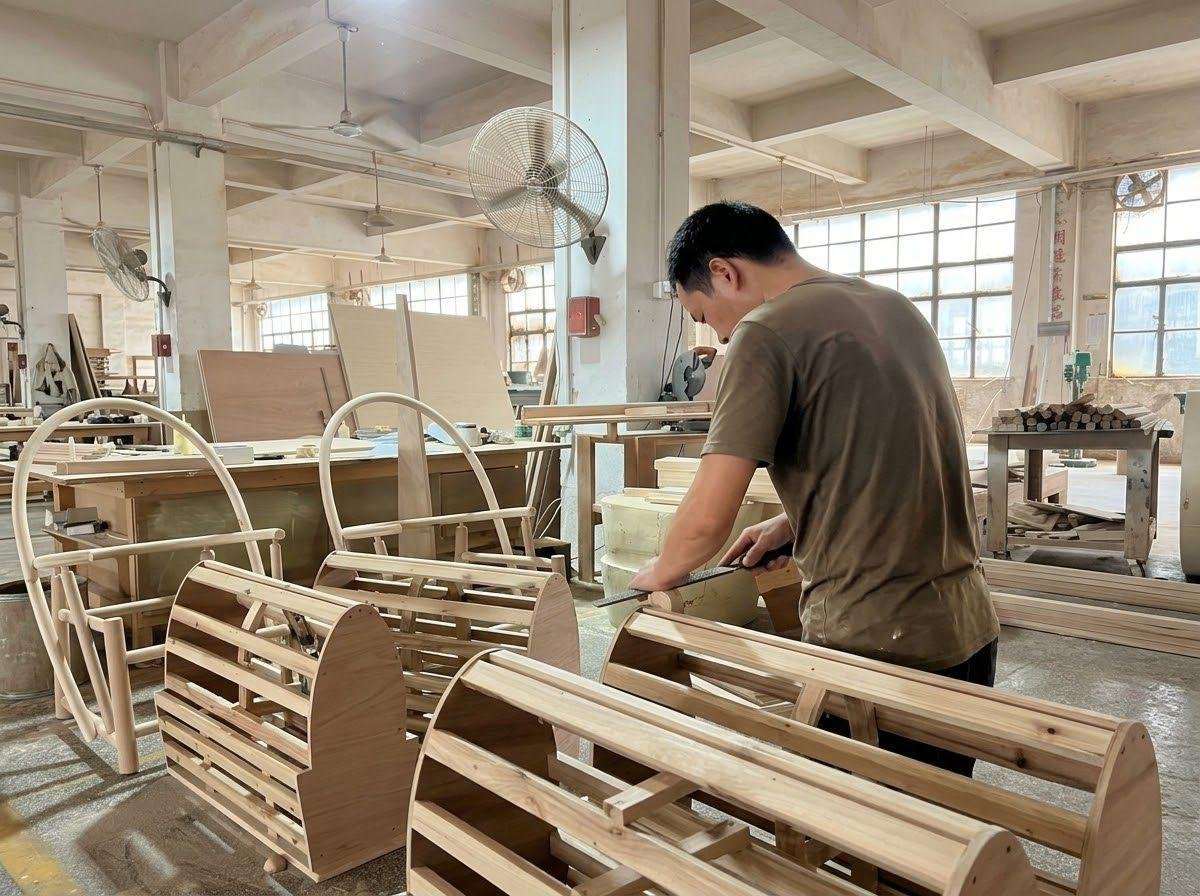
I still remember the smell. Not the lacquer — that came later. It was wet cement and machine oil, March 2019, a twelve-thousand-square-meter plant on the edge of Longjiang, Foshan. I was walking the floor with a buyer from Melbourne who’d flown in to inspect a $340,000 hotel furniture order. Twenty minutes in, he stopped at a CNC station. A technician was hand-modifying a jig for a curved headboard. “Is this their R&D?” he asked, half-joking. I didn’t answer. Because right then, that technician was doing something more honest than any PowerPoint about “innovation strategy.” He was solving a problem the factory had never seen before. Three halls over, another line was stamping out replica Knoll chairs with the kind of mechanical boredom that turns your stomach if you’re paying for originality. Same industrial park. Same business license. Two entirely different animals. The buyer was asking the wrong question. He wanted to know if the factory “had R&D.” What he should have asked: Has this factory ever seen real R&D that wasn’t dressed up for visitors?
The Truth Is Ugly
Most buyers are practically begging to be lied to.
They walk into a showroom, see an “R&D Center” plaque, and exhale. That plaque cost twelve bucks. The real price? What happens when you believe it.
Here’s my rough rule: If a factory talks innovation before you talk tolerances, you’re already in the marketing department, not the workshop.
The uncomfortable part? Real R&D in Chinese furniture manufacturing is invisible by design. It doesn’t live in that glassed-off room with the 3D printer nobody touches. It lives in a production manager’s insomnia — humidity keeps killing his joints, margins are bleeding, and he can’t let it go. It lives in the quiet decision to prototype seven chair legs instead of ordering the mold from a catalog.
But buyers don’t want invisible. They want certificates. Photos. A narrative that says “my supplier is innovative” so the airfare and due diligence budget feel justified.
Wait — that’s not quite right. What most buyers actually miss is that the copiers know this. They’ve learned the performance. The R&D theater. Smoke and mirrors. And it’s convincing enough to pass most factory audits.
Key Takeaways
- China supplier check isn’t about finding an R&D department on an org chart. It’s about identifying whether a manufacturer’s internal problem-solving habits match your quality expectations.
- A factory willing to show you failures — rejected prototypes, worn-out tooling, money-losing experiments — is a stronger R&D signal than any patent certificate.
- Copiers have learned to dress like innovators. The only way to tell them apart is to watch what they do when nobody’s watching.
- Geographic clustering matters: Foshan carries different risks than Anji or Nankang. One city doesn’t cover every category.
What Real R&D Actually Looks Like on a Factory Floor
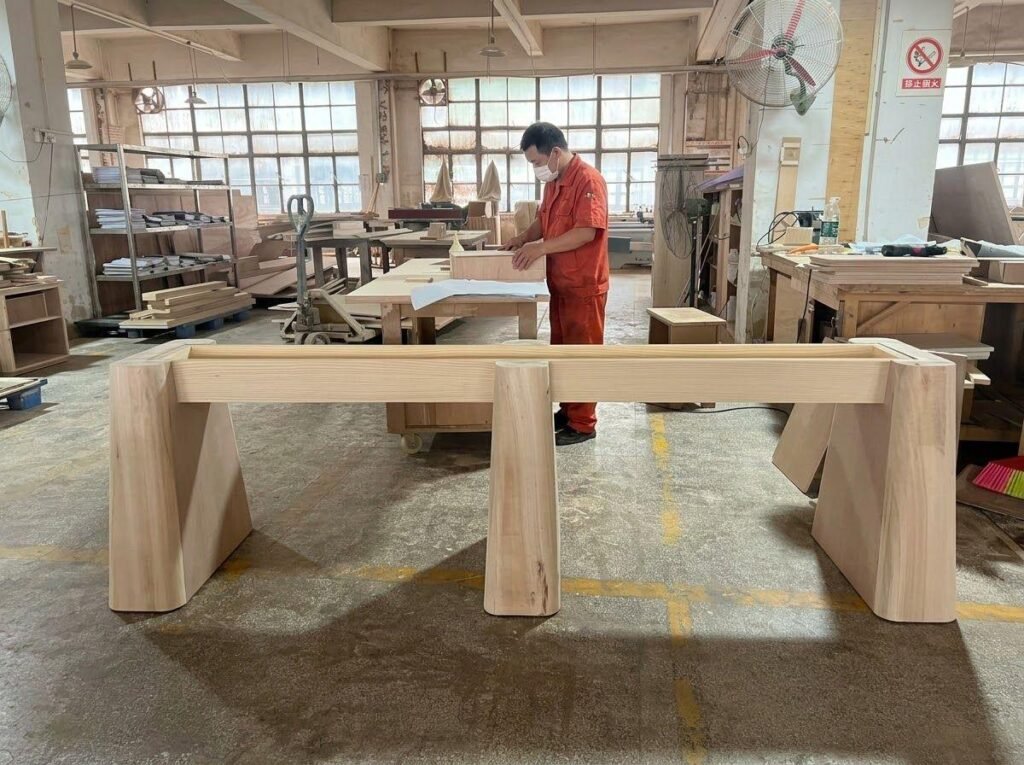
Spotting genuine R&D in a Chinese factory is less like auditing a tech firm and more like judging a barbecue competition. (Hear me out.) You don’t ask the pitmaster about his “smoke innovation strategy.” You look at the fire. The woodpile. Whether he’s adjusting dampers at 3 a.m. because the brisket’s running hot. Real R&D in furniture works the same. Messy. Obsessive. Done by people who can’t help themselves.
Last year I walked a solid wood chair factory in Dongguan. The owner was pushing sixty, still wearing factory slippers to meetings. He’d spent eleven months refining a mortise-and-tenon joint for outdoor teak. Not because a client asked. Because he’d watched three years of warranty claims from Dubai and couldn’t sleep. That’s not an “innovation pipeline.” That’s pathology. The good kind.
The best R&D often looks like stubbornness.
Check the scrap pile. A factory doing real development has scrap that tells stories. Chair backs with experimental curvature. Veneer samples that didn’t make the cut. Jigs used once and abandoned. A copier’s scrap pile? Boring. Uniform. Just defective copies of the same thing.
And here’s where it gets tricky. Some of the most “innovative” factories on paper are the worst offenders. ISO certifications. University partnerships. A slick R&D director with perfect English giving conference presentations. But walk the floor at 10 p.m. on a Tuesday. If the prototype room is dark and the replica showroom is blazing, you have your answer.
Industry observers estimate that R&D investment in Chinese furniture manufacturing follows a bimodal distribution. On one end, the quiet obsessives. On the other, the theatrical copiers. The middle — the sensible, moderate innovator — is surprisingly thin. Most buyers think they’re looking for the middle. They’re not. They’re looking for the obsessives and hoping they don’t land on the performers.
The Copier Playbook — And Why It’s Harder to Spot Than You Think
Let’s talk about the performers. Because they’ve gotten scary good.
A copier factory today doesn’t look like a back-alley operation. It looks professional. Clean floors. ISO plaques. Maybe a few original SKUs mixed in to confuse things. The real kicker? Some copiers have better quality control than innovators. They’re copying something that already works. Tolerances are known. Failure modes are documented. Risk is low. They’ve learned you don’t need to cut corners when you’re reverse-engineering a design that already survived the hard work.
I saw this in Nankang a few years back. A factory was producing a near-flawless replica of a high-end Italian dining chair. Original retailed at €1,800. Their version, wholesale at $140, had better seam consistency because they’d studied the failure points and engineered around them. That’s not R&D. That’s forensic engineering. And it’s wildly profitable.
The copier’s greatest advantage is predictability.
Buyers love predictability. It feels safe. Which means the copier often delivers a smoother initial experience than the innovator, who’s still working out the kinks on iteration four of something new. That’s the trap. The factory that impresses you on the first visit — perfect samples, fast turnaround, no pushback — might be the one with nothing original to lose.
| Dimension | R&D Innovator | Systematic Copier |
|---|---|---|
| Prototype scrap rate | High; visible experimentation | Low; mature, borrowed designs |
| Tooling investment pattern | Sporadic, project-specific bursts | Steady, amortized across volume |
| Engineering response to changes | Deep questions, pushback, timeline extensions | Immediate “yes,” zero friction |
| Product evolution over 3 years | Gradual, sometimes awkward improvements | Sudden “new” collections mimicking market leaders |
| Floor atmosphere at off-hours | Small teams problem-solving quietly | Either empty or running full replication shifts |
What usually happens is buyers mistake cooperation for capability. A factory that says “yes” to everything — every customization, every compressed timeline, every material swap — isn’t being flexible. It’s being hollow. No there there. No accumulated knowledge saying, “We tried that in 2017 and the joint failed in Singapore’s humidity.”
Case Study — The Factory Floor Doesn’t Lie
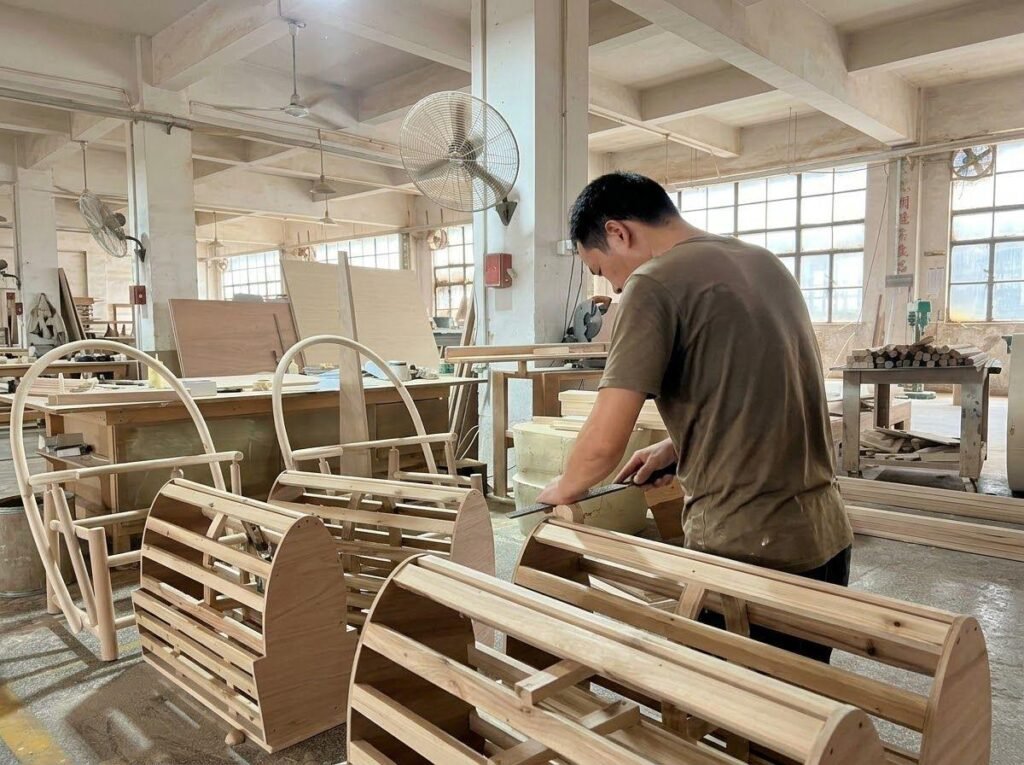
Let me ground this in something concrete. A procurement director I’ve worked with — James, based in Sydney — was sourcing a 600-unit boutique hotel project two years ago. He’d narrowed it to three factories. Two were large-scale operations in Foshan with impressive R&D departments on paper. The third was a mid-sized specialist in Zhejiang focused on solid wood hospitality furniture.
James did something smart. He skipped the main showroom and asked to see the “problem room” — where they keep returns, warranty claims, and rejected prototypes. The two Foshan giants refused. Cited confidentiality. The Zhejiang factory walked him right in. Showed him a chair that failed a 200kg static load test. Showed him the revised version. Showed him the email chain with the client.
While some buyers gravitate toward large-scale manufacturers in Foshan, others find that mid-sized specialists — operations like Interi Furniture, which focuses on custom hospitality and project-based residential work — offer a different risk-reward equation. You trade some volume leverage for a closer view of how problems actually get solved. For a 600-unit hotel, that visibility turned out to be worth more than a 4% price discount.
The showroom is for selling. The problem room is for judging.
James placed the order with the Zhejiang factory. Delivery had hiccups. A veneer batch arrived with color variation that required sorting. But the chairs? Three years in, zero structural failures. The real kicker? One of the Foshan factories he rejected later showed up in a trade magazine feature about “China’s Most Innovative Furniture Makers.” That plaque on the wall worked on the journalist. It didn’t work on James.
The Buyer’s Decision Tree
So how do you actually do this? Not in theory. In practice. When you’ve got three days in Guangdong and procurement breathing down your neck.
Phase 1: The Pre-Visit Smoke Test
- Ask for photos of a product they developed that failed in the market. Not successes. Failures. An R&D factory has these. A copier will stall, because their “failures” are quality defects, not developmental dead ends.
- Request a 15-minute video call with the production manager, not the sales director. If the factory can’t make this happen, you’re not talking to a manufacturer. You’re talking to a trading company in a factory costume.
Phase 2: On the Floor
- Count the jigs. A factory with serious development has hundreds of custom jigs, many worn, many obsolete. A copier has a few perfect ones. Too clean.
- Look for the “awkward” prototype — the piece that doesn’t fit the showroom aesthetic. That’s the R&D fossil record.
- Ask about a material or process they refuse to use. Innovators have strong opinions born from scars. Copiers say “we can do anything.”
Phase 3: The Red Flags
Here’s the one that contradicts conventional wisdom: Be suspicious of perfect samples.
A factory that delivers flawless first samples for a custom design isn’t showing competence. It’s showing that your “custom” design isn’t custom to them. They’ve made it before. For someone else. Probably the brand you’re trying not to copy.
Also:
- Immediate “yes” to aggressive timelines — this means they’re not iterating. They’re reordering.
- A showroom that changes completely every six months — fashion, not development.
- Sales staff who can’t explain why a joint is designed a certain way. They should know the failure mode that created it.
At the end of the day, your job isn’t to find the “best” factory. It’s to find the factory whose incentives match your project. And that requires looking past the pitch.

FAQ — The Questions Buyers Actually Ask
Q: Can I just ask the factory directly if they do their own R&D?
A: You can, but you’ll get a “yes” 100% of the time. Even the purest copier will say yes. The better question is: “Show me something you developed that your competitors thought was a bad idea.” Real innovators light up at that. Copiers deflect.
Q: Is a factory bad just because it copies? Some of my best-selling pieces are “inspired by” European designs.
A: Not necessarily bad. Just know what you’re buying. If you want a reliable reproduction of a proven design at scale, a copier is often the right choice. The danger is paying innovation prices for replication work, or worse, discovering your “supplier” is violating IP that lands you in a European customs hold. Copying isn’t a moral failure in this industry. Misrepresentation is.
Q: How do I check a China supplier for real engineering capability without flying there?
A: Three remote tests. First, send a flawed technical drawing — include an impossible joint or an under-specified load requirement. See if they catch it. Second, ask for a video of their oldest running prototype, not their newest. Third, request a quote breakdown that separates tooling from unit cost. A factory that does real R&D knows their tooling numbers intimately. A copier often lumps them together because they’re ordering existing molds.
Q: Are the big factories in Foshan automatically safer bets than smaller ones in Anji or Nankang?
A: No. Size correlates with volume capacity, not originality. Some of the most sophisticated R&D I’ve seen came from factories under 200 workers in Dongguan. Some of the most polished copiers occupy 50,000 square meters in Shunde. Scale is a logistics metric. R&D is a culture metric.
Q: So can you actually spot the difference between R&D innovation and copiers in Chinese factories?
A: Yes. But not from the brochure. You spot it in the scrap pile, in the pushback, in the stories of what broke and who fixed it. The factories worth your long-term money aren’t the ones with the cleanest showrooms. They’re the ones with the most interesting problems.
Closing
After fifteen years of walking these floors, the lesson that took me longest to learn wasn’t about engineering. It was about appetite.
The factories that change this industry aren’t the ones hungry for your order. They’re the ones hungry for the problem your order represents.
A copier wants your volume. An innovator wants your puzzle. And most buyers, if they’re honest, have never stopped to ask themselves which one they actually need.
So here’s my question: when you look at your current supplier list, do you know — really know — which category each one falls into? Or are you just hoping the plaques on the walls are telling the truth?