


I still remember the smell. Not the lacquer—that I expected. It was the smell of thirty people breathing in a room with no windows. July 2019. Longjiang, on the outskirts of Foshan. I was there to tour a “BSCI-compliant” dining chair factory. The owner, a guy from Wenzhou who’d been in woodwork since the 90s, walked me through the main line first. Clean. Bright. Everyone wearing masks. Time cards neatly punched. textbook.
Then he leaned in. “You want to see where your chairs actually get finished?”
Side door. Concrete warehouse. No AC, and Guangdong humidity hits different in July—like breathing through a wet towel. Thirty workers. Hand-sanding. 9:45 PM. No time clocks. No safety glasses. The owner almost laughed when he caught my face. “These guys? Not on the audit. But without them, your container misses the boat.”
That was six years ago. I’ve been back to the Pearl River Delta maybe a dozen times since. And if there’s one thing I know for sure, it’s this: the distance between a factory’s audit report and its actual shop floor isn’t a gap. It’s a canyon. Most buyers fly into Guangzhou Baiyun, spend two days shaking hands, check a certificate, negotiate FOB, and fly home thinking they’ve done the work. They haven’t. Not even close.
The Brutal Truth
Let’s stop pretending.
Most social compliance audits in China’s furniture game? Theater. Pure theater. The factory knows you’re coming. They’ve known for three weeks. Overtime logs rewritten. Young workers sent back to the dorm. Fire extinguishers bought last Tuesday, lined up like soldiers by an exit that, for once, isn’t blocked by a pallet of MDF.
Here’s my rule of thumb: if the shop floor looks ready for Instagram, you’re being sold a story. Real manufacturing is messy. Real ethics? Even messier.
And the buyers who get burned? Not the careless ones. The busy ones. The hotel procurement director juggling twelve SKUs across three countries. The interior designer who needs 200 custom chairs by Q2 and doesn’t speak a word of Mandarin. They trust third-party audit reports because the playbook says they should. But that playbook was written for a different decade.
Key Takeaways
- A China factory audit tells you what the factory wanted you to see on audit day. The other 364 days? That’s a different movie.
- Your Chinese furniture supplier probably leans on undocumented subcontractors you’ll never find on a certificate.
- Compliance isn’t a document you collect. It’s a relationship you stress-test, again and again.
- The factories that look the shabbiest to a first-timer? Sometimes they’re the cleanest.
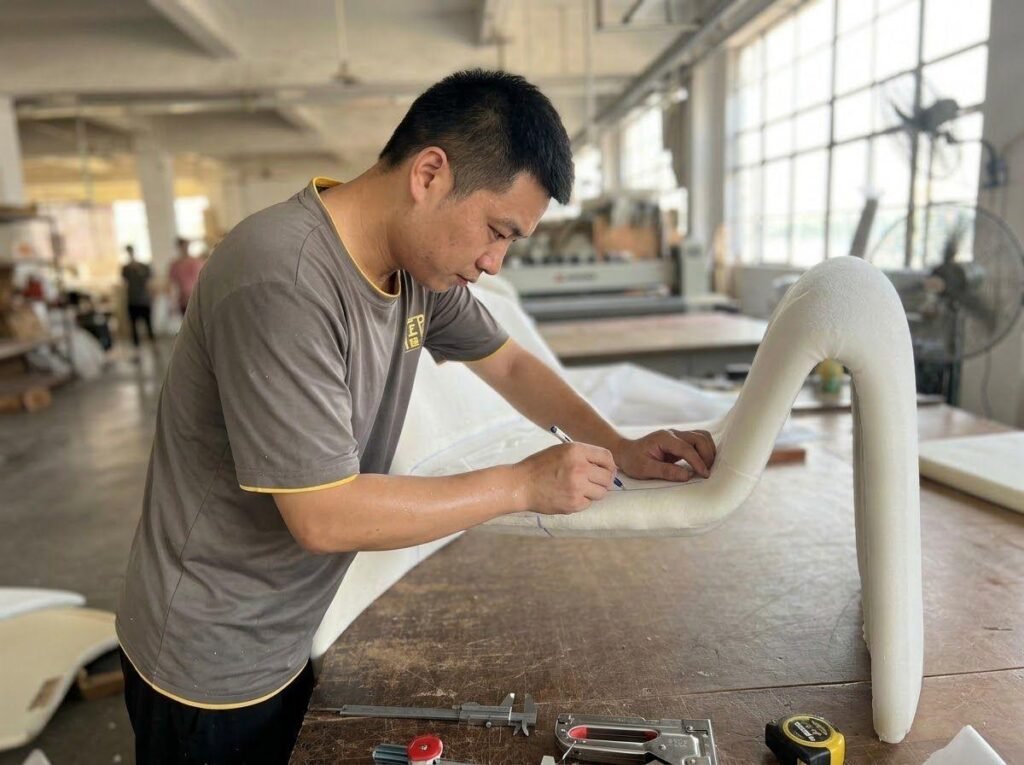
What a China Factory Audit Actually Catches (and What Slips Right Through)
China furniture sourcing is the process of finding, vetting, and contracting manufacturers in China’s industrial clusters—mainly Guangdong, Zhejiang, and Jiangxi—to produce furniture for export or large-scale projects. The factory audit sits at the center of this process. It’s supposed to be the gatekeeper. Problem is, it’s a gatekeeper with a blindfold on.
“Certification Theater”
Think of your standard BSCI or Sedex audit like a restaurant health inspection. Inspector shows up. Manager’s already hidden the dodgy meat, told the staff exactly what to say, and printed fresh hand-washing logs. Kitchen sparkles. Inspector signs off. That night? Back to thawing chicken on the counter and the same grease trap from 2014.
Not a perfect analogy—restaurant inspectors at least sometimes surprise you. But close enough. In my experience, maybe six out of ten furniture factories I’ve walked through in Foshan and Dongguan run two sets of books. One for auditors. One for payroll. The “official” crew clocks out at 6 PM. The shadow crew clocks out at midnight. Official wage meets the minimum. Shadow wage gets nibbled by dorm fees, tool deposits, and “training” that never happened.
And here’s what people don’t get. The auditors? They’re not dumb. A lot of them know exactly what’s going on. But they’re on fixed-fee contracts with brutal timelines. Four factories this week. They’re not detectives. They’re checkbox jockeys.
Who’s Really Writing the Script?
Actually, wait. That’s not quite right. It’s not that factories cheat. It’s that the whole audit economy is built to reward cheating.
The factory pays for the audit. Often picks the firm from an approved list. Fail? Hire a “compliance consultant”—there’s a whole cottage industry of these guys in Shunde—to patch the holes. Re-audit in 90 days. Pass. Certificate printed. Buyer sleeps easy.
But it gets worse. A lot of Chinese furniture supplier operations don’t even make everything under one roof. That solid oak table on your spec sheet? Your audited factory assembles and finishes it. But the rough cutting? Thirty clicks away at a subcontractor you’ve never heard of. The hand carving? Another shop. Metal base? A third. None of them on the report. None of them visited.
Supply chain’s a matryoshka doll. And you only looked at the paint on the outside.
Why “Ethical” Looks Nothing Like the Brochure
If you want to understand labor ethics in Chinese furniture manufacturing, put down the audit checklist. Walk to the workers’ dorm. Read the bulletin boards above the bunk beds. The repayment schedules for recruitment fees. The factory rules in blunt Mandarin that no translator ever fully interprets for you.
The Overtime Paradox
Western buyers see long hours and scream exploitation. Sometimes? Absolutely. But here’s the thing nobody wants to say out loud—often, the workers want those hours. Base wage in Guangdong’s furniture sector, based on export data patterns I’ve tracked, sits around 2,200 to 2,800 RMB for unskilled labor. Try sending money home to Hunan on that. Overtime doubles it. Sometimes triples it.
So when a factory says workers “voluntarily” stay until 10 PM? Might be true. The real ethical question isn’t whether overtime exists. It’s whether a worker can say no without getting punished. Whether they actually get the legal rate. Whether the dorm—eight bunks, shared toilet down the hall—is part of a deal they chose, or a debt trap with no door out.
I’ve seen dorms cleaner than my hotel in Longjiang. I’ve seen “kitchens” that were just a propane burner on a concrete slab next to the sanding room. No pattern. No shortcut. You have to look.
The Subcontracting Rabbit Hole
Mid-sized players make this even murkier. Some buyers chase the big names in Foshan—2,000-worker plants with shiny showrooms. Others end up with mid-sized specialists. Operations like Interi Furniture, for example, which focuses on custom hospitality and high-end residential casegoods. Smaller scale means less bureaucratic fog than a mega-factory. But it also means they’re more likely to farm out specialized work—hand carving, upholstery, metal fab—to tiny workshops that don’t exist on any compliance map.
Not throwing stones at any one operation. It’s structural. Margins are thin. Lead times are insane. Every factory is a network, not a building. The general pattern? The more “custom” or “artisan” your order, the longer the shadow chain behind it.
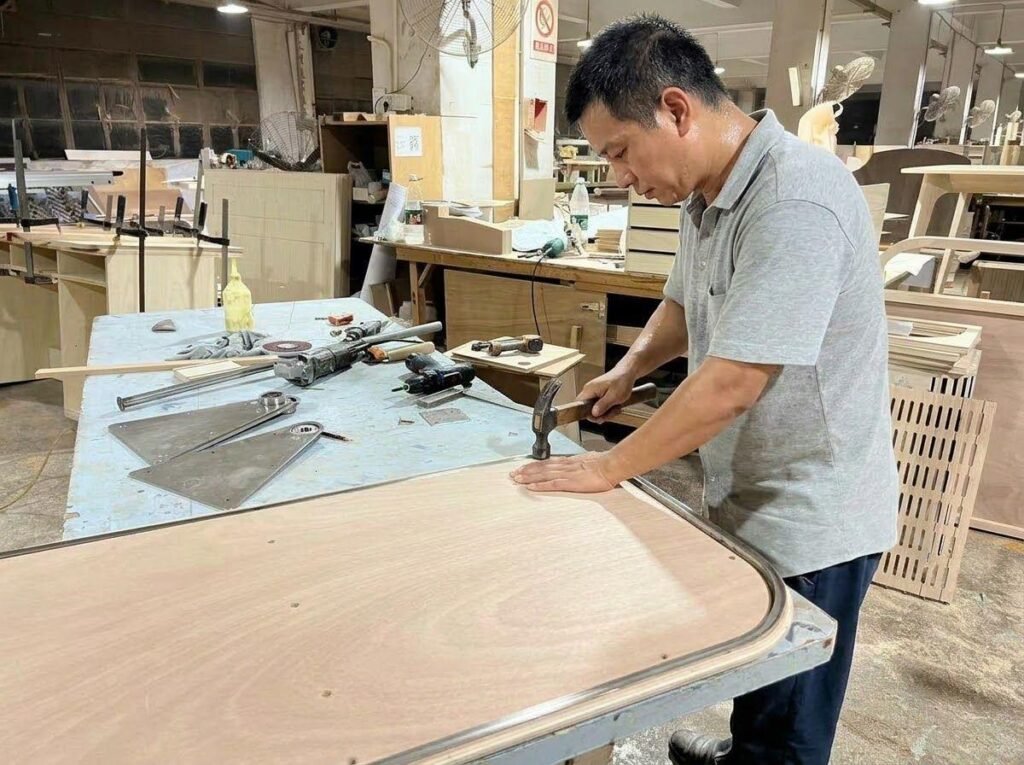
The Audit-Industrial Complex: What’s Real vs. What’s Paper
| What Buyers Usually Check | What’s Actually Happening | The Gap |
|---|---|---|
| On-site wage and hour logs | Two sets of books. Digital for auditors. Handwritten for reality. | 10–30% of hours vanish into the gap |
| Fire safety and building certs | Valid for the main plant. Subcontractors work in unapproved structures | Your liability just jumped to someone you’ll never meet |
| Worker age docs | IDs are real. But recruitment agents in rural areas play games with birth registration | Underage labor is rare at Tier 1. Tier 3? Different story |
| Environmental compliance | Chemicals stored properly at the audited site. Off-gassing and waste? Less controlled downstream | VOCs and water contamination get displaced, not solved |
| Management systems (ISO, etc.) | Certificates bought or maintained for audit season only | Day-to-day culture often ignores everything in the binder |
A Framework for Buyers Who Give a Damn
You can’t kill risk. You can only push it far enough that you can sleep. Here’s what I do after fifteen years of getting educated the hard way.
Start with geography, not paper. Shunde in Foshan has the biggest cluster of audited, export-ready furniture factories in China. Sounds good, right? Except that concentration drives up labor competition, which drives turnover, which pushes factories to subcontract inland where labor’s cheaper. Nankang in Jiangxi—China’s self-proclaimed “furniture capital”—has a different labor pool entirely. Anji in Zhejiang, heavy on seating and bamboo, another one again. Know your geography before you ask for an SA8000 certificate.
Visit on a Tuesday. Or Thursday. Never Monday. Never Friday. Monday is cleanup day after the weekend production push. Friday is performance day. Tuesday afternoon, mid-production cycle, is when you see the real pace. Real fatigue. Real headcount.
Count the helmets. Sounds idiotic. But here’s the trick: in a factory that looks compliant, PPE is everywhere and nobody wears it. In a factory that’s actually safety-conscious, the gear is worn, dirty, dented, and there’s a system to replace it. Pristine helmets in a box by the door? That’s a prop. Not protection.
Ask to see the rejects. Every factory makes bad pieces. The ones that won’t show you their scrap pile are either hiding quality issues, or they don’t have a scrap pile—which means they ship everything and hope. An ethical factory has an organized reject area. It’s a weird proxy for honesty, but it works.
Trace one part backward. Pick the most complex piece of your furniture. The carved leg. The welded base. Ask: “Where was this actually made?” Then ask to see that place. If you get hesitation, a rapid-fire Cantonese phone call, or “it’s my cousin’s workshop,” congratulations—you found your subcontractor. Now you get to decide if they need auditing too.
Here’s the red flag that goes against everything you’ve been taught: A factory that volunteers for every audit under the sun and frames certificates in the lobby like diplomas. The truly compliant operations? They’re tired of the audit circus. They’ll show you their books, but they won’t perform enthusiasm for you. Skepticism beats cheerleading every time.

FAQ: The Questions Buyers Actually Ask (Not the Polished Ones)
Q: If my Chinese furniture supplier has BSCI or Sedex, am I covered?
A: No. You have a snapshot from one day, usually with advance warning. Think of it like a driver’s license photo—accurate for that exact second, useless for predicting next month. You still need to verify ongoing practices yourself, or through someone you trust on the ground.
Q: What should I actually budget for a real audit program?
A: One comprehensive audit by a decent firm runs $2,000–$4,000 depending on size and location. But one audit is worthless. Budget for at least two unannounced follow-ups in year one, plus quarterly spot-checks if you’re moving volume. In my experience, roughly 3–5% of your annual PO value should go to compliance verification. Less than that? You’re not verifying. You’re hoping.
Q: My factory says all their workers are happy and nobody wants to unionize. True?
A: Independent unions basically don’t exist in China’s private manufacturing sector. Workers might be content, numb, or scared—good luck telling the difference as a foreign buyer. What you can check: is there a functioning worker rep committee? Are grievance boxes actually opened and answered? And what’s the turnover rate? High turnover is the loudest signal that people are miserable.
Q: Can I ever really know my furniture was made ethically, or am I just managing PR?
A: Depends how deep you’ll dig. Audit your direct supplier only? You’re managing appearances. Map the chain to Tier 3, do unannounced visits, and accept that verified compliance costs more? You can get close to real confidence. Not certainty. Never certainty. But close enough to sleep.
The Question That Doesn’t Have a Clean Answer
I’ve watched maybe a hundred buyers wrestle with this. They want a clean story. Something to tell the client, the board, themselves—that the furniture was made right. But China’s furniture industry doesn’t traffic in clean stories. It traffics in trade-offs. Speed versus traceability. Cost versus verification. Convenience versus that 11 PM phone call when your local guy finds a second shift running in a building that isn’t on any map.
So here’s where I landed after too many factory floors and too many lukewarm cups of tea in Dongguan: You don’t find ethical factories. You build ethical relationships. The certificate is where the conversation starts, not where it ends. The factory that remembers your name, that fixes a problem before you spot it, that lets you show up unannounced without scrambling—that’s the one worth your time. Maybe not perfect. But real.
The rest? Smoke and mirrors. And nobody’s got time for mirrors.