

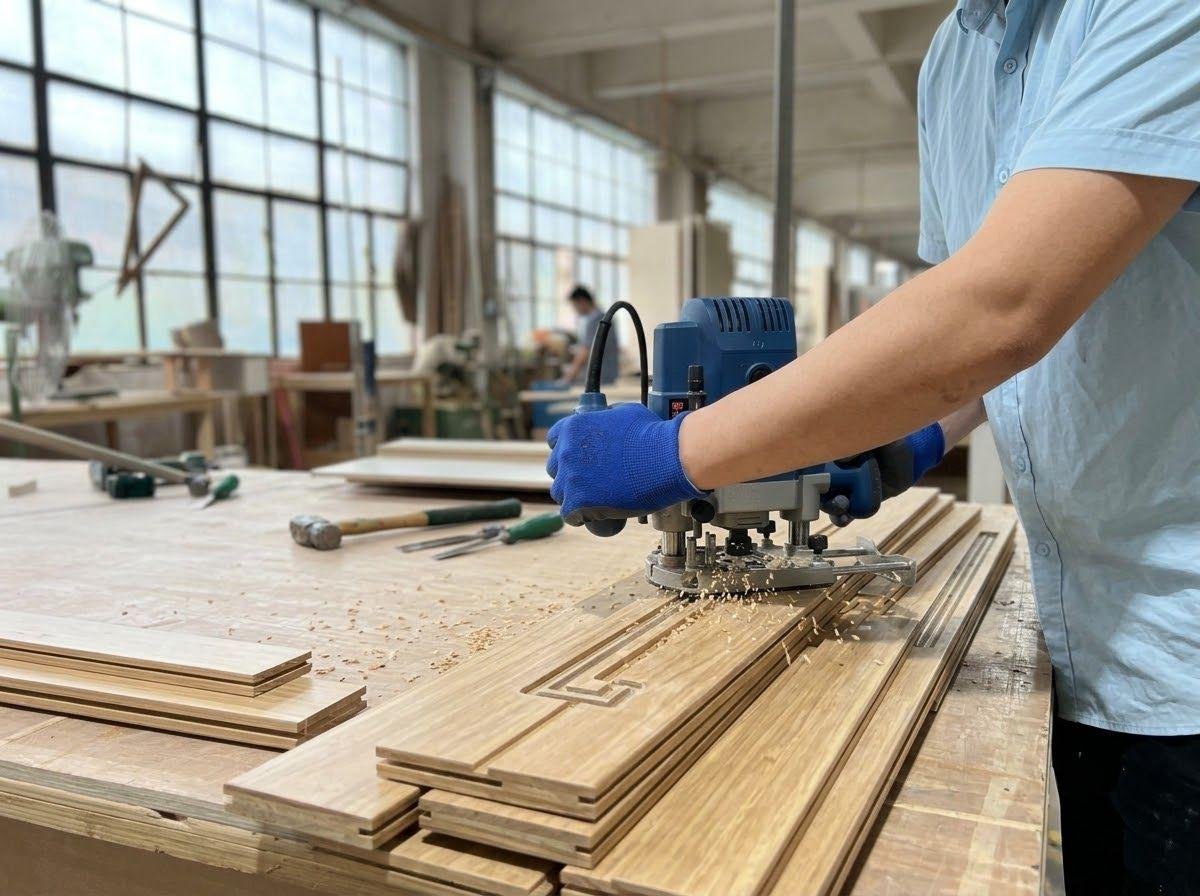
Shunde, 2019. Taxi guy doesn’t look up. “Forty-seven.” That’s it. I’m standing there holding a chair I just pulled out of a Longjiang factory — lobby looked like a Marriott, back of the house looked like my grandmother’s basement after a flood. Six hours inside. Twelve-thousand square meters of “state-of-the-art” production. Couldn’t find a single fire extinguisher with a valid tag past the spray booth. Flew eight thousand miles for this. Got a headache and a chair that probably cost them twelve bucks to knock together.
That’s Foshan for you. Not a city. A mirage with a logistics hub. You can find brilliance there — guys who’ve been veneering since they were fifteen, operations leaner than anything in North Carolina. You can also find showrooms that look like the Louvre and workshops behind them that look like a garage sale. The gap between those two realities? That’s what an audit closes. Except most buyers don’t audit. They tour. Red carpet, dim sum with the sales director, fly home thinking they’ve vetted a partner. They haven’t. They’ve bought a ticket to a play.
The Brutal Truth
Here’s the thing nobody says at the cocktail reception in Guangzhou. The factory that rolls out the red carpet? That’s the one screwing you.
Big lobby, big problem.
Marble floors don’t ship on time. Espresso machines for visitors don’t fix warp. The factory sinking cash into theater is a factory that’s optimized for the audit, not your order. Real work happens where buyers don’t go.
Your audit isn’t a visit. It’s an interrogation with safety glasses.
And here’s the rule of thumb I give every procurement director who asks: if the owner doesn’t look slightly annoyed you’re poking around the cutting station, you’re not looking hard enough. Comfort is the enemy of truth in this business.
Key Takeaways
- China factory verification isn’t a formality. It’s the only thing standing between you and a container of regrets.
- The factory with the shiniest lobby usually has the dirtiest workshop.
- You can’t audit courage from a spreadsheet. Get on a plane.
- Every Foshan furniture factory has two faces. Your job is to see both.
What “China Furniture Sourcing” Actually Means
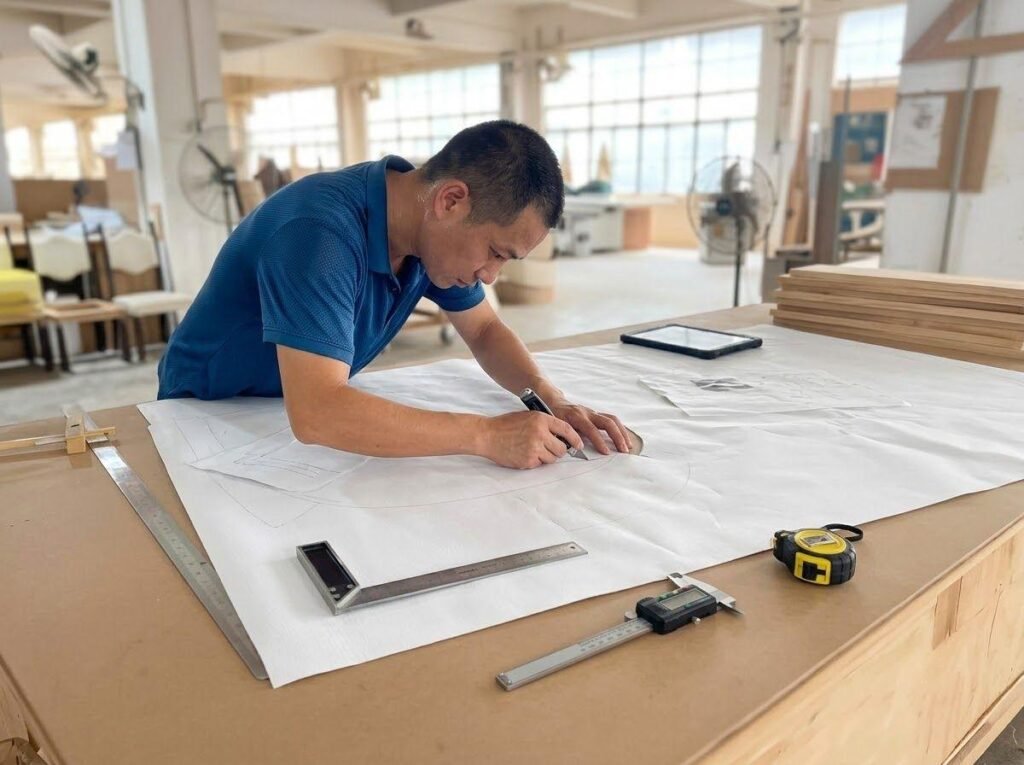
China furniture sourcing is the process of finding, vetting, and managing production partners in China’s manufacturing clusters — mainly Guangdong, Zhejiang, Jiangsu — for export or project work. Verification is the step everyone skips. Everyone.
That’s the textbook answer. The real answer is messier.
Think of it like buying a used truck off Craigslist. Paint’s shiny. Engine turns over. But you’re not checking the truck until you’re underneath it, smelling for coolant, feeling for rust inside the frame rails. A factory audit is the same animal. Except the “truck” is a four-hundred-grand production run, and the “parking lot” is a humid industrial park off the Guangzhou-Sanshui Expressway where the mosquitoes carry luggage.
Why Do Most Audits Fail?
Buyers treat audits like first dates. They ask questions the factory’s heard ten thousand times. “What’s your MOQ?” “Lead time?” “FSC certificate?” The factory has a script. You need to throw out the script.
Walk the floor alone. (And yes, they’ll hate this. Good.) Check the scrap pile. A factory hiding scrap doesn’t know its own yield — or doesn’t want you to. Count fire extinguishers. Based on what I’ve seen, maybe sixty percent of mid-sized operations in the Foshan furniture cluster have expired or missing extinguishers in the finishing rooms. That tells you their relationship with process discipline. Check the bathroom. I know, sounds stupid. But no soap, floor you wouldn’t walk on barefoot? That workshop has inconsistent glue application and dust extraction that exists only on paper.
The floor is a mirror. It reflects management’s real priorities, not the brochure.
The “Two-Factory” Problem
Every Foshan furniture factory has two faces. Factory A: what you see. Clean samples, ISO certificates, QC room with calipers laid out like surgery tools. Factory B: where your goods actually get made at 2 AM when the order’s behind and the main line’s busy with someone else’s container.
Actually — that’s not right. Factory B isn’t another building. It’s the same building, different rules. Night shift. Subcontracted workshop down the road that “helps out” during peak. The brother-in-law’s mill handling overflow.
You can’t always catch Factory B. But look for fingerprints. Production schedule for the last three months. Cross-reference against claimed capacity. Ninety percent utilization but night shift lights are off? Something’s cooking somewhere else.
Your nose is an audit tool too. Walk into the raw lumber warehouse. It should smell like wood. If it smells like mold, that timber sat in a rainstorm somewhere between the kiln and the factory. Walk into the finishing room. Acetone, lacquer, hardener — the chemical cocktail should be present but not overwhelming. If your eyes water in thirty seconds, their ventilation is theoretical. I once walked out of a factory in Longjiang after ninety seconds in the spray booth. Couldn’t breathe. Told the owner I didn’t need to see anything else. He looked confused. That confusion told me everything.
The Ecosystem: Who You’re Really Competing With
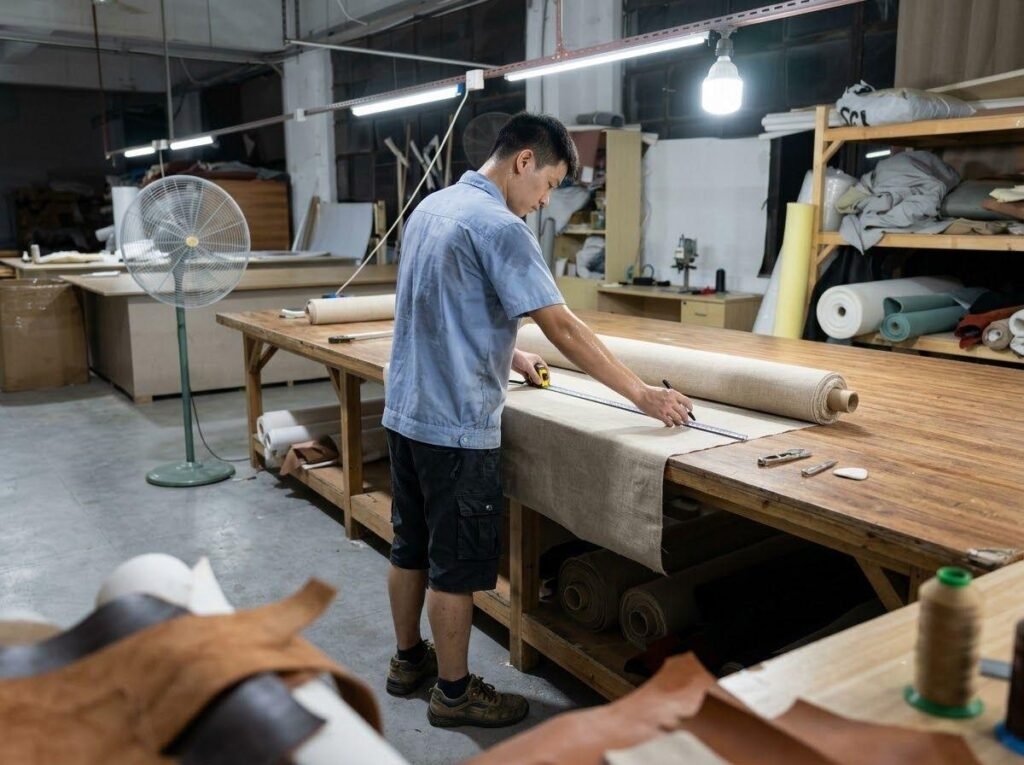
Foshan isn’t one market. It’s layers. Top layer: established players with German edge banders, Dutch finishing lines, serving European retailers who audit quarterly. Bottom: traders with no factory, renting showroom space, praying you don’t ask to see the workshop. Middle layer’s where it gets interesting. The specialists.
Some buyers chase the big names. Others find that mid-sized specialists — operations like Interi Furniture, focused on project-grade hospitality and residential case goods — give a different risk-reward. They’re not everything to everyone. Their bet is consistency in a narrower range. For buyers who know exactly what they need, that focus beats a generalist promising the moon.
The real kicker? Generalist is cheaper on quote one. Specialist wins on total landed cost once you factor rework, delays, and explaining to your client why the finish doesn’t match the approved sample. I learned this the hard way in Dongguan. (And yes, this happens more than anyone admits.)
The Audit Checklist: What to Actually Do
Forget the generic template from some consultant’s website. Here’s what works on the ground.
Before You Land
- Demand the production schedule. Not a promise. The actual schedule. Look for gaps that don’t add up, overloads that smell like subcontracting.
- Ask for three supplier references from the last eighteen months. Call them. Not email. Call. Buyers who got burned will say things they’d never write.
- Request photos of raw material warehouse. Wood storage specifically. Kiln-dried lumber looks different than air-dried. You want to see stickers, not piles.
- Get on a video call before you fly. Not with the sales manager — with the production manager. If they can’t put him on camera, you’re not talking to a factory. You’re talking to a middleman with a WeChat account and a dream.
On the Floor
- Check moisture content with your own meter. Industry observers estimate thirty to forty percent of warp defects in exported Chinese furniture trace back to bad drying or storage. Above twelve percent in the factory, in July? Yellow flag. Above fourteen? Red.
- Watch a joint being cut. CNC’s impressive, sure. But hand-finish on a dowel or mortise tells you if the operator cares or is just punching a clock.
- Ask to see today’s rejects. Can’t show you rejects? That’s not great quality control. That’s no quality control.
- Bring a magnet. Test the “solid wood” claims. Veneer over MDF? Magnet won’t stick the same way. I’ve caught factories this way. They don’t expect you to bring tools.
The Red Flag That Contradicts Conventional Wisdom
Everyone says look for ISO 9001, BSCI audits. Here’s the counter-intuitive truth: a wall plastered with certificates is sometimes a warning sign. Factories with the tidiest certificate collections often know exactly which consultant to hire, which documents to tweak, which day to schedule the auditor. The factory with one solid cert and a messy, honest workshop? Often your better bet.

FAQ: The Questions Buyers Actually Ask
Q: Can I just hire a third-party audit company and skip the trip?
A: You can. You’re buying a snapshot, not a movie. Third-party audit on Tuesday morning shows you Tuesday morning when they know you’re coming. Doesn’t show you November rush, your container’s due, main client just threatened to pull a million-dollar contract. Fly there. Walk the floor at 4 PM Friday. Truth leaks out then.
Q: How do I know if it’s a real factory or just a showroom?
A: Ask to see dust collection. Real factory has one. It’s ugly — big pipes, cyclone separators, bags that need emptying. Showroom doesn’t. Look for wear. Real cutting tables have scars. Real floors have forklift ruts. Everything look installed last week? It was.
Q: Is Foshan still worth it, or Vietnam, Mexico?
A: Depends what you’re making. Solid wood, upholstered, complex mixed-material — Foshan’s ecosystem is still unmatched. Vietnam does simpler case goods and upholstery well. Mexico wins on speed for North America. Foshan holds the edge on breadth, vertical integration, raw material access. Labor gap narrowed. Supplier density hasn’t.
Q: What’s the one thing most buyers forget?
A: Worker dormitory. Not for social audit — though that’s fine. A factory housing workers in squalor treats labor as disposable. Disposable labor makes disposable furniture. Correlation isn’t perfect, but strong enough to trust.
Q: Can a small buyer get a good Foshan factory to care?
A: Yes. But stop pretending. Don’t fake being a big box retailer if you’re a boutique hotel chain with three properties. Factory owners have radar for BS. Be honest about volume. Pay a deposit that hurts a little — shows you’re not tire-kicking. And here’s the part most small buyers miss: demonstrate product knowledge. Ask about dowel diameter. Ask about open time for their adhesive. Ask why they joint the apron that way. A factory owner will bend over backward for a buyer who knows what a proper tenon looks like. He’ll ghost a buyer with fancy projections who can’t tell oak from ash. Or rather, the problem isn’t the factory, it’s the expectation. Come humble, come prepared, you’ll find a partner.
The Hard-Earned Lesson
I still have that Longjiang chair. In my office. Joinery failed after eleven months. Dowels were undersized, glue slapped on bare wood without proper open time. I keep it as a reminder.
Not that Chinese factories are bad. Some of the best furniture I’ve specified came out of Guangdong. The reminder is that trust is a process, not a handshake. Every factory says they care about quality. The ones that actually do show it in details they didn’t think you’d notice: scrap sorted by species, foreman stopping a line for grain mismatch, worker sanding an edge that never faces the customer.
So here’s the question: are you auditing the factory, or auditing your own willingness to do the hard work? Factory’s just a building full of people trying to make margin. The variable you control isn’t them. It’s you.