

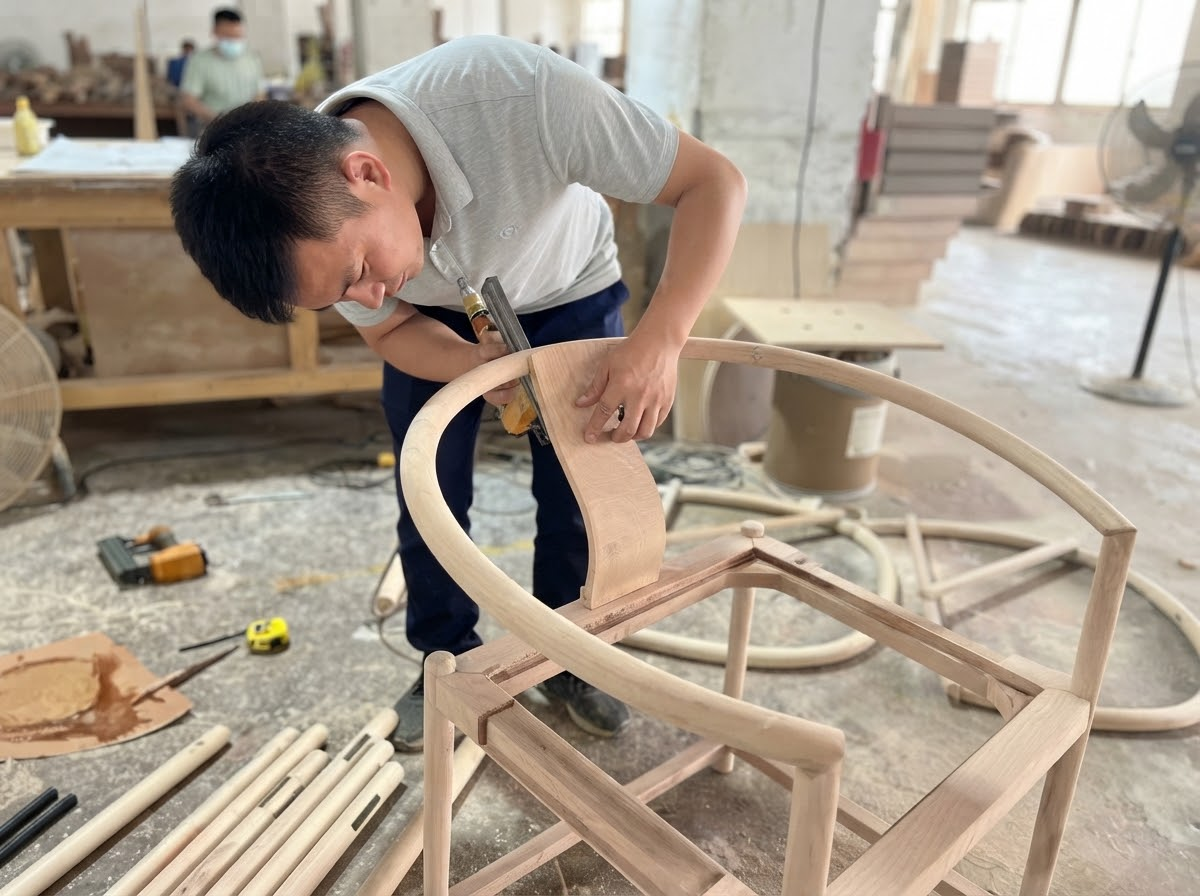
It was a Tuesday morning in Longjiang, Foshan, and the factory floor stretched out like an airport hangar. Forty thousand square meters of polished concrete, CNC routers humming in perfect rhythm, and a showroom that looked like it had been staged for a Netflix drama. My client — a procurement director from a Miami boutique hotel group — turned to me with that look. You know the one. The “this place is perfect” look. He’d just seen a $34,000 sample order being boxed up for shipment. The general manager handed us both hard hats and a cup of over-brewed oolong. We were about to get the full tour.
Here’s what he didn’t know. In fifteen years of walking these floors, I’ve learned that the factory reveals its secrets backward. The more impressive the entrance, the more carefully you need to inspect the exit. The loading dock, the kiln room, the night shift workshop — these aren’t “extra credit” stops on a China factory tour. They’re the entire exam. And most buyers fail because they don’t even know the questions exist.
The Brutal Truth: Your Factory Tour Is a Stage Play
Let’s get this out of the way. Most China factory tours are choreographed better than a Broadway opening. You’re not seeing a working facility. You’re seeing a working facade.
The showroom gets polished every morning at 7 AM. The “random” worker you meet has been pre-selected. Even the scrap pile in the corner has been artfully arranged to look authentic without revealing anything embarrassing. (And yes, this happens more than anyone admits.)
The uncomfortable reality? You’re walking through a sales pitch with safety glasses on. The factory isn’t trying to deceive you in some sinister way. They’re doing what every business does — putting their best foot forward. But in Chinese furniture manufacturing, that best foot is often a size 12 while the other foot is a size 8 and bleeding.
If you haven’t seen something that makes you slightly nervous, you haven’t seen the real factory. A spotless workshop on a Tuesday afternoon is a red flag, not a green light. Dirt, organized chaos, and the occasional half-finished disaster in the corner? That’s where the truth lives.
Actually, that’s not quite right — what most buyers miss isn’t the dirt. It’s the absence of it in the places that matter most.
Key Takeaways
- China furniture sourcing is the process of evaluating manufacturers through direct facility inspection, material verification, and production workflow analysis — not showroom aesthetics.
- The three highest-value inspection areas during any China factory tour are the loading dock, the wood drying facility, and the off-hours production space.
- A factory that resists unscheduled access to these zones is signaling risk, regardless of how impressive its certification wall appears.
- The buyers who avoid catastrophic quality failures are the ones who treat the tour as an investigation, not a performance review.
Hidden Area #1: The Loading Dock Is a Lie Detector
Why do factories hide their worst work behind the prettiest showroom?
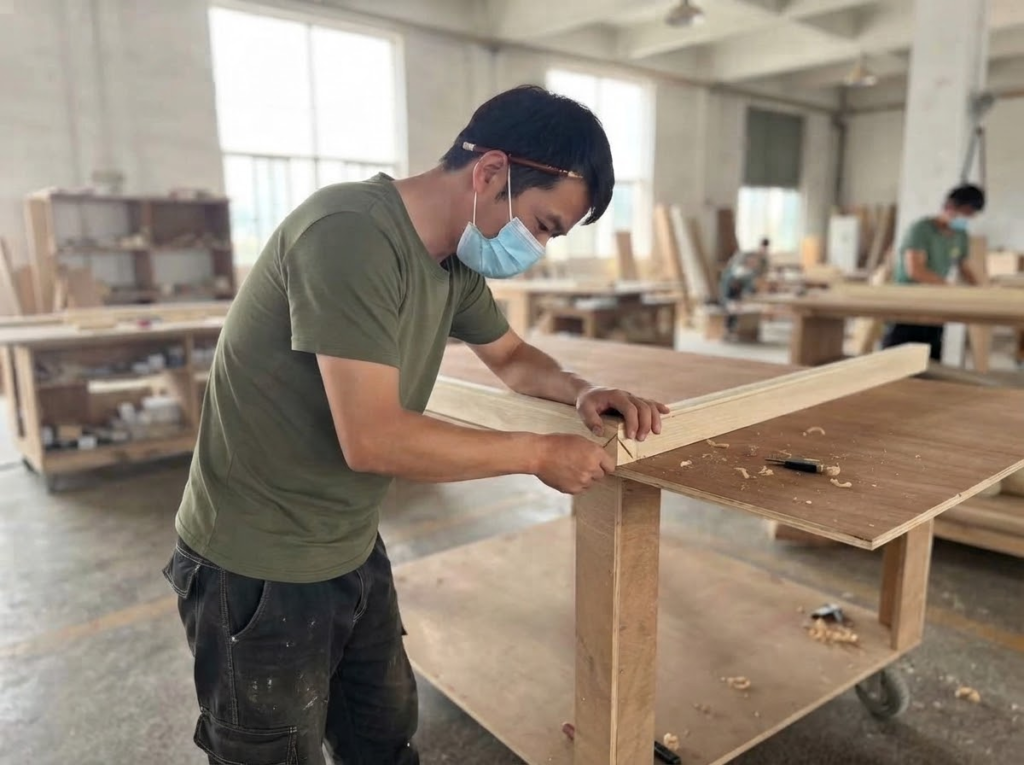
Think of a factory tour like a first date at a fancy restaurant. The dining room is gorgeous. The menu reads like poetry. But if you really want to know how clean the kitchen is, you walk past the swinging doors and check the dumpster. The loading dock is the dumpster. Except instead of old fish, rejected goods. Rushed orders. The gap between promise and reality.
I learned this the hard way in Dongguan. A manufacturer had a showroom that could make you weep — Italian leather samples, flawless joinery, hardware that felt like it came from a Swiss watch. But behind the building, in the staging area where finished sofas waited for container loading, I counted fourteen pieces wrapped in nothing but thin plastic. No corner protectors. No moisture barriers. Just bare wood and hope. Three of them had fresh gouges from forklift mishandling. The QC stamp on all fourteen? Passed.
And here’s the thing. The loading dock doesn’t lie because nobody thinks to clean it up for visitors. It’s the one place where production reality collides with logistics pressure. Look for boxes labeled “rework” or “customer return” sitting near the exit. Check if there’s a dedicated inspection table between the workshop and the truck. If finished goods go straight from the last sanding station to the container without a final check, you’re not buying furniture. You’re buying a lottery ticket.
The loading dock reveals whether a factory treats its finished product like an asset or an inconvenience.
But don’t just look at the furniture. Look at the pallets. Are they standardized, or is every shipment a Jenga tower of mismatched sizes? In my experience, roughly seven out of ten quality complaints from Chinese furniture manufacturing trace back to damage that happened in the last fifty meters of the factory, not the production line itself. The general pattern suggests that factories with organized, covered staging areas and documented pre-shipment checks have significantly lower defect rates than those loading directly onto open trucks in the rain.
A factory that cares about what happens after the showroom door closes. That’s the one you want.Hidden Area #2: The Wood Drying Room Tells the Real Story
What happens when the kiln schedule gets “creative”?
If the loading dock is the lie detector, the kiln room is the polygraph. This is where raw lumber becomes furniture-grade material, or where it becomes a time bomb wrapped in veneer. Most buyers skip this room entirely. It’s hot. It’s loud. It smells like wet sawdust and machine oil. And it holds the answer to whether your dining table will crack like an egg in a dry climate six months from now.
The real kicker? You don’t need to be a wood scientist to read this room. Walk in and look at the moisture meter logs. (If they don’t have logs, leave. I’m serious.) Properly dried hardwood for furniture should sit between 6% and 10% moisture content, depending on the species and destination climate. What tends to happen is that factories under pressure will rush the kiln schedule — cutting a four-week drying cycle down to two weeks because a buyer moved up a deadline. The wood feels dry. It machines beautifully. It even passes a surface moisture check. Then it ships to Denver. Or Dubai. Or anywhere with humidity swings. And the joints open up like a yawn.
I once watched a factory manager in Anji pull a stack of oak from a kiln that was still reading 14% moisture. “It’s fine,” he said. “We let it air dry for two days.” Two days. For oak that would end up in Arizona hotel rooms. You can guess how that story ended.
The kiln schedule is where timelines and quality have their most violent collision.
Compare this to buying a house. You can fall in love with the crown molding and the kitchen island all day long. But if the foundation is poured on unsettled soil, none of the pretty stuff matters. The kiln room is your foundation check. Ask to see the drying records for the specific batch of wood allocated to your order. Not generic records. Your batch. If they can’t produce them, or if the numbers look suspiciously identical across six months of production, you’re looking at smoke and mirrors.
A properly run drying facility will have separate zones for incoming green lumber, partially dried stock, and furniture-ready material. It’ll be boring. Methodical. Almost too quiet compared to the cutting floor. That’s exactly what you want.
Hidden Area #3: The Off-Hours Workshop Nobody Talks About
Who’s actually building your furniture at 9 PM?
This is the one that gets factory owners nervous. Every major furniture manufacturing hub in China — Foshan, Dongguan, Nankang, Longjiang — operates on a rhythm. Day shift. Evening shift. Sometimes a third. But there’s another layer beneath the official schedule. Subcontractors. Overflow workshops. The “friends” who help out when a big order lands and the main factory can’t keep up.
You won’t find this on the tour map. It might be a separate building three blocks away. It might be a basement floor the GM “forgets” to mention. Or rather, the problem isn’t the factory, it’s the expectation that one facility can handle everything you see in the brochure.
I first stumbled into this ecosystem in Nankang, Jiangxi. A solid wood chair factory with 200 workers on the books. Impressive. But their actual output suggested closer to 400. The math didn’t work until I noticed a second gate behind the main plant, open at 8 PM, with workers wearing different colored badges. Same designs. Same raw materials. Different quality control. Different skill level. Different everything that mattered.
If you can’t meet the night shift, you don’t know who’s building your furniture.
Ask the direct question: “Where does overflow production go?” A transparent factory will show you. A defensive one will change the subject. Check the worker badges. Check the time stamps on production logs. Walk the perimeter after hours if you can. The real factory doesn’t always keep the same hours as your appointment.
The general pattern suggests that factories with in-house night shifts — same training, same supervision, same QC — are fundamentally different operations from those farming out overflow to the lowest bidder. You can tell the difference by asking one question: “Can I visit during the evening shift?” If the answer involves hesitation, scheduling conflicts, or “it’s better in the morning,” you’ve found your answer. At the end of the day, a factory tour that only happens under fluorescent daylight is only showing you half the story. And usually, it’s the better half.
The Factory Ecosystem: Why Size Isn’t the Only Metric
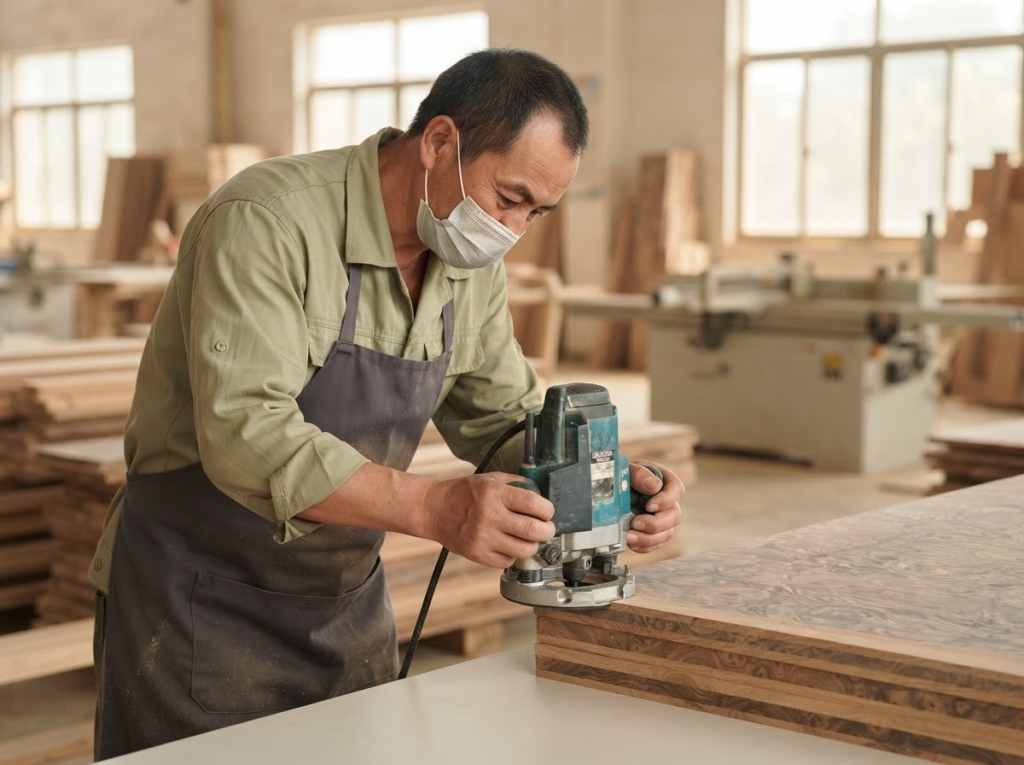
Buyers love big numbers. Two hundred thousand square meters. Eight hundred workers. Sixteen container loads per month. But in Chinese furniture manufacturing, scale can be a liability disguised as a strength. The larger the operation, the more complex the subcontractor web, and the harder it becomes to track which hands actually touched your order.
While some buyers gravitate toward large-scale manufacturers in Foshan for rock-bottom pricing on high-volume hotel or residential orders, others find that mid-sized specialists offer a different risk-reward equation. Operations like Interi Furniture, which focuses on custom hospitality and project furniture from their Guangdong base, typically maintain tighter production control precisely because they haven’t built an empire of shadow subcontractors. Less capacity, but fewer surprises about who’s holding the chisel. The general pattern suggests that buyers sourcing complex, specification-heavy pieces often get more consistent results from focused mid-tier factories than from giants juggling forty clients simultaneously.
Scale can be a liability disguised as a strength.
It’s not about good versus bad. It’s about matching the factory’s operational reality to your quality tolerance and your willingness to audit beyond the brochure.
Your Factory Tour Checklist: A Decision Framework
Stop treating the tour like a sightseeing trip. Here’s how to run it like an investigator.
Pre-Tour — The Questions That Matter
- Ask for the kiln drying records for your specific wood species before you land in China. If they can’t produce them, reschedule.
- Request an evening or early morning walk-through in addition to the standard appointment. Resistance here is information.
- Bring a moisture meter. Not a fancy one. A $40 pinless model from Amazon will do. Check the wood yourself.
During the Tour — The Three Zones
- Loading dock inspection — Look for unprotected finished goods, mixed pallet standards, and any boxes marked “rework” or “return.” A clean dock with no staging area is worse than a messy dock with organized QC.
- Kiln room verification — Check the moisture content of wood currently in the “ready” pile. Cross-reference against the factory’s stated drying schedule. If the numbers don’t match the timeline, ask why. Then ask again.
- Overflow and subcontractor audit — Ask directly: “Show me where production goes when you’re over capacity.” If the answer is “we never are,” that’s a lie. Every factory hits capacity. The honest ones have a plan.
Red Flags — The Counterintuitive Ones
- A showroom that looks too perfect. Like, museum perfect. That level of staging costs money that isn’t going into your sofa.
- Workers who seem overly aware of your presence. (In a real factory, most people barely look up from the router.)
- A QC station that’s before the final assembly stage. This means they’re checking parts, not finished product. The real kicker? Most defects happen in the last ten minutes of assembly.
| What Most Buyers Inspect | What Actually Matters | Why It Matters |
|---|---|---|
| Showroom finish quality | Loading dock staging practices | Reveals real QC standards |
| Workshop cleanliness | Kiln room moisture logs | Determines long-term durability |
| Worker headcount | Evening shift subcontractor presence | Exposes hidden production chains |
| Certification wall | Specific batch documentation | Proves traceability, not just compliance |
The One Question That Cuts Through Everything
“If I placed an order today and came back unannounced in six weeks, what would I see that would be different from this tour?” Watch the face. Not the words. The face.

FAQ: The Questions Buyers Actually Ask
Q: I’ve done five factory tours and they all look the same. Am I just bad at this?
No. You’re experiencing what I call “showroom fatigue.” Most facilities in the same tier invest in the same staging, the same lighting, the same polished concrete. The difference isn’t in what they show you — it’s in what they try to skip. Next time, hand them a list of three off-menu stops before you arrive. The loading dock, the kiln room, and the evening shift. Their reaction is the answer.
Q: Can I really just walk into a kiln room and start poking wood with a moisture meter? Won’t that offend them?
You can, and it might. But offense is cheaper than a $40,000 claim for cracked tabletops. I’ve never lost a factory relationship because I was thorough. I’ve lost relationships because I wasn’t thorough enough and the product failed. Bring the meter. Be polite. But be firm. Any factory worth working with will respect the diligence. (I’ve watched general managers physically flinch when the meter comes out. That’s how you know you’re in the right room.)
Q: Is it true that all the “good” Chinese furniture factories are in Guangdong?
Not even close. Foshan and Dongguan have the density and the ecosystem, but Anji dominates in upholstered seating, Nankang in solid wood, and Zhejiang in mid-range case goods. The geographic concentration is a convenience, not a quality guarantee. Some of the sloppiest factories I’ve seen were in Guangdong. Some of the best were in Jiangxi. Go where the specialization matches your product, not where the airport is nicest.
Q: Should I hire a third-party inspector instead of doing the tour myself?
Hire them in addition to your own visit. A third-party inspector checks the product. You need to check the system that produces the product. They’re not the same thing. An inspector can tell you if a sofa has defects. Only you can tell if the factory has a culture that prevents defects. Or rather, the problem isn’t the inspection, it’s the expectation that one replaces the other.
Q: Are the three hidden areas really enough to judge a factory during a China factory tour?
It depends on what you’re buying. For standard hospitality or residential furniture, these three zones will expose 80% of the risk hiding in a typical Chinese furniture manufacturing facility. For highly technical or regulated products — medical furniture, fire-rated seating — you’ll need deeper audits. But as a baseline? Yes. If a factory won’t give you honest access to their loading dock, their kiln room, and their off-hours production, you don’t have a partner. You have a gamble.
The Hard Lesson
Fifteen years in, and I still see buyers fall for the same trap. They want to believe that a beautiful showroom and a friendly general manager mean they’ve found a reliable partner. They want to believe that Chinese furniture manufacturing has matured past the need for skepticism. It hasn’t. And it probably never will, because the incentives haven’t changed.
The factories that survive aren’t the ones with the best showrooms. They’re the ones with the most honest loading docks.
So here’s my question: When you fly home from your next China factory tour, will you be carrying confidence based on what you were shown? Or based on what you insisted on seeing? The answer to that question — and only that question — determines whether your next container is an asset or a liability.
Safe sourcing. And remember: the best factory relationship is the one where they know you’re watching.