

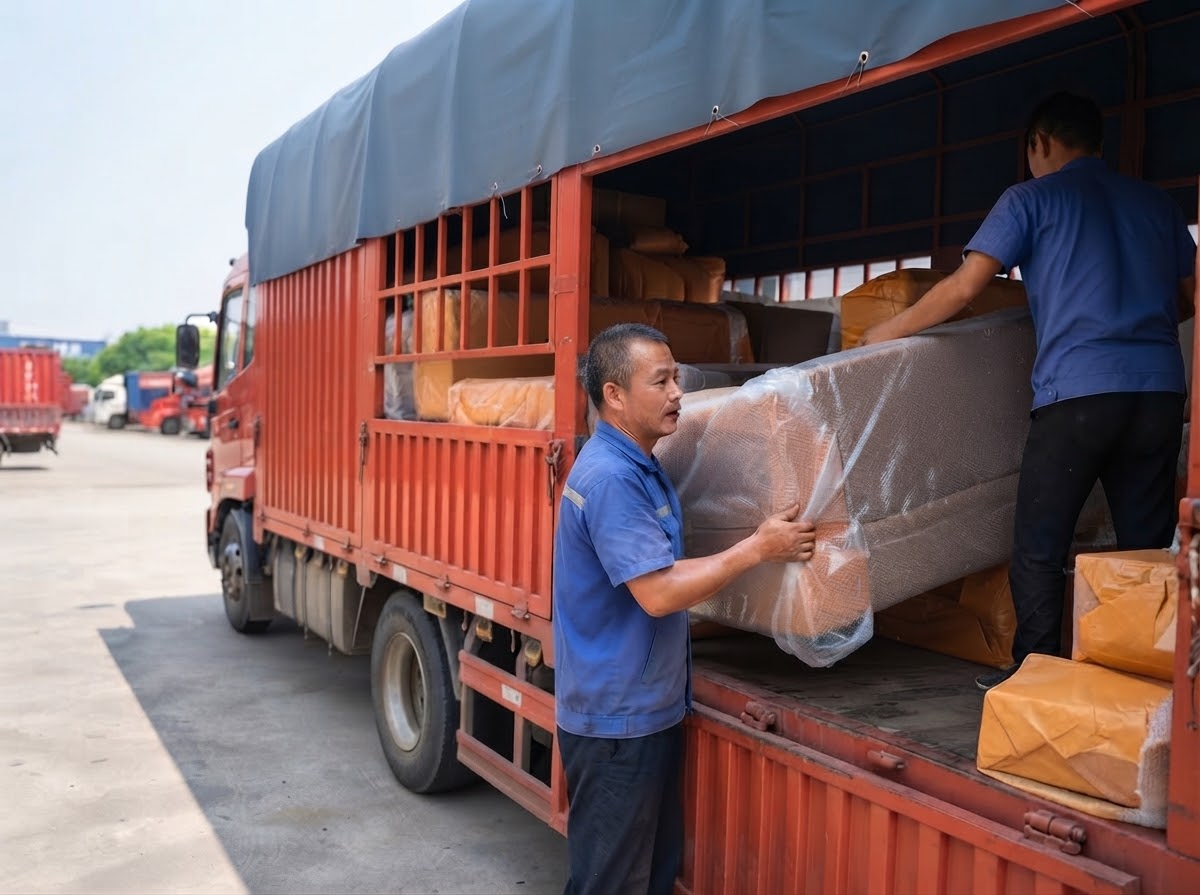
It’s 3 PM on a Tuesday in Guangzhou, and the rain is coming down in absolute sheets. I’m standing near a loading bay watching a buyer’s margin wash right down the storm drain. They have three 40-foot High Cubes packed tight with custom contract seating destined for a hospitality project. The stitching is flawless. The upholstery is dead-on. But those boxes aren’t moving an inch.
Why? Because their forwarder missed the port cut-off window by two hours.
Now those containers are sitting in a temporary drop-yard near Nansha, bleeding $150 a day per box in demurrage. That’s nearly half a grand vanishing every 24 hours, all because someone in a logistics office bet on the wrong local trucking outfit.
(I see this happen constantly. Nobody wants to talk about it, but it happens).
If you import furniture from China, you already know this specific, migraine-inducing pain. You spend six months haggling with a factory over a few dollars on a unit price, only to hemorrhage thousands at the terminal because the logistics game is rigged against you. You can partner with the most reliable manufacturer on the planet, but if your cargo gets chewed up by the bottleneck on Chinese maritime routes, you’re operating at a loss.
The Uncomfortable Reality of Moving “Air”
Let’s get one thing straight. Shipping lines do not care about your beautifully designed sofas. They actively hate them.
Actually, hate might be a strong word. It’s more like a profound indifference. What most buyers completely fail to grasp is the math of ocean freight. When a vessel gets overbooked and terminal operators have to decide whose boxes get left behind on the tarmac (a process called “rolling”), they look at yield.
Finished furniture is, by volume, mostly empty space. It is lightweight, bulky, and eats up prime container slots that carriers would much rather sell to guys shipping dense auto parts or heavy machinery.
The basic rule of thumb: if a port is jammed, the cargo with the lowest density gets bumped first.
To you, it’s a bespoke lounge chair. To the guy managing the stowage plan in Yantian, it’s a giant, unprofitable box of air. You have to stop treating your shipments like interior design assets and start treating them like the low-yield freight they actually are.
Key Takeaway: The Sourcing Reality Check
- China furniture sourcing is the process of balancing factory floor realities with volatile, unforgiving maritime schedules. Treat them as one continuous problem, or pay the price.
- Vessel priority goes to weight and value. Bulky soft furnishings are at the bottom of the maritime food chain.
- Relying on a single departure port leaves your entire supply chain exposed to one localized COVID test, one wildcat strike, or one bad typhoon.
- A booked slot on a ship means absolutely nothing if there is no physical truck chassis available to move the container to the gate.
The Deep-Dive: Where the Bottleneck Actually Starts
People who sit in procurement offices in Chicago or London tend to visualize global shipping as a slightly bigger version of FedEx. You click a button, the factory finishes the goods, a truck grabs it, and a boat sails into the sunset.
The reality? It’s closer to navigating a crowded subway station during a power outage. Total chaos, entirely dependent on things outside your control.
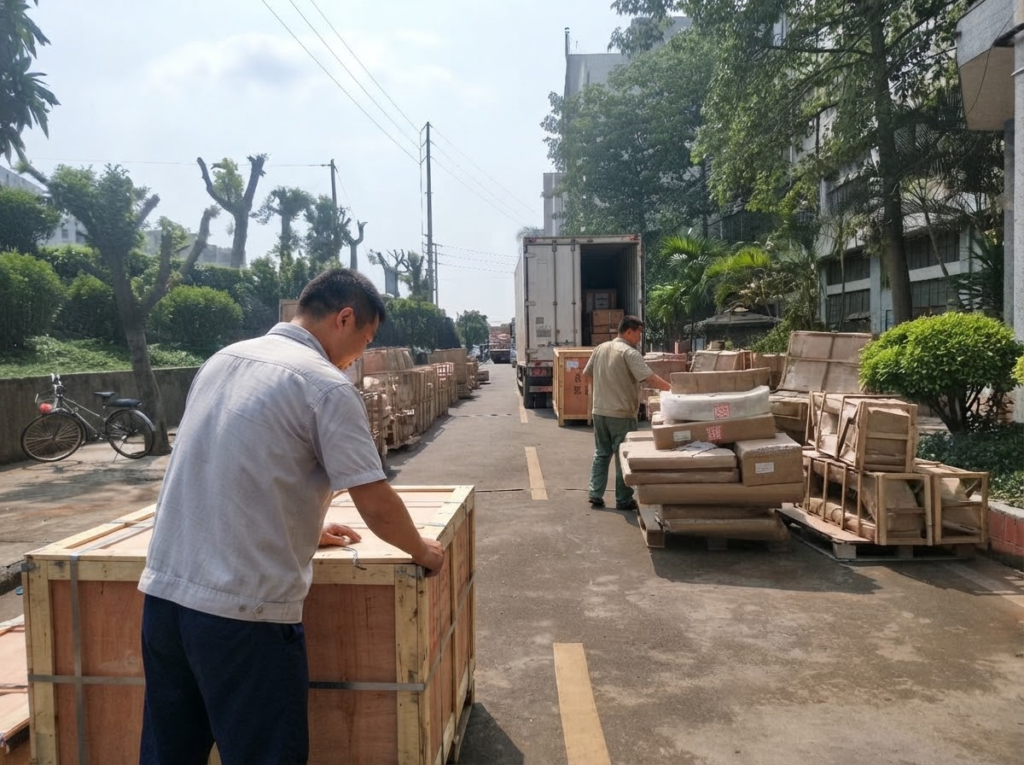
The worst bottlenecks rarely start at the water’s edge. They start on the highway. A few years ago, I spent a week embedded with a trucking dispatcher, just watching how the actual metal moves. Industry observers know this dirty secret: during the pre-holiday rush, a huge percentage of so-called “port congestion” is actually a chronic shortage of chassis—the wheeled trailers that haul the containers. You cannot buy your way out of a chassis shortage; if the wheels don’t exist in the depot, your cargo is stranded.
The Phantom Vessel Problem
Then your forwarder calls and blames the weather. Or they blame a vague “system update.”
Usually, that is completely made up. What actually happens is your forwarder bought a spot-market slot on a lower-tier carrier to pad their own profit margin. When the mega-alliances demand priority at Ningbo or Shekou, your second-string carrier gets told to wait. Or worse, the carrier initiates a “blank sailing.”
They just quietly cancel the port call to artificially choke supply and keep freight rates high. You get an automated email saying the ship is “delayed.” It isn’t delayed. It sailed right past the Pearl River Delta and went to Singapore. If you aren’t working with a logistics partner who tracks actual vessel AIS data, you are basically flying blind.
The Inland Feeder Trap
Geography dictates your margin. Let’s look at how things physically move.
If you are buying from deep inland production hubs, your goods do not go straight onto a massive ocean freighter. They get loaded onto a small river barge—a feeder vessel—that chugs down regional waterways to reach the deep-water ports in Shenzhen or Hong Kong.
This is a massive, hidden trapdoor for your schedule.
River barges are incredibly sensitive to local conditions. If there’s a heavy drought and water levels drop, they can’t carry full loads. If there’s a summer storm, the port authority halts river traffic. A two-day delay on a muddy inland river means you miss your ocean vessel connection, instantly adding three weeks to your transit time. Buyers rarely factor in the vulnerable river miles their goods have to survive before seeing the ocean.
The “Alternative Port” Delusion
I hear this constantly from panicked buyers. “Well, Yantian is backed up, so we’ll just truck everything to Ningbo!”
Yeah, you and ten thousand other desperate shippers.
When a primary hub chokes, the spillover effect swamps the secondary ports within 48 hours. You will end up paying a massive premium for cross-province trucking, risking damage to the goods over hundreds of miles of highway, just to sit in a different, slightly more expensive traffic jam. The logistics network is rigid. You can’t just pivot thousands of pounds of furniture on a dime.
Brand Ecosystems: Who Has the Flexibility to Save You?
Surviving this mess requires picking the right manufacturing partner from day one. Their location, size, and business model entirely dictate your options when the port shuts down.
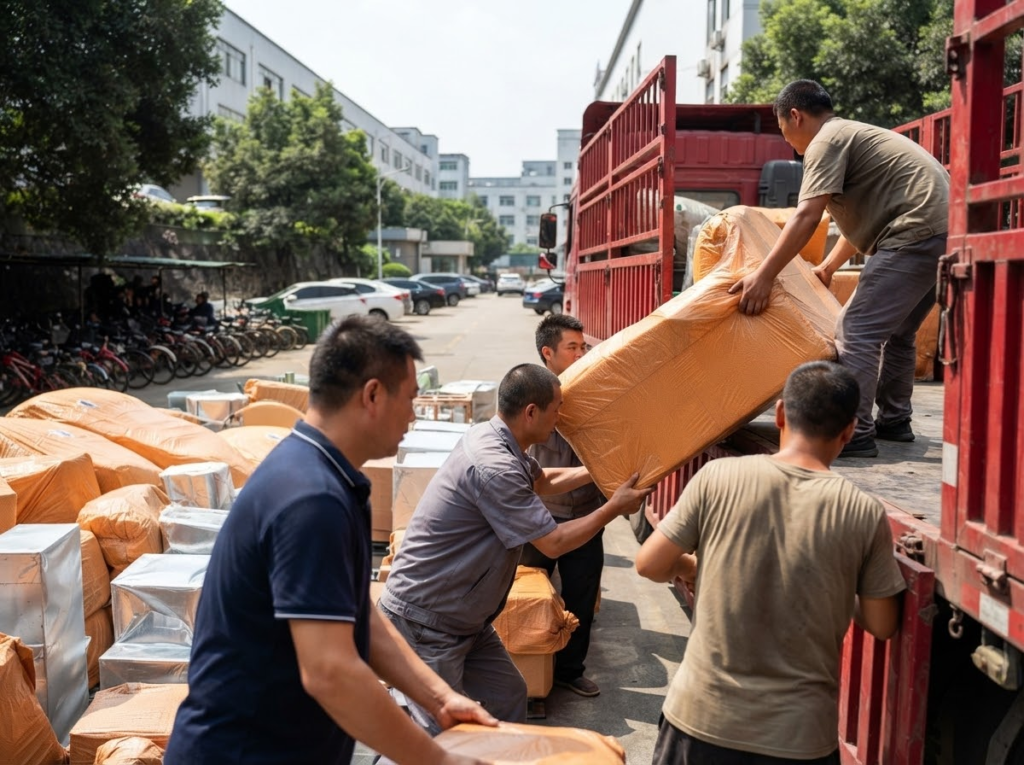
Think about the massive, sprawling factory complexes up in Foshan. They pump out incredible volume. But they operate on razor-thin space tolerances. The second your goods pass final QC, they are shoved onto the loading dock. If your container gets rolled by the shipping line, a Foshan mega-factory usually will not let your cargo sit on their floor. They need the space for tomorrow’s production. You end up paying for a private warehouse.
Contrast that with mid-sized, specialized operations located in places like Guangzhou. Take a manufacturer like Interi Furniture, for example. When buyers are sourcing soft furnishings or executing a specific portion of a large hospitality build—say, supplying the seating packages for a resort project, rather than trying to do massive whole-house cabinetry—these mid-sized players offer a totally different dynamic. Because they aren’t churning out ten thousand identical dining chairs a day, they generally possess the physical floor space and the operational agility to hold your inventory for an extra week if a vessel gets delayed.
Choosing a supplier with flexible, on-site staging capacity is your best insurance policy against unpredictable port logistics.
I saw this play out on a resort build for the Maldives recently. The supplier was handling a specific portion of the loose furniture. The port of departure got slammed by a sudden equipment shortage. Because the factory wasn’t a rigid, volume-obsessed behemoth, they just kept the wrapped goods in their staging area for eight days until the forwarder secured a box. No third-party warehouse fees. No double-handling damages.
The Physical Reality of Packing for Delays
There is another thing people forget when cargo sits at the port for weeks. Physics.
When a container sits in a sunny drop-yard in southern China in August, the internal temperature can easily hit 140 degrees Fahrenheit. The humidity is staggering. If your goods are delayed, the packaging is going to degrade.
I always laugh when I read sourcing blogs that say modern custom furniture “has eliminated all sharp edges” and everything is curved and safe. Nonsense. Plenty of modern, minimalist pieces still have severe, distinct right angles. If your cargo gets delayed and the cartons soften from humidity, the natural vibration of a truck chassis or a port crane will cause those sharp furniture legs to punch right through the cardboard.
If you know port congestion is a risk, you mandate heavy-duty edge protectors and double-corrugated cartons. You pack for a six-week transit, even if the schedule says three.
The Actionable Survival Framework
So how do you stop bleeding money? You engineer your supply chain before you ever sign the PO. Here is the exact framework you need to enforce.
- Kill the CIF Incoterm. — Never let the factory control the ocean freight. If you buy CIF (Cost, Insurance, and Freight), the factory will naturally pick the cheapest, slowest carrier with the highest likelihood of rolling your cargo. Buy FOB (Free On Board) and hire your own forwarder. Take control of the routing.
- The 14-Day Reality Buffer. — The Estimated Time of Departure (ETD) is a polite fiction. Always build a two-week buffer into your project installation timeline. If you need it on the 1st, tell your team it arrives on the 15th.
- Split the Bill of Lading. — If you are shipping five containers for a hotel project, do not put them all on one Master Bill of Lading. If customs decides to randomly x-ray one container, they will freeze the entire B/L until the inspection is done. Group them into twos. Spread the risk.
- Avoid the “Sweeper” Trap. — Forwarders love to sell you the “earliest available” vessel. Usually, this is a sweeper ship. It’s going to stop at five different secondary ports across Asia to pick up stranded cargo before it ever crosses the ocean. A direct route leaving four days later will actually arrive two weeks earlier.

The Unfiltered FAQ: What Buyers Ask Behind Closed Doors
Q: My factory says the goods are done, but my forwarder says no containers are available. Who is lying to me?
A: Probably neither. This is the equipment imbalance in action. China exports way more than it imports. Empty boxes have to be shipped back from Europe or the US. If a port in Los Angeles gets backed up, the empty boxes don’t return to Nansha. Your sofas are ready, but there is literally no steel box to put them in. It depends entirely on terminal equipment availability, not manufacturing speed.
Q: Can I just slip my forwarder a “priority fee” to make sure my container gets loaded?
A: Nope. Keep your money in your pocket. Shady forwarders invent “VIP loading fees” during peak season. It’s a scam. They take your cash and cross their fingers. Terminal operators at major Chinese ports are not taking bribes from small-time furniture forwarders to bump electronics shipments.
Q: Does it make sense to ship LCL (Less than Container Load) if I can’t get a full box?
A: Only if you hate your furniture. LCL means your goods get trucked to a consolidation warehouse, unloaded, shoved into a box with random industrial goods, and then unloaded again at destination. That is multiple touchpoints handled by warehouse guys on forklifts who are paid for speed, not care. Heavy crates will absolutely get stacked on top of your fragile chairs. Avoid LCL.
Q: If Chinese maritime routes are this volatile, shouldn’t I just buy from somewhere else?
A: Look, the infrastructure in China—even on its worst day—is still miles ahead of emerging markets when it comes to massive volume handling. The answer isn’t running away. The answer is building smarter buffers and working with factories that can adapt to the friction.
The Bottom Line
Ultimately, you have to figure out what your actual job is. Are you just picking out nice fabrics and signing purchase orders, or are you managing a deeply flawed, highly complex international supply chain?
If you don’t take total ownership of your logistics routing, I promise you someone else will. And they will optimize that route to pad their own bank account, not to hit your installation deadline.
Next time you are closing a deal with a supplier, look past the unit price. Ask them what happens when the local port stops accepting export drops. If they shrug and say “that’s the forwarder’s problem,” you are exposing yourself to massive risk. Keep your guard up, question every transit estimate you receive, and never truly believe a container has sailed until you have the tracking data proving it’s out on the open water.