

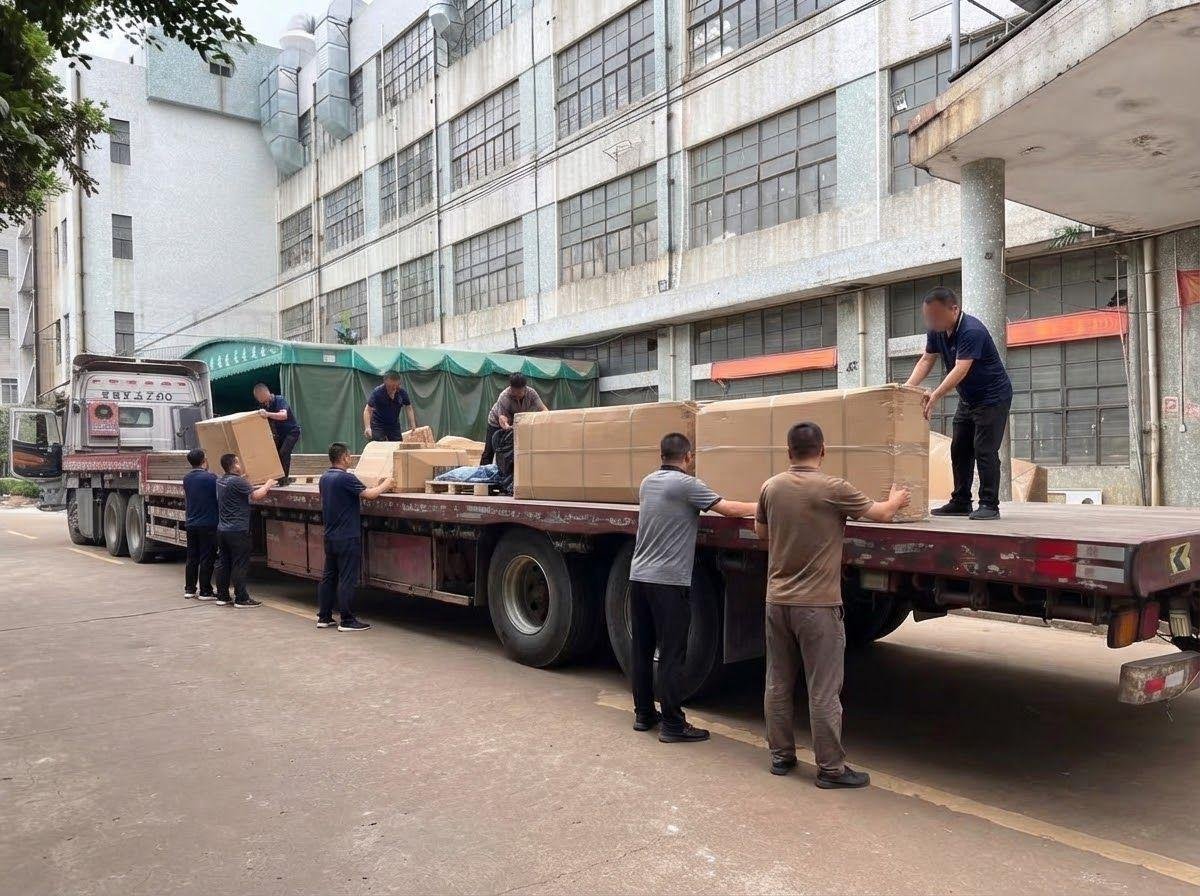
I was standing on a sweltering, mosquito-infested loading dock out in Shunde last October when a hospitality buyer from Austin nearly had a coronary. The guy was clutching his iPad, sweating through his polo shirt, and staring blankly at a logistics invoice for $14,832.25.
That wasn’t the bill for a 40-foot high-cube container. That eye-watering number was the air freight quote to fly exactly four custom, curved-back mohair sectionals out of Guangzhou Baiyun.
He’d missed his maritime vessel cutoff by eight days. The hotel’s soft opening was three weeks away. Just like that, his profit margin on the entire ground-floor lobby installation vanished into the jet stream.
People love to act like importing commercial goods is just a sterile math problem you solve on a spreadsheet from an air-conditioned office in California. It isn’t. It’s a ruthless physical reality check. You’re not just buying kiln-dried wood, high-density foam, and upholstery. You’re buying empty space. And when you’re suddenly forced to move that empty space through the sky instead of dragging it across the ocean, the math gets violent.
The Brutal Truth About Factory-Floor Physics
Let’s rip the band-aid off right now. Most buyers—even guys who have been doing this for half a decade—are completely delusional about their true landed costs.
They will sit in a stuffy showroom in Longjiang, drink terrible instant coffee, and grind a supplier down for three agonizing weeks just to shave fifty bucks off a marble-top dining table. Then they’ll turn around and blow five hundred dollars shipping the damn thing because they fundamentally misunderstand how cargo airlines calculate volume.
The factory boss? He honestly doesn’t care how it ships once that 70% balance payment clears his account. You simply cannot apply the logistics models used for iPhones or t-shirts to a three-seater leather sofa. Chinese furniture logistics is essentially the dark art of managing, aggressively compressing, and transporting massive volumes of dead air across the Pacific.
My golden rule for this industry is simple, and it has saved my clients millions over the last fifteen years: If you can’t flat-pack it, and it doesn’t slide into a standard shipping container without leaving half a meter of dead space staring back at you from the ceiling, you are going to bleed cash.
THE DIM-WEIGHT REALITY CHECK
- Dim-Weight is the Enemy: Airlines charge by volume, not what the item actually weighs on a scale. Flying fully assembled furniture is financial suicide.
- The 20% Variance Trap: The Cubic Meter (CBM) estimates you get from the factory are almost always 15-20% lower than reality. Why? Because they quote the naked product, not the final export-crated beast.
- Ocean or Bust: 98% of profitable furniture sourcing relies entirely on putting goods on the water. Period.
- Time is Literally Money: Bad production planning—not factory delays—is the number one reason buyers get forced into catastrophic air freight bailouts.
Are You Paying for Craftsmanship, or Oxygen?
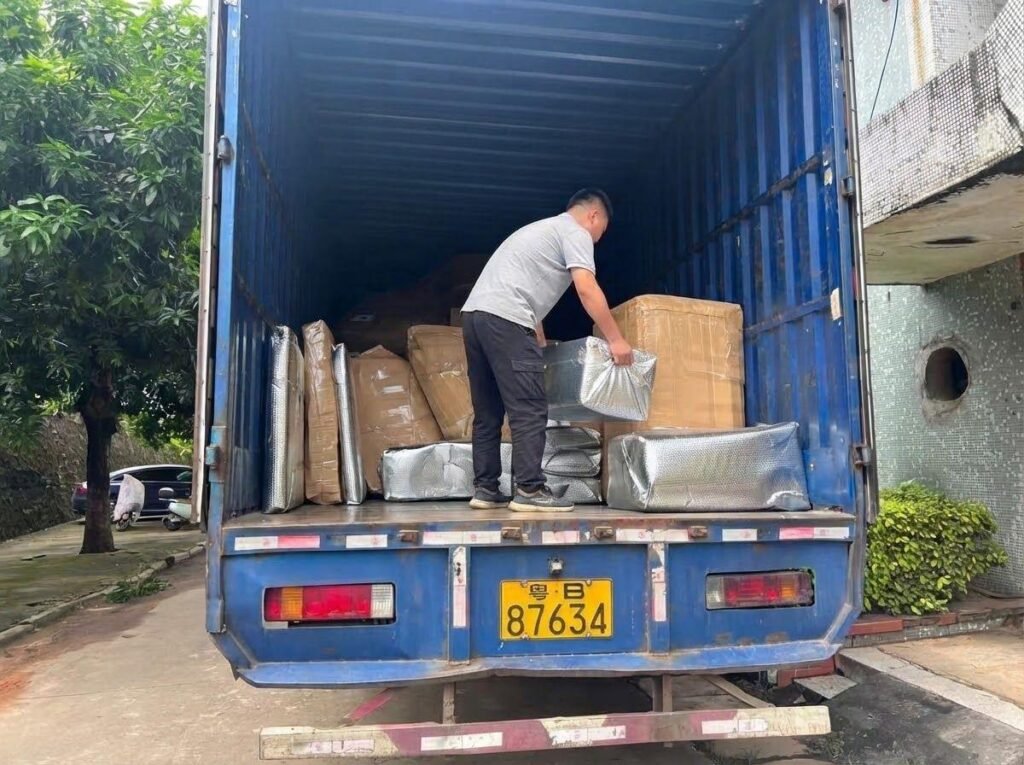
I spent a solid three days last month lurking around a factory floor in Dongguan. The noise was deafening. Pneumatic nail guns firing, the endless screech of industrial packing tape. I leaned against a support pillar and watched line workers wrap a batch of high-end lounge chairs.
First came the EPE foam. Then the hardened cardboard corner protectors. Then a layer of bubble wrap. Finally, they shoved the whole thing into heavy-duty, 5-ply corrugated cartons. By the time they stapled it shut and strapped it to a pallet, a sleek, modern piece of furniture had swelled into a gigantic, unwieldy cube.
The actual wood, metal, and fabric? That took up maybe forty percent of the interior volume. The rest of the box was literally just trapped Guangdong air.
If you put that specific box on a slow boat to Long Beach, it’s a minor annoyance. But if you put that same box on an airplane, that dead space gets billed at $6 to $12 per kilogram of dimensional weight, instantly turning a $300 lobby chair into a $1,200 liability.
Let me explain the math, because forwarders will weaponize it against you. Airlines take the length, width, and height of your carton in centimeters, multiply them, and divide by a standard dimensional factor (usually 5000 or 6000). They couldn’t care less that the box only weighs 30 kilograms on a forklift scale. The math says it takes up the physical real estate of 150 kilograms of high-density cargo. So, guess what? You pay for 150.
The Prototyping Bloodbath
You see this volumetric slaughter happen most frequently during the sampling phase. An interior designer in New York wants to touch and feel a new dining chair before committing to a 500-piece purchase order. Makes total sense, right?
Except they never do the dimensional math.
A standard dining chair, fully assembled and properly crated for export, easily pushes 0.4 CBM. The factory shoots over an air courier rate on WeChat, the buyer types “approved” without thinking, and then the DHL invoice hits their inbox a week later. I’ve watched grown men literally gasp over freight bills for a single barstool.
What are you actually trying to test? If it’s the upholstery stitching, just have them DHL a fabric swatch and a cut-away of the foam density for thirty bucks. If you need to check the frame geometry, demand they ship the frame completely unassembled in a flat box. Never ship an assembled furniture prototype by air unless your eventual production order is fat enough to absorb a $1,000 sampling write-off.
The Ocean vs. Sky Casino
Okay, so is there ever a time when putting a 200-pound sofa on a Boeing 777 actually makes financial sense?
Yeah. Sometimes. Usually, it happens in commercial hospitality procurement. Think ultra-high-end residential projects or massive hotel build-outs. If delaying a luxury resort opening costs the developer $80,000 a day in lost revenue and contractor penalties, spending an extra $30,000 on air freight just to get your lobby seating installed before the ribbon-cutting isn’t a loss. It’s cheap insurance.
Here’s the actual breakdown when you look at the raw numbers today:
| Freight Method | The Real Cost Baseline | Transit Time (to US) | The Brutal Reality of Use Cases |
|---|---|---|---|
| Ocean Freight (FCL) | $3,000 – $6,500 per 40HQ | 25 – 45 days | The only way to actually make money. Large projects, standard inventory. |
| Ocean Freight (LCL) | $80 – $160 per CBM | 35 – 55 days | Small batches. But beware port fees and forklift damage. |
| Air Freight | $6 – $12 per kg (Dim Weight) | 3 – 8 days | Severe emergencies, prototypes, or guys who don’t know any better. |
Notice the LCL (Less than Container Load) transit times? I don’t sugarcoat those. Consolidation is a nightmare. Your goods will sit gathering dust in a Container Freight Station (CFS) in Shenzhen waiting for a container to top off. They will be aggressively handled—and potentially dropped by a forklift driver named Kevin who hates his job—half a dozen times before they finally reach your receiving dock in Chicago.
Ecosystem Spotlight: Navigating the Food Chain
When you decide to ship from China, your logistics strategy is entirely hostage to the type of factory you chose in the first place. The landscape is wildly fragmented.
If you’re buying tens of thousands of cheap, flat-packed MDF desks from a mega-factory up north, your shipping is basically a solved equation. Those places have optimized their carton sizes to within a millimeter. Exactly 840 boxes fit into a 40HQ container. Done. You are a cog in their machine.
The middle of the market is where the chaos lives. But it’s also where the opportunity is. Take a mid-sized specialist operation like Interi Furniture—they do a lot of higher-end commercial and residential pieces. Factories operating in this specific tier are usually way more willing to mess with custom packaging engineering. They’ll actually work with you to tweak carton dimensions, shaving off half an inch here or there to maximize your container yield without sacrificing product safety.
But you have to open your mouth and ask. If you don’t communicate your shipping constraints before they finalize the packaging design, you lose. A factory accustomed to loading full FCL containers will default to standard export cartons. Take those same cartons, ship them LCL, and they’ll get crushed to dust under a pallet of heavy machinery. For LCL, you absolutely must specify plywood crating. Yes, it adds weight. Yes, it adds volume. But it stops your sofas from arriving in splinters.
The “Don’t Get Burned” Playbook
How do you actually manage this circus without losing your shirt? You build a paranoid vetting system. I use this exact checklist for every single shipment leaving Guangdong or Zhejiang. Ignore these at your own peril.
- Demand the “Packed” CBM, Not the Product CBM: Do not accept the raw dimensions of the chair. You need the exterior carton dimensions. If it’s shipping LCL, you need the dimensions including the pallet and the wooden crating. I’ve seen guys miscalculate container yields by 20% because they forgot to account for the pallets.
- Do the math yourself: Ask your forwarder what dim-weight divisor they are using. If they hesitate, or try to dodge the question, fire them. You need to know if they are dividing by 5000 or 6000. It makes a massive difference in the final bill.
- The 30-Day Buffer: Always bake an extra month into your sea freight timeline. Port congestion at Long Beach, random customs X-ray holds, and sudden carrier blank sailings are just Tuesday in this business. If your schedule requires everything to go perfectly, you’re already screwed.
- The Expiration Red Flag: Never, ever trust a forwarder who promises a firm ocean freight rate valid for more than two weeks. Ocean rates are incredibly volatile right now. Anyone quoting you a guaranteed rate for a ship departing next month is either lying to your face, or they’ve padded the cost so heavily you’re being robbed.
- Consolidate or Die: Buying from three different factories in Foshan? Do not let them book three separate LCL shipments. Hire a local consolidation warehouse, truck it all there, and stuff it into one FCL container. The upfront warehouse fee is peanuts compared to the destination handling charges (DTHC) you’ll avoid at the US port.

The Ugly Questions You’re Afraid to Ask
Buyer Panic 1: “My factory rep says they can DHL a sample lounge chair for $400. Is this a scam?”
Not an intentional one, but it’s a massive, expensive misunderstanding. Inexperienced factory reps almost always quote the courier rate based on the actual physical weight of the chair. They completely forget that UPS will absolutely hammer you on the volumetric weight once that box hits their sorting facility. That $400 quote is going to magically become $1,800 right before it boards the plane. Guess who holds the bag for the difference? You.
Buyer Panic 2: “I only have 14 CBM of goods. Is it cheaper to just ship LCL rather than paying for a half-empty container?”
Pay for the whole 20-foot container. Seriously. Once you hit 13 or 14 CBM, the hidden destination handling charges, stripping fees, and warehouse document fees on LCL shipments at your local port will eat you alive. Plus, FCL means nobody else is shoving their heavy, jagged cargo up against your fragile furniture. You pay for the air in the container, but you buy peace of mind.
Buyer Panic 3: “Can’t I just tell the factory to use thinner cardboard and less foam to shrink the box and save on air freight?”
Don’t do it. Shaving an inch of EPE foam off the corners might save you $80 in volumetric freight. It also pretty much guarantees your $1,200 custom chair arrives with a crushed frame and torn upholstery. The freight savings never justify the scrap rate. You are trading a logistics problem for a quality control disaster.
Buyer Panic 4: “Do these logistics providers handle customs clearance on both sides of the ocean?”
Depends entirely on your Incoterms. If you blindly agree to DDP (Delivered Duty Paid), the Chinese forwarder handles everything right to your loading dock. But watch your back—a lot of dirt-cheap DDP quotes from unverified forwarders rely on shady customs declarations and under-invoicing to dodge tariffs. If they get caught, your goods get seized by CBP. Stick to FOB (Free on Board) and control your own destiny with a reputable US-based customs broker who actually answers the phone.
The Bottom Line
Logistics is not a boring afterthought you hand off to an intern on Friday afternoon.
Sweating in consolidation warehouses from Anji to Guangzhou has taught me one absolute truth: Freight is the core determinant of your profitability. You can negotiate the most brilliant factory unit price in the history of global trade, but if you don’t respect the brutal geometry of the cardboard box, you’re just subsidizing a freight forwarder’s next vacation to Bali.
Are you actually managing your supply chain, or are you just crossing your fingers, blindly paying the invoice, and praying the container rate drops before your next big project?
Think about it. Or don’t, and keep paying FedEx. Your call.