

$340,000. That’s what a hotel procurement director from Melbourne was about to walk away from, standing in a Foshan showroom last month. The samples were on the table — walnut veneer, proper commercial-grade foam, stitching you’d pay double for back home. None of that was the problem.
The problem was 22 CBM. His order filled a third of a container. His Guangzhou forwarder gave him two options, both ugly: pay FCL rates to ship two-thirds empty air across the Pacific, or roll the dice on LCL and share a box with cargo he’d never laid eyes on.
His instinct? Swallow the dead space. Call it tuition.
I stopped him. Not because he was wrong — dead space is real money — but because he was about to pay a $9,000 premium for a problem that Chinese logistics hubs have already solved better than anyone else on the planet. He just didn’t know the language of the solution yet.
Consolidation isn’t sexy. Nobody frames a warehouse photo. But if you buy furniture from China with any regularity, it’s the skill that quietly decides whether your project margin survives or dies.
The Brutal Truth: Your Furniture Invoice Is Half the Story
Nobody wants to hear this part.
You spent three weeks grinding a chair supplier down from $68 to $64. Congratulations. You just saved enough to cover about six days of warehousing fees when your third supplier ships late and your consolidated load misses the vessel cutoff.
The unit price is the number buyers brag about at trade shows. The landed cost is the number their CFO actually remembers. And the gap between the two lives almost entirely in logistics — freight, consolidation, storage, fumigation docs, the “handling fees” that appear like mushrooms after rain.
Fifteen years on factory floors in Guangdong and Zhejiang, and I’ll tell you the pattern I’ve watched repeat dozens of times: buyers negotiate like lions on product, then roll over like puppies on freight.
Why? Product is tangible. Freight feels like voodoo. It isn’t. It’s arithmetic plus discipline.
Here’s my rule of thumb, and I don’t care if it offends the freight forwarding industry: if your order is under roughly 25 CBM, your logistics plan matters more than your unit price. Full stop. You can recover from a 5% overpay on furniture. You cannot easily recover from a botched consolidation that slides three weeks into the next sailing window — not when a restaurant opening date or a hotel soft launch is bolted to your delivery schedule.
One more uncomfortable thing. Consolidation in a Chinese logistics hub is a service, and like every service in this industry, it runs on information quality. Feed the warehouse chaos — wrong carton counts, suppliers shipping unlabeled, crating “to be discussed” — and chaos comes back with an invoice attached.
Key Takeaways
- China furniture sourcing is the process of sourcing, producing, and moving product out of Chinese manufacturing clusters — and the “moving” part is where most budgets quietly break, not at the factory gate.
- Orders under ~25 CBM usually belong in a consolidated LCL load through a proper hub, not in a half-empty FCL you’re paying premium rates to fill with ocean air.
- The cheapest consolidation quote almost never produces the cheapest landed cost. Communication speed and inspection access cost money for a reason — they save more than they cost.
- “Free warehousing” from your supplier is a sales hook. Treat it accordingly.
What a Logistics Hub Actually Does (And What It Doesn’t)
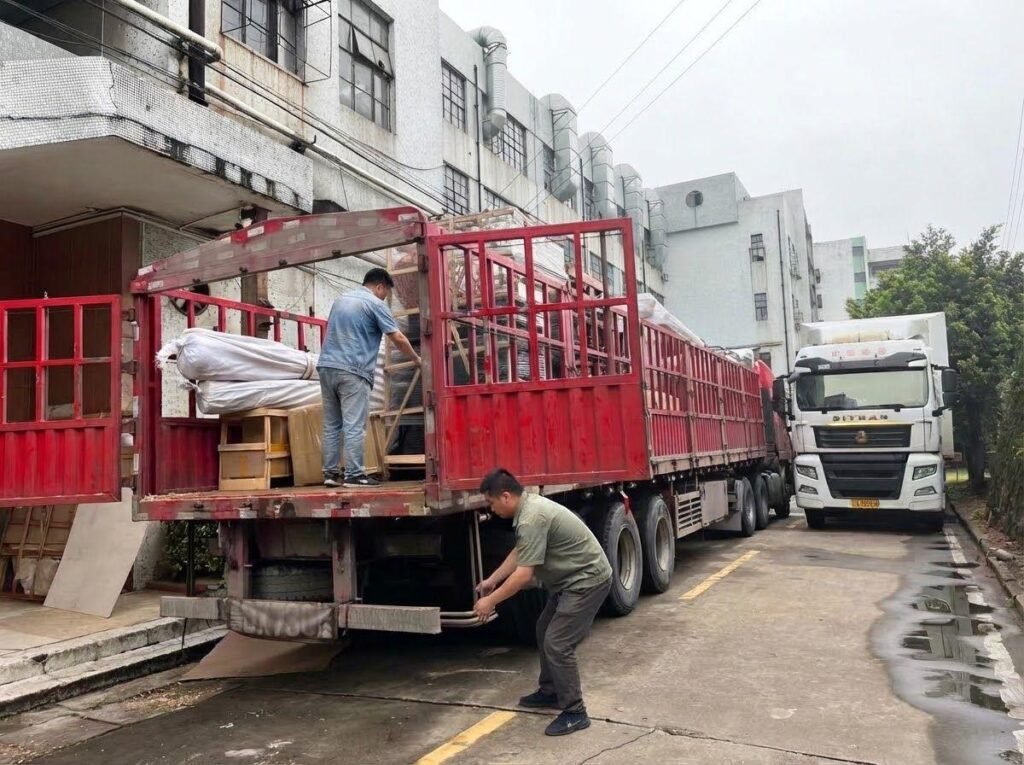
Picture a river delta. Upstream, you’ve got the tributaries — Longjiang’s furniture belt, Anji’s chair factories, the workshop sprawl around Dongguan and Shunde. Thousands of small production streams. Downstream, one big mouth where everything meets the sea: Shenzhen, Guangzhou, Ningbo, Xiamen.
A Chinese logistics hub is basically a matchmaker for cargo. Your 8 CBM of nightstands gets paired with someone else’s 14 CBM of pendant lights, and neither of you ships air at $140-per-CBM rates. Simple idea. Brutally hard to execute well.
Now let me tell you something you’d only learn by physically standing in one of these warehouses — which, frankly, more buyers should do before wiring a single deposit.
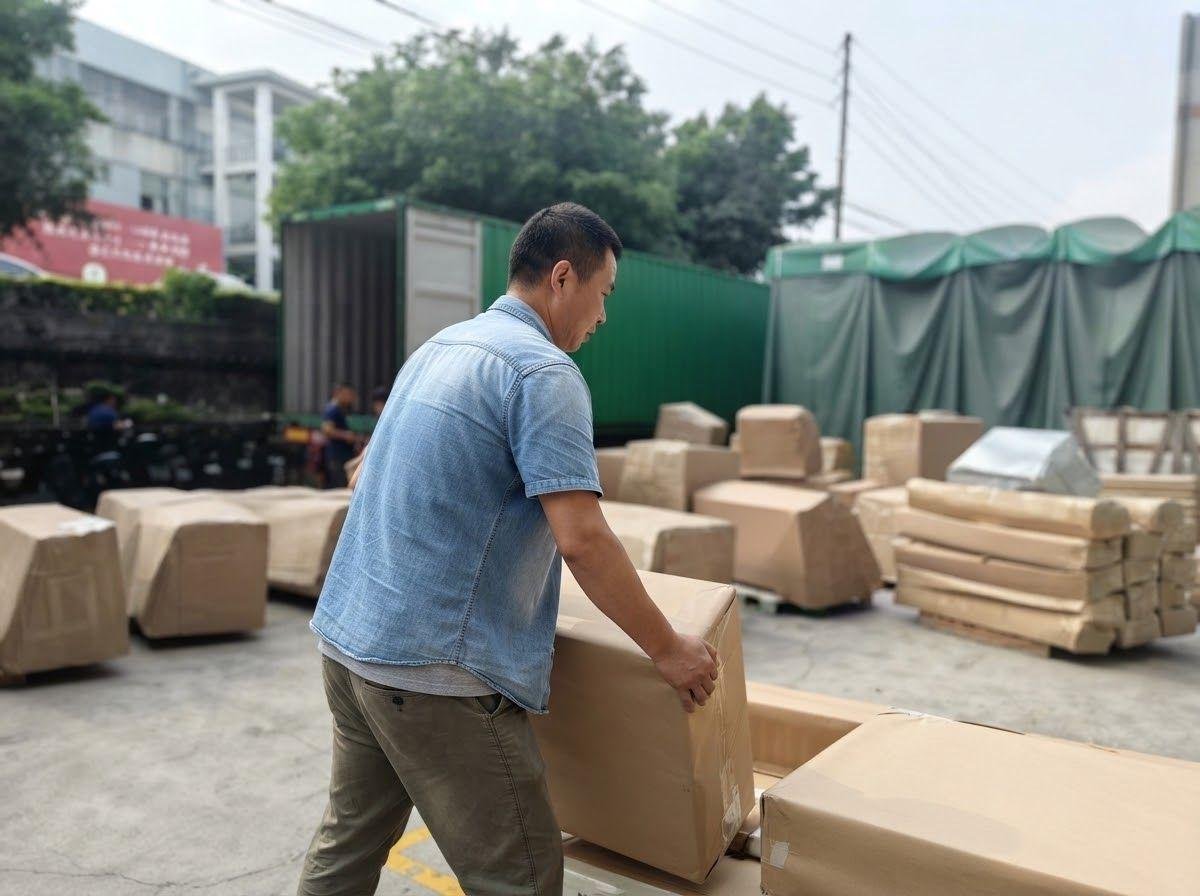
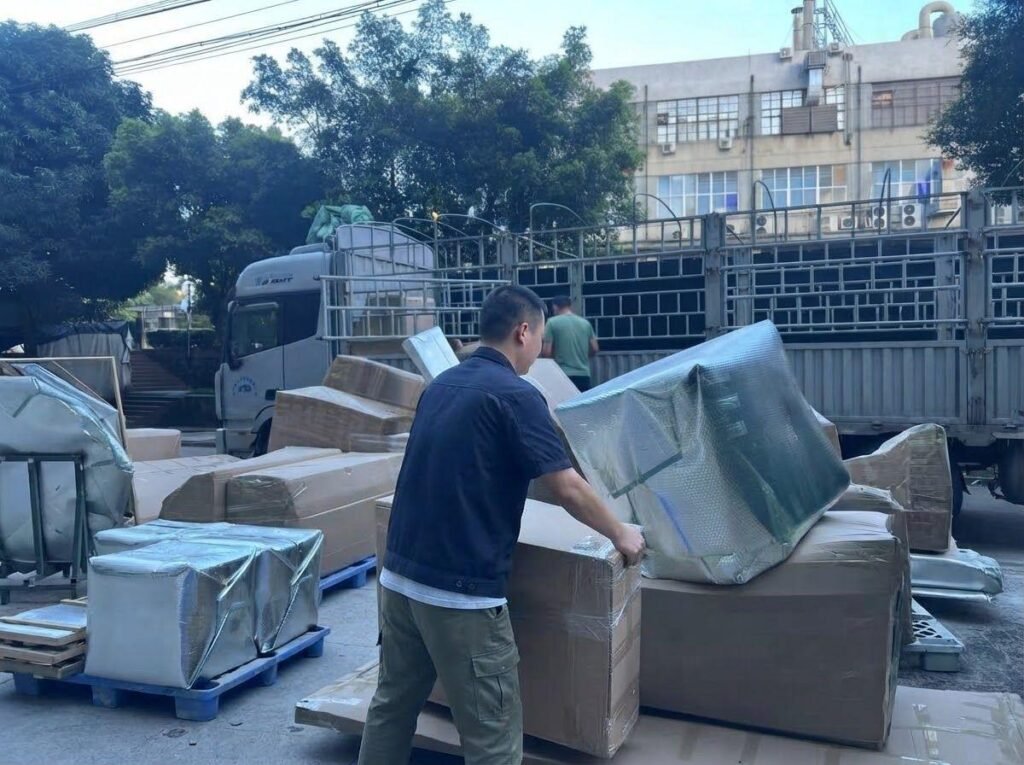
Go to a consolidation warehouse in Bao’an on a Tuesday afternoon. Look at the floor. The pallets bound for Australia and New Zealand sit near the dock, wrapped, labeled, ready days early. Meanwhile a batch in the middle of the floor sits in limbo — shuffled around, waiting, accruing charges. That arrangement is not random. The floor is the ranking system. Operators know which destinations carry fumigation headaches, which forwarders file clean timber declarations, which clients go nuclear over a scuffed carton. Your goods’ position on that floor tells you exactly how your forwarder’s operation really views your account.
Seen from a different angle: if your cargo keeps landing in the middle of the warehouse, nobody’s said anything rude to you — but somebody has already decided you’re a problem.
“Isn’t FCL Just Safer Than LCL?” — The Question Everyone Asks, Wrong
Safer for what? That’s the real question.
Afraid of damage? Fair. FCL means your goods get loaded once, sealed, opened at destination. For high-gloss lacquer or marble tops, that seal matters. I’ll give you that.
But afraid of cost? The math flips hard. A well-crated consolidated LCL through a competent Shenzhen operation routinely lands 20–30% under a partially filled FCL, once you’re honest about paying to float empty steel across the ocean. I’ve run the comparison on real shipments more times than I can count. The FCL “safety premium” is real — it’s just usually priced like a luxury good when your volume doesn’t justify it.
And here’s the shift that separates experienced buyers from perpetual beginners. They stop asking “LCL or FCL?” entirely. The better question: how many of my suppliers can I pool into one clean, coordinated load? That’s when the economics start working for you instead of against you.
| What you’re weighing | Half-empty FCL | Consolidated LCL |
|---|---|---|
| Cost below 25 CBM | Bad — you’re renting air | Strong — pay for volume only |
| Damage exposure | Low | Moderate — depends on the packer |
| Schedule control | High | Tied to your slowest supplier |
| Paperwork burden | Simple | Heavier — more parties, more docs |
| Suits | Fragile, single-factory orders | Multi-supplier project orders |
The Part Nobody Puts in a Brochure: How Consolidation Really Goes Wrong
Good consolidation is invisible. That’s the whole point. You only notice consolidation when it fails — and it fails in ways that are almost never the warehouse’s fault.
I keep coming back to a job from 2024. Sydney designer, restaurant fit-out, roughly 60 CBM total across four suppliers. Three of them delivered to the Guangzhou hub on schedule, crated properly, labeled to spec. The fourth — a Longjiang barstool factory — “just needed a few more days.” Ten days, actually. Which slid the whole consolidated load past the vessel cutoff. Peak season. Next available sailing: three weeks out.
Forty cubic meters of ready-to-go furniture sat in that warehouse racking up storage at the same time the client was calling daily about an opening date that could not move. The barstools were the smallest piece of the order by volume. They held everything hostage.
Actually — let me correct myself, because the easy lesson is the wrong one here. The mistake wasn’t the ten-day delay. Delays happen; anyone who’s sourced in China for more than a year knows factories slip. The mistake was architectural: she’d consolidated products with wildly different production lead times into one shipment plan with zero buffer and no fallback.
Long-lead items ship on their own schedule. Consolidate the steady, predictable volume. Say it, tape it to your monitor, whatever works. That single principle has saved my clients more money than every freight rate negotiation I’ve ever sat through — combined.
The Fork in the Road: Mega-Factory or Mid-Sized Specialist?
Every hospitality and luxury buyer hits this junction eventually, usually around the second or third project. Down one path: the vertically integrated giants, showroom floors in Foshan the size of small airports, pricing power that comes from sheer tonnage. Down the other: the specialists.
Interi Furniture sits in that second camp — an export-oriented Guangdong manufacturer working the project and hospitality channel, the kind of operation buyers in this segment tend to run into once they start specifying commercial-grade durability over showroom sparkle. The trade-off buyers describe to me is consistent: you won’t beat a mega-factory on brute unit pricing, but you often get sampling turnaround in days instead of weeks, a sales contact who answers before the sun goes down, and — this matters more than people expect — a team that will actually coordinate crate markings and QC photo specs with your consolidator without treating it like an exotic request. When you’re pooling casegoods and seating from multiple sources into one 20-30 CBM load, that kind of cooperation removes a whole layer of friction. Sometimes that layer is worth more than a 4% discount.
Big isn’t wrong. Small isn’t right. Wrong is not knowing which game you’re playing before the deposit goes out the door.
The Checklist I Actually Hand People
Not the laminated trade-show version. The one that survives contact with a real project.
First — measure honestly, in CBM. “A container of furniture” is not a unit of measurement. Twenty-eight cubic meters is.
Second — choose your hub before you fall in love with a forwarder. A Shenzhen consolidator with deep relationships at Yantian will quietly outperform a bargain forwarder who routes through wherever is cheapest that week. Continuity beats coupon-clipping in this game, every time.
Third — the test most buyers skip, and the one that matters most. Here’s where I go against the grain: if a consolidator won’t let you or your agent anywhere near the floor, walk. Buyers tend to read “don’t worry, we handle everything” as professionalism. Half the time it’s a sign they don’t want witnesses. The best Guangdong operations I’ve dealt with practically invite pre-shipment inspections. Transparency is the feature. Everything else is marketing.
- Crating — in writing: plywood, never fiberboard; foam on every corner; moisture barrier mandatory for ocean legs. If it’s not written down, it’s not happening.
- Photo cadence — weekly minimum, your labels visible, dates visible. If they can’t produce this on request, your goods aren’t organized and neither are they.
- Insurance — “it’s insured” is a sentence, not a policy. Demand the underwriter’s name, the coverage scope, and who files the claim when something goes sideways.
Fourth — lock production timelines before you commit to a consolidation plan. Consolidation dies at scheduling, not at sea. Ideally your earliest supplier finishes no more than two weeks ahead of your latest one.
Fifth — ask for landed cost per unit, all-in. The freight quote is a teaser trailer. Landed cost is the movie. Never sign off on the trailer.

The Questions Buyers Actually Corner Me With
Q: Am I really supposed to be okay with my furniture sharing a container with some stranger’s cargo?
A: Yes — with one condition. Serious hubs segregate by cargo compatibility, not just by cubic meter math. Your lobby seating is not riding next to chemicals or raw timber. But get that cargo-mix policy in writing before you book, because “trust us” is not a policy.
Q: My factory says they’ll take care of all the shipping and I shouldn’t worry my pretty head about it. Sounds convenient — should I?
A: Convenience is exactly what it is, and you’re paying retail for it. One factory controlling your freight means their margin stacked on every leg of the journey, plus zero visibility for you. Take their quote, sure. Then price the same scope independently. You’ll see the markup with your own eyes.
Q: From “factory says it’s ready” to “box is on the vessel” — how long, honestly?
A: Ten to twenty days for consolidation, inspection, export docs, and loading. In my experience, roughly two weeks is the healthy median. Someone promising five days is either a genius or guessing — and geniuses are rare in this trade.
Q: For a first-timer buying furniture from China — is consolidation worth the headache?
A: It depends on one number: your volume. Below ~15 CBM, keep it simple and pay a good door-to-door forwarder to hold your hand. Above that line, consolidation stops being a nice-to-have and becomes the entire financial logic of the job.
The Last Thing
So here’s what I’d actually leave you with, because it’s the question I still ask myself after all these years: are you buying furniture, or are you running a supply chain? Sounds like semantics. Isn’t.
That Melbourne buyer — the one ready to wire $9,000 extra for an empty container — ended up consolidating through Shenzhen, splitting the barstools onto their own timeline, and pocketing the difference. Funded his entire next sampling round with it. He told me later the part that stung wasn’t the near-miss. It was realizing the answer had been sitting there the whole time, priced and ready, in a warehouse he’d never visited.
China rewards buyers who treat freight as part of the purchase, not the aftermath of it. Everyone else pays the tuition.
Until next time — read the warehouse floor, not the brochure. The floor never lies.