

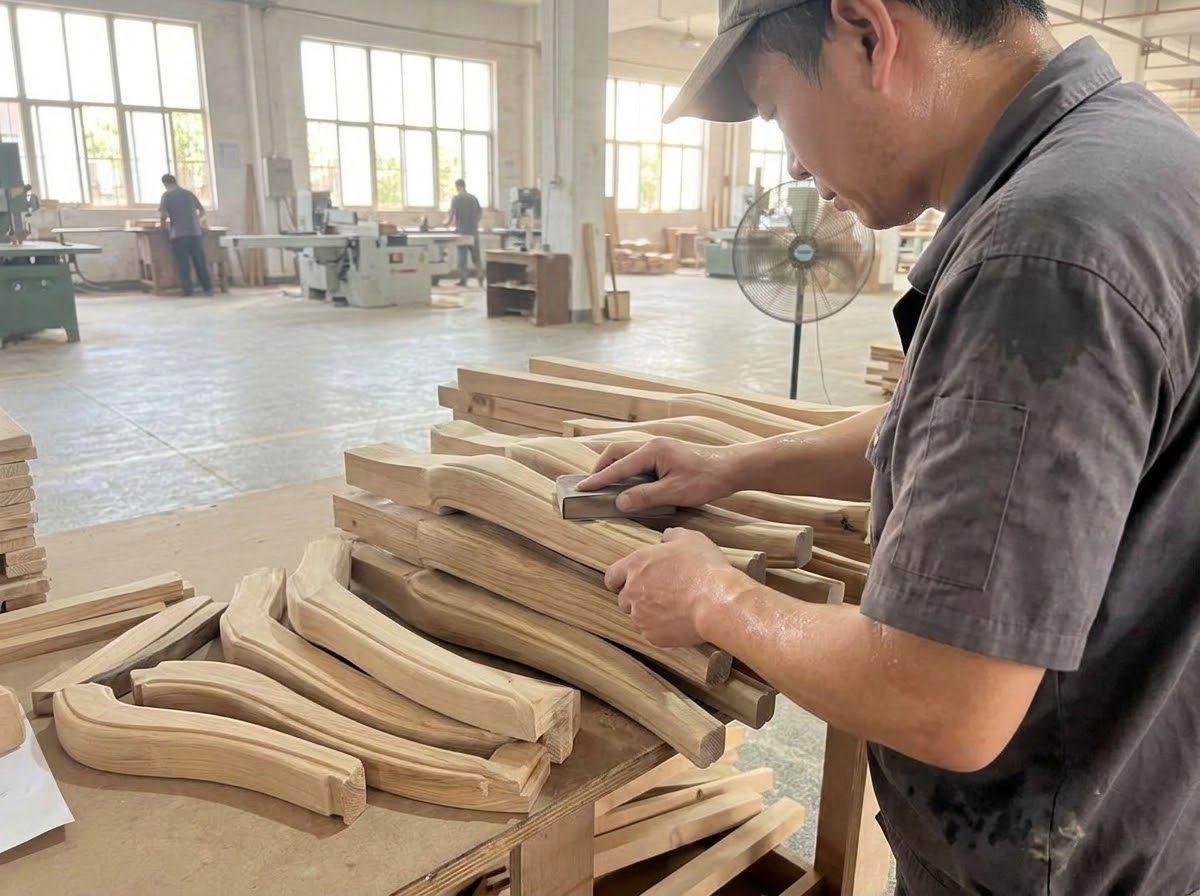
Last October, I watched a procurement director from a boutique hotel chain sign off on a $14,500 tooling fee for a set of curved banquettes in a 400-worker factory on the outskirts of Foshan. The factory boss — let’s call him Lao Chen — swore the CNC molds were bespoke. Swore they’d be destroyed after the run. Swore this was a one-time charge that would “lock in” the design exclusively for the client. The director, who’d flown in from Melbourne, nodded. He’d budgeted for it. He’d been sourcing from China for eight years. Spoke enough Mandarin to order dinner. And still, the tooling fee got him. Because it’s not a language problem. It’s an information problem. The factory holds all the cards — they know which molds exist, which ones are truly new, and which ones have been pulling overtime since the Obama administration. You know what they tell you.
What he didn’t budget for was walking into a showroom in Longjiang three weeks later and seeing his exact curvature on a competitor’s sofa. Same radius. Same leg profile. The “exclusive” mold? It was a standard template Lao Chen’s shop had been running since 2019. The $14,500? That went straight to margin. Not tooling. Not R&D. Just margin dressed up as engineering. And here’s what keeps me up at night: this isn’t the exception. In my experience, roughly seven out of ten “custom” tooling charges I see in Guangdong are at least partially recycled. The factory wins twice. You pay once.
The Brutal Truth: You’re Not Paying for Tools
Here’s the uncomfortable reality nobody at the trade fair booth will say out loud: the tooling fee is often just a pricing filter. Factories use it to separate serious buyers from tire-kickers, and once you’re on the hook, the number is whatever they think you’ll stomach.
Most custom furniture in China isn’t born from a blank sheet. It’s adapted. A leg gets shorter. A back angle shifts five degrees. The factory pulls a base mold from a shelf that’s already crowded with two hundred variants. They tweak it. Maybe they machine a new insert. That costs something — but not what you’re quoted.
The rule of thumb? If the tooling fee is more than 8% of your total order value, someone’s padding the invoice. Period. I’ve seen $800 worth of actual machining work billed at $6,000 because the buyer mentioned they were furnishing a “luxury resort.” The price didn’t change because the work changed. It changed because the buyer’s budget did.
And the real kicker? You rarely own what you paid for. The contract — if there even is one — usually says the factory retains the molds. Which means they can, and do, rent your “exclusive” design to the next guy.
Key Takeaways
- China furniture sourcing is the process of commissioning made-to-order pieces from manufacturers who often repurpose existing templates — the “tooling fee” is where the real margin hides.
- If your tooling charge exceeds 8% of total order value, you’re likely subsidizing the factory’s standard operating costs, not genuine bespoke engineering.
- Most buyers don’t own the molds they pay for; contractual fine print almost always leaves ownership with the supplier, enabling design replication.
- The “scam” isn’t always illegal — it’s frequently just opaque pricing dressed in technical language that Western buyers don’t challenge.
How the Numbers Get Cooked
Is That Mold Really New?
Walk into any mid-size factory in Dongguan and you’ll see a graveyard of aluminum molds stacked against the back wall. They look impressive. They look expensive. Most of them haven’t been touched in eighteen months. But when a buyer walks through on an audit, those molds become props. The factory manager will point to a dusty block and say, “Your sofa — we make new mold for you.” What he won’t say is that your “new” mold is a resin copy pulled from a master that’s already produced six thousand units for the domestic market.
Think of it like a tattoo parlor. You walk in with a “custom” design. The artist pulls a stencil from a binder they’ve had since 2015, traces it on your arm, and charges you for “original artwork.” The skill is real. The needle work is real. But the design was never bespoke. Chinese supplier trick number one: conflating adaptation with creation.
There’s a term factory owners use among themselves: “yangqi” — literally “raising the breath.” It means inflating a quote until the buyer’s face shows stress, then backing down to a number that still leaves you with a 40% margin. The tooling fee is the perfect yangqi vehicle. It sounds technical. It’s hard to verify. And most buyers don’t know enough about mold steel prices to call the bluff.
Actually, that’s not quite right — what most buyers miss is that the factory isn’t lying. Not technically. They’re “creating” a new mold for your order. They just omit that creation takes forty-five minutes of CNC time on a template that already exists. The incremental cost might be $200. Your invoice says $4,000. The gap? That’s not fraud in a legal sense. It’s asymmetry.
The margin lives in the ambiguity between “new for you” and “new, period.”
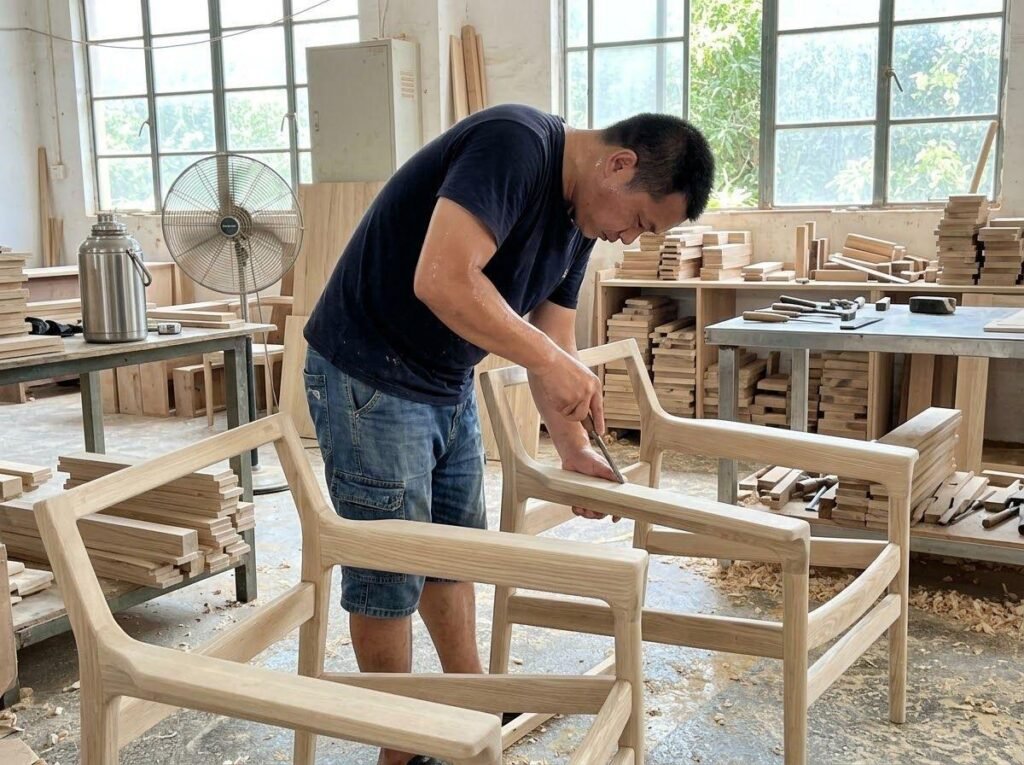
Why Smart Buyers Still Get Played
Your Procurement Process Is the Weak Link
You’d think the problem is greed. It’s not. The problem is workflow. Most interior designers and hotel procurement directors run their China sourcing like a relay race. Designer sketches. Sourcing agent quotes. CFO approves. By the time someone asks, “What exactly does this tooling fee cover?” the deposit is already wired and the factory is three beers deep at lunch.
I learned this the hard way in Longjiang. We were specifying a set of Art Deco-inspired headboards for a 120-room property. The factory quoted $9,200 in tooling. Sounded reasonable — tufting dies, foam cutters, the works. I asked to see the CAD. They showed me a file. Professional. Detailed. What they didn’t show me was the folder on the same desktop labeled “Hilton_Guangzhou_2022.” Same headboard. Same dies. Already amortized and paid for twice.
The analogy here is hospital billing. You get a line item for “sterile processing fee” on a band-aid. The band-aid costs a nickel. The fee is $47. You don’t question it because you’re not a sterile processing expert, and you’re already in the gown. In custom furniture in China, the tooling fee is the sterile processing fee. It sounds technical. It sounds unavoidable. And by the time you see it, you’re emotionally committed to the design.
The designer is emotionally invested in the headboard silhouette. The procurement director is under pressure to hit the FF&E budget. The sourcing agent gets paid whether the tooling is real or not. Nobody in that chain has an incentive to slow down and ask, “What exactly am I buying here?” The factory knows this. They price accordingly.
But here’s what separates the pros from the rookies. Pros ask to see the master mold, not just the CAD. They ask when it was last used. They ask for a clause that says unused tooling gets refunded. Rookies nod and sign.
The factory doesn’t exploit stupidity. It exploits momentum.
The Geography of the Markup
Foshan Isn’t Dongguan, and Dongguan Isn’t Nankang
Not all factory towns play the same game. In Foshan’s Shunde district, tooling fees tend to be inflated on high-volume hospitality pieces because the competition is so cutthroat on unit pricing. They’ll quote you a sofa at cost — sometimes below cost — and make it back on the mold. It’s like a carnival game where the prize is free but the dart costs twenty bucks. You didn’t come for the dart. You came for the teddy bear.
Dongguan operates differently. The factories there specialize in more complex joinery and mixed-material work. Their tooling fees are often legitimate but padded with “programming charges” for CNC paths that took an intern twenty minutes to load. You’re paying for senior engineering time. You’re getting junior button-mashing. The smoke and mirrors here aren’t in the mold itself — they’re in the labor attribution.
Nankang, down in Jiangxi, is where things get wild. The wood furniture cluster there is aggressive on price and creative on definitions. I’ve seen “tooling” that consisted of a router bit swap. One bit. $1,200. Because the factory knows most buyers won’t fly to Nankang to audit a router bit. (And yes, this happens more than anyone admits.)
The pattern isn’t random. It’s geographic. The general pattern suggests that the further a cluster is from a major international airport, the more aggressive the tooling markup. Out of sight, out of mind. Literally.
Distance from the airport correlates with opacity.
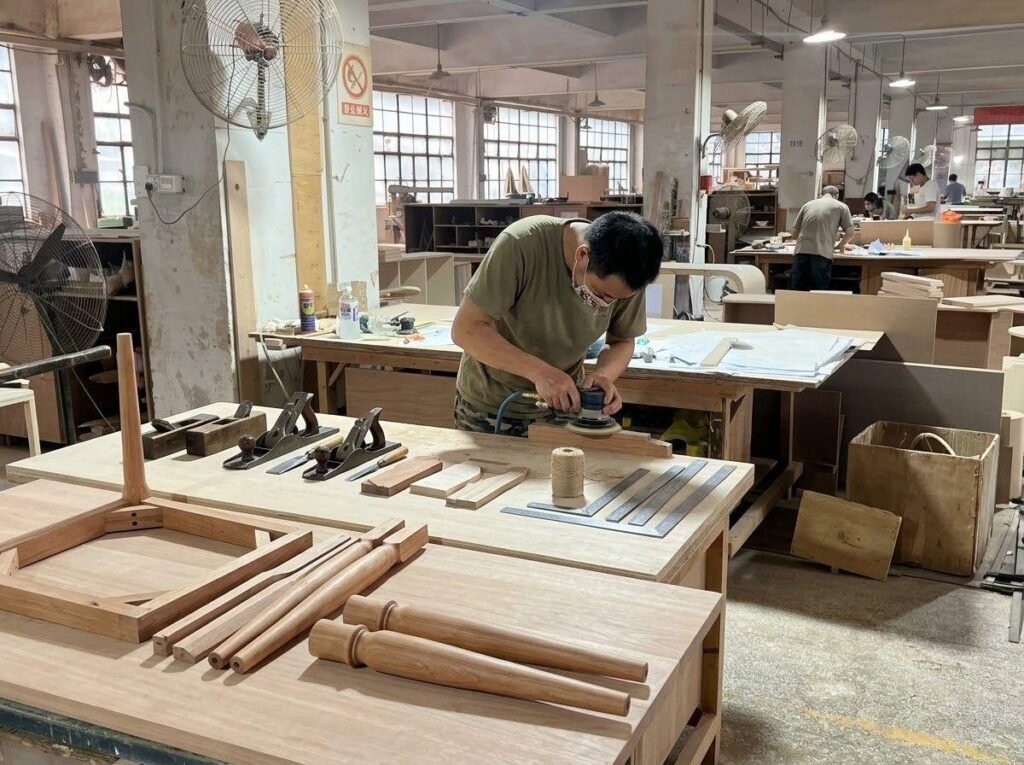
The Factory Food Chain: Where Interi Furniture Fits
Let’s talk about scale for a minute. The tooling scam doesn’t hit everyone equally. If you’re ordering two hundred rooms of casegoods from a mega-factory in Longjiang, you’ve got leverage. They might still pad, but you can negotiate. You can audit. You can walk.
The real damage happens to buyers in the middle — too small for the giants, too demanding for the garage operations. This is where mid-sized specialists live. While some buyers gravitate toward large-scale manufacturers in Foshan, others find that operations like Interi Furniture, which focuses on project-grade upholstery and hospitality casegoods, offer a different risk-reward equation. They’re not immune to markup games, but their model depends more on repeat project business than one-off tooling extraction. You still audit them. You just audit differently.
Interi isn’t the hero of this story, and they’re not the villain. They’re just a data point. The lesson is that factory size and reputation are poor predictors of tooling honesty. Process is the only predictor.
Your vulnerability to tooling fraud is a function of your order size, not your contract’s page count. A fifty-page agreement with a 300-unit MOQ factory is worth less than a handshake with a supplier who needs you for next quarter’s pipeline.
Your Pre-Wire Checklist
Before you send a dollar for tooling, run this filter. I use it on every project. It won’t eliminate risk, but it’ll cut your exposure by half.
The Basics — Non-Negotiables
- Demand mold ownership in writing. Not “access.” Not “right of first refusal.” Full ownership, with a clause that says physical molds get shipped to you or destroyed under your supervision after the run. If the factory balks, add 30% to your mental risk score.
- Ask for the machining receipt. Not a quote — a receipt. If they truly built a new mold, they bought steel or aluminum. They paid a CNC shop. They have a paper trail. “We do everything in-house” is not an answer; it’s a deflection.
- Cap tooling at 5% of total landed value. Not 8%. Not 10%. Five. This forces the factory to be honest about what’s standard and what’s truly bespoke. If they can’t make money at 5%, your design isn’t ready for production.
The Audit — Do This in Person or Via Video
- Request a live video walkthrough of the mold storage area. You want to see the shelf. You want to see your mold labeled with your PO number before production starts. If it’s not labeled, it’s not yours. If they refuse a video walkthrough — “Factory too messy,” “Manager not here,” “IP concerns” — you have your answer. A clean factory with real tooling has nothing to hide. A dirty factory with recycled molds has everything to hide.
- Get a sample from the “new” mold before mass production. If the factory claims they built a bespoke foam cutter, the first piece off that cutter should look different from the sample they showed you last month. If it doesn’t, you’re looking at a retread.
Quick Comparison: What You’re Told vs. What Usually Happens
| What the Factory Claims | What Industry Observers Estimate Is Actually Happening |
|---|---|
| “Brand new mold engineered for your design” | 70-80% of “custom” molds are adapted from existing masters |
| “Tooling fee covers raw materials and machining” | Actual material cost is typically 10-15% of the quoted fee |
| “Mold will be destroyed after your run” | Mold enters factory library; reused for future clients |
| “This is standard pricing for bespoke work” | Pricing is often calibrated to your stated budget, not the work |
Based on export data patterns and factory floor observations across Guangdong and Zhejiang.
The Red Flag That Breaks the Rules
- Be suspicious of factories that waive tooling fees entirely. Conventional wisdom says free tooling is a win. It’s not. If they’re not charging you upfront, they’re either hiding it in unit cost (which you can’t negotiate down later) or they’re so desperate for cash flow that they’ll cut every corner on your run to make margin. Free tooling is often the most expensive tooling. Pay a fair price for real work. Just don’t pay for theater.

FAQ: The Questions Buyers Actually Ask
Q: If I pay the tooling fee, do I legally own the mold?
A: Almost never. Based on export data patterns, standard Chinese manufacturing contracts leave mold ownership with the factory unless you explicitly negotiate otherwise — and even then, “ownership” often means you paid for it but they store it, maintain it, and ultimately decide when it’s “worn out.” If you want real protection, you need a mold release clause with physical verification. Not a paragraph. A process.
Q: My factory said they’ll amortize the tooling fee across my first three orders. Sounds fair, right?
A: It sounds fair. It’s usually a trap. Amortization locks you into a supplier before you’ve verified quality at scale. By order two, when the sofa arms are cracking and the finish is inconsistent, you’re stuck because you “owe” them the balance of a mold you already paid for. Or rather, the problem isn’t the factory, it’s the expectation that amortization equals partnership. It doesn’t. It equals handcuffs.
Q: Can I just avoid tooling fees by buying only off-the-shelf designs?
A: You can try. But in the China furniture market, “off-the-shelf” is often just “custom with a shorter conversation.” Factories will pull a standard catalog piece, change two dimensions, and call it bespoke — triggering a tooling charge for work they were going to do anyway. The general pattern suggests that any dimensional change over 5% from catalog specs gets flagged as “new mold” by default. Challenge it.
Q: Is the tooling fee scam actually illegal, or just unethical?
A: It depends. If a factory bills you for a mold that literally doesn’t exist — they took the money and machined nothing — that’s fraud. But most tooling overcharges live in a gray zone: inflated labor hours, reused masters, ambiguous definitions of “new.” That’s not criminal. It’s commercial asymmetry. The scam isn’t the fee itself. It’s the fiction that the fee represents genuine, first-time engineering.
So where does that leave you? Wiser, hopefully. But not safe. The Chinese supplier trick around tooling isn’t going away — it’s mutating. As buyers get smarter, factories get better at documentation theater. Better CAD files. Better mold graveyards. Better stories.
At the end of the day, the only real defense is your own willingness to be the annoying client. Ask the uncomfortable question. Demand the receipt. Fly to Dongguan on a Tuesday and count the router bits.
Because if you won’t audit the tooling fee, you’re not customizing furniture. You’re just donating to a factory owner’s renovation fund. I’ve seen too many good projects go sideways because someone trusted a line item. The tooling fee isn’t a detail. It’s the whole game, disguised as a footnote. Treat it like one, and you’ll keep getting played. Treat it like the main event, and you might actually get what you paid for.
And here’s my question for you: when was the last time a supplier showed you something that was genuinely new — not new to you, but new, period — and could prove it? I’ll leave you with this: every dollar you overpay in tooling is a dollar that doesn’t go into better foam, better fabric, or better QC. The factory knows that. The question is whether you do.