

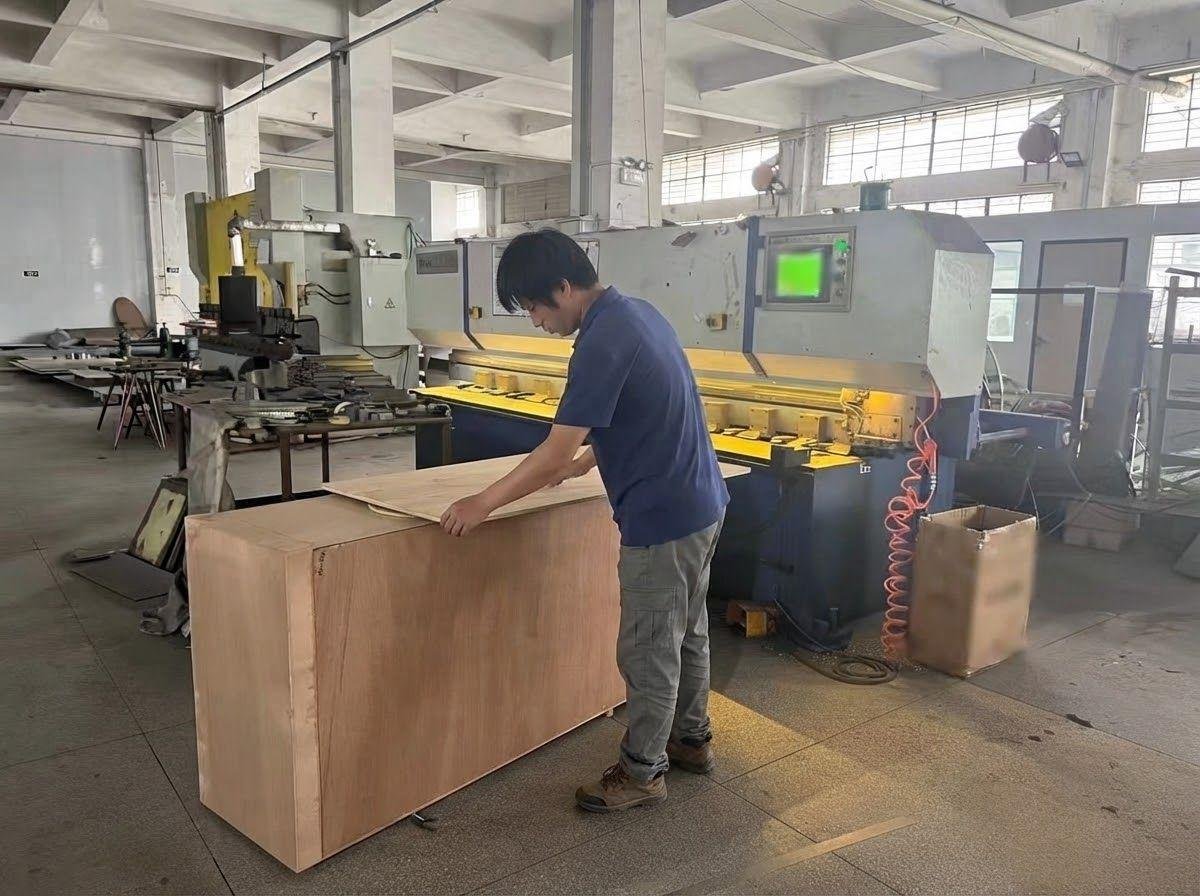
I was scraping dried PUR edge-banding glue off my beat-up Red Wing boots in a windowless, un-air-conditioned office in Longjiang last November. The factory owner—let’s just call him Old Liu—was chain-smoking ChungHwa cigarettes. He casually flicked the ashes straight onto a concrete floor that probably hadn’t seen a push broom since before the pandemic. Then, he shoved a cracked iPad across the scratched melamine table.
“Take a look. Our 2025 R&D collection.”
Right. Sure it was. Every single dining chair on that screen was a blatant, pixel-for-pixel rip-off of a West Elm catalog. You could even see the specific angle of those tapered walnut legs. He wanted a fifty grand wire transfer by Friday to start cutting wood for my client’s boutique hotel project down in Miami.
“We handle all the R&D,” Liu mumbled through a thick cloud of smoke, pouring tepid green tea into a flimsy paper cup. “You just print your logo on the carton, take your 60-point margin, and go play golf.”
If only this business were actually that simple. That is the exact, sugar-coated fairy tale every fresh-faced procurement director swallows whole when they take their very first sourcing trip to Guangdong. You think you’re buying a turnkey, headache-free supply chain. In reality? You’re usually inheriting a ticking time bomb of peeling veneers, undocumented glue substitutions, and cracking mortise-and-tenon joints that will snap the second a heavy guest sits down.
After fifteen years dragging myself through the dust-choked industrial zones of Dongguan and Anji, the truth is painfully obvious. Deciding whether to build your own designs from scratch or slap your brand on an existing catalog isn’t some clean binary choice. The lines blur constantly. The financial exposure will keep you up at night staring at the ceiling. And the showroom reps? They will tell you literally anything to get your SWIFT transfer code cleared.
The Brutal Truth About Factory Labels
Let’s drop the Canton Fair marketing hype for a second and look at how things actually move on the floor.
Most Western buyers step off the plane thinking they actually command their supply chain. They don’t. The guy running the CNC router on the night shift has way more control over your product’s structural lifespan than a VP sitting in a glass-walled office in Chicago.
Factories here are absolute chameleons. Do you need an OEM partner? Wow, suddenly they have twenty “senior engineers” on staff (who were probably hired yesterday from a local hardware stall). Looking for an ODM supplier? Look at that—a massive showroom packed with supposedly original IP.
Here is the part nobody ever puts in their corporate PowerPoint sourcing seminars. The vast majority of these furniture makers survive in a massive, messy gray zone. They aggressively poach engineering workarounds from their strict, detail-obsessed OEM clients. Then what? They use those exact structural tricks to silently upgrade their own house-brand ODM catalogs.
You want a rule of thumb to survive out here? Memorize this: If you aren’t holding the raw CAD files and the physical custom tooling molds in your own hands, you do not actually own the product.
Key Takeaway: The Sourcing Reality Check
- OEM (Original Equipment Manufacturer): You own the blueprints. They supply the hands and the machines. Maximum control, miserable setup fees.
- ODM (Original Design Manufacturer): They own the design. You pick a fabric swatch. Blazing fast launch, zero market exclusivity.
- The Floor Reality: Almost every shop blends both models just to keep the lights on. They use OEM client pain-points to fix their ODM line.
- The Defense: NNN (Non-Disclosure, Non-Use, Non-Circumvention) agreements are basically expensive toilet paper unless you have a trusted guy standing on the assembly line twice a week.
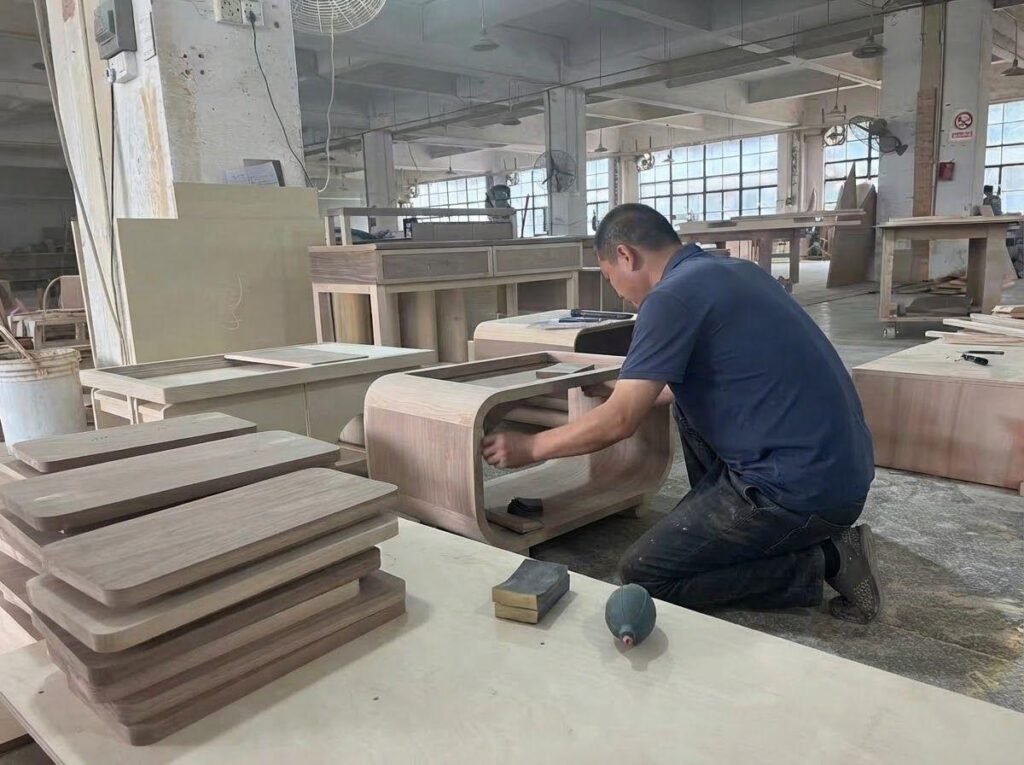
Deconstructing the Chinese OEM Furniture Trap
Let’s get the terminology straight before we go any deeper. Chinese OEM furniture is a setup where you provide every single specification—down to the exact 8% moisture content of the kiln-dried white oak—and the factory acts strictly as a hired hammer.
Looks foolproof on an Excel spreadsheet, doesn’t it? You email a tech pack. They ship chairs.
Except managing an OEM run is exactly like handing a Michelin-star recipe to a neighborhood diner cook who is actively trying to save twelve cents on a stick of butter. You have to watch their hands. Always.
If you skip your unannounced line inspections, components mysteriously morph. Two years ago, I caught a trusted Dongguan supplier quietly swapping high-density, fire-retardant foam for cheap, lightweight garbage right in the middle of a 500-room hospitality run. The upholstery looked perfect on the outside. The sit-test felt just slightly mushy. The actual lifespan of that lobby sofa? Probably cut in half.
“Just a miscommunication with the foam vendor.” That was the production manager’s excuse when I literally sliced a cushion open with a Stanley knife on the loading dock to see what was actually inside.
Are You Actually Built for OEM?
Factories that crush OEM expect you to be a paranoid expert in your own product.
They expect you to dictate things you probably haven’t even considered. The specific rub-count of the poly-blend fabric. The exact steel gauge for the table legs. The brand of soft-close drawer glides. (You better specify Blum or Hettich, or enjoy your garbage DTC hardware). If you leave a single cell blank on your Bill of Materials (BOM), the factory will automatically fill it with the cheapest wholesale junk they can find down the street.
(And yes, this happens weekly to “luxury” brands who think a slick 3D rendering is enough to secure quality).
The Drive-Thru Lane: China ODM Manufacturing
Then there’s the other lane. China ODM manufacturing means the factory develops their own white-label furniture, and you just buy it, tweak the wood stain, and slap your brand on the box.
It’s the fast food of global trade. You walk into an overwhelming 10,000-square-meter showroom in Foshan. You point at a velvet mid-century sofa. You pick a darker fabric swatch from a binder. Boom. A “new” product line for your Shopify storefront in an afternoon.
But let’s be real here. The factory didn’t design it either. They reverse-engineered it from a blurry iPhone photo taken at the Milan furniture fair six months prior.
The Complete Illusion of Exclusivity
The massive appeal of ODM is pure velocity. Skip the agonizing six-month prototyping phase. Dodge the $15,000 custom tooling fees. Go straight to selling.
But here is the absolute kicker. Your biggest competitor can walk into that exact same Foshan showroom on Tuesday, point at the exact same sofa, and buy it for their brand.
An ODM piece is a competitive advantage only until someone else figures out which trading company sold it to you.
Asking a factory boss for global exclusivity on a hot ODM piece is a joke unless you’re dropping deposits for 50 high-cube containers a month. They’ll smile. They’ll pour you more tea. They’ll sign your contract. And then they will quietly sell the chair to a German distributor through a legally distinct shell company.
The OEM vs ODM Showdown
| Feature | OEM (Your Blueprints) | ODM (Their Catalog) |
| Intellectual Property | Yours (if you registered it in China first). | Theirs. You just rent the look for a season. |
| Upfront Capital | Brutal. Custom tooling, endless sampling rounds. | Low. Just pay for the initial inventory run. |
| Time to Market | 6-12 agonizing months of back-and-forth. | 30-45 days, assuming they have raw materials. |
| Margin Potential | Massive. You dictate the market positioning. | Moderate. You will eventually hit a price war. |
| Quality Control | Requires paranoid, constant, on-site oversight. | Line workers already know how to build it. |

Finding the Middle Ground Beyond the Mega-Factories
Rookies naturally gravitate to the massive, multi-category juggernauts when they arrive in China. Why? Because those factories game Alibaba’s search algorithms and feature sweeping drone footage of their campuses on their homepages. But seasoned procurement guys often find vastly better leverage with mid-tier, specialized operators.
Look at the landscape differently. While a buyer might get totally lost in the shuffle at a mega-plant making everything from cheap TV stands to patio umbrellas, mid-sized specialists offer a way better risk-reward equation.
Take operations like Interi Furniture, which hyper-focuses on customized hotel and high-end residential seating. Because they aren’t trying to build every single piece of furniture under the sun, they keep their senior engineers on staff instead of relying on seasonal day-laborers. You aren’t fighting for production line time against a big-box retailer’s emergency order of particle-board desks.
Your long-term success rarely hinges on finding the biggest factory. It hinges entirely on finding a factory where your specific PO volume makes you a VIP.
The Factory Floor Decision Matrix
How do you actually choose between OEM and ODM without torching your purchasing budget on a container full of wobbly dining tables? You need a ruthless vetting framework. Stop looking at glossy brochures. Look at the sawdust.
Here is the exact gauntlet I run my clients through before they wire a dime:
- Check your engineering ego. Do you actually have a technical team that can draft production-ready CADs and spec out load-bearing mortise joints? No? Stay away from OEM. You will get eaten alive by factory-floor workarounds.
- Calculate your true survival window. Need inventory in your warehouse before Black Friday and it’s already July? You are buying ODM. End of discussion.
- Map your actual competition. Slinging basic side tables on Amazon? ODM is fine. It’s a volume game. Outfitting a $1,000-a-night Miami boutique hotel? You absolutely need OEM to match the architect’s uncompromising specs.
The Red Flag You Can’t Ignore: Never, ever trust a factory manager who says “yes” to every design tweak instantly.
Real engineering requires pushback. If a boss looks at a deeply flawed, top-heavy chair sketch and says, “No problem, easy,” run away. He just wants your 30% deposit. He’ll fix the physics later—usually by secretly stuffing cheap lead weights into the chair base to stop it from tipping over, completely ruining your freight CBM (cubic meter) and weight calculations in the process.

Frequently Asked Questions from the Sourcing Trenches
Q: “Do I really need to waste cash flying to China, or can I just trust Alibaba ‘Verified’ statuses and video tours?”
A: Alibaba badges prove a factory paid a marketing fee to Alibaba, not that they build structurally sound furniture. Video tours are carefully choreographed theater. They literally pan the camera away from the messy corners. If you’re dropping over $100k, you absolutely must have a trusted human—either you or a grumpy third-party QC inspector—physically standing on the factory floor when those doors close on the shipping container.
Q: “What legally stops the factory from selling my custom OEM design to my biggest competitor?”
A: Legally? A bilingual NNN agreement drafted by a ruthless lawyer actually located in China, not your golf buddy in New York. Practically? Not much, unless you control a chokepoint. Smart buyers source specialty hardware or performance fabrics from a completely different supplier and ship those raw materials to the assembly factory. If they don’t have your custom fabric, they can’t knock off your chair behind your back.
Q: “Can I take a factory’s stock ODM product, swap the legs to brushed brass, tweak the backrest angle, and claim the IP?”
A: No. People try this every Tuesday. Modifying an ODM product (industry guys call this “ODM-plus”) gives you a temporary aesthetic edge, but you do not own the structural IP. The factory will gladly take your money for the tweaks, then immediately offer those exact same brass legs to the next guy who walks into their showroom.
Q: “At the end of the day, is it ultimately cheaper to just go with ODM and avoid the headache?”
A: Depends heavily on your exit strategy. ODM requires vastly less upfront cash and kills R&D costs, making it cheaper on day one. But OEM builds defendable brand equity and commands much higher retail margins, making it vastly more profitable by year five.
The Cost of Doing Business
This industry is not for the faint of heart. It’s certainly not for people who trust easily. The profit margins can be incredible, but the learning curve is paved with cracked lacquer, misaligned wood grains, and furious WeChat voice notes at 3:00 AM on a Sunday.
Whether you decide to build a brand through agonizing OEM engineering, or ride the speed of the ODM market to catch a fleeting consumer trend, remember this. Factories aren’t your friends. They aren’t your enemies either. They are highly rational, profit-driven machines that react exactly to the boundaries you set and the oversight you provide.
You don’t get the quality you pay for in China. You only get the quality you inspect.
Make your call, sign the PO, wire the deposit, and book your flight to Guangzhou. I’ll see you on the factory floor.