

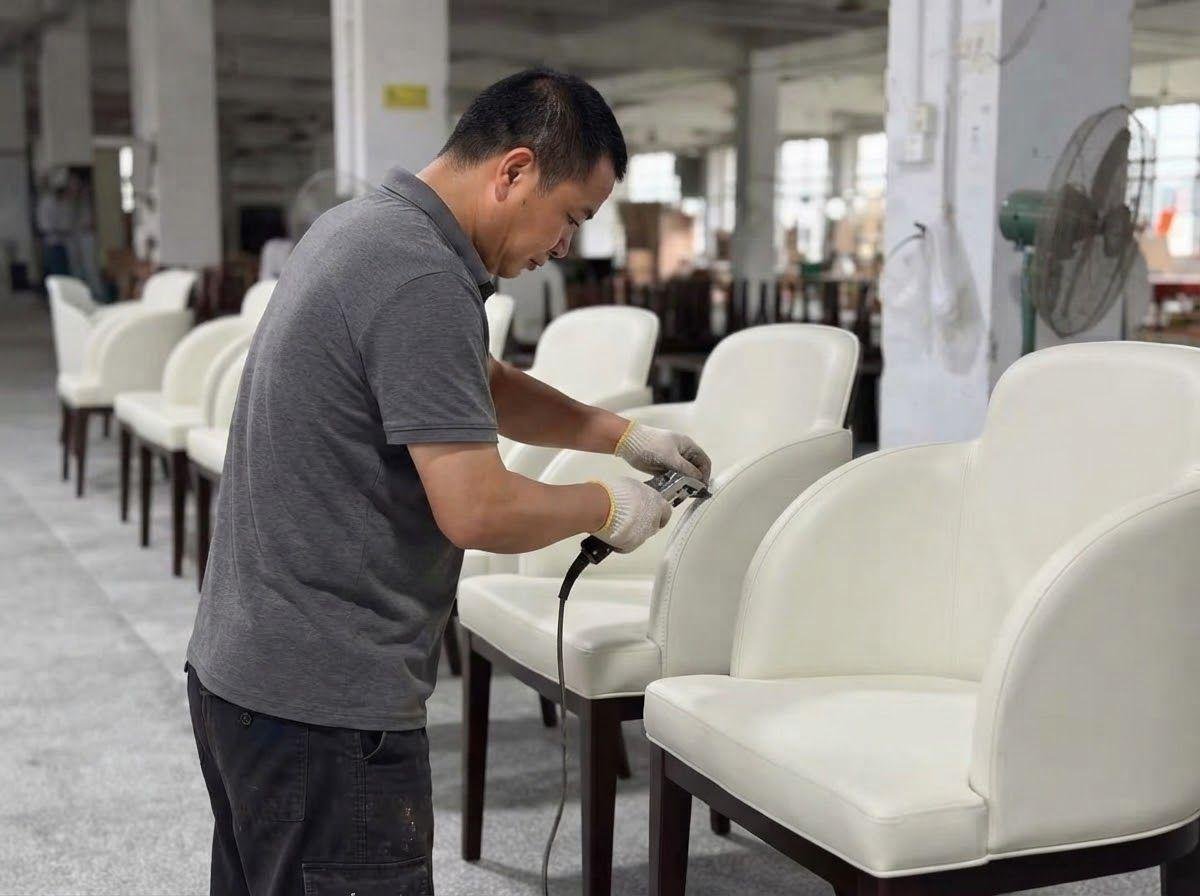
You never really wash the smell of MEK solvent and cheap Zhonghua cigarettes out of your clothes. It gets into the lining of your suitcase. It gets into your hair.
11:45 PM. Tuesday. Longjiang. The heat inside Mr. Chen’s corrugated-steel warehouse was the kind that makes your ears ring. I was standing under a half-dead fluorescent tube, wiping sweat off the back of my neck with a filthy shop rag, staring dead at a custom lounge chair.
To the client I was representing, the thing would have looked like an absolute masterpiece. A flawless, dead-on carbon copy of a $6,000 Italian import. It had the deep channel-tufted leather, the heavy brushed-brass sled base, the exact pitched angle of the original CAD file. It looked like money.
Chen flicked his cigarette ash straight onto the concrete, punched a few numbers into a massive, faded desktop calculator, and quoted me four hundred and fifty bucks.
Somewhere over in Miami, a boutique hotel developer had just wired a 30% deposit to mass-produce 120 of these exact chairs for his high-traffic lobby. I hadn’t made the dreaded phone call to break the bad news yet. But that buyer was walking blindfolded straight into a meat grinder. Why? Because the hidden internal framing underneath that butter-soft upholstery was cheap, unsealed, formaldehyde-soaked MDF.
Medium-density fiberboard. The second that chair hits Miami’s aggressive coastal humidity, the frame acts like a thirsty sponge. It swells up. The internal wooden dowels snap under the pressure. That tight leather sags like a deflated car tire in under six months.
I’ve watched this exact disaster unfold more times than I care to admit over 15 years wearing out my steel-toe boots on these factory floors. Buyers fly over. They eat some incredible local roast goose. They walk a glittering 10,000-square-foot showroom with a bilingual sales rep who keeps calling them “boss,” and they assume they’ve finally hacked the system.
They haven’t. The problem isn’t the Chinese factory itself. It’s the Western buyer’s naive, borderline-arrogant assumption that a preliminary quote is an ironclad promise. Buying high-end pieces in Guangdong isn’t some magic trick you unlock just by showing up with a passport. It is a grueling, daily street fight of engineering audits, cultural arm-wrestling, and an exhausting amount of paranoia.
The Brutal Truth About “Going Direct”
Let’s kill a massive industry myth right now. You didn’t cut out the middleman. You just fired a highly experienced one so you could hire yourself—a rank amateur.
When you dive headfirst into sourcing luxury China hotel furniture, you instantly inherit three new jobs. You are now the lead QA inspector. You are the localized logistics coordinator. And you are the technical engineer. Don’t possess those three very specific skills? Then you aren’t a savvy procurement director. You’re just a tourist wandering a chaotic bazaar with an open checkbook, begging to be taken advantage of by factory bosses who have been playing this game since you were in grade school.
These guys are brilliantly pragmatic. Capitalists in the purest sense of the word. They will build exactly what you pay them to build, down to the penny.
Did you squeeze the sales rep too hard on a quote because your FF&E budget got slashed by the general contractor back home? They won’t argue with you. They rarely tell you a price is mathematically impossible. They will just smile, pour you another little cup of tieguanyin tea, and quietly swap out the high-resilience D45 foam for a cheap, chalky alternative that flattens into a literal pancake by your third fiscal quarter.
Here is the golden rule you need to tape to your monitor: If a price quote makes you feel like you just pulled off a daylight robbery, the factory is already stealing from a part of the furniture you can’t physically see.
The Insider’s Cheat Sheet: Sourcing Hospitality FF&E in China
- Sourcing out here isn’t shopping. It’s the tactical process of wrestling local manufacturing quirks to meet strict commercial-grade specs.
- Showroom prototypes are theatrical props. Assembly line variance is the silent killer of operational budgets.
- Mid-sized specialists usually crush massive mega-factories when it comes to custom boutique runs. Don’t blindly chase the biggest smokestacks.
- Stop hiring agents just because their Mandarin is fluid. Hire someone who speaks joinery, fabric rub counts, and fire codes.
The “Golden Sample” Trap (And Why You Keep Falling For It)
Signing off on a beautiful showroom sample is dangerously similar to swiping right on a heavily filtered dating profile. You get the best lighting, the most flattering angle, and zero visible flaws. Then the actual shipping container hits your loading dock in Texas, you rip open a cardboard box with a box cutter, and cold reality sets in.
What buyers never grasp is the labor dynamic on the ground.
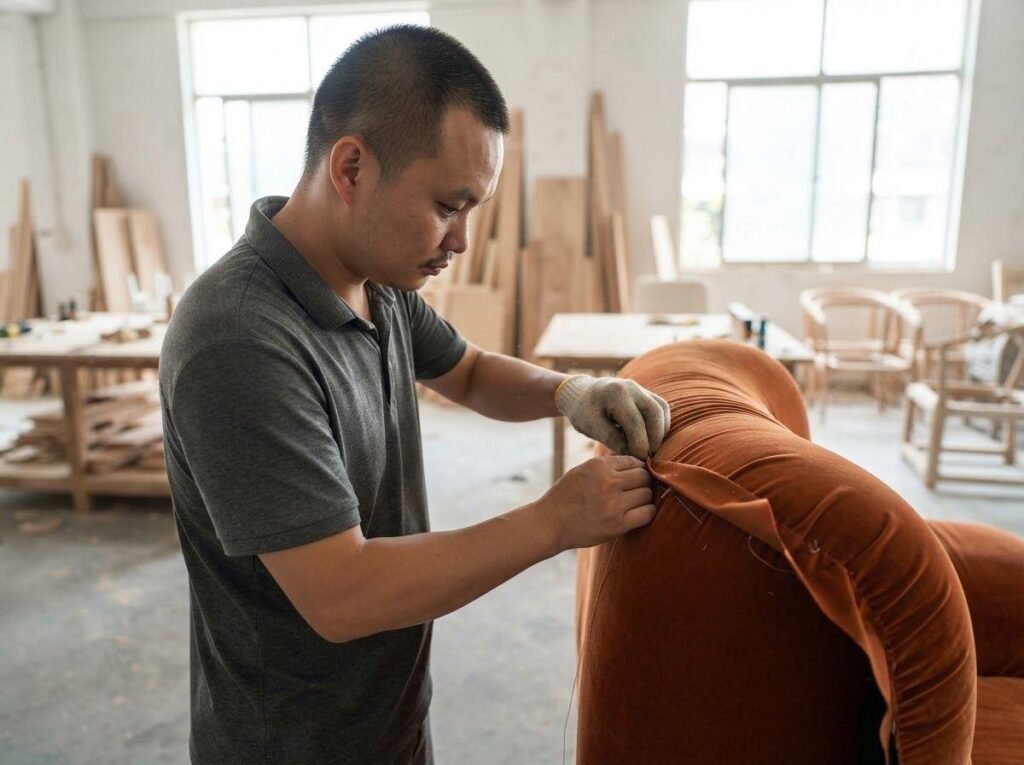
That prototype you enthusiastically approved? The industry calls that the “golden sample.” It was meticulously handcrafted over two entire weeks by the factory’s three aging master carpenters. Your 200-piece production run, on the other hand, is being hammered together by transient, quota-chasing line workers on a random Tuesday afternoon.
These workers get paid piece-rate. Speed is their only incentive. I still have a permanent scar on my left thumb from ripping open a “flawless” lobby sofa in Dongguan, only to find the armrest stuffed with filthy scrap foam offcuts glued together. The factory owner didn’t even blink when I showed him the mess. He shrugged, lit a cigarette, and blamed a subcontractor.
That’s the reality. Premium top-grain leather on the outside. Absolute garbage underneath.
Are You Dictating the Hidden Geometry?
You can’t just hand a factory a beautiful watercolor rendering or a basic 3D model and say, “Hey, make this.” That’s procurement suicide.
If you leave a single specification blank on your Bill of Materials (BOM)—say, the exact type of wood glue required, or the precise millimeter thickness of an internal steel bracket—a factory boss will fill that void for you. And he will fill it with whatever scrap material maximizes his daily margin.
You have to dictate the hidden geometry. If you aren’t specifying the exact thread count of the upholstery stitching, the exact gauge of the zig-zag springs, and the exact micron thickness of the brass electroplating, you are gambling your client’s money at a casino where the house always wins.
The Myth of the “Do-It-All” Mega Factory
Too many rookies treat Chinese manufacturing as one big monolithic entity. They assume a factory in one city can make anything you doodle on a cocktail napkin. It can’t. Not even close.
True woodworking heritage lives in one specific province. Metal extrusion lives in another. Outdoor wicker weaving lives somewhere else entirely.
Ask a solid wood factory in Nankang to manufacture your bespoke brass-inlaid marble nightstands, and they’ll quietly outsource the metal and stone to a buddy three towns over, mark it up 20%, and totally abandon quality control.
You have to align your raw materials with the region’s actual industrial DNA. Any supplier aggressively claiming they manufacture absolutely everything under one roof is pulling your leg. They are a final assembly point masquerading as a vertically integrated powerhouse.
The Heavy Foam Scam (The Sub-Component Shell Game)
Let’s go a layer deeper. This is where the real money burns.
Even if you pick the right factory in the right city, you still have to fight the supply chain shell game. Chinese hospitality FF&E isn’t just about the main factory you visit. It’s about the dozens of opaque tier-two suppliers feeding them daily.
Take seat cushions. You demand high-density foam because this is commercial seating. The factory says “No problem, boss!” When the chairs arrive, the cushions feel heavy. They feel premium. Eight months later, they are completely collapsed, and a weird white dust is falling out of the bottom of the chairs.
What happened? The foam supplier mixed calcium carbonate powder into the cheap, low-density foam liquid before it cured. The powder adds artificial weight to fool your initial physical inspection, but it destroys the chemical bonds of the foam. It literally crumbles into dust under human weight.
Calling this malicious isn’t entirely accurate. The factory is just being brutally pragmatic. Hitting the shipping date so they can get paid is their absolute priority. Your hotel’s maintenance schedule three years from now is simply not their problem. “Trust” is a completely useless word in overseas procurement. You don’t trust. You test.
Finding the Right Fit in a Chaotic Ecosystem
So how do you narrow down hundreds of vendors to find one that won’t burn you? Hint: the compound with the nicest front gates isn’t automatically the best partner.
Most green buyers fly into Guangzhou, rent a car, and run straight to the massive Foshan conglomerates. A 100-acre campus with robotic spray booths feels incredibly safe to a corporate buyer. But those giants are hunting for massive, repetitive volume. Think 1,500-room Vegas casino rollouts. If you roll up with a highly customized 60-room boutique hotel project, you’re a mosquito to them. Your order will get bumped to the B-team night shift the exact second a bigger fish calls.
The real sweet spot for custom hospitality work lies in the mid-sized, export-heavy specialists.
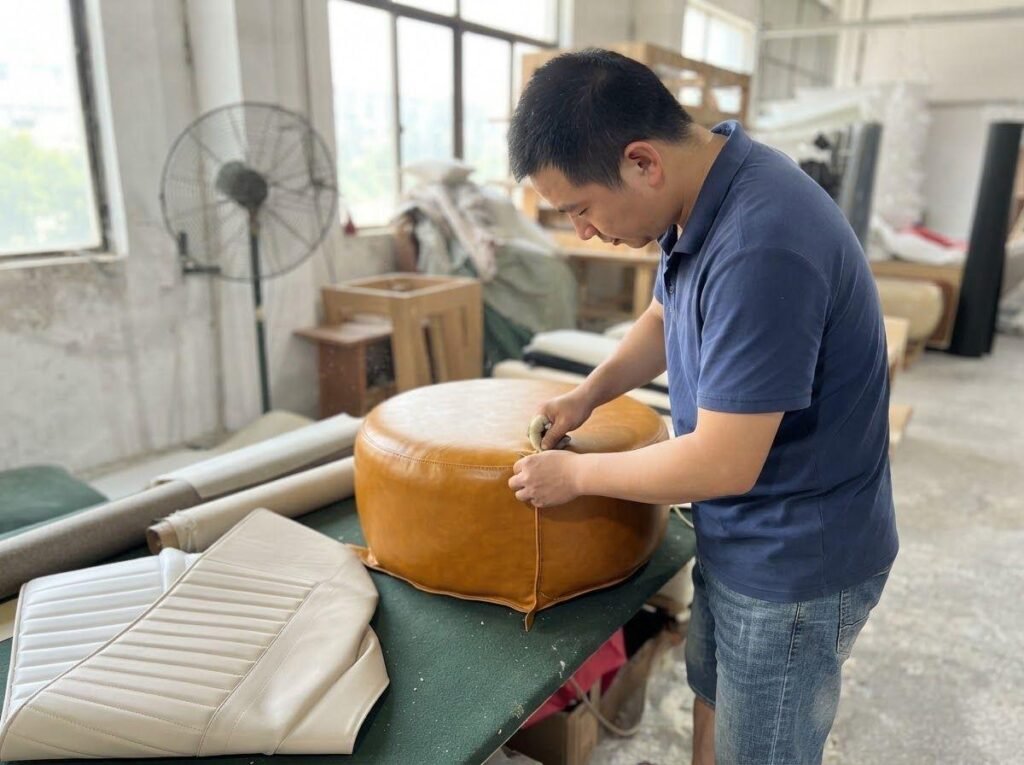
While novices chase the giant smokestacks, veterans look for factories structured specifically for batch-customization. Take an operation like Interi Furniture. They built their entire floor plan around mid-volume, high-complexity project work—which is exactly the lane most boutique designers swim in. You carry significantly less risk with a setup like that because their assembly lines are actually calibrated for customized specs rather than blinding, reckless speed.
Going with a mid-sized player changes your leverage. You get the heavy infrastructure required for standardized, commercial-grade output, but you can still get the actual owner on WeChat when a wood-stain alignment issue pops up at midnight. That agility is priceless when a grand opening deadline is looming and the general contractor is screaming at you over the phone.
A Paranoid Buyer’s Survival Checklist
Shipping multiple 40-foot high-cube containers of high-stakes custom furniture across the Pacific requires heavy paranoia. You can’t just wire the money, sit back in your air-conditioned office, and pray to the supply chain gods. Here is how you protect yourself on the ground:
- The “White Wood” Ambush: Never wait until pieces are painted, stained, or wrapped in fabric to inspect them. Check the raw, unfinished frames. We call this the white wood stage. Show up unannounced. If you see guys shooting thin staples into load-bearing joints where there should be double-dowels and corner blocks with heavy wood glue, kill the production run right there. Don’t let them cover up the crime scene with foam.
- The Moisture Game: Wood sitting in a muggy Guangdong warehouse in July might read 14% to 16% moisture on a handheld meter. Ship that untreated desk to an air-conditioned resort in Scottsdale, and the wood will literally crack in half like a gunshot. Demand localized kiln-drying targeting your destination’s exact climate (usually 8-10% for North America). Check the kiln logs yourself. If they won’t show you the logs, they didn’t bake the wood.
- The Drop Test Nobody Does: Buyers obsess over the leather but forget the cardboard. If a factory uses cheap 3-ply cardboard for a 150-pound credenza, it will be destroyed by the forklift at the port. Demand 7-ply minimum, with molded EPE foam corner protectors.
- Weaponize the final 30%: Totally non-negotiable. Keep a minimum of 30% of the funds locked up until a trusted third party signs off on the final inspection and the container doors are physically sealed at the port. Once that final wire clears your bank account, your leverage evaporates into thin air.

Factory Floor FAQ: Real Emails from Angry Clients
Q: My factory rep says the heavy-duty Blum door hinges I specified are out of stock. Should I just let them use the “local equivalent” to save three weeks?
A: Absolutely not. Compromising on moving parts is the fastest way to destroy an expensive piece of casegoods. They are pushing the local hardware because importing Austrian hinges is a logistical headache, or the purchasing manager is getting a quiet kickback from a local metal shop down the street. Hold the line. A cheap, unbranded hinge will rip clean out of an MDF core after three months of rough guest use.
Q: Can I just browse Alibaba for my hotel furniture and skip hiring a local sourcing agent?
A: Doing your own custom commercial FF&E procurement on Alibaba from your laptop in Chicago is exactly like doing your own plumbing based on a YouTube video. It’s possible, sure, but you’ll probably flood the house. You desperately need boots on the ground to audit technical drawings, check moisture meters, and randomly show up at the assembly lines. Pictures lie. Factories literally rent beautiful showrooms that don’t belong to them just to take photos for their Alibaba page.
Q: Are these factories going to steal my proprietary designs?
A: Yes. Accept it now and make your peace with it. It’s almost guaranteed your custom headboard design will mysteriously appear in their generic catalog next spring. You can draft all the international NDAs you want. Spend thousands on lawyers. Enforcing them across borders is a total fool’s errand. The only real defense you have is getting your project open, installed, and publicized before the knockoffs saturate the market.
Q: Is it true that Chinese factories will intentionally lower the quality of my second or third order?
A: Yes. It’s a well-documented phenomenon known out here as “quality fade.” They take a loss on the first container just to win your business, break even on the second, and start quietly swapping out premium materials for cheaper ones on the third container to claw back their margins. You have to inspect the fifth container with the exact same ruthless, annoying intensity as the first.
At the end of the day, outfitting a boutique hotel property from overseas isn’t just about picking out pretty lounge chairs. It’s a brutal, ongoing stress test of your own procurement discipline.
Treat the process like a simple, frictionless Amazon checkout, and you will get fleeced. But if you treat these vendors as highly capable, adversarial partners—respecting their incredible hustle while relentlessly double-checking every single dowel and foam density rating—you can build world-class interiors at a fraction of the cost of domestic production. Skip the fancy showroom coffees. Stop looking at the glamorous veneer. The only thing that truly matters is what you catch on an unannounced Tuesday morning inspection.
See you out there on the floor.