

It was raining sideways in Longjiang last November. That specific, bone-chilling Guangdong drizzle that somehow seeps straight through your boots after a two-hour traffic jam out of Guangzhou. I was standing in a freezing, poorly lit factory showroom with a hospitality procurement director from Chicago. We’ll call him Marcus. He was rubbing his temples, looking dangerously close to having a massive stroke.
The air in the room was suffocating. Heavy notes of cheap contact cement, curing polyurethane, and stale Double Happiness cigarettes.
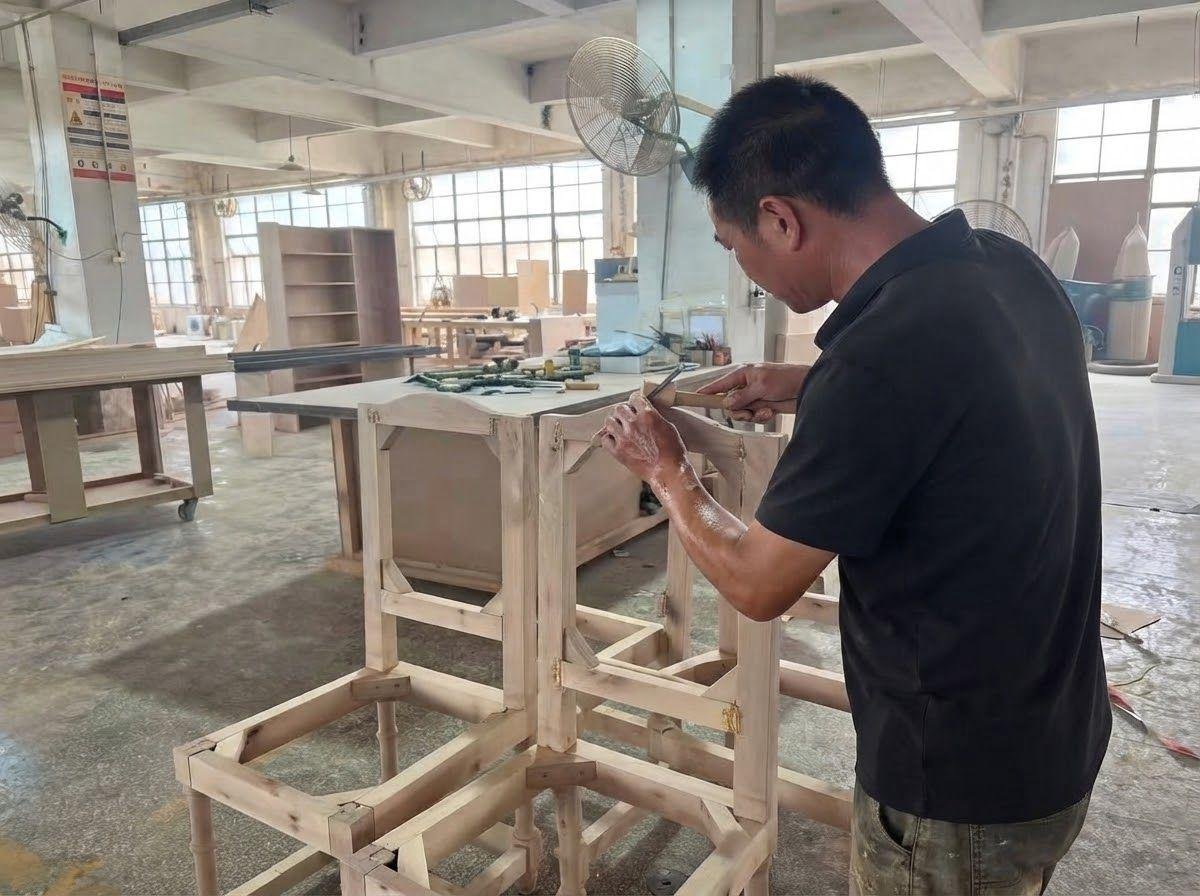
Marcus flew fourteen hours just to verify the structural integrity of a custom banquet chair for a massive hotel rollout. To prove the internal frame was “virtually indestructible,” the factory’s lead technician—a heavy-set guy in a faded polo who easily cleared 240 pounds—didn’t bother firing up the computerized stress-testing jig in the corner. That thing was probably broken anyway. Instead, he picked the prototype up by the backrest, let out a grunt, and drop-kicked it straight across the raw concrete floor.
Crack.
It snapped. Right at the rear leg joint.
And it wasn’t a clean break. It was a jagged, splintery nightmare. The kind of break that screams ‘we used uncured green wood’ to anyone who knows timber.
The technician didn’t even flinch. He just laughed a little, flicked his cigarette ash onto the floor, and muttered to the translator that they could easily weld a heavy-duty steel corner bracket onto the frame for another $1.50 per unit. Marcus looked like he wanted to throw up on his own shoes.
Welcome to the absolute trenches of overseas procurement.
Forget the glossy B2B portal photos. Forget the slickly edited Alibaba promo videos with drone shots panning over sunlit industrial parks. If you are trying to source furniture at scale, it’s not about finding a pretty design, wiring a 30% deposit, and hoping for the best. It’s about figuring out exactly how a piece is going to catastrophically fail before you load 10,000 of them onto a Maersk container ship bound for Long Beach.
When you decide to buy from China wholesale, you are walking into a blood sport. The margins are basically non-existent. Physics is entirely unforgiving. Sure, every factory boss in Guangdong is desperate to win your bid. But here is the brutal catch: a chair engineered for a 160-pound guy eating a quick twenty-minute dinner in his apartment will absolutely self-destruct during a chaotic, high-turnover Vegas casino conference.
The Stuff Nobody Mentions at the Canton Fair
Let’s drop the polite corporate diplomacy for a minute. The reality that nobody wants to discuss over expensive dinners at trade shows is this: most export factories will happily stamp a “10-year commercial warranty” on your proforma invoice. Meanwhile, back on the dusty assembly line, they are quietly stuffing your seat cushions with residential-grade scrap foam that will flatten out like a literal pancake by month six.
And you know what? Nobody is doing this out of pure malice. It’s just brutal, inescapable math.
You spent three weeks on WeChat grinding some exhausted 24-year-old sales rep down to a $42 unit price because your CFO demanded Q4 budget cuts. What exactly did you think was going to happen?
The factory owner isn’t going to take a financial loss on your project just to be a nice guy. He’s got a Porsche Cayenne payment to make. To hit his margin, he’s going to shave half a millimeter off the steel tube wall. He’s going to swap out the heavy-duty nylon floor glides for cheap, brittle plastic caps that will inevitably scratch the hell out of your client’s million-dollar marble lobby. You walked away thinking you won the negotiation. Newsflash: you lost.
The core issue isn’t even the aggressive haggling. It’s this delusional buyer expectation. The idea that Western commercial durability standards somehow magically apply to rock-bottom export quotes just because you typed the words “HEAVY DUTY” in bold red font on your purchase order.
I tell my clients one thing before we ever step onto a factory production floor.
If you can lift a metal commercial dining chair with one finger, throw it in the dumpster right now. Because that’s where the end-user is throwing it by Christmas anyway.
Chinese contract seating is a violent game of material margins. Every single millimeter of steel, every extra hardwood dowel, and every gram of foam density dictates whether a hotel guest sits comfortably or ends up suing your brand because they fell backward onto a hard floor.
The Field Guide to Bulk Sourcing
- Sourcing isn’t shopping. It’s the incredibly paranoid process of actively engineering failure out of a product before they turn the machines on.
- Factory-provided BIFMA or SGS test certificates? Worthless for your bulk order. They only prove that one golden sample passed a test three years ago.
- Real durability demands on-site, totally destructive testing of random units pulled straight off the dirty assembly line.
- Pad your target price by 10% strictly for hidden structural reinforcements. It saves 100% of your replacement budget later.
You Are Buying an Abuse Sponge. Act Like It.
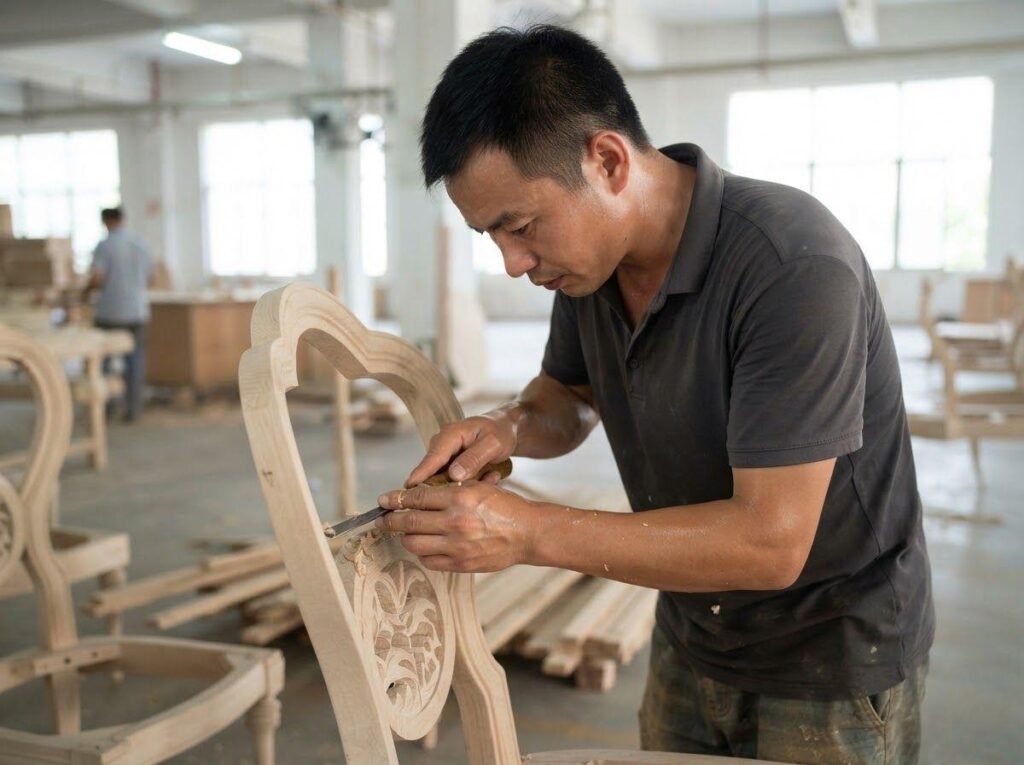
Procuring 10,000 chairs for a commercial project is exactly like buying a massive fleet of rental cars. You aren’t hunting for delicate, hand-crafted artisan luxury. You need a highly engineered abuse sponge.
Let’s be real. Hotel guests treat furniture terribly. They just do. I’ve personally watched guests use upholstered lounge chairs as luggage racks, stepladders to change ceiling lightbulbs, and makeshift ironing boards.
When you scale up to those massive volumes, you tap into the most ruthlessly efficient supply chain on the planet. But never confuse efficiency with durability. Those are two very different animals.
Let me give you a frontline example.
During a surprise audit up in Anji—which is basically the undisputed global capital of office chairs—I caught a line manager pulling a fast one. We were walking the factory floor, trying to talk over the deafening, rhythmic hiss of pneumatic nail guns. I noticed workers on line four seamlessly swapping out high-resilience virgin molded foam for cheap, multi-colored off-cut rebond foam (the garbage stuff that looks like a chopped-up yoga mat) on a massive restaurant chain order.
Why? Did the boss order the bait-and-switch to save a buck? Nope. The production manager simply wanted to hit his Friday afternoon shipping quota. He realized he ran out of the specified high-density molds at 3 PM, and just substituted whatever junk was lying around in warehouse B so he could clock out and go drink with his buddies. A thousand chairs compromised just like that.
Your reality is dictated by the guys running the floor, not the beautifully stamped PDF sitting in your inbox. It’s all smoke and mirrors until you physically cut a finished cushion open with a box cutter to see what’s inside.
The “Golden Sample” Illusion
I hear this whine from junior buyers every single week: “But the sample we approved in our Miami office was absolutely perfect! We tested it!”
Of course it was perfect. It was hand-built over four agonizing days by “Master Chen,” the factory’s 60-year-old senior prototype engineer who treats every joint like a piece of fine art.
When you order a sample, you get the absolute VIP treatment. Every weld is painstakingly polished smooth with a handheld grinder. Every single fabric seam is double-stitched and checked for perfect tension. They probably even hand-sanded the bottom of the hidden legs. Factories put roughly 300% more effort into that one sample than they ever will on your bulk order.
But what happens when you wire the 30% deposit and scale up to 10,000 units? The actual assembly line takes over.
That’s when the 19-year-old new hire from a rural province starts operating the welding robot on the 2 AM night shift. That’s when the fabric cutter decides to stack fifty layers of polyester on the cutting table instead of twenty to save time, resulting in totally skewed patterns on the bottom twenty pieces.
Here is exactly what changes between your beautiful sample and the actual container load:
- Internal Wood Joints: The sample had joints that were glued, screwed, and reinforced with heavy hardwood corner blocks. The mass production version? Hastily stapled together with minimal industrial glue, maybe a #8 screw if you’re lucky. The Fix: Your contract must explicitly state “Double-doweled, glued, and screwed corner blocks mandatory”—and you have to check it.
- The Cushion Guts: The sample used 45kg/m³ high-resilience molded foam. The production line is using 30kg/m³ standard cut blocks that will degrade in months. The Fix: Walk the line and weigh the raw foam inserts on a digital scale before they get anywhere near the upholstery station.
- Metal Finishes: The sample got three smooth layers of electroplating. The bulk order gets a flash powder-coat that chips if you look at it wrong. The Fix: Keep a roll of 3M tape in your pocket. Stick it to the frame, rip it off hard. If the paint comes with it, reject the entire batch.
Finding the Right Factory Fit (And Why Bigger Isn’t Always Better)
You can’t look at the manufacturing landscape over here as one giant, identical machine. It’s highly fragmented.
A lot of naive buyers immediately gravitate toward the massive, million-square-meter mega-factories over in Foshan. They see the sheer volume pricing, the endless shiny showrooms, and they get blinded by the perceived safety of scale. “If they make a million chairs a month, they must be good,” right? Wrong. Massive scale comes with lethal rigidity. Try asking a mega-factory to change the pitch of a chair back by two degrees for an ergonomic requirement mid-production. They’ll laugh you right out of the room unless you’re ordering 50,000 pieces.
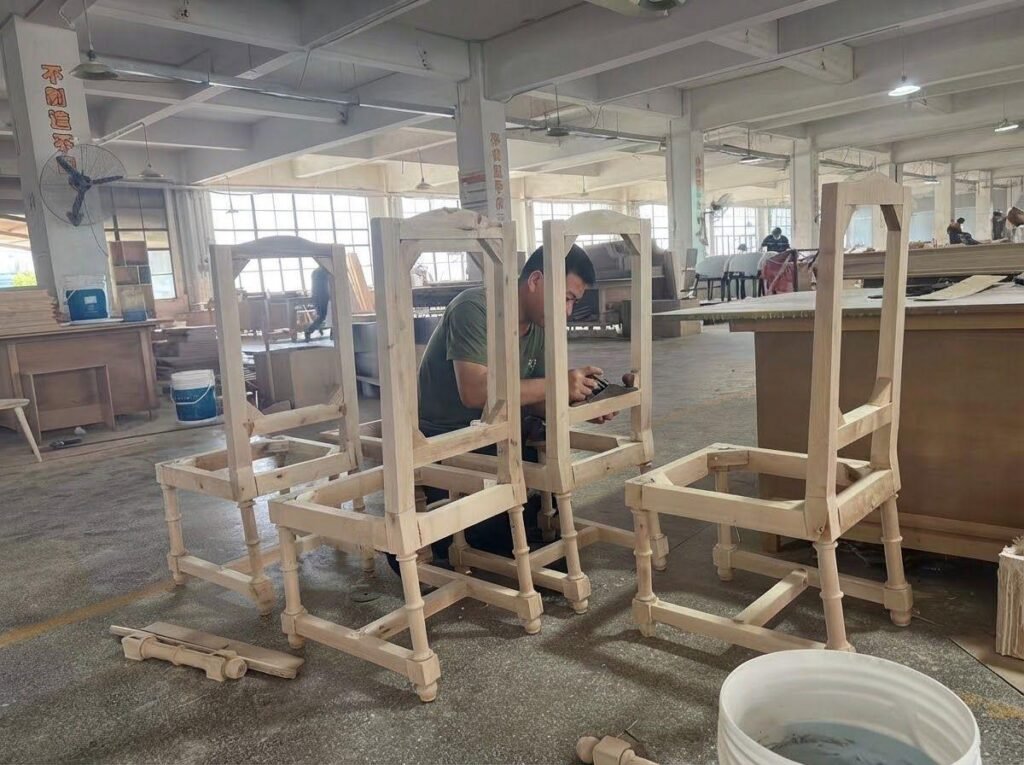
On the flip side, smaller independent operations or specialized mid-tier makers approach things differently. Take an outfit like Interi Furniture, for example, which spends its time dialed into custom hospitality and high-traffic project seating. I’ve walked lines in places exactly like that. They usually have just enough floor space and specialized manpower to handle a 10,000-piece rollout without outsourcing to shady sub-shops. But crucially, they maintain enough operational agility to actually implement the weird, custom structural reinforcements a high-traffic hotel demands. They won’t grind their entire factory to a halt just because you needed a specific fire-retardant barrier added under the upholstery fabric at the last minute.
And by the way, you negotiate these specific structural nuances over tiny, boiling cups of pu’er tea in the boss’s office. Not via a PDF attachment on an email.
Matching your specific project’s complexity to the factory’s actual floor capabilities—not just what their glossy marketing brochure says—is the single most critical decision you will make.
The Paranoia Protocol for Quality Control
If you are dropping a million dollars on commercial seating, your quality control process needs to border on clinical paranoia. Trusting a third-party inspector who swings by the factory for two hours to count boxes isn’t going to cut it. Not even close.
Here is how you actually handle high-risk, heavy-duty production on the ground.
The 250-Pound Gorilla Test: Forget expensive testing machines. Do it the gritty way. Find your heaviest team member. Have them stand on the chair, jump off it, and then violently kick it over backward onto a hard floor. Pick it up. Does it rattle? Did the back legs splay out even a fraction of an inch? If yes, reject the frame design immediately. Back to the drawing board.
The Pin Moisture Meter: I learned this the hard way years ago. Buy a cheap pin-type wood moisture meter from a hardware store. Jam the metal prongs directly into the raw wood frames sitting on the assembly line. If it reads over 12%, that wood is way too wet. When it ships to a dry climate, it’s going to shrink, crack, and every single joint will fail.
The Assembly Line Scale Trick: Weigh your approved golden sample. Write that exact number down on a piece of masking tape. Then, walk unannounced onto the line and weigh a random production unit. If the mass-produced chair is two pounds lighter, they hollowed out the frame or downgraded the steel gauge behind your back. Catch them red-handed.
The Fabric Roll Audit: You noted the exact Martindale rub count in your contract, right? Great. But never trust the tiny swatch they hand you in a meeting. Make an independent lab take a cutting from the actual massive bulk fabric roll sitting on the factory floor.
The Ultimate Trap Door: Never, ever trust a factory boss who immediately says “yes” to your aggressive target price without putting up a massive fight.
Think about it logically. If they instantly agree to $35 for a fully upholstered commercial dining chair, they aren’t taking a loss out of the kindness of their hearts. They are simply planning to cut corners you don’t even know exist yet. You won’t see the missing T-nuts or the downgraded zig-zag springs from the outside, but the inside will be held together by cheap staples and prayers.

The Real Questions Buyers Ask in the Trenches
I get panicked emails from procurement guys all the time. Here’s what they usually want to know when things inevitably go wrong.
Q: Why do my solid wood restaurant chairs get incredibly wobbly after just three months of use?
A: It’s almost always a catastrophic failure of the moisture content. If a factory down in a swampy, humid place like southern China doesn’t properly kiln-dry their ash or beech wood down to 8-10% before assembly, the wood absorbs ambient moisture. When that chair hits a hyper-dry, air-conditioned environment like Dubai or a Vegas casino floor, the wood violently shrinks. The tenons contract, the wood glue cracks, and suddenly every single joint is loose. It literally sounds like a gunshot when a leg finally snaps under a customer.
Q: Can’t I just rely on standard third-party inspection reports to guarantee my durability?
A: Absolutely not. A standard AQL inspection report only tells you what the guy visually saw on a random Tuesday afternoon. They check cosmetic defects, packaging labels, and basic functionality. They count boxes. That’s it. They do not tear away the upholstery to stress-test the internal frame structure of 10,000 units. You need a dedicated engineering audit, not a counting service.
Q: Look, with ocean freight rates fluctuating constantly, is it actually still cheaper to source these massive contract jobs from overseas?
A: Yes. But—and this is a massive asterisk—only if you bake the cost of rigorous, paranoid quality control and a 5% spare parts buffer into your landed cost analysis upfront. If you try to do it on the cheap and skip the on-site destructive testing, the inevitable replacement costs will entirely wipe out your alleged savings before your property even hits its one-year anniversary.
The Bottom Line on the Factory Floor
The next time you sit in a high-end hotel lobby chair and feel the backrest flex just a little too much when you lean back, you will know exactly what happened on a dusty production line 7,000 miles away.
Some ambitious junior buyer squeezed the factory for three extra dollars of margin. And the factory quietly removed a vital under-seat steel crossbar to make the math work for everybody.
When you scale up to these massive volumes, ask yourself a very serious question. Are you actually buying furniture, or are you just buying future liabilities?
You cannot manage a 10,000-piece heavy-duty order from a laptop in New York. You just can’t. Get on a plane, go to the factory, smell the glue, and break some chairs yourself.