

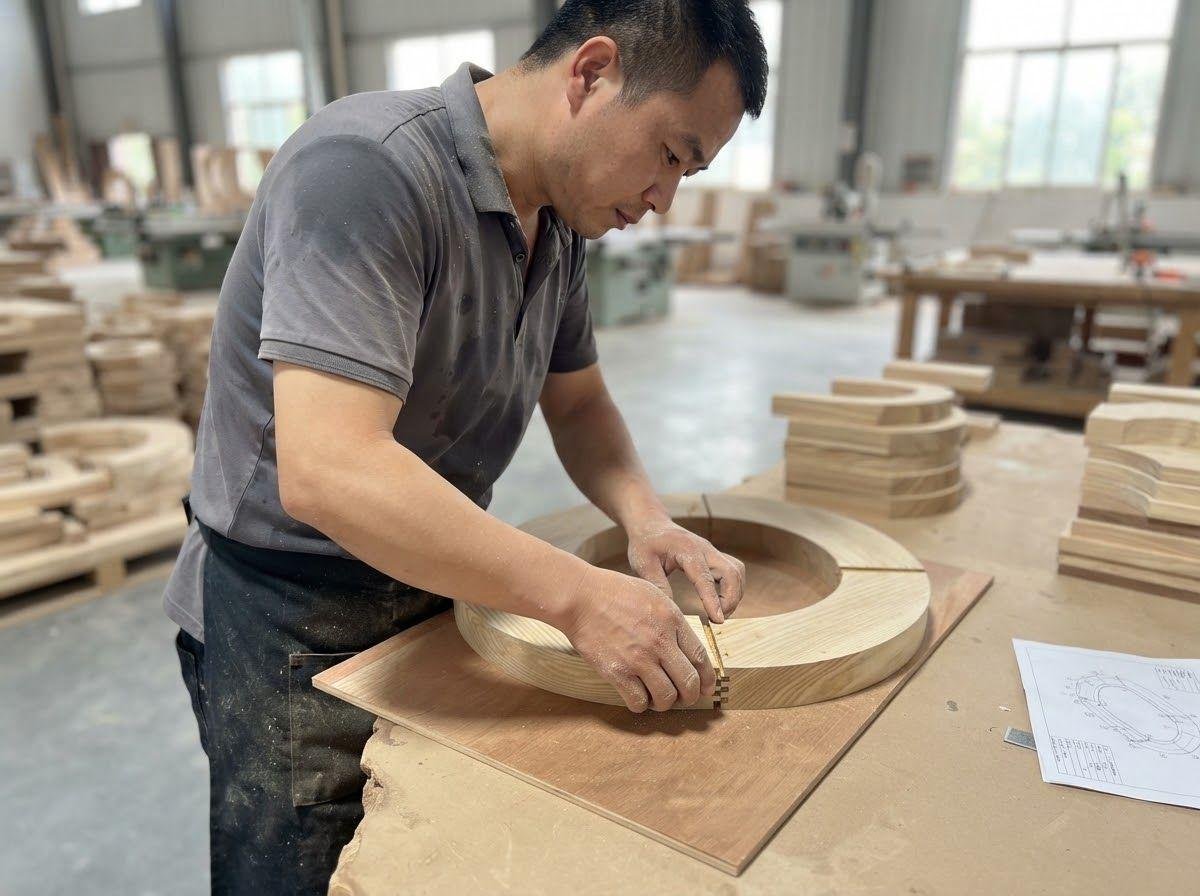
Rain was absolutely hammering the tin roof in Dachong. It was late 2024, and my translator had completely given up trying to yell over the scream of the sliding panel saws.
I was walking the production floor with a senior FF&E buyer. She flew out of Chicago—15 hours in coach—for one specific reason. To see authentic Chinese joinery workshops with her own eyes. Our host for the afternoon? The factory boss. A guy sporting a very loud, definitely fake Gucci belt, chain-smoking Chunghwa cigarettes, and grinning like he just won the lottery. He slaps the top of this massive, heavily carved Ming-style console table. Swears on his grandfather’s grave it’s pure mortise and tenon. Zero glue. No hardware. Just raw craft.
Then her pen rolled off the table.
She bent down. Picked it off the concrete. Squinted at the underside of the apron, and just froze. I leaned in to look. Right there, practically dripping out of the primary leg joint, was a wet, sloppy smear of A/B epoxy. And right next to it? A sunken hex screw. Some guy on the assembly line had actually taken a brown Sharpie to the metal head trying to match the rosewood grain.
Silence. We were in our Didi heading back to the hotel three minutes later.
Finding the real stuff—heritage joints held together purely by the friction of interlocking wood—is basically hunting ghosts. You won’t find these guys by scrolling page one of Alibaba on your lunch break. And you definitely aren’t finding them drinking aged tea in a Foshan mega-showroom.
The Brutal Truth About the “Heritage” Export Market
Middlemen hate this conversation. Sourcing agents will lie to your face over dim sum because the truth kills their margin. Here’s the ugly, unfiltered reality of the export market: 95 percent of the “traditional joinery” leaving standard hubs is a complete joke.
It’s cut on a CNC machine. Smacked together by temp workers on a dusty floor. Glued to high heaven.
Real joinery refuses to scale. You can’t jam a 300-key resort order into a shed with five old carpenters and demand a six-week turnaround. It defies physics.
But honestly, the factories aren’t the only ones screwing this up. The western buying mentality is entirely broken. Procurement teams fly over. They want museum-grade aesthetics. But then they demand the factory hit an IKEA budget and a fast-fashion shipping schedule. Completely delusional.
My rule of thumb is blunt. If a supplier claims they can casually push out 500 hand-joined pieces a month, they’re either subcontracting to fifty dirty garages or lying about the metal hardware.
Key Takeaways: The Floor Reality
- China furniture sourcing is the process of bleeding through layers of slick trading companies until you finally hit a sawdust-covered factory floor.
- True Chinese joinery workshops run on artisan timelines. A standard 30-day export schedule? Massive red flag.
- Authentic mortise and tenon means zero metal. Period. It relies on wood moisture acclimatization to lock tight.
- To source from China successfully in this niche, stop staring at 3D renders. Crawl under the actual tables.
The Assembly Floor Scent Test
Timber or a chemical spill?
Buying solid wood without walking the line is like buying a used car blindfolded. You’re begging to get scammed. You have to physically smell the building.
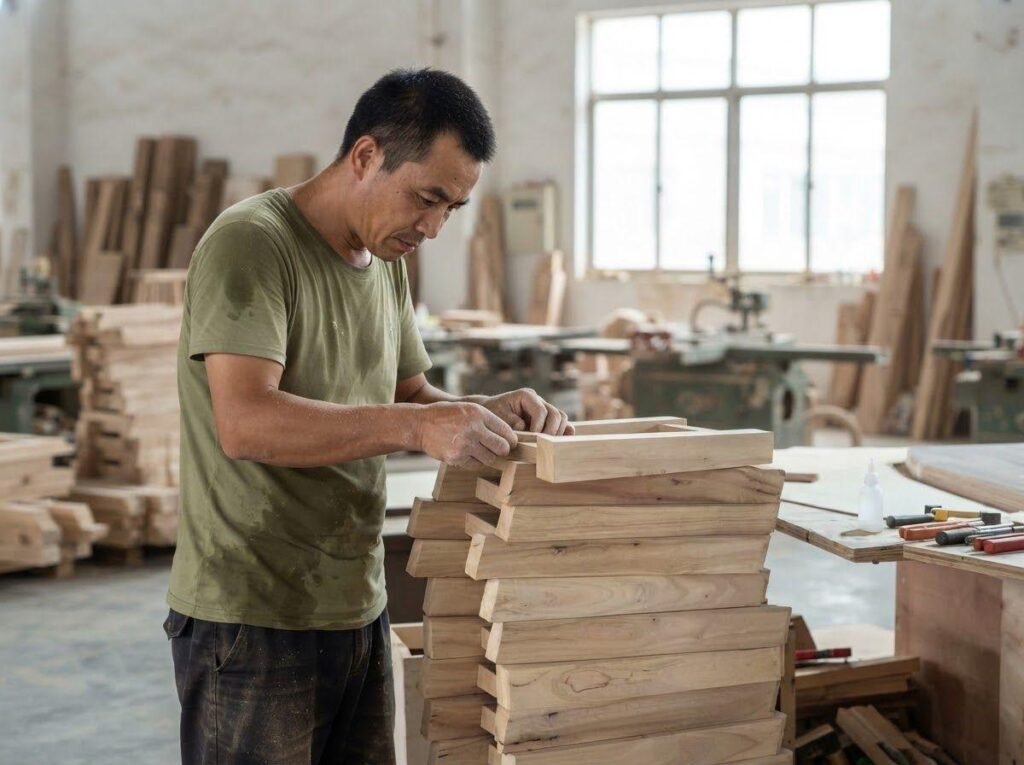
Cross the threshold of a real shop. You get hit with a specific scent. Raw sawdust. Aged timber. Maybe a hint of natural sap lacquer. Earthy stuff. But if you walk in and your eyes immediately start burning from formaldehyde and cheap nitrocellulose off-gassing? Turn around. Your taxi is waiting outside.
Let’s kill a stupid industry myth, though.
Purists think real shops operate by candlelight. Old men sitting in the dirt with rusty hand saws. Garbage. They use modern sliding table saws. Heavy thickness planers for the rough cuts. The heritage part happens in the final 20 percent. The fitting.
Hand-chiseling the tenon cheeks down to the millimeter. A master carpenter tapping joints closed with a wooden mallet. Closing his eyes. Listening. The pitch of the wood tells him if the friction fit is right. Real joints hold because the math is right—the wood geometry locks it in. Glue is just admitting you did the math wrong.
Digging Past the Guangdong Bubble
Western buyers usually land at Baiyun Airport, hit the Foshan mega-markets, grab a stack of catalogs, and hit the hotel bar. Guangdong is a manufacturing beast. I spend half my life stuck in traffic there. But for authentic mortise-and-tenon? You’re probably in the wrong province.
The real artisans got priced out of the main hubs years ago. They retreated. You’ll find them up north in Dongyang, a city utterly obsessed with woodcarving. Or tucked into the dusty fringes of Suzhou, hiding behind unmarked rolling metal doors.
Find one, and watch the power dynamic flip.
They don’t give a damn about your container volume. Tell a master carpenter you need 1,000 chairs by November. He’ll literally laugh you out of his office. They care about the timber. They will hold you hostage for two hours lecturing about how the moisture content of their Burmese teak needs to acclimate for your client’s dry Nevada property.
If they aren’t intensely interrogating you about the destination’s HVAC system, they aren’t joiners. They’re just pushing SKUs.
The Moisture Content Obsession
Who controls the climate, controls the product.
Solid wood is alive. It breathes. It aggressively contracts depending on the relative humidity of the room.
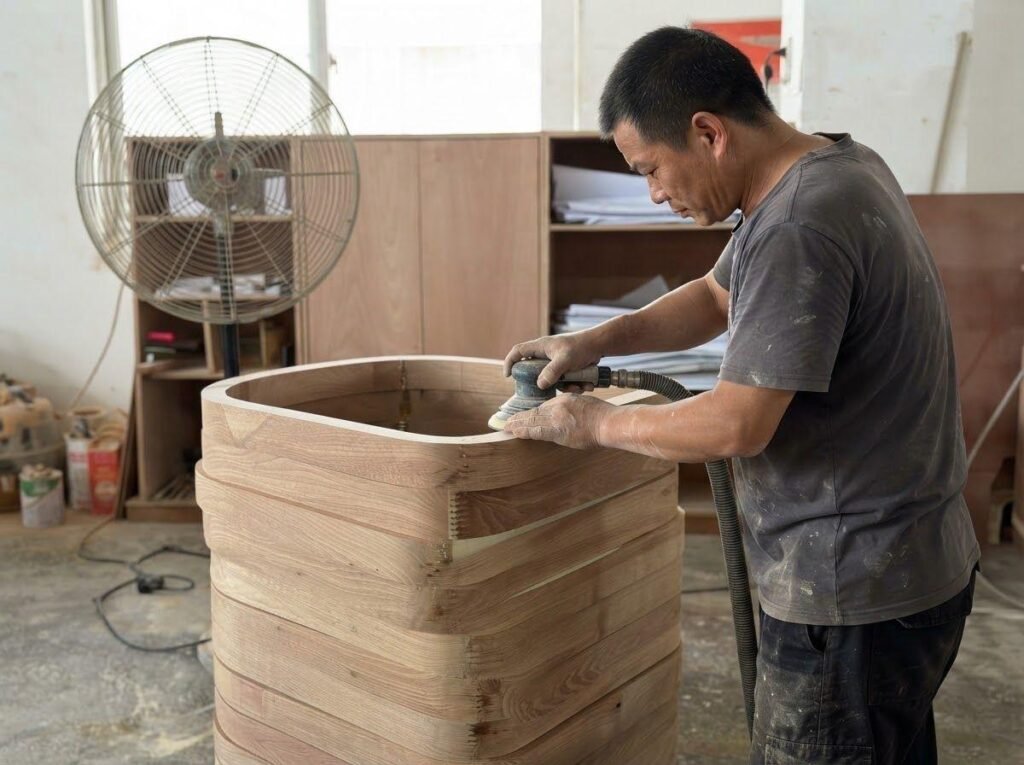
Cue the drying kilns. Mass-market factories blast raw wood in a high-heat kiln for three days. Hit 8% moisture. Shove it onto the cutting floor. Heritage shops? They treat drying like a religion. Air-dry timber in the yard for a year. Then kiln-dry it. Then let it rest again in a temperature-controlled room. The internal grain stresses have to relax before a blade touches it.
Cut a joint while the wood holds tension? That swallowtail tenon snaps itself in half six months after arriving in a heated London flat.
I once watched a factory owner scream at his production manager for thirty minutes. A batch of walnut was at 11% moisture instead of 9%. That’s the psychotic level of detail you are paying for. You aren’t just sourcing furniture; you are sourcing patience.
The Scale-Soul Compromise
Let’s be real. Not every project can eat a 16-week lead time for one console table built by a grumpy craftsman. Budgets exist. FF&E directors have bosses.
At the top, pure heritage shops do glue-free museum reproductions. At the bottom, volume factories staple paper-thin veneer over MDF. The smart money plays the middle.
The most profitable strategy is finding a hybrid manufacturer adapting traditional philosophies to commercial scales.
New guys always make a beeline for the Foshan conglomerates to save a buck. Veterans look for mid-sized specialists. Operations like Interi Furniture, which zeroes in on blending reliable export-grade production with elevated residential finishes, offer a completely different risk-reward setup. They bridge that nasty gap between artisan obsession and brutal hospitality deadlines.
You aren’t getting a chair chiseled by a monk. But you get a structurally sound, beautifully finished piece that won’t twist into a pretzel the second the hotel AC kicks on. Match the factory’s DNA to your project’s reality. Stop expecting an artisan to fill a 40-foot container in a month.
The Factory Vetting Playbook
How do you vet these guys without wasting two weeks driving around rural industrial parks? You need a ruthless filter.
Here is my playbook, built strictly from getting burned:
- The Exploded View Demand – Before booking flights, demand a CAD exploded view of their flagship chair. If they can’t show the internal mortise and tenon structures on paper, they can’t build it. Period. No stalling.
- The Magnet Trick – Walk the floor holding a heavy-duty neodymium magnet. Run it discreetly under tables and chair aprons. Clicks and sticks? Hidden screws masking garbage joinery. I caught three factories doing this last month alone.
- The Raw Joint Sample – Make them FedEx an unfinished, un-lacquered sample joint. Look at the bare wood. See how it interlocks without dark stain and heavy wax hiding the sins. You can’t hide terrible cuts in raw wood.
- Check the dust extraction – Look up. High-end workshops dealing with expensive hardwoods invest in massive central dust extraction systems. Wood dust from Zitan is incredibly valuable (sold for incense). If the floor is buried in dirty sawdust, they aren’t working with premium materials.
- The slick website trap – Beware flawless English and slick pitch decks. The best craftsmen are historically terrible at marketing. If their Alibaba profile looks like an Apple product launch, they are a trading company marking up a rural workshop by 300%. Real masters are too busy fighting wood grain to optimize SEO.
Here’s what the math actually looks like on the floor:
| Factory Reality | True Heritage Joinery Workshop | Standard Mass-Market Factory |
| Primary Fastener | Wood-to-wood friction | Dowels, cheap epoxy, hex screws |
| Typical Lead Times | 60 to 120 days (weather dictates this) | 30 to 45 days max |
| Moisture Control | Obsessively acclimated to your climate | Flash kiln drying, one size fits all |
| Customization | Infinite, but the master will debate you | Pick from the fixed catalog |
| Vibe on the Floor | Smells of raw wood, central dust vacs | Smells of chemicals, frantic, loud |

Unfiltered FAQs from the Trenches
Q: “I found a supplier for Chinese joinery workshops on Alibaba. They have the ‘Verified Gold Supplier’ badge. Does that mean they actually make the stuff?”
A: No. That badge means they paid Alibaba a membership fee. Passed a basic license check. It has zero to do with whether they are a heritage workshop or a guy in a Shenzhen apartment flipping your PO to the cheapest shed he can find. Ignore the badges. Go see the floor.
Q: “How do I stop the factory from swapping my solid wood for cheap veneer after I fly home?”
A: Hire a ruthless third-party inspector. Do a DUPRO (During Production) inspection when the furniture is strictly in the “white wood” phase. Once the dark lacquer goes on, you’re blind. Wait for the pre-shipment inspection at the loading dock, and the damage is done. You’ll be arguing over WeChat photos while your container misses its vessel.
Q: “Can I realistically source from China for a 200-key resort using traditional mortise and tenon?”
A: Depends on your definition. Purely hand-chiseled, friction-fit joints with zero adhesive? Absolutely not. The timeline will murder your budget. The factory will cut corners to finish on time anyway. Accept a hybrid approach—precision machine-cut joinery with minor adhesive reinforcement—and yes, it’s highly feasible.
Q: “Why do the lead times for real joinery fluctuate so much?”
A: The weather. Literally. In plum rain season (May to June), ambient humidity spikes to 95%. You cannot apply traditional lacquer or finalize tight joints when wood absorbs that much moisture. The timeline pauses. Scream at the sales rep all you want. You can’t negotiate with the weather.
Closing Thoughts
We waste hours grinding unit prices down by fifty cents. And we completely forget what we’re actually buying. With real joinery, you aren’t paying for lumber. You are paying for time.
The decades a tree took to grow in a harsh environment. The year the raw timber spent drying in a yard. The lifetime a craftsman spent learning how to lock two pieces of wood together so tightly they survive a century.
Are you willing to pay for that time? Or are you just chasing a cheap photo-op for a mood board?
Next time you’re sweating through your shirt on a factory floor in southern China, put the spreadsheet away for five minutes. Look at the sawdust. Look at the guy’s hands making the product. They’ll tell you everything the sales rep won’t.
See you out there.